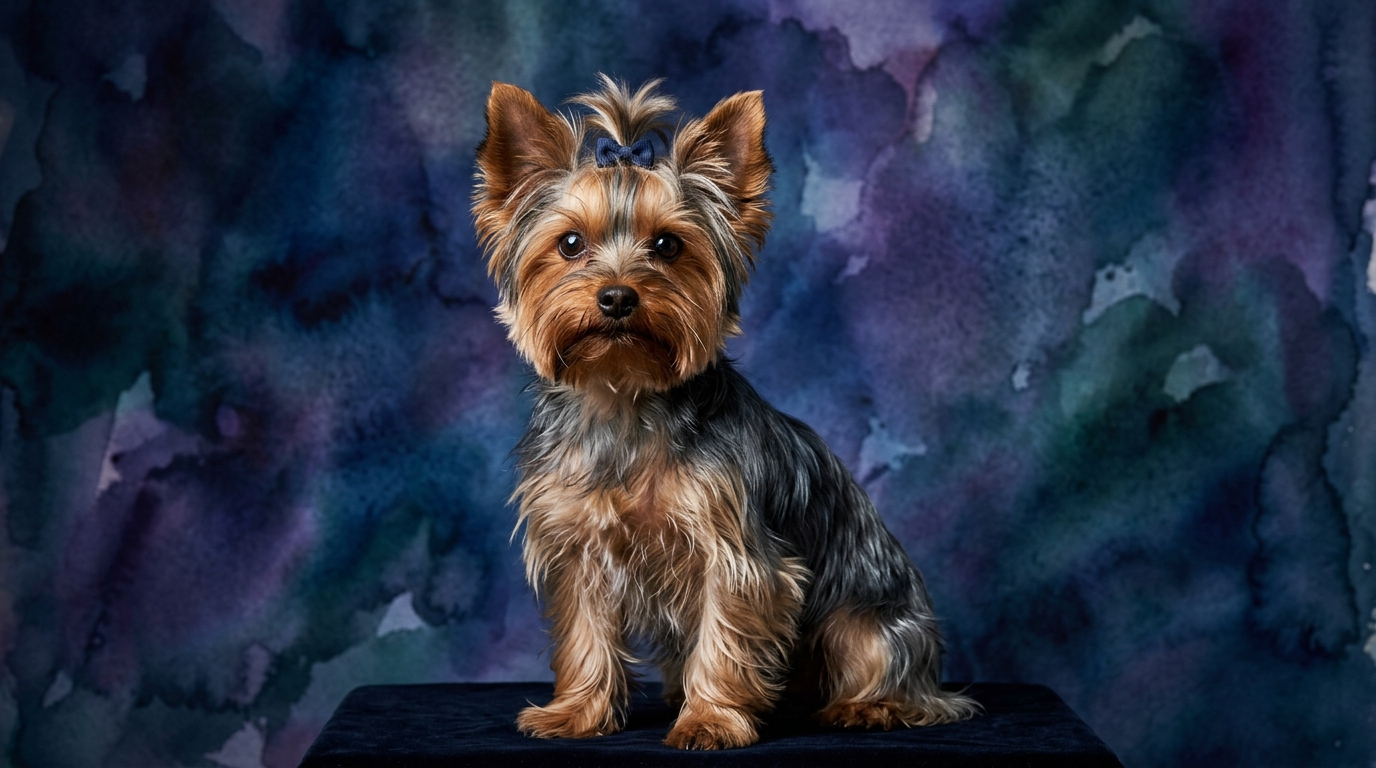
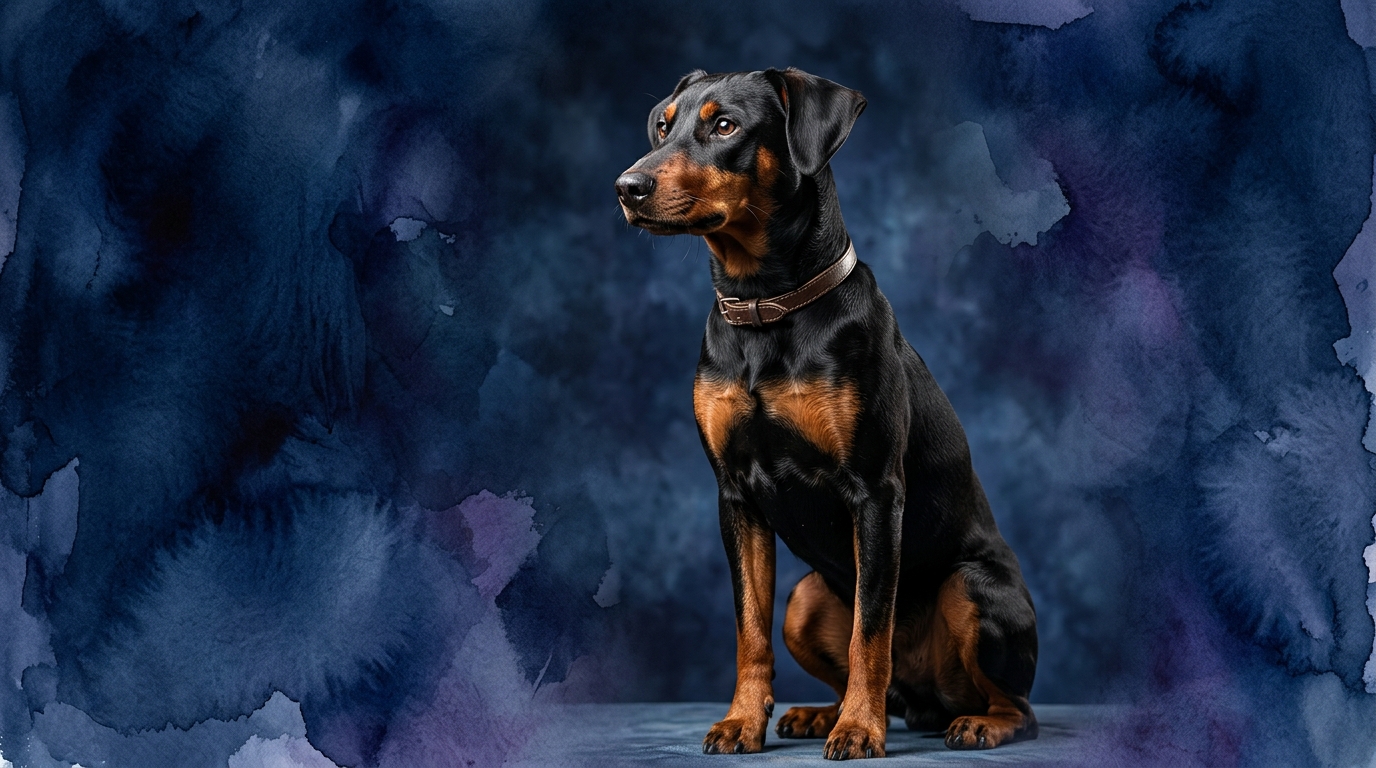
Side-by-Side IQ Profile: Yorkshire Terrier vs. German Pinscher
The Yorkshire Terrier, a member of the Terrier Group and Coren-ranked #27, demonstrates a balanced and often eager cognitive profile. Its Problem Solving ability, rated at 3/5, suggests it can navigate moderate mental challenges, such as figuring out puzzle toys or adapting to new routines, but might not excel at complex, multi-step tasks without consistent guidance. Training Speed shines at 4/5, indicating a quick grasp of new commands and a strong willingness to learn from interaction, making initial training periods often quite efficient. Social Intelligence also scores 4/5, reflecting a keen awareness of human emotions and social cues, making them adept at forming strong bonds and understanding household dynamics. An Instinctive Drive of 4/5 points to a robust inherent motivation, likely rooted in their terrier heritage for chasing and exploring, which can be channeled into engaging activities. Finally, a Memory score of 4/5 means they retain learned behaviors and experiences effectively, building upon past lessons and making consistent training highly impactful.
The German Pinscher, from the Working Group and not Coren-ranked, presents a solid, consistent cognitive foundation across the board. Its Problem Solving capacity stands at 3/5, similar to the Yorkie, meaning it can tackle practical challenges and learn from experience, but may require consistent effort for intricate problem-solving scenarios. Training Speed is rated 3/5, suggesting a steady learning pace; they absorb information reliably, though perhaps not with the immediate flash of insight seen in some breeds. Social Intelligence at 3/5 indicates a good understanding of their human companions and their environment, forming clear connections, though perhaps with a more independent streak compared to highly socially driven breeds. An Instinctive Drive of 3/5 highlights a moderate natural motivation, reflecting their working background with an inherent drive for purpose and activity. Their Memory also scores 3/5, indicating they reliably recall training and experiences, making consistent reinforcement an effective strategy for long-term retention.
Where the Yorkshire Terrier Wins Cognitively
The Yorkshire Terrier holds a distinct edge in several cognitive dimensions, particularly in areas related to rapid learning and social interaction. With a Training Speed of 4/5, they typically pick up new commands and routines faster than the German Pinscher's 3/5. This means a Yorkie often requires fewer repetitions to master a new trick or integrate a new household rule, making initial training phases potentially more rapid and less frustrating for owners seeking quick progress. Their superior Social Intelligence (4/5 versus 3/5) also grants them a nuanced understanding of human emotional states and intentions. A Yorkie is more likely to anticipate an owner's mood or respond subtly to non-verbal cues, fostering a highly attuned and responsive companionship. Furthermore, their 4/5 Memory score suggests a stronger ability to retain these learned behaviors and social observations over time, building a robust cognitive history that informs future interactions and training successes. This combination of quick learning, social perceptiveness, and strong retention positions the Yorkie as a highly adaptive and interactive learner in a variety of settings.
Where the German Pinscher Wins Cognitively
While the raw scores might suggest a Yorkie lead in some areas, the German Pinscher's consistent 3/5 across all five cognitive dimensions points to a balanced and robust mental resilience, which can be a distinct advantage in specific contexts. Unlike the Yorkie, whose higher instinctive drive might sometimes be channeled into typical terrier pursuits, the German Pinscher's balanced instinctive drive (3/5) is often more readily directed towards purposeful tasks. This breed's working heritage means their cognitive faculties are geared towards reliability and endurance in performing duties, rather than purely quick, flashy learning. Their sustained focus, even if learning takes slightly longer, translates into solid, dependable performance once a task is mastered. For owners seeking a dog whose cognitive profile supports consistent, task-oriented engagement without extreme fluctuations in drive or social demands, the German Pinscher's well-rounded 3/5 scores represent a stable and predictable cognitive partner, particularly in environments requiring steadfastness and practical application of learning and routine.
Which is Easier to Train and Why
Based on our IQ Lab metrics, the Yorkshire Terrier is generally easier to train, primarily due to its higher Training Speed (4/5) and Social Intelligence (4/5). A Yorkie's quicker learning curve means they often grasp new commands and concepts with fewer repetitions, accelerating the training process. For instance, teaching 'sit' or 'stay' might see a Yorkie respond reliably in fewer sessions, making early obedience work feel more immediately rewarding. Their superior social intelligence also means they are often highly motivated by human interaction and praise, and are adept at reading their owner's cues, both verbal and non-verbal. This natural desire to please and connect can make them highly receptive students. In contrast, the German Pinscher's 3/5 Training Speed suggests they learn at a steady but perhaps more deliberate pace, requiring more consistent reinforcement over time. While capable of learning complex tasks, their approach might be less about immediate gratification and more about methodical understanding. Their 3/5 social intelligence, while adequate, suggests they might be slightly more independent in their decision-making, requiring an owner to be more direct and consistent in their communication rather than relying on subtle social cues to drive compliance.
Which Suits Active Owners vs. Relaxed Owners
For active owners seeking a canine partner for diverse activities, both breeds offer engagement, but with different nuances. The German Pinscher, with its working background and balanced instinctive drive (3/5), thrives on purposeful activity and consistent engagement. They are well-suited for owners who enjoy structured exercise, obedience training, agility, or even dog sports where their stamina and focused energy can be utilized. Their stable cognitive profile supports sustained effort in these endeavors. A relaxed owner, however, might find the German Pinscher's need for consistent mental and physical stimulation a bit demanding; without it, their moderate instinctive drive could manifest as boredom or restlessness, requiring proactive management.
The Yorkshire Terrier, while small, possesses a robust instinctive drive (4/5) typical of terriers, making them surprisingly energetic and keen on exploration. Active owners who enjoy shorter, frequent play sessions, puzzle games, or even urban agility can find a spirited companion in a Yorkie. Their quick learning and strong memory make them excellent candidates for learning numerous tricks and engaging in interactive games. For relaxed owners, a Yorkie can adapt, but still requires regular mental stimulation to prevent their sharp minds from becoming under-stimulated. Their higher social intelligence means they are often content to cuddle, but their innate drive for activity needs an outlet, even if it’s just vigorous indoor play and mental enrichment.
The Verdict
Choose the Yorkshire Terrier if you prioritize a quick learner, a highly socially attuned companion, and a dog that excels in rapid, interactive training sessions.
Opt for the German Pinscher if you value a consistently stable cognitive profile, a dog that thrives on purposeful activity, and a reliable partner for structured engagement and a steady learning pace.
🧠 Find Your Pet's IQ Score
Our Pet IQ Lab assessment covers 25+ tests across 5 cognitive dimensions — personalized to your breed.
Take the Full IQ Test →Frequently Asked Questions
Is the Yorkshire Terrier difficult to train due to its terrier nature?
Not necessarily. While they possess a strong instinctive drive, their 4/5 Training Speed and Social Intelligence mean they are quick to learn and eager to please their human companions. Consistent, positive reinforcement training works very effectively with them, channeling their drive into desired behaviors.
Do German Pinschers need a lot of mental stimulation?
Yes, German Pinschers benefit greatly from regular mental stimulation. Their 3/5 Problem Solving and Instinctive Drive mean they need purposeful activities and consistent engagement to prevent boredom and channel their energy constructively, aligning with their working heritage.
How does Coren's ranking relate to The Cosmic Pet Pet IQ Lab scores?
Coren's ranking primarily assesses 'working and obedience intelligence,' focusing on trainability in a specific context. Our IQ Lab provides a more granular view across five distinct cognitive dimensions, offering a broader understanding of a breed's overall mental blueprint beyond just obedience, encompassing problem-solving, social aspects, and inherent drives.