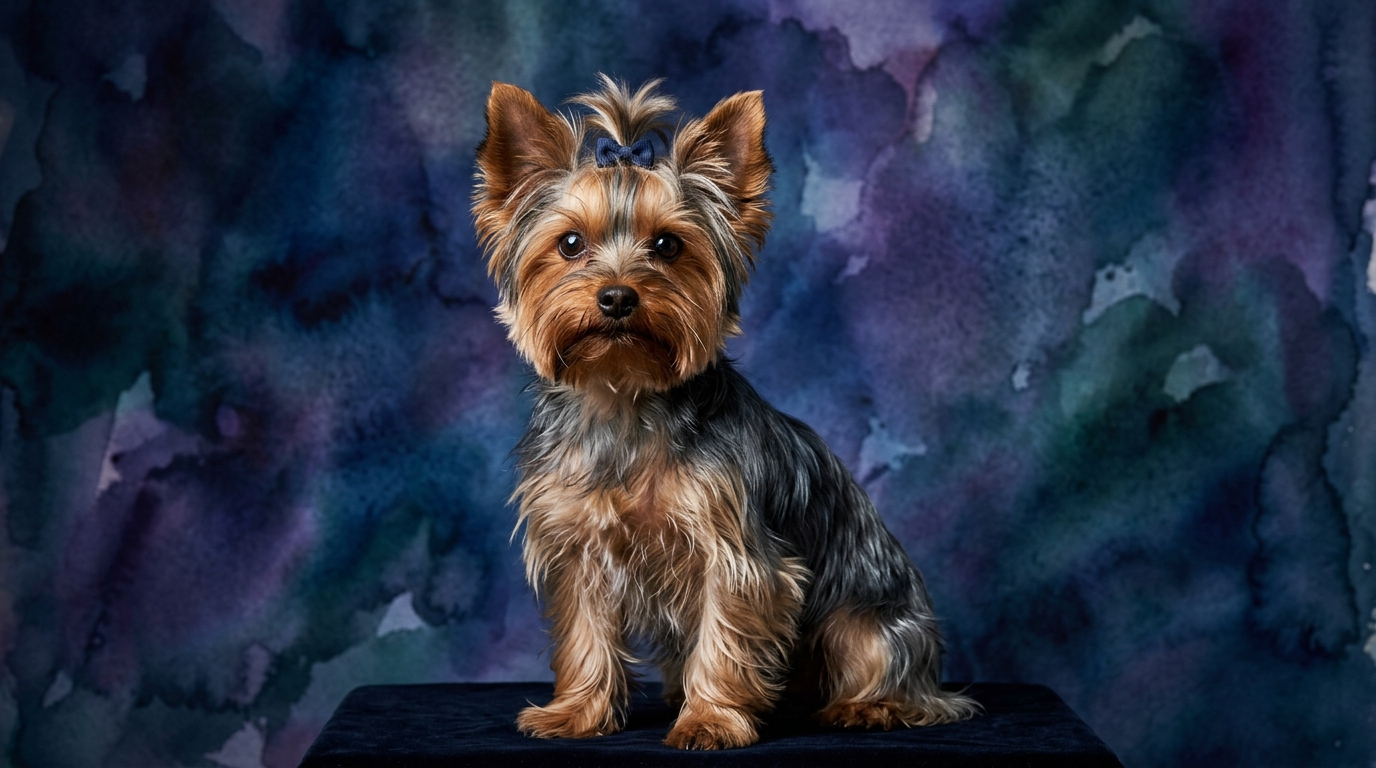
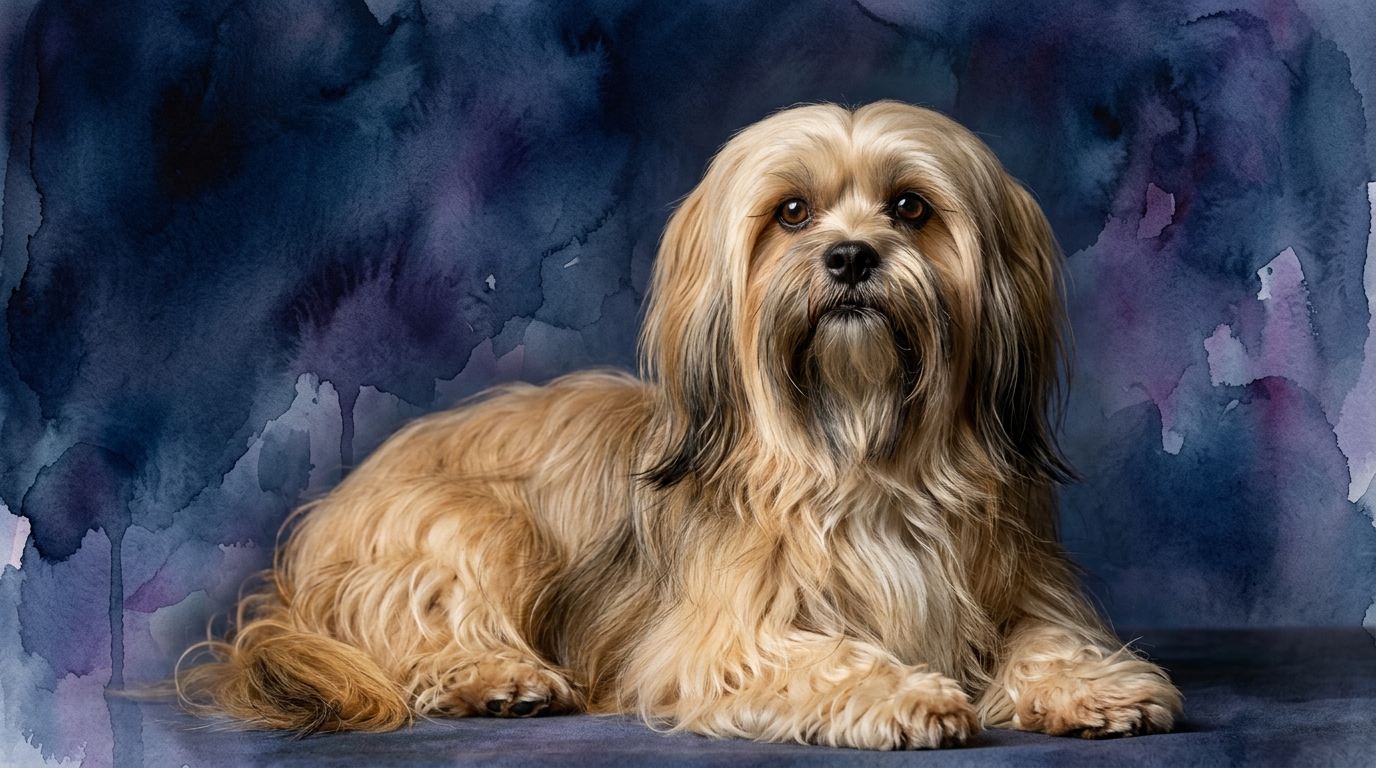
Side-by-Side Cognitive Profiles: Yorkshire Terrier vs. Lhasa Apso
Our Cosmic Pet Pet IQ Lab evaluates canine cognition across five key dimensions, providing a nuanced understanding beyond simple obedience. The Yorkshire Terrier, ranked #27 by Coren for working and obedience intelligence, presents a profile marked by quick learning and social engagement. Their Problem Solving is rated 3/5, indicating a capacity for practical solutions, often driven by their environment or immediate desires, rather than complex abstract thought. Training Speed scores 4/5, reflecting their eagerness and ability to form strong associations between commands and actions rapidly. Social Intelligence, also at 4/5, highlights their perceptive nature regarding human cues and their aptitude for building close, responsive relationships. An Instinctive Drive of 4/5 showcases their terrier heritage, manifesting as strong prey drive and vigilance. Finally, their Memory at 4/5 suggests they retain learned behaviors and environmental information effectively, contributing to their adaptability.
In contrast, the Lhasa Apso, holding a Coren rank of #68, demonstrates a cognitive approach rooted in independence and discernment, typical of a guardian companion breed. Their Problem Solving is rated 3/5, indicating they can devise solutions, but often on their own terms, demonstrating resourcefulness when motivated. Training Speed stands at 3/5, meaning they are capable learners, though they may require more consistent, patient instruction and convincing to comply if they perceive an instruction as unnecessary. Social Intelligence, at 3/5, reflects their selective nature; they form deep bonds with their chosen family but can be reserved or aloof with strangers, processing social interactions with a discerning eye. Their Instinctive Drive, rated 3/5, primarily manifests as a strong sense of territoriality and an alert disposition, rather than a high prey drive. Memory at 3/5 suggests they retain information adequately, but might benefit from regular reinforcement to solidify complex learning.
Where the Yorkshire Terrier Cognitively Excels
The Yorkshire Terrier demonstrates particular cognitive strengths that align with their terrier lineage and companion role. Their 4/5 score in Training Speed is a clear advantage, signifying their rapid acquisition of new commands and routines. This reflects a strong capacity for associative learning, where they quickly link specific actions with desired outcomes or human cues. This makes them particularly adept at engaging in diverse training activities, from basic obedience to more intricate trick training, often responding enthusiastically to positive reinforcement. Their 4/5 Social Intelligence further amplifies this, as they are highly attuned to their human companions' moods and intentions, making them responsive and cooperative partners in learning.
Furthermore, the Yorkie's 4/5 Memory means they retain these learned behaviors and social cues over time, building a robust repertoire of responses. This cognitive trait ensures that once a behavior is established, it tends to stick, requiring less frequent re-training than breeds with lower memory scores. Their 4/5 Instinctive Drive, while sometimes manifesting as a persistent chase instinct, also contributes to their cognitive engagement; they are curious and persistent in exploring their environment, applying their problem-solving skills (3/5) to navigate challenges like finding hidden toys or navigating new spaces. This combination of quick learning, social perceptiveness, and good retention positions the Yorkshire Terrier as a highly interactive and adaptable canine companion.
Where the Lhasa Apso Cognitively Excels
While the Lhasa Apso's scores might appear moderate, their cognitive strengths lie in their unique independent approach to the world, making them excel in specific contexts. Their 3/5 Problem Solving, though not indicative of rapid, eager compliance, speaks to a resourceful and often self-directed intelligence. They are capable of figuring things out, not necessarily to please, but to achieve their own objectives or to manage their environment effectively. This independent streak means they are not easily flustered and can adapt to new situations by assessing them on their own terms, often displaying a quiet determination.
The Lhasa Apso's 3/5 Instinctive Drive, primarily focused on vigilance and territorial awareness, highlights a keen situational intelligence. They are perceptive observers of their surroundings, quick to notice changes or potential intrusions, and will alert their human family with a distinct bark. This cognitive strength is less about physical prowess and more about an acute sensory awareness and the capacity to discriminate between routine events and unusual occurrences. Their 3/5 Social Intelligence, while not broadly demonstrative, points to a deep, discerning capacity for bonding within their immediate family. They are excellent judges of character, forming profound, loyal attachments that, once earned, are unwavering. This nuanced social understanding makes them perceptive companions who offer quiet companionship and a steadfast presence, rather than eager-to-please antics.
Training Dynamics: Which is Easier and Why?
When it comes to ease of training, the Yorkshire Terrier generally presents a more straightforward experience for most owners. Their Training Speed of 4/5 signifies a strong inclination to learn and respond to cues, often driven by their social intelligence (4/5) and desire to interact with their human companions. Yorkies tend to be motivated by praise, treats, and attention, making them receptive to positive reinforcement methods. They form associations between commands and actions quickly, meaning fewer repetitions are typically needed to solidify new behaviors. Their attentive nature and good memory (4/5) further contribute to their ability to pick up and retain a wide array of commands and tricks with relative ease.
The Lhasa Apso, with a Training Speed of 3/5, requires a different approach. Their independent nature and discerning social intelligence (3/5) mean they are not inherently driven by a strong desire to please, but rather by what they perceive as worthwhile or logical. Training a Lhasa Apso demands patience, consistency, and an understanding that they will learn, but on their own timeline. They are capable of learning complex commands, but they might challenge the necessity of an instruction or require more persuasive motivation. Owners often find success by making training sessions fun, varied, and ensuring the Lhasa Apso feels like they are making a choice, rather than simply obeying. Their cognitive profile suggests they respond best to clear, calm communication and respect for their independent spirit, rather than forceful methods.
Matching Canine Minds to Lifestyles: Active vs. Relaxed Owners
Considering their distinct cognitive profiles, the Yorkshire Terrier and Lhasa Apso naturally align with different owner lifestyles. The Yorkshire Terrier, with their higher scores in Training Speed (4/5), Social Intelligence (4/5), and Instinctive Drive (4/5), thrives with active and engaged owners. They benefit immensely from consistent mental stimulation, whether through daily training sessions, puzzle toys, or engaging in various canine sports like agility or obedience trials. Their perceptive social nature means they enjoy being involved in family activities and appreciate owners who provide plenty of interaction and opportunities to learn new things. An active owner who enjoys teaching tricks and providing diverse experiences will find the Yorkie a responsive and enthusiastic partner, eager to participate and show off their learned behaviors.
The Lhasa Apso, conversely, with their more moderate scores and independent streak, often suits owners seeking a more relaxed pace. While they still require regular exercise and mental engagement, their cognitive profile suggests they are content with a less demanding interactive schedule. Their primary instinctive drive (3/5) is often observational and guardian-oriented, making them excellent companions for those who appreciate a watchful, discerning presence. A relaxed owner who values quiet companionship, respects a dog's independent thought, and provides a calm, consistent environment will find a deeply loyal and affectionate partner in the Lhasa Apso. They enjoy observing their domain and are often satisfied with moderate walks and thoughtful, less frequent, but consistent, engagement.
The Verdict
Choose the Yorkshire Terrier if you seek an interactive companion eager to learn, quick to engage in training, and thrives on consistent social and mental stimulation.
Opt for the Lhasa Apso if you value an independent, discerning companion who offers steadfast loyalty and a watchful presence, appreciating subtle communication and a more relaxed, consistent routine.
🧠 Find Your Pet's IQ Score
Our Pet IQ Lab assessment covers 25+ tests across 5 cognitive dimensions — personalized to your breed.
Take the Full IQ Test →Frequently Asked Questions
Do Yorkshire Terriers learn tricks easily?
Yes, Yorkshire Terriers typically learn tricks easily due to their 4/5 Training Speed and 4/5 Memory. They are quick to associate actions with rewards and enjoy the mental engagement of learning new behaviors from their human companions.
Are Lhasa Apsos difficult to train?
Lhasa Apsos are not difficult to train, but they require patience and consistency due to their 3/5 Training Speed and independent nature. They learn effectively when motivated and when training feels like a collaboration, rather than strict obedience.
Which breed is more attentive to their owner's mood?
The Yorkshire Terrier, with a Social Intelligence score of 4/5, is generally more attuned to their owner's moods and cues. They are highly perceptive and responsive to human emotions, often seeking to engage and respond to their companion's state.