
Side-by-Side IQ Profile: Yorkshire Terrier vs. Maltese
To truly understand the unique cognitive makeup of the Yorkshire Terrier and the Maltese, we turn to The Cosmic Pet Pet IQ Lab's five-dimensional intelligence framework. This framework assesses specific cognitive aptitudes, providing a nuanced view beyond general perceptions. Let's break down how each breed measures up.
The Yorkshire Terrier, a member of the Terrier group with a Coren ranking of #27, presents a profile reflecting its working heritage. Its Problem Solving score is 3/5, indicating an average capacity to independently figure out novel challenges, like navigating a simple puzzle toy or finding a hidden treat. Training Speed is strong at 4/5, suggesting a quick uptake of new commands and routines. In Social Intelligence, the Yorkie earns a 4/5, showing a good understanding of human cues and emotional states, though perhaps with a characteristic terrier independence. Their Instinctive Drive is robust at 4/5, reflecting a strong inclination towards behaviors like chasing, digging, or exploring, a hallmark of their breed type. Finally, Memory stands at 4/5, signifying a reliable retention of learned behaviors, locations, and experiences over time.
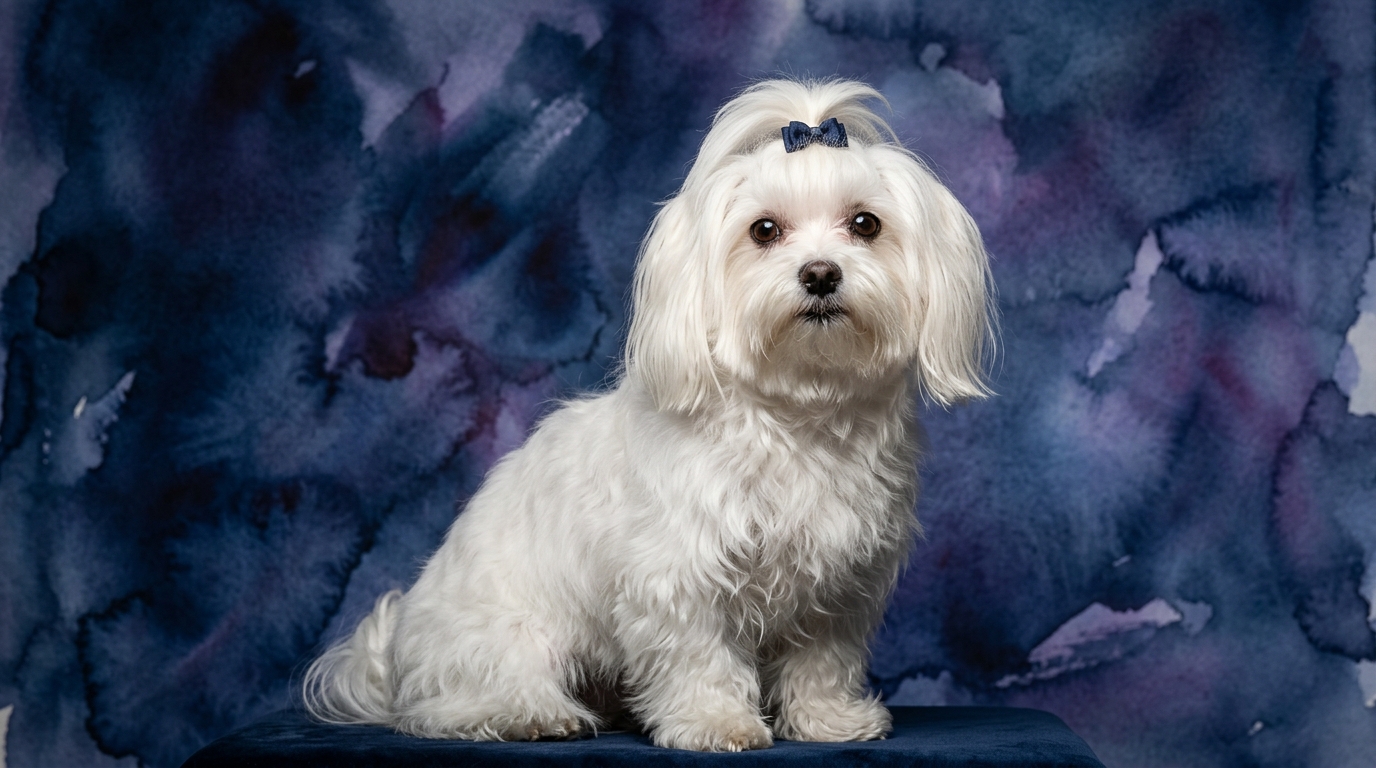
The Maltese, a delightful Toy breed with a Coren ranking of #59, offers a distinct cognitive pattern optimized for companionship. Similar to the Yorkie, its Problem Solving score is 3/5, meaning it can handle straightforward mental tasks but may require more guidance for complex ones. Training Speed for the Maltese is 3/5, suggesting a moderate pace for learning new commands, requiring consistent repetition. Where the Maltese truly shines is in Social Intelligence, earning an exceptional 5/5. This indicates a profound ability to read and respond to human emotions and social dynamics, fostering deep, intuitive bonds. In contrast, its Instinctive Drive is lower at 2/5, meaning less intrinsic motivation for independent hunting, chasing, or exploring. Memory for the Maltese is 3/5, an average score indicating they retain information adequately but may benefit from periodic refreshers for less frequently practiced behaviors.
Where the Yorkshire Terrier Wins Cognitively
The Yorkshire Terrier's cognitive strengths are deeply rooted in its terrier lineage, manifesting particularly in its impressive training speed, robust instinctive drive, and solid memory retention. Scoring a 4/5 for training speed, the Yorkie demonstrates a notable aptitude for quickly grasping new commands and routines, often showing a keenness to engage in structured learning sessions. This rapid acquisition of behaviors can be a delight for owners who enjoy teaching tricks or pursuing canine sports like agility, where quick understanding and execution are paramount. For instance, a Yorkie might master 'sit' and 'stay' in significantly fewer repetitions than many other breeds, making early obedience training a more efficient process.
Their 4/5 instinctive drive is another area where Yorkies shine, reflecting a strong inherent motivation to pursue and engage with their environment. While not always channeled into traditional 'work' in a pet home, this drive translates into a persistent curiosity and a spirited approach to play, often involving chasing small objects or exploring nooks and crannies. This means they are often self-motivated to investigate their surroundings, showing tenacity in finding a hidden treat or following an interesting scent. This drive, combined with a 4/5 memory, means that once a Yorkie learns something, whether a command or a routine, it tends to stick. They can recall complex sequences of actions and remember specific locations or individuals over extended periods, making them reliable companions once properly socialized and educated. Their memory also contributes to their problem-solving abilities, allowing them to draw upon past experiences to navigate new situations, even if their raw problem-solving score is an average 3/5. This combination of quick learning, strong drive, and reliable memory positions the Yorkshire Terrier as a cognitively agile breed, eager to learn and ready to engage with the world on its own terms.
Where the Maltese Wins Cognitively
The Maltese truly distinguishes itself in the realm of social intelligence, earning a remarkable 5/5 in this dimension, which significantly outweighs its scores in other cognitive areas. This exceptional capacity for social awareness means the Maltese possesses an innate ability to read and respond to human emotions and social cues with unparalleled sensitivity. They are masters at forming deep, intuitive bonds with their human companions, often anticipating needs and offering comfort or playful engagement precisely when it's desired. For example, a Maltese might gently nudge a hand when sensing sadness, or playfully bring a toy when detecting a joyful mood, demonstrating a profound empathy.
This high social IQ translates into a dog that is profoundly attuned to its family's dynamics, capable of nuanced interactions that go beyond simple learned behaviors. They can pick up on subtle changes in voice tone, body language, and even mood, adjusting their own demeanor accordingly. While their training speed (3/5) and memory (3/5) are average, their profound social intelligence often compensates by making them incredibly eager to please and cooperative within the context of their bond. A Maltese might not learn a complex trick as quickly as a Yorkie, but its motivation to perform for its beloved owner, driven by that strong social connection, can be a powerful learning aid. Their lower instinctive drive (2/5) further supports their role as devoted companions, as they are less prone to independent pursuits that might distract from human interaction. Instead, their cognitive energy is largely channeled into maintaining and enriching their social relationships, making them wonderfully empathetic and responsive pets. This breed's cognitive strengths lie not in independent problem-solving or driven exploration, but in their capacity for deep emotional connection and their nuanced understanding of the social world around them.
Which is Easier to Train and Why
When considering which breed might offer an easier training experience, the data from The Cosmic Pet Pet IQ Lab points towards the Yorkshire Terrier, though with important nuances. The Yorkie's training speed of 4/5 outpaces the Maltese's 3/5, indicating a quicker grasp of new commands and routines. This means a Yorkie will typically require fewer repetitions to learn a specific behavior, making initial training sessions potentially more efficient and rewarding for both dog and owner. Their higher instinctive drive (4/5) also contributes to their trainability; while this drive can sometimes manifest as stubbornness if not properly channeled, it also provides a strong internal motivation for engagement and task completion, especially when training involves activities that tap into their natural inclinations, like retrieving or puzzle-solving. Owners can leverage this drive to maintain focus and enthusiasm during training, turning it into a game.
In contrast, the Maltese, with its 3/5 training speed, may require more patience and consistency. However, its exceptional social intelligence (5/5) can be a powerful motivator. A Maltese, deeply attuned to its owner's desires and emotions, often learns quickly out of a strong desire to please and maintain that bond, even if the pure acquisition speed is moderate. Training for a Maltese is often most effective when it strengthens the social connection, using positive reinforcement that emphasizes praise, affection, and gentle encouragement rather than strict task-oriented drills. The Yorkie's stronger memory (4/5 vs. 3/5 for Maltese) also means learned behaviors are retained more reliably over time, reducing the need for frequent refreshers. While both breeds respond well to positive reinforcement, the Yorkie's inherent tenacity and quicker learning curve often make the process of teaching new commands feel more straightforward, whereas the Maltese thrives on a training approach that prioritizes relationship building and gentle consistency, making the journey enjoyable, if a bit slower.
Which Suits Active Owners vs. Relaxed Owners
The distinct cognitive profiles of the Yorkshire Terrier and the Maltese lend themselves to different owner lifestyles, particularly concerning activity levels. An owner seeking a companion for more dynamic engagement will likely find the Yorkshire Terrier a more suitable match. With its 4/5 instinctive drive and an average 3/5 for problem-solving, the Yorkie possesses a spirited curiosity and a readiness to explore and engage with its surroundings. They thrive on mental stimulation and benefit from regular activities that challenge their quick learning (training speed 4/5) and good memory (4/5). This could involve learning new tricks, participating in dog sports like agility or obedience at a recreational level, or simply enjoying varied walks that offer opportunities for scent work and exploration. Their terrier nature means they appreciate having a 'job' to do, even if it's just a daily puzzle toy or a structured play session that burns off their innate drive and keeps their agile minds occupied.
Conversely, the Maltese, with its lower instinctive drive (2/5) and unparalleled social intelligence (5/5), is an ideal companion for more relaxed owners who prioritize close, affectionate interaction over strenuous activity. While they certainly enjoy walks and gentle play, their cognitive strengths are focused on their bond with humans. A Maltese is content to be a devoted lapdog, observing family activities and offering gentle companionship. Their happiness is deeply tied to their human's presence and interaction, making them less inclined towards independent exploration or task-oriented work that requires sustained focus away from their people. They excel in environments where their social needs are met with consistent affection and gentle attention, making them perfect for those seeking a tranquil, emotionally responsive pet who will be a constant, loving presence by their side rather than an adventure partner.
The Verdict
For owners who appreciate a quick learner, enjoy teaching new behaviors, and are prepared to channel a spirited curiosity and drive into engaging activities, the Yorkshire Terrier is an excellent choice.
Those seeking a profoundly empathetic, devoted companion who thrives on close social bonds and offers calm, affectionate presence will find the Maltese an ideal match.
🧠 Find Your Pet's IQ Score
Our Pet IQ Lab assessment covers 25+ tests across 5 cognitive dimensions — personalized to your breed.
Take the Full IQ Test →Frequently Asked Questions
Are Yorkshire Terriers difficult to train due to their terrier nature?
While Yorkies possess a spirited independence linked to their 4/5 instinctive drive, their 4/5 training speed and 4/5 memory mean they learn quickly and retain commands well. Consistent, positive reinforcement training from a young age is key to channeling their tenacity effectively and ensuring they become well-mannered companions.
Does a Maltese's high social intelligence make them clingy?
The Maltese's exceptional 5/5 social intelligence fosters deep bonds, making them highly attuned to their owners and eager for interaction, but this doesn't necessarily translate to clinginess. Instead, it means they thrive on companionship and may become distressed if left alone for extended periods, making them best suited for homes where they receive ample human presence and affection.
Which breed is better for first-time dog owners?
For first-time owners, the Maltese's profound social intelligence and lower instinctive drive might make them slightly more forgiving, as their primary motivation is companionship and pleasing their human. However, a Yorkshire Terrier's quicker training speed and memory can also be rewarding for new owners willing to invest in consistent, engaging training from the start.