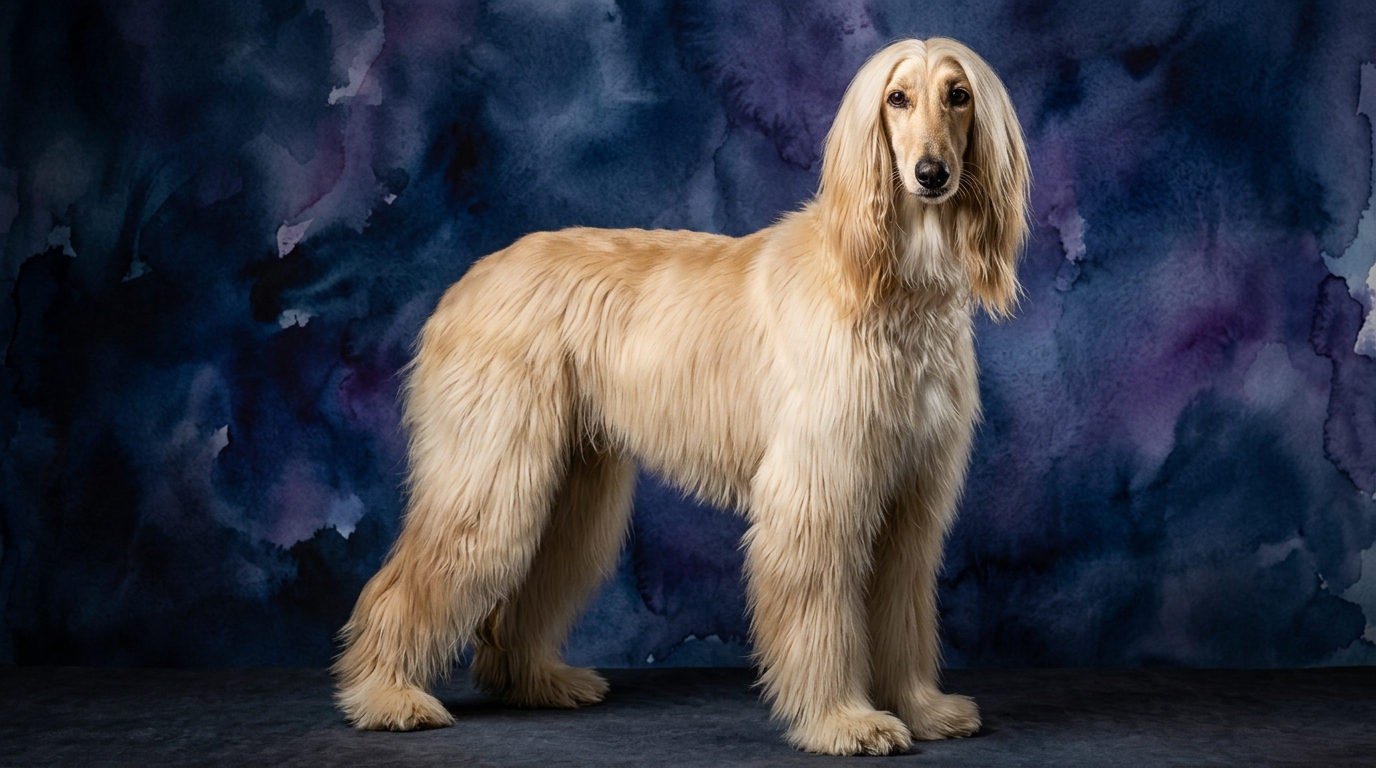
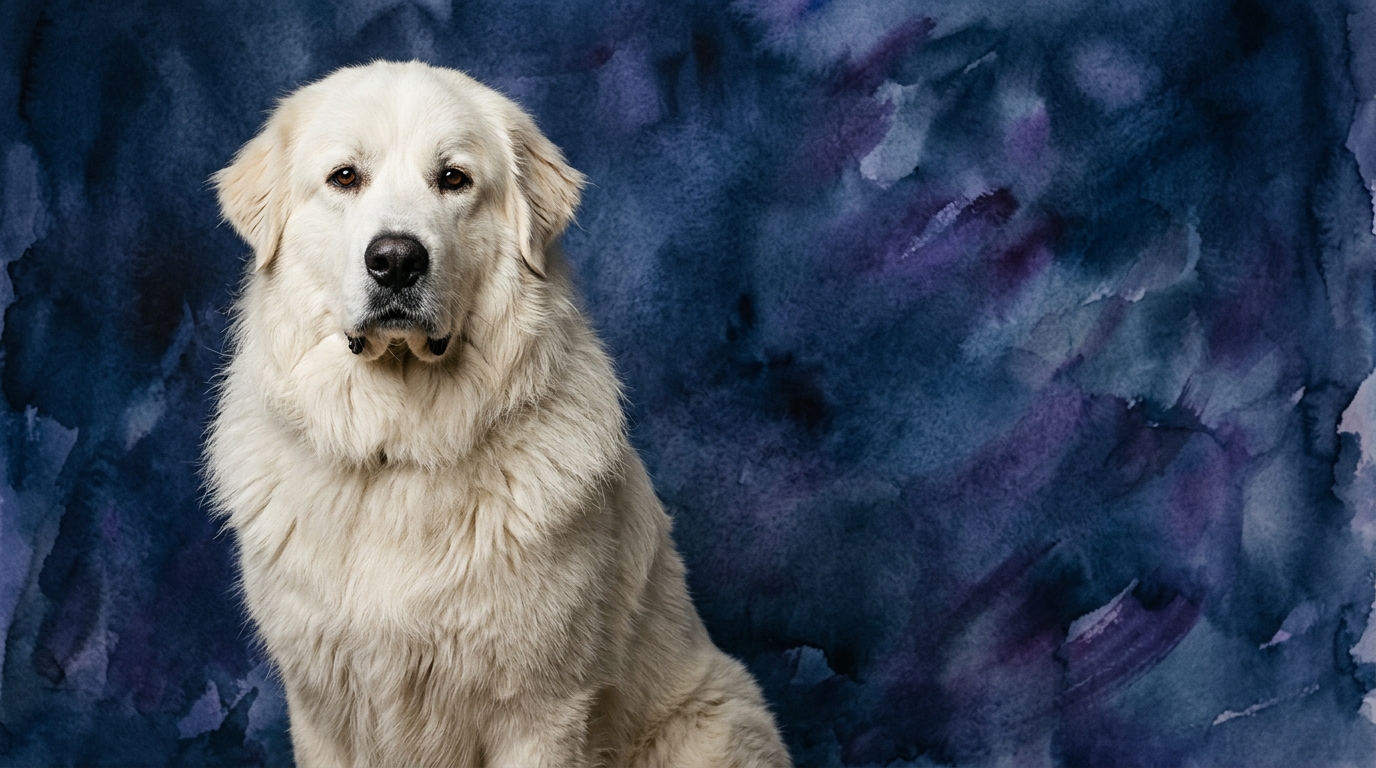
Side-by-side IQ profile
Our Cosmic Pet Pet IQ Lab analysis offers a granular view into the cognitive makeup of these two distinct breeds. The Afghan Hound, ranking #79 in Coren's list, exhibits a remarkable 4/5 in problem-solving, indicating a strong capacity for independent thought and creative solutions when faced with novel challenges. However, its training speed is a modest 1/5, reflecting a highly independent nature that often prioritizes self-directed action over handler instruction, complemented by a lower social intelligence score of 2/5. This breed's instinctive drive is a formidable 5/5, showcasing a powerful intrinsic motivation rooted in its sighthound heritage, while its memory stands at a respectable 3/5.
In contrast, the Great Pyrenees, positioned higher at #64 on Coren's list, presents a more balanced cognitive profile tailored to its role as a livestock guardian. Its problem-solving ability scores 3/5, suggesting practical intelligence focused on its duties rather than abstract puzzles. The Great Pyrenees shows a moderate training speed of 3/5, indicating a willingness to learn but often on its own terms, aligning with its 3/5 social intelligence score which reflects a capacity for connection but also a degree of self-reliance. Its instinctive drive is also 3/5, a steady internal compass guiding its protective instincts, and its memory, like the Afghan Hound, registers at 3/5, sufficient for recalling commands and routines.
Where Afghan Hound wins cognitively
The Afghan Hound truly excels in the realm of independent problem-solving, scoring an impressive 4/5. This breed doesn't wait for direction; it observes, assesses, and devises its own solutions, a trait honed over centuries of hunting without direct human command. This cognitive strength means an Afghan Hound can often navigate complex environments or overcome obstacles with inventive strategies, demonstrating a self-sufficiency that few breeds possess. Furthermore, its exceptionally high instinctive drive of 5/5 means it possesses an unparalleled internal motivation, particularly for activities that align with its sighthound heritage, such as chasing or exploring vast spaces, making it a tireless and focused participant in pursuits it deems worthwhile. This powerful intrinsic motivation, though sometimes challenging for training, is a profound cognitive asset for specific tasks.
Where Great Pyrenees wins cognitively
The Great Pyrenees demonstrates superior cognitive adaptability in areas crucial for its historical role. With a Coren rank of #64 compared to the Afghan Hound's #79, it generally exhibits a greater capacity for working and obedience intelligence. Its training speed, at 3/5, significantly surpasses the Afghan Hound's 1/5, indicating a more receptive and cooperative mindset towards learning human-initiated commands and routines. This breed’s social intelligence, also 3/5, allows for more effective communication and collaboration with its human companions, fostering a stronger bond and a greater willingness to engage in shared activities. These combined traits make the Great Pyrenees more amenable to structured learning environments and more attuned to human social cues, translating into a more predictable and responsive companion in many domestic settings.
Which is easier to train and why
Based on our Pet IQ Lab data, the Great Pyrenees is unequivocally easier to train than the Afghan Hound. The Great Pyrenees' training speed of 3/5, coupled with its social intelligence of 3/5, means it is more inclined to understand and respond to human cues and commands. While still possessing a degree of independence, its historical role as a guardian required it to work in concert with humans to protect livestock, fostering a cooperative learning style. Conversely, the Afghan Hound's training speed of 1/5 and social intelligence of 2/5, combined with an intense instinctive drive of 5/5, paints a picture of a dog that is notoriously difficult to motivate through conventional obedience methods. Their problem-solving abilities are often applied to circumventing rules rather than following them, and their independent nature means they frequently view commands as suggestions rather than directives, requiring immense patience and creative, consistent training approaches.
Which suits active owners vs relaxed owners
For active owners who value a canine companion with immense stamina and a drive for independent exploration, the Afghan Hound is a compelling choice. Its 5/5 instinctive drive and 4/5 problem-solving make it a perfect partner for long, vigorous runs, lure coursing, or activities where it can utilize its keen senses and independent decision-making. These owners must embrace the breed's self-directed nature and provide outlets for its boundless energy and cognitive engagement. In contrast, the Great Pyrenees, with its more moderate instinctive drive (3/5) and balanced social intelligence (3/5), is better suited for owners who appreciate a steadfast, watchful presence and a more relaxed pace. While they require regular exercise and mental stimulation, their activity needs are generally less intense and their temperament more amenable to a less frenetic lifestyle, making them ideal for those seeking a calm, protective companion who enjoys a comfortable home environment.
The Verdict
If you cherish a dog that thinks for itself, thrives on independent activity, and offers a unique, often challenging, but deeply rewarding partnership rooted in ancient instincts, the Afghan Hound is your match.
For those seeking a loyal, protective companion who is more receptive to training and enjoys a more integrated family role, offering a balance of independence and cooperation, the Great Pyrenees will be a more suitable choice.
🧠 Find Your Pet's IQ Score
Our Pet IQ Lab assessment covers 25+ tests across 5 cognitive dimensions — personalized to your breed.
Take the Full IQ Test →Frequently Asked Questions
Does the Afghan Hound's high problem-solving score make it 'smarter' than the Great Pyrenees?
Not necessarily in all contexts. The Afghan Hound excels in independent problem-solving (4/5) for self-directed tasks, while the Great Pyrenees (3/5) demonstrates practical intelligence relevant to its guardian duties and cooperation, making their cognitive strengths different rather than universally superior.
How does instinctive drive impact daily life for these breeds?
The Afghan Hound's 5/5 instinctive drive means a powerful urge to chase and explore, requiring secure containment and constant vigilance, whereas the Great Pyrenees' 3/5 drive focuses more on territorial monitoring and protection, making them less prone to bolt but still requiring mental engagement.
Can a Great Pyrenees be an agility dog?
While the Great Pyrenees has a moderate training speed (3/5) and can learn agility tasks, their large size, protective instincts, and generally lower drive for fast-paced, repetitive commands mean they may not excel in competitive agility compared to more agile, biddable breeds, but can certainly enjoy it recreationally.