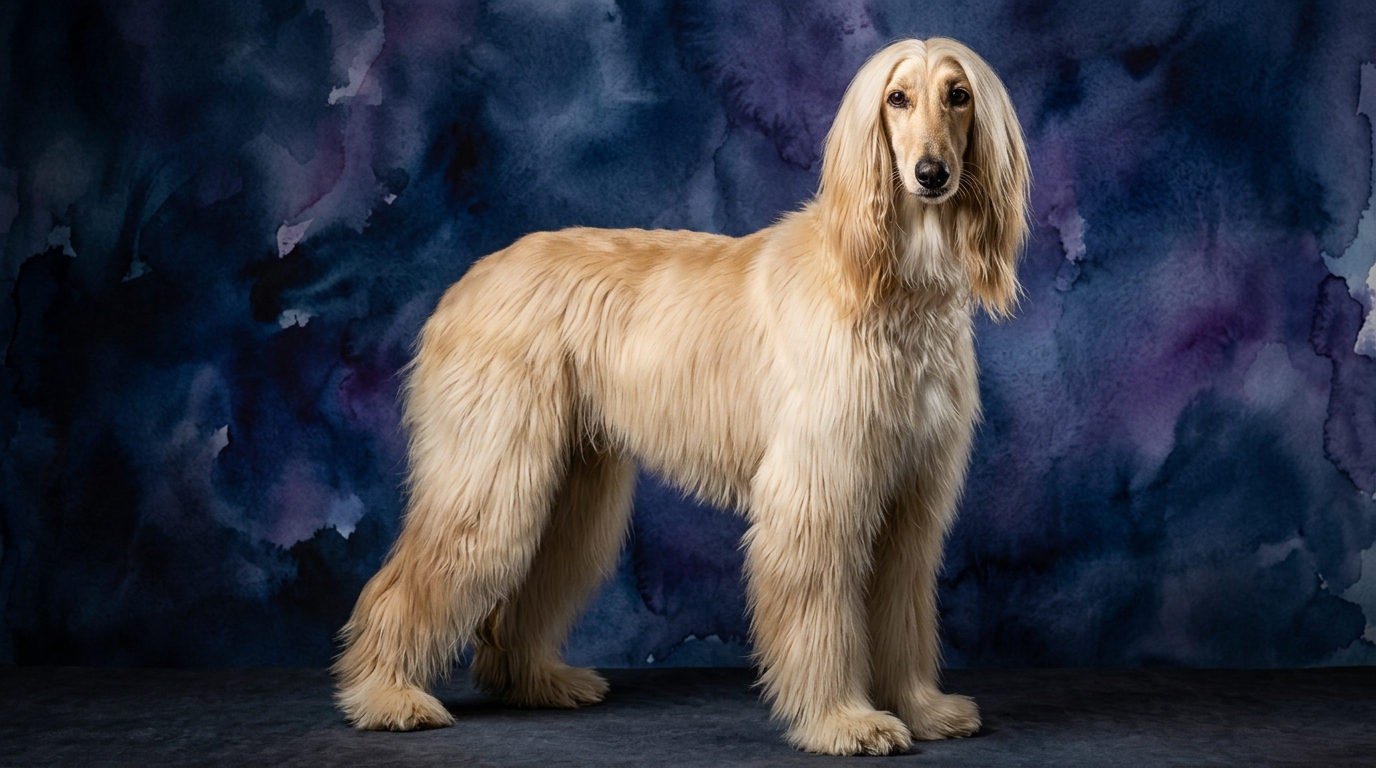
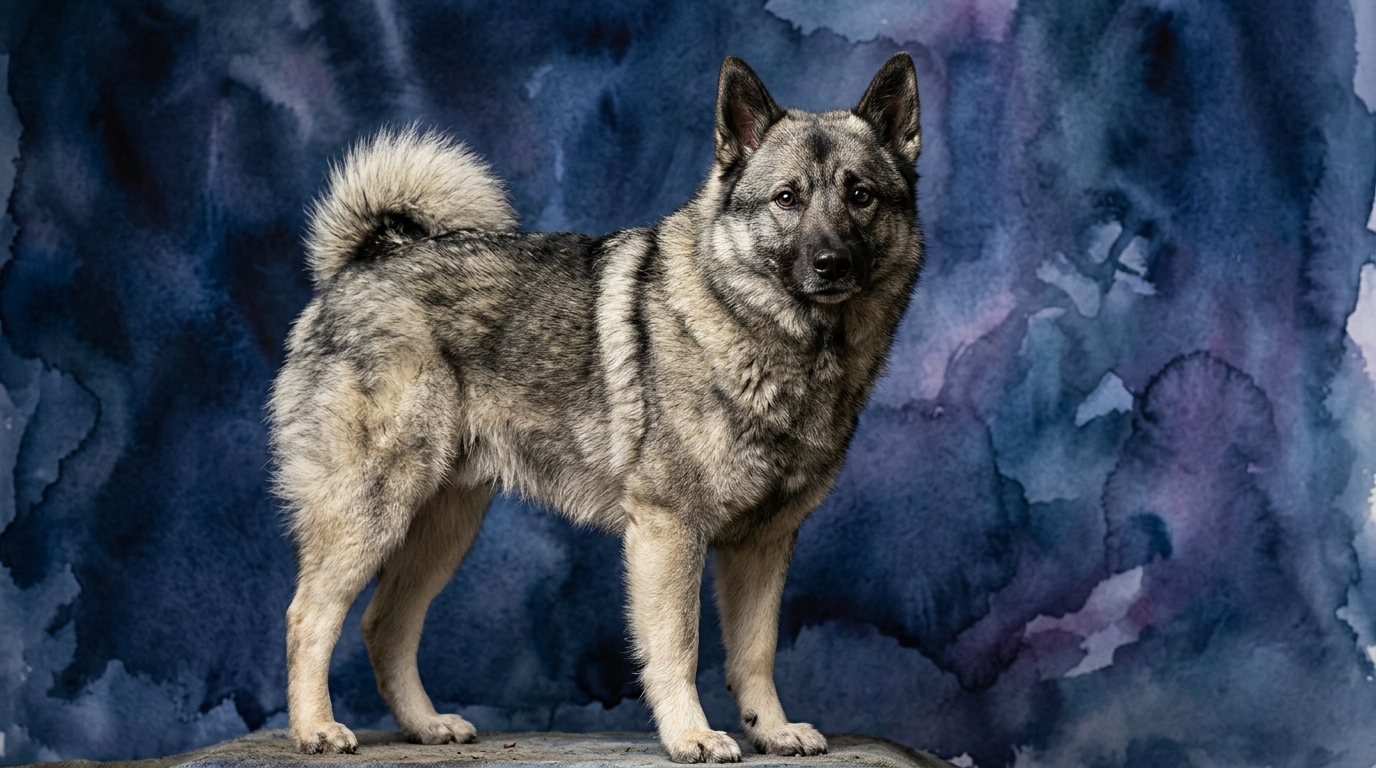
Side-by-Side IQ Profile: Afghan Hound vs. Norwegian Elkhound
The Cosmic Pet Pet IQ Lab employs five key dimensions to assess canine intelligence, offering a nuanced view beyond traditional obedience rankings. For the Afghan Hound, these scores paint a picture of an independent and visually driven intellect. Their Problem Solving is rated at 4/5, indicating a strong capacity for independent thought and creative solutions, particularly when pursuing their own goals or navigating complex terrain during a chase. However, their Training Speed stands at 1/5, reflecting a significant independence that often requires extensive repetition and highly motivating rewards to grasp and consistently perform new commands, as their focus is frequently internal. Social Intelligence is 2/5; while capable of forming deep bonds, Afghan Hounds tend to be more reserved and less attuned to subtle human social cues than many other breeds, interpreting the world through their own highly developed senses and instincts rather than primarily through human interaction. Their Instinctive Drive is a profound 5/5, a sighthound heritage manifesting as an exceptionally powerful urge to chase and pursue, triggered by movement or distant visual stimuli, often overriding other considerations. Finally, their Memory is 3/5, suggesting a functional recall for routines and experiences, though retention of specific, human-imposed commands might be less consistent due to their independent nature.
In contrast, the Norwegian Elkhound's cognitive profile suggests a more collaborative and biddable intelligence. Their Problem Solving also scores 4/5, but this skill is often applied in more cooperative contexts, such as navigating hunting challenges with their handler or figuring out how to manipulate objects to gain access to a desired item. Their Training Speed is a robust 4/5, indicating a strong desire to please and a focused attention span that allows them to learn new commands and routines with relative swiftness, being responsive to positive reinforcement and eager to engage in structured learning. Social Intelligence is 3/5, making them generally more perceptive of human moods, intentions, and communication, striving for cooperation and seeking to understand their owner's expectations. While possessing a distinct hunting heritage, their Instinctive Drive is a more moderate and manageable 3/5, typically focused on scent-tracking and baying rather than pure visual pursuit, and can often be channeled or redirected. Their Memory is 4/5, demonstrating a robust recall for commands, routines, and past experiences, contributing significantly to their trainability and ability to adapt to consistent structures, effectively retaining learned behaviors over time.
Where the Afghan Hound Wins Cognitively
The Afghan Hound's cognitive strengths truly shine in its profound instinctive drive, scoring an exceptional 5/5. This isn't merely a physical attribute, but a driving force behind its unique problem-solving approach and perception of the world. While both breeds score 4/5 in problem-solving, the Afghan's manifests as an unparalleled capacity for independent, self-directed pursuit. When a visual stimulus triggers their chase instinct, their cognitive focus narrows intensely, allowing them to rapidly assess and overcome environmental obstacles to achieve their goal. This translates to an impressive ability to navigate complex outdoor environments, quickly identifying the most efficient path to their quarry, a skill honed over centuries for hunting swift game. Their mental architecture is geared towards autonomous action, making them masters of independent strategy when their deep-seated drive is engaged, showcasing a self-reliant form of intelligence.
Where the Norwegian Elkhound Wins Cognitively
The Norwegian Elkhound's cognitive profile presents a clear advantage in areas of cooperation and structured learning. Their training speed, at 4/5, is significantly higher than the Afghan Hound's 1/5, indicating a much greater readiness and capacity to absorb and respond to human instruction. This efficiency stems from their superior social intelligence, rated 3/5 compared to the Afghan's 2/5, meaning they are more attuned to human cues and more inclined to seek collaborative engagement. Coupled with a stronger memory, scoring 4/5 against the Afghan's 3/5, Elkhounds retain learned behaviors and commands with greater consistency. These combined attributes contribute directly to their higher Coren rank (#36 vs #79), reflecting their predisposition for understanding and executing human directives, making them more pliable and responsive partners in various activities and a more traditional 'working' intelligence.
Which Is Easier to Train and Why
Without question, the Norwegian Elkhound presents a considerably easier training journey for most owners. Their training speed, at 4/5, is dramatically higher, meaning they typically grasp new commands and concepts much faster and with fewer repetitions than the Afghan Hound, which scores a mere 1/5. This efficiency stems from a combination of factors: their enhanced social intelligence (3/5) makes them more attuned to human communication, eager to understand and respond to cues, while their superior memory (4/5) ensures they retain those lessons effectively over time. The Elkhound generally approaches training with a cooperative mindset, viewing it as an engaging interaction with their human, making them highly receptive to traditional positive reinforcement methods and consistent routines. They are often keen to please and will adjust their behavior based on owner feedback.
In contrast, the Afghan Hound's profound instinctive drive (5/5), coupled with lower training speed and social intelligence, means they are often more internally motivated and less naturally inclined to prioritize human directives over their own sensory explorations. Training an Afghan requires immense patience, creativity, and a deep understanding of their independent, sighthound nature, often demanding highly motivating rewards and a willingness to work *with* their instincts rather than against them. For example, recalling an Afghan Hound from a chase can be incredibly difficult because their instinctive drive overrides any prior training or social cues. Their lower biddability means that while they *can* learn complex behaviors, the process is typically extended, requires consistent, dedicated effort, and may never achieve the same level of precision or eagerness seen in an Elkhound.
Which Suits Active Owners vs. Relaxed Owners
Both breeds are generally active, but their cognitive profiles dictate *how* they engage with that activity, making them suitable for different types of active owners. The Norwegian Elkhound, with its moderate instinctive drive (3/5) and higher social intelligence (3/5), thrives with active owners who enjoy collaborative pursuits. They are excellent companions for hiking, jogging, or participating in dog sports like agility or obedience, where their responsiveness and desire to work alongside their human are assets. Their activity needs are often met through engaging, structured interactions, making them well-suited for owners who want a partner in their adventures. For more relaxed owners, an Elkhound might adapt, but would still require consistent mental and physical outlets to prevent boredom and potential destructive behaviors.
The Afghan Hound, conversely, suits active owners who appreciate and can manage a highly independent companion. Their exceptional instinctive drive (5/5) means they require significant outlets for running and chasing, ideally in secure, spacious environments, as their recall can be unreliable when their chase instinct is activated. However, their lower social intelligence (2/5) and training speed (1/5) mean they might not engage in these activities *with* their owner in the same collaborative way as an Elkhound; they are more likely to pursue their own interests independently. An Afghan Hound is less suited for truly relaxed owners, as their powerful internal drives necessitate consistent management and opportunities for expression, even if that expression is largely self-directed. Owners must be prepared to provide extensive, safe off-leash opportunities or engage in sighthound-specific activities like lure coursing to satisfy their profound chase instinct, understanding that their cognitive engagement is often self-serving rather than cooperative.
The Verdict
Choose an Afghan Hound if you are an owner who values a strikingly elegant, independent companion with a profound, self-directed drive, and you are prepared for a long-term commitment to understanding and patiently working with a unique cognitive profile that prioritizes instinct over immediate human directives.
Opt for a Norwegian Elkhound if you seek a more biddable, socially engaged, and responsive partner for an active lifestyle, one that learns readily and thrives on collaborative activities and a structured routine.
🧠 Find Your Pet's IQ Score
Our Pet IQ Lab assessment covers 25+ tests across 5 cognitive dimensions — personalized to your breed.
Take the Full IQ Test →Frequently Asked Questions
Is the Afghan Hound truly less intelligent than the Norwegian Elkhound?
The Coren rank suggests the Afghan Hound is less obediently intelligent, but this comparison reveals they excel in different cognitive areas. Afghan Hounds demonstrate high independent problem-solving and instinctive drive, while Elkhounds show greater social intelligence and training speed, indicating different forms of cognitive strength.
How does 'instinctive drive' impact their daily lives?
For the Afghan Hound (5/5), high instinctive drive means a powerful urge to chase, requiring secure environments and specific outlets like lure coursing to prevent them from pursuing perceived prey. For the Norwegian Elkhound (3/5), their drive is more moderate, often manifested as scent tracking, which can be channeled into structured activities like tracking games or scent work.
Can an Afghan Hound be trained to a high level?
Yes, Afghan Hounds can be trained, but it requires significant patience, consistency, and a deep understanding of their independent nature. Their lower training speed and social intelligence mean they respond best to positive reinforcement and owners who appreciate their unique motivations, rather than expecting immediate, eager compliance.