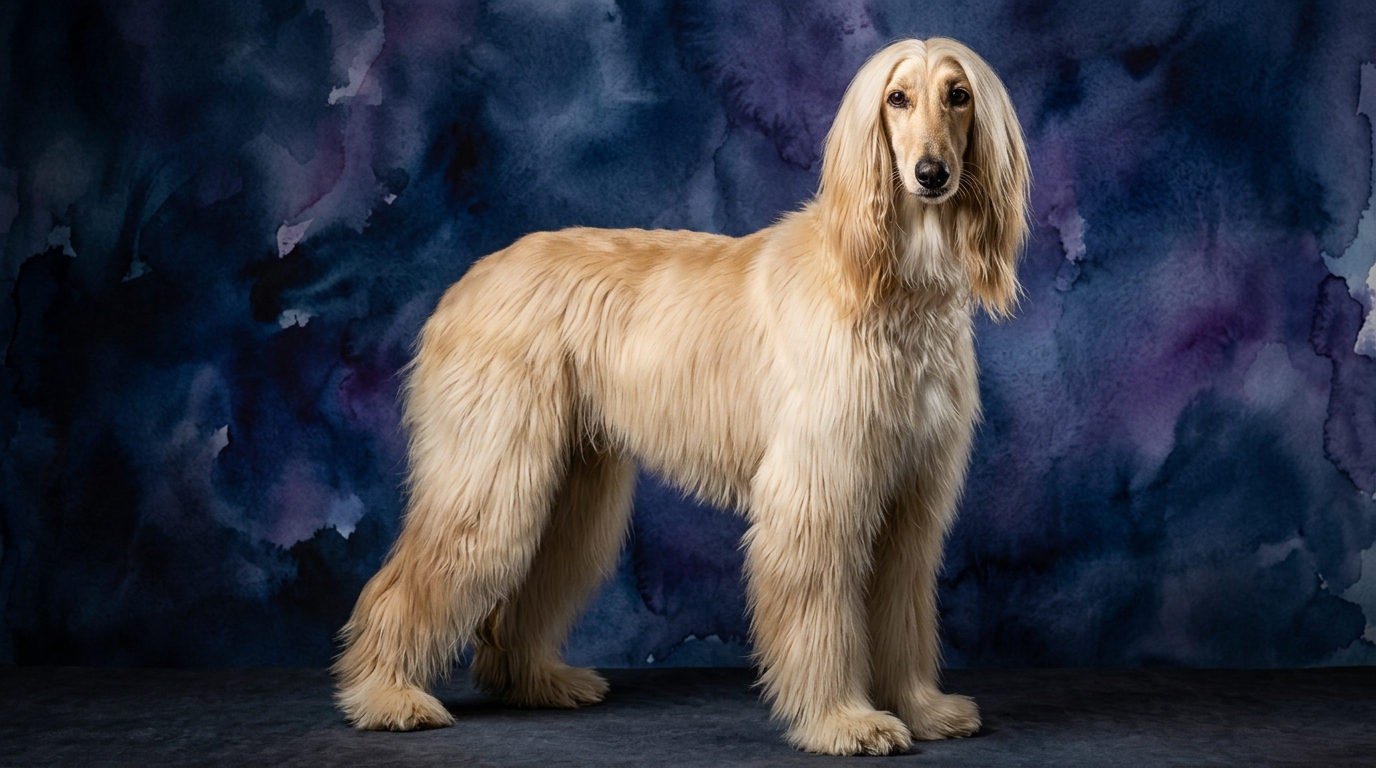
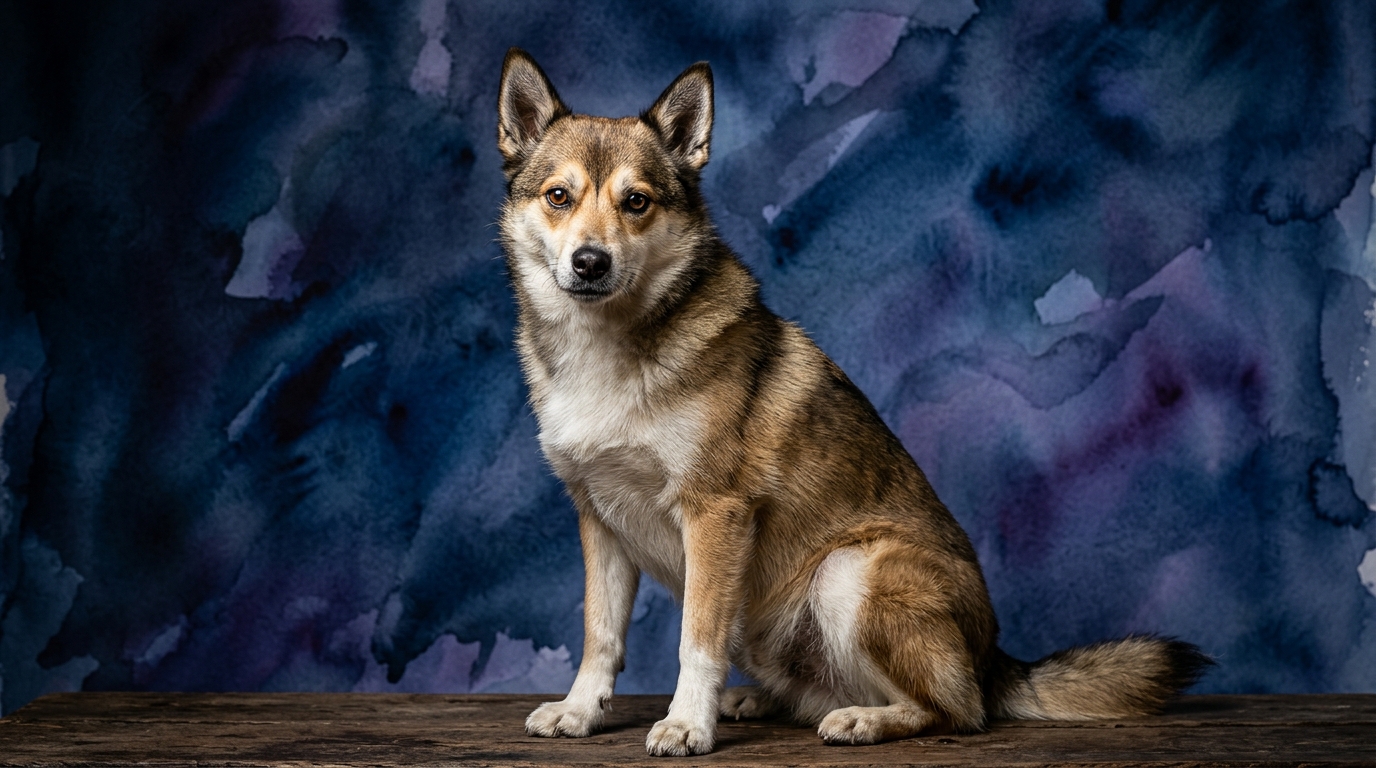
Side-by-Side IQ Profile: Afghan Hound vs. Norwegian Lundehund
The Cosmic Pet Pet IQ Lab employs a five-dimensional framework to assess canine intelligence, offering a nuanced view beyond simple obedience. For the Afghan Hound, a sighthound with a Coren rank of #79, its profile paints a picture of independent thought and strong instincts. Its Problem Solving is rated 4/5, indicating a high capacity for independent strategic thinking, while its Training Speed is a low 1/5, reflecting a breed that often prioritizes its own agenda. Social Intelligence for the Afghan Hound is 2/5, suggesting a reserved nature, but its Instinctive Drive soars at 5/5, a hallmark of its hunting heritage. Memory is assessed at an average 3/5, retaining information relevant to its pursuits and routines.
In contrast, the Norwegian Lundehund, a Non-Sporting breed not Coren-ranked, presents a more balanced cognitive spread. Its Problem Solving is rated 3/5, indicating practical aptitude, while its Training Speed stands at a moderate 3/5, suggesting a reasonable willingness to learn. Social Intelligence is also 3/5, showing a balanced capacity for interaction. The Lundehund's Instinctive Drive is 3/5, present but not overwhelmingly dominant, reflecting its specialized historical role. Finally, its Memory is 3/5, indicating an average ability to recall experiences and learned behaviors, contributing to its adaptability.
Where the Afghan Hound Wins Cognitively
The Afghan Hound truly shines in areas demanding independent thought and powerful instinct. Its Problem Solving score of 4/5 indicates a profound ability to strategize and navigate complex situations on its own terms, often without human prompting. This isn't about solving puzzles for a treat, but rather finding ingenious ways to achieve personal objectives, like figuring out an elaborate escape route from a securely fenced yard. Coupled with an Instinctive Drive rated at 5/5, its cognitive processes are intensely focused on pursuit and observation. This formidable drive means it processes environmental stimuli with a heightened awareness for movement and potential prey, making it exceptionally alert and decisive when its hunting instincts are triggered. Its cognitive strength lies in its self-directed determination and an inherent ability to process external cues through the lens of its ancient sighthound purpose.
Where the Norwegian Lundehund Wins Cognitively
The Norwegian Lundehund demonstrates cognitive strengths in areas revolving around adaptability and balanced engagement. Its Training Speed of 3/5 suggests a more receptive and cooperative mindset compared to the Afghan, making it more amenable to learning and retaining new behaviors with consistent guidance. This moderate pace allows for effective communication between owner and dog without the profound resistance seen in more independent breeds. Furthermore, its Social Intelligence, also rated at 3/5, indicates a balanced capacity for understanding and responding to social cues from both humans and other canines. This allows for smoother integration into diverse social settings, as it is generally more inclined to engage and adapt to group dynamics, showing a greater willingness to participate in shared activities and respond to nuanced social signals.
Which is Easier to Train and Why
Comparing ease of training, the Norwegian Lundehund presents a significantly more straightforward experience due to its balanced cognitive profile. With a Training Speed of 3/5 and Social Intelligence of 3/5, Lundehunds are generally more cooperative and eager to please, responding positively to clear commands and consistent reinforcement. They are less likely to view training as an infringement on their autonomy and more inclined to engage as a partnership. In stark contrast, the Afghan Hound's Training Speed of 1/5 and Social Intelligence of 2/5 make training a considerable challenge. Its strong independent problem-solving often translates into a 'what's in it for me?' attitude, and its reserved social nature means it is less motivated by human approval. Real behavioral differences include the Lundehund's willingness to make eye contact and follow sequential commands, versus the Afghan's tendency to assess a command and decide if it aligns with its immediate desires, often choosing to ignore it if it doesn't.
Which Suits Active Owners vs. Relaxed Owners
The choice between these two breeds depends heavily on an owner's lifestyle and energy levels. The Afghan Hound, with its powerful Instinctive Drive of 5/5, demands an owner capable of providing outlets for its innate need to run and chase. These are not dogs content with short leashed walks; they thrive with opportunities for vigorous, open-field sprinting in secure areas. Its independent Problem Solving also means it requires mentally stimulating environments and owners who can appreciate and manage a self-directed companion. Conversely, the Norwegian Lundehund, with its moderate Instinctive Drive of 3/5, suits a more varied activity level. While it enjoys exploration and regular exercise, it doesn't possess the relentless drive of a sighthound. Its balanced social intelligence also means it is generally more adaptable to different social settings and less prone to intense focus on external stimuli, making it suitable for owners who appreciate a companion that is active but also content with quieter times indoors.
The Verdict
Choose the Afghan Hound if you are an experienced owner who cherishes profound independence and can provide extensive, secure opportunities for vigorous exercise, appreciating a companion that thinks for itself.
Opt for the Norwegian Lundehund if you seek a more adaptable, moderately active companion willing to engage in training and social activities, fitting a balanced lifestyle.
🧠 Find Your Pet's IQ Score
Our Pet IQ Lab assessment covers 25+ tests across 5 cognitive dimensions — personalized to your breed.
Take the Full IQ Test →Frequently Asked Questions
Is the Afghan Hound truly difficult to train, or just independent?
The Afghan Hound is genuinely challenging to train in the traditional sense due to its profound independence and low training speed score. While capable of understanding, they often prioritize their own instincts and desires over human commands, requiring immense patience and highly motivating techniques.
What unique physical traits of the Norwegian Lundehund relate to its intelligence?
The Norwegian Lundehund's unique physical traits, like its six-toed paws and flexible joints, reflect its historical role in navigating treacherous cliffs for puffin hunting. These adaptations suggest an intelligence geared towards environmental navigation and agile problem-solving within a specific, demanding niche.
Do these breeds differ in their ability to live with other pets?
Yes, their cognitive profiles suggest differences. The Afghan Hound's high instinctive drive and lower social intelligence can make living with smaller pets challenging due to its strong prey drive. The Norwegian Lundehund's average social intelligence and moderate instinctive drive generally make it more adaptable to cohabiting with other pets, especially if introduced thoughtfully.