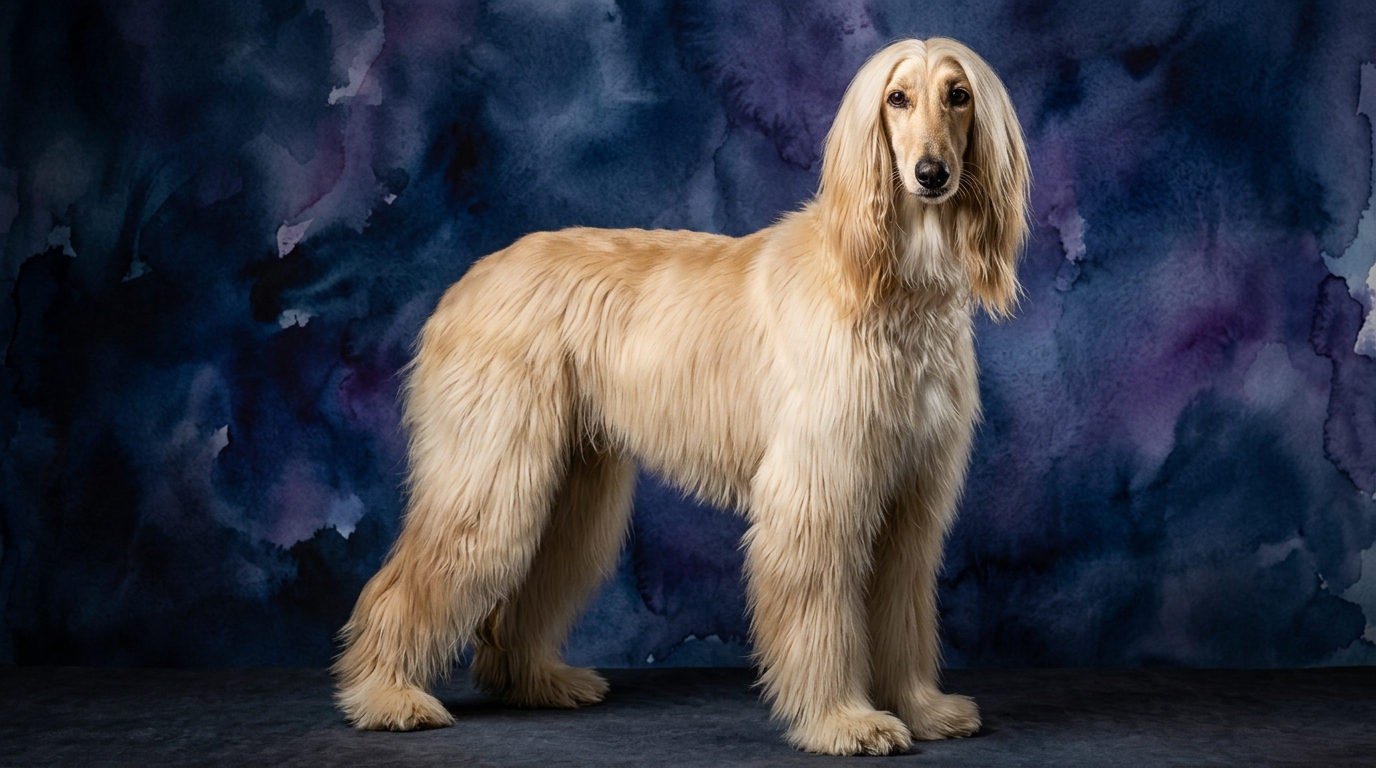
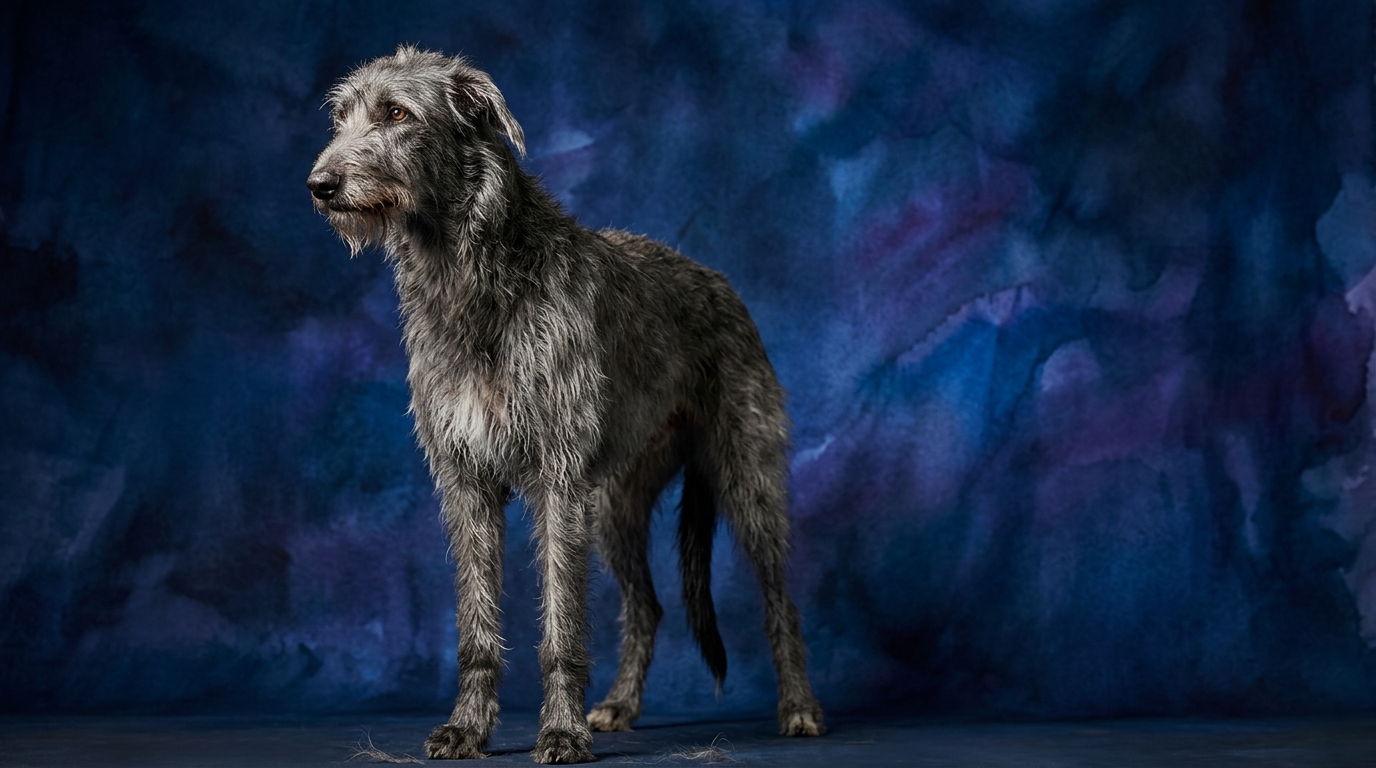
Side-by-Side Cognitive Profile: Afghan Hound vs. Scottish Deerhound
The Afghan Hound presents a unique cognitive blueprint, reflecting its heritage as an independent hunter in challenging terrains. Its Problem Solving score of 4/5 indicates a strong capacity for autonomous thought and strategic action, often devising its own methods to achieve desired outcomes. However, this independence translates to a Training Speed of 1/5, meaning they require exceptionally patient and creative approaches, as they often perceive little inherent value in repetitive drills. Their Social Intelligence at 2/5 suggests a reserved nature, forming deep bonds with a select few but generally remaining aloof or indifferent towards strangers. A dominant Instinctive Drive of 5/5 highlights their profound prey drive and acute sensitivity to movement, a hallmark of their sighthound lineage. Finally, their Memory at 3/5 is quite capable, particularly for spatial navigation and patterns relevant to their environment, though they may selectively apply it to human-initiated tasks.
In contrast, the Scottish Deerhound offers a more balanced cognitive profile, befitting its role as a noble yet cooperative hunter. With a Problem Solving score of 3/5, they are capable of assessing situations and making decisions, often showing a propensity to involve their human companions in the process rather than acting entirely independently. Their Training Speed of 3/5 is notably more amenable than their Afghan counterparts, responding well to positive reinforcement and consistent guidance, demonstrating a moderate willingness to engage in structured learning. Social Intelligence also scores 3/5, indicating a generally gentle and amiable disposition, capable of forming strong family bonds and typically displaying polite, though not overtly effusive, interactions with new people. Their Instinctive Drive, also at 3/5, is present as a sighthound’s desire to chase, but it often manifests with a slightly softer edge, allowing for more manageable training in controlled settings. Their Memory, at 3/5, is reliable for retaining routines and commands, especially when associated with positive experiences, ensuring learned behaviors are maintained over time.
Where the Afghan Hound Cognitively Excels
The Afghan Hound’s primary cognitive strength lies in its exceptional problem-solving abilities and its unparalleled instinctive drive. Their Problem Solving score of 4/5 isn't about rote learning, but about their capacity for independent reasoning. Faced with an obstacle or a desired object, an Afghan Hound is likely to strategize and execute a plan on its own terms, often displaying remarkable ingenuity in navigating complex environments or outsmarting perceived barriers. This mental agility is a direct inheritance from their ancestral role, where survival depended on quick, self-reliant decisions in vast, often harsh landscapes.
Furthermore, their Instinctive Drive, rated at a formidable 5/5, is a testament to their deep-seated predatory instincts. This isn't merely a desire to chase; it's a profound attunement to movement, speed, and the thrill of the pursuit. This intense drive means they are incredibly focused and determined when their natural instincts are engaged, demonstrating a single-mindedness that can be awe-inspiring. While this strong drive can present training challenges in distracting environments, it underscores a cognitive specialization for their original purpose that few breeds can match.
Where the Scottish Deerhound Cognitively Shines
The Scottish Deerhound's cognitive advantages manifest in its more balanced temperament, particularly in areas of training and social engagement. With a Training Speed of 3/5, they demonstrate a greater willingness to participate in human-directed learning compared to the Afghan Hound. This doesn't imply a blind obedience, but rather a capacity for understanding and responding to cues with a reasonable degree of consistency, making them more approachable for owners seeking a responsive companion. Their cognitive framework allows for more effective communication and cooperation in structured settings.
Moreover, their Social Intelligence, also rated 3/5, highlights their generally amiable and gentle nature. While they retain a sighthound's dignity, they are typically more open to forming social connections beyond their immediate family circle, showing politeness and a calm demeanor around new people or other animals. This balanced social aptitude means they are often more adaptable to diverse social situations, processing new interactions with a measured curiosity rather than the Afghan Hound's typical reservation. This makes them cognitively well-suited for integration into various family dynamics and public settings.
Training Dynamics: Which is Easier and Why?
When it comes to ease of training, the Scottish Deerhound generally presents a more straightforward experience due to its Training Speed of 3/5 compared to the Afghan Hound's 1/5. The Deerhound's greater biddability stems from a cognitive inclination to cooperate and a moderate desire to please its human companions. While still an independent sighthound, they are often more receptive to positive reinforcement, food motivation, and consistent, fair methods. They tend to understand the 'why' behind commands more readily and are less likely to view repetitive tasks as beneath them, making the learning process more collaborative.
The Afghan Hound's cognitive independence, while a strength in problem-solving, poses significant challenges in traditional obedience training. Their low Training Speed reflects their tendency to question commands, evaluate their personal benefit, and prioritize their own agenda. They are not unintelligent; rather, they are highly discerning and often perceive repetitive drills as tedious and unnecessary. Training an Afghan Hound requires immense patience, creative engagement, and a deep understanding of their unique motivations, often relying on making training feel like their idea or a fun game rather than a command to be followed, directly reflecting their innate self-reliance.
Lifestyle Suitability: Active vs. Relaxed Owners
For owners seeking a highly active partner who respects a dog’s profound independence, the Afghan Hound offers a compelling match. Their high Instinctive Drive (5/5) means they thrive with opportunities for long, vigorous runs in secure areas where they can truly stretch out and engage their natural pursuit behaviors. This isn't a breed for casual strolls; they require consistent, intense physical outlets to satisfy their cognitive and physical needs. Owners must also be prepared to engage with their Afghan's formidable problem-solving skills, which might manifest as finding novel ways to open doors or achieve their goals, requiring an owner who appreciates and can gently manage this independent ingenuity.
The Scottish Deerhound, while still requiring substantial exercise, often suits an owner who desires an active companion with a slightly more relaxed and biddable disposition. Their moderate Instinctive Drive (3/5) means they enjoy a good run, but are often content to then settle peacefully indoors with their family. Their more balanced Social Intelligence and Training Speed make them adaptable to a wider range of activities, from hiking to potentially some dog sports, provided the owner understands their sighthound nature. They offer a blend of majestic athleticism and gentle companionship, appealing to owners who want an active dog that also integrates smoothly into a calm home environment after their exercise needs are met.
The Verdict: When to Choose Each Majestic Sighthound
The Verdict
Choose the Afghan Hound if you are an experienced owner who values profound canine independence, appreciates a dog with strong problem-solving prowess, and is prepared for a unique, often challenging, but deeply rewarding training journey that respects their spirited autonomy.
Opt for the Scottish Deerhound if you seek a majestic, gentle giant that is more amenable to training, possesses a balanced social nature, and offers a harmonious blend of athletic capability and serene companionship within a family setting.
🧠 Find Your Pet's IQ Score
Our Pet IQ Lab assessment covers 25+ tests across 5 cognitive dimensions — personalized to your breed.
Take the Full IQ Test →Frequently Asked Questions
Are Afghan Hounds truly difficult to train?
Afghan Hounds are not 'difficult' in the sense of lacking capacity, but rather 'challenging' due to their extreme independence and low motivation for repetitive tasks. Their cognitive makeup means they often prefer to make their own decisions, requiring owners to employ highly engaging, positive, and creative training methods that appeal to their natural instincts rather than relying on traditional obedience.
Do Scottish Deerhounds have a strong prey drive?
Yes, Scottish Deerhounds possess a sighthound's instinctive drive, rated at 3/5, meaning they are compelled to chase moving objects. While often slightly less intense than some other sighthounds, it is crucial to keep them in secure, fenced areas and on a leash in unfenced spaces to prevent them from pursuing perceived prey.
Which breed is better with children or other pets?
Based on their social intelligence scores, the Scottish Deerhound (3/5) is generally considered more amiable and patient, often integrating well into families with older, respectful children and other pets, especially if raised together. The Afghan Hound (2/5) is more reserved and may prefer a quieter environment, requiring careful introductions and supervision with children and other animals due to their independent nature and strong prey drive.