Side-by-Side Cognitive Profiles at The Cosmic Pet Pet IQ Lab
The Cosmic Pet Pet IQ Lab's data illuminates the distinct cognitive strengths and challenges of the Afghan Hound and Tibetan Mastiff. Understanding these profiles is key to appreciating their unique mental landscapes.
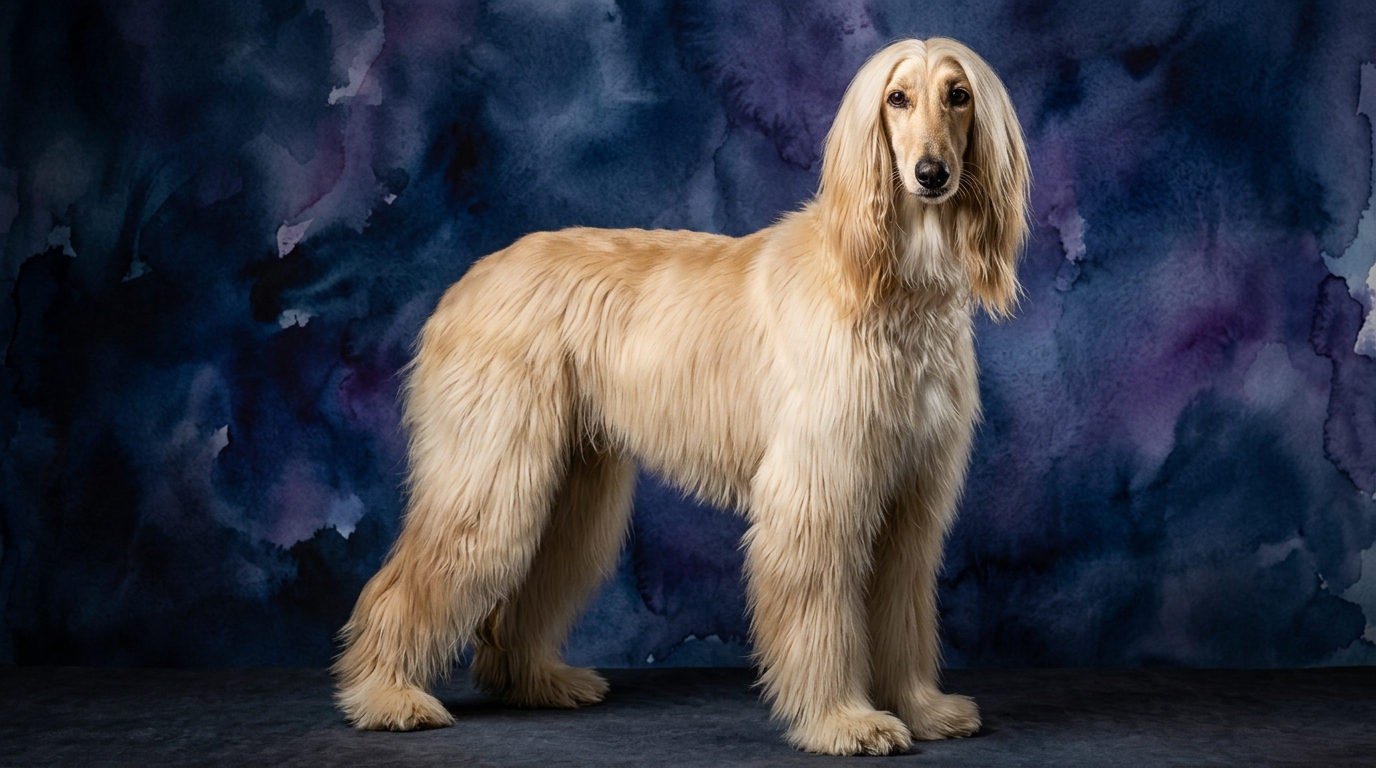
Afghan Hound (Hound, Coren Rank #79): This breed’s cognitive makeup is heavily influenced by its sighthound heritage. Their Problem Solving is rated 4/5, indicating a strong capacity for independent decision-making, particularly when pursuing a goal. Training Speed scores a challenging 1/5, reflecting their independent nature and often self-willed approach to directives. Social Intelligence is 2/5, as they can be reserved with strangers, preferring their immediate family. Their Instinctive Drive is a perfect 5/5, dominated by an intense prey drive and the urge to chase. Memory is a moderate 3/5, sufficient for routines but sometimes overshadowed by instinct.
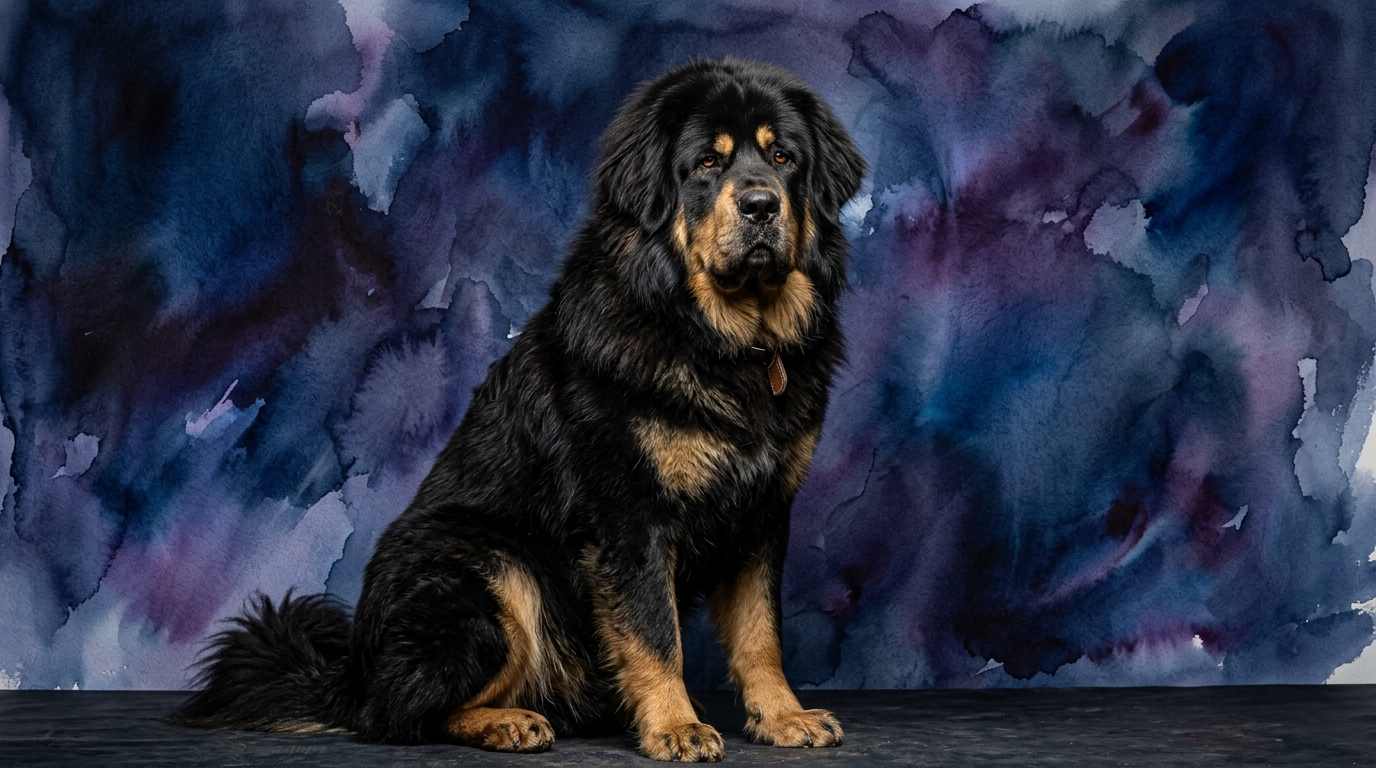
Tibetan Mastiff (Working, Not Coren-Ranked): The Tibetan Mastiff presents a more balanced cognitive profile, befitting its role as a steadfast guardian. Their Problem Solving is 3/5, often applied to territorial assessment and protection strategies. Training Speed is 3/5, suggesting a moderate ability to learn and respond with consistent guidance. Social Intelligence is also 3/5, characterized by deep family loyalty and wariness towards outsiders. Instinctive Drive is 3/5, primarily focused on guarding and territorial surveillance rather than chase. Memory is 3/5, enabling them to retain boundaries, routines, and social distinctions effectively.
Where the Afghan Hound Excels Cognitively
The Afghan Hound’s cognitive strengths primarily lie in their advanced problem-solving capabilities when driven by instinct, scoring a 4/5. Unlike breeds that might wait for direction, an Afghan Hound will independently assess a situation and devise a course of action, especially if it involves pursuing something in motion. This translates into a dog that can navigate complex environments and strategize during a chase, showcasing a remarkable ability to think on their paws. Their instinctive drive, rated at a perfect 5/5, is the engine behind much of this cognitive prowess, enabling them to focus intensely and relentlessly on a goal, often to the exclusion of other stimuli. This singular focus, while challenging for training, is a testament to their specialized mental architecture honed for centuries of independent hunting.
Where the Tibetan Mastiff Shines Cognitively
The Tibetan Mastiff's cognitive profile reveals a more balanced intelligence, with consistent 3/5 scores across problem-solving, training speed, social intelligence, instinctive drive, and memory. This balance makes them profoundly capable in their historical role as guardians. Their problem-solving (3/5) is often applied to assessing potential threats and determining the most effective way to secure their territory, relying on observation and strategic positioning. Their social intelligence (3/5) allows them to discern friend from foe and form deep, protective bonds with their family, understanding the social dynamics within their household. Furthermore, their moderate training speed (3/5) indicates a capacity for learning and retaining commands, provided the handler approaches them with respect for their independent nature, making them more adaptable to structured learning than the Afghan Hound.
Trainability: A Tale of Two Temperaments
When considering which breed is easier to train, the Tibetan Mastiff clearly has an edge over the Afghan Hound. The Afghan Hound’s training speed is rated a challenging 1/5. Their independent nature and formidable instinctive drive (5/5) mean they often prioritize their own agenda over human directives. Asking an Afghan to ignore a squirrel and return on command can feel like asking a fish to climb a tree; their brain is simply wired for the chase. This isn't a lack of capacity to understand, but rather a profound lack of motivation to comply when their instincts are engaged. They require incredibly patient, consistent, and creative training methods, often relying on positive reinforcement that makes compliance more rewarding than their independent pursuits.
In contrast, the Tibetan Mastiff scores a moderate 3/5 in training speed. While they possess an independent streak characteristic of guardian breeds, they are generally more amenable to learning and obeying commands. Their instinctive drive (3/5) is focused on protection rather than chase, making them less prone to sudden, overwhelming distractions from their environment. They respond well to a confident, consistent leader who earns their respect. Training a Tibetan Mastiff involves establishing clear boundaries and expectations, fostering a working relationship built on trust. While not a breed for novice owners, their willingness to engage in structured learning makes them significantly more trainable than the Afghan Hound.
Matching Owners: Active Pursuits vs. Steadfast Guardianship
The Afghan Hound, with its boundless instinctive drive (5/5) and need for physical exertion, is best suited for highly active owners who appreciate their independent spirit and can provide ample opportunities for supervised running and exploration. Their mental stimulation often comes from engaging their sighthound instincts, whether through lure coursing, extensive off-leash (in secure areas) running, or scent work. Owners must be prepared for a dog that may not always seek direct engagement but rather thrives on fulfilling its internal motivations. This breed demands an owner who understands and respects their unique blend of elegance and primal drive, valuing a companion that finds joy in movement and sensory exploration.
The Tibetan Mastiff, on the other hand, aligns more with relaxed owners who seek a steadfast, watchful companion and have a spacious, secure property. While they need regular exercise to maintain their health, their activity level is generally moderate, focusing more on patrolling their domain than high-speed pursuits. Their cognitive strengths are best utilized when they can observe and protect their family and property. Owners must be prepared for a breed that is naturally reserved with strangers and requires careful socialization from a young age to channel their protective instincts appropriately. This breed suits those who appreciate a formidable, loyal presence and are committed to consistent, calm leadership, providing a stable environment where their guardian instincts can be fulfilled responsibly.
The Verdict
Choose the Afghan Hound if you are an experienced, active owner who values an independent, elegant companion with a powerful drive for chase and can commit to extensive exercise and patient, creative training methods.
Opt for the Tibetan Mastiff if you are a calm, confident owner with a secure property, seeking a deeply loyal, protective guardian who thrives on stability and clear, consistent leadership, accepting their reserved nature.
🧠 Find Your Pet's IQ Score
Our Pet IQ Lab assessment covers 25+ tests across 5 cognitive dimensions — personalized to your breed.
Take the Full IQ Test →Frequently Asked Questions
Is the Afghan Hound truly difficult to train, or do they just need a specific approach?
Afghan Hounds are genuinely challenging to train in conventional obedience due to their low training speed (1/5) and overwhelming instinctive drive (5/5). They require immense patience, positive reinforcement, and methods that tap into their independent problem-solving rather than rote compliance.
How does the Tibetan Mastiff's social intelligence impact its interaction with families and strangers?
The Tibetan Mastiff's social intelligence (3/5) means they form deep bonds with their family but are naturally wary of strangers. Early and ongoing socialization is crucial to ensure they discern true threats from benign visitors, enabling them to be protective without being aggressive.
Given their different drives, what kind of mental stimulation is best for each breed?
For the Afghan Hound, mental stimulation should engage their chase drive, like lure coursing or flirt pole games, and opportunities for independent exploration. For the Tibetan Mastiff, activities that allow them to "guard" or observe, like puzzle toys, perimeter walks, and clear boundaries, fulfill their cognitive needs.