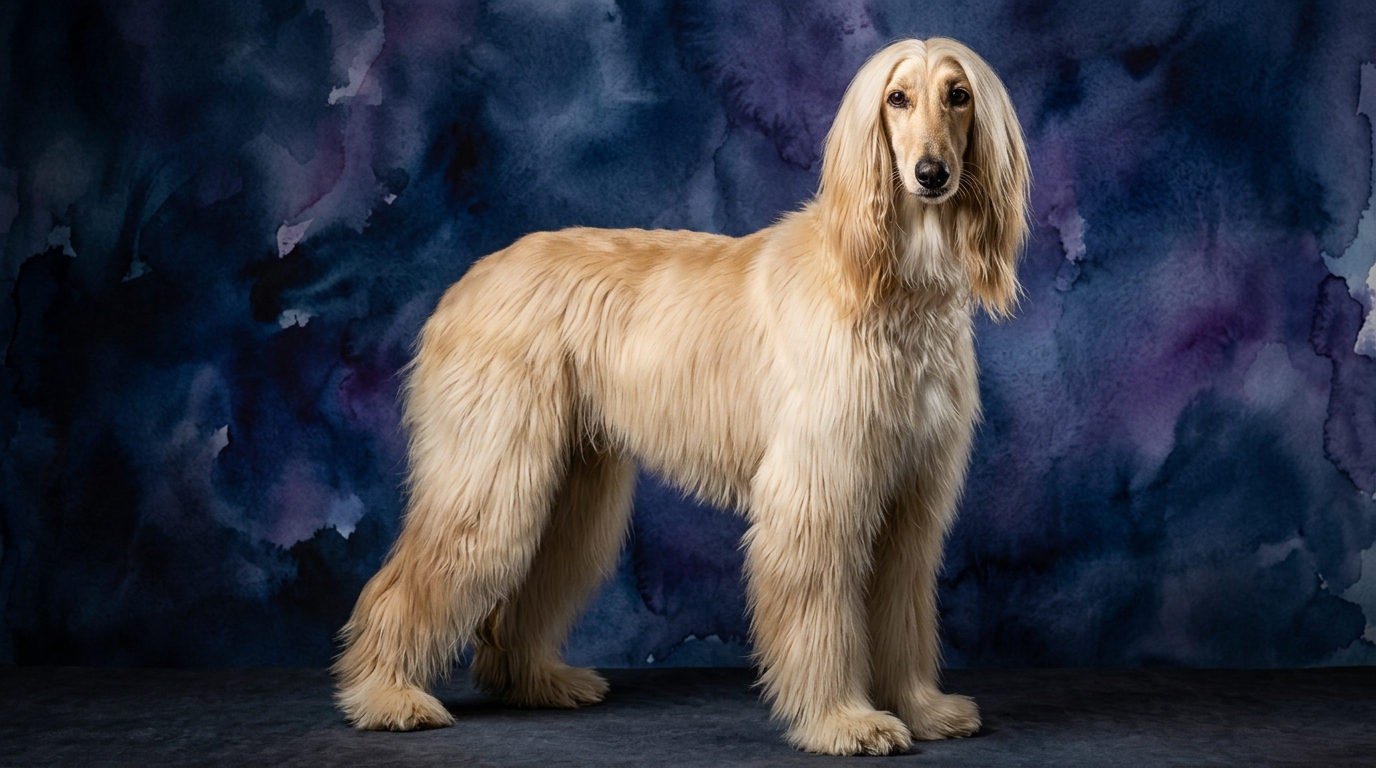
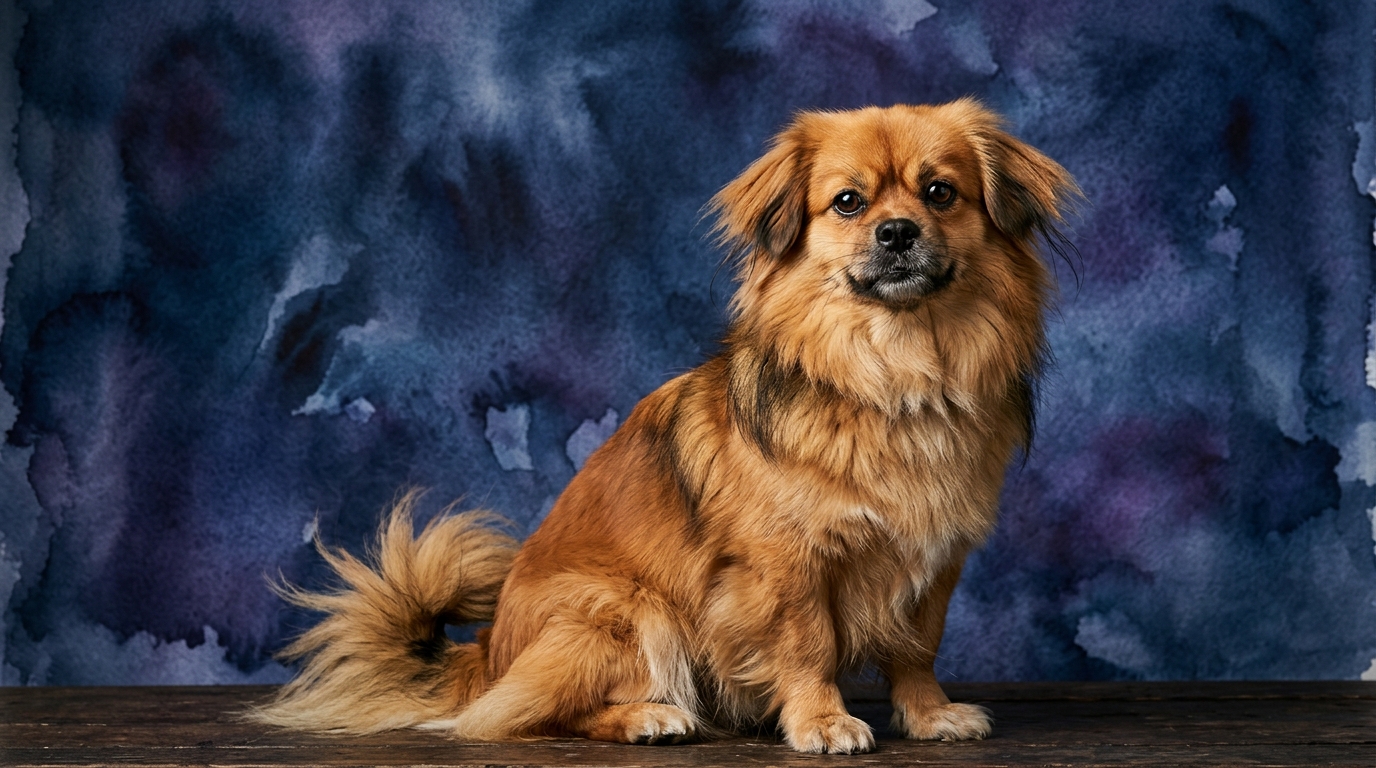
Side-by-Side Cognitive Profiles
Delving into the cognitive landscape of the Afghan Hound and the Tibetan Spaniel reveals fascinating distinctions across five key dimensions. These profiles offer a window into their inherent predispositions and how they engage with their environment and human companions.
The Afghan Hound, a breed steeped in ancient history, possesses a unique cognitive makeup. Their Problem Solving is rated at 4/5, indicating a strong capacity for independent thought and finding solutions, often without human direction. However, this self-reliance translates to a Training Speed of 1/5, making them notoriously challenging to instruct, as their motivation to comply with human commands can be low. Social Intelligence scores 2/5; they are often reserved and somewhat aloof, not highly focused on human emotional cues. Their Instinctive Drive is a powerful 5/5, reflecting a deep-seated hunting heritage with an intense focus on chase and prey. Memory stands at 3/5, meaning they retain experiences and routines, though this doesn't guarantee obedience.
In contrast, the Tibetan Spaniel presents a more balanced and companion-oriented cognitive profile. Their Problem Solving is 3/5, suggesting a moderate ability to navigate challenges using learned behaviors and observation. Training Speed is 3/5, indicating they are generally receptive to learning and respond well to positive reinforcement, though they can have their moments of independent thought. Social Intelligence also scores 3/5; they are attentive to human moods and enjoy interaction, often seeking companionship. Their Instinctive Drive is 3/5, manifesting more as an alert, watchful nature rather than a strong prey drive. Memory is 3/5, solidifying their capacity to recall commands and adapt to routines, contributing to their overall trainability and domestic integration.
Where the Afghan Hound Excels Cognitively
The Afghan Hound’s cognitive strengths are deeply rooted in its original purpose as a sighthound, hunting independently across vast, rugged terrains. Their Problem Solving ability, rated at 4/5, truly shines in scenarios demanding self-sufficiency and quick, autonomous decisions. For instance, an Afghan Hound might expertly navigate a complex outdoor environment, finding the most efficient path or identifying a subtle change in their surroundings without needing human guidance, driven by their own objectives.
Furthermore, their Instinctive Drive, a formidable 5/5, is a profound cognitive advantage in specific contexts. This manifests as an unparalleled focus and relentless pursuit when a target, real or perceived, captures their attention. This deep-seated drive, crucial for tracking, chasing, and cornering prey, involves a sophisticated interplay of sensory perception and single-minded determination that few other breeds possess to the same degree, making them exceptional in activities like lure coursing.
Where the Tibetan Spaniel Shines Cognitively
The Tibetan Spaniel’s cognitive advantages lean towards adaptability and social integration, making them excellent companions. Their Training Speed, rated at 3/5, is a significant win compared to the Afghan Hound. This means they are generally more eager to learn and respond positively to consistent training methods, quickly grasping new commands and routines, which simplifies the training journey considerably for most households.
Equally important is their Social Intelligence, also rated at 3/5. This indicates a greater attunement to human emotional states and social cues. A Tibetan Spaniel is more likely to pick up on their owner's mood, offering comfort or initiating play at appropriate times. This cognitive trait allows them to form deeper, more responsive bonds, integrating seamlessly into family life and making them highly intuitive and engaging pets. Their balanced cognitive profile also supports general adaptability to various living situations.
Training: A Tale of Two Temperaments
When it comes to ease of training, the Tibetan Spaniel undeniably holds the advantage, and their respective cognitive profiles clearly explain why. The Tibetan Spaniel’s 3/5 Training Speed and 3/5 Social Intelligence create a strong foundation for effective learning. They are generally cooperative and motivated by positive interaction and rewards, often viewing training as a collaborative activity with their human. Their attentiveness to social cues means they are more likely to understand what is being asked of them and adjust their behavior accordingly, typically responding to commands with reasonable consistency.
The Afghan Hound, however, presents a significant challenge, reflected in their 1/5 Training Speed and 2/5 Social Intelligence. Their strong independent Problem Solving (4/5) and overwhelming Instinctive Drive (5/5) mean they are often more interested in pursuing their own agenda than in pleasing a human. An Afghan Hound might understand a command perfectly but choose to ignore it if it conflicts with a more pressing sensory input, such as a distant movement. Teaching off-leash recall in an open area can be an arduous task, as their powerful prey drive can override any learned command in an instant, demonstrating their cognitive priorities are not always aligned with human expectations.
Matching Canine Minds to Owner Lifestyles
The cognitive differences between the Afghan Hound and the Tibetan Spaniel dictate which breed is better suited for active versus relaxed owners. An Afghan Hound thrives with an active owner who understands and respects their profound need for physical exertion and mental engagement. Their 5/5 Instinctive Drive means they require ample opportunities to run, chase, and explore in secure environments. Owners who enjoy long runs, hiking, or participating in activities like lure coursing will find a rewarding partnership, but must be prepared to manage their powerful chase drive and commit to extensive socialization.
Conversely, the Tibetan Spaniel is an ideal match for more relaxed owners who appreciate a devoted, interactive companion without demanding intense physical activity. While they enjoy daily walks and playtime, their moderate instinctive drive means they are equally content to curl up on the couch. Their 3/5 Social Intelligence makes them adaptable and eager to participate in family life, finding joy in close proximity and interaction. Owners who prefer a less strenuous routine and seek a dog that is highly attuned to their presence will find a Tibetan Spaniel to be a delightful fit, integrating smoothly into various home environments.
The Verdict
Choose an Afghan Hound if you are an experienced, active owner who appreciates a magnificent, independent thinker with a strong will and are prepared to meet their significant exercise and unique training demands.
Choose a Tibetan Spaniel if you desire an amiable, socially intelligent companion that is more amenable to training and thrives on close interaction within a less demanding, more adaptable lifestyle.
🧠 Find Your Pet's IQ Score
Our Pet IQ Lab assessment covers 25+ tests across 5 cognitive dimensions — personalized to your breed.
Take the Full IQ Test →Frequently Asked Questions
Are Afghan Hounds truly untrainable?
No, Afghan Hounds are not untrainable, but their training requires immense patience, consistency, and a deep understanding of their independent nature. Success often comes from making training a game, focusing on positive reinforcement, and acknowledging that their cognitive priorities might differ from typical companion breeds.
Do Tibetan Spaniels have a strong prey drive?
Tibetan Spaniels have a moderate instinctive drive (3/5), which typically manifests as alert barking and a watchful nature rather than a strong prey drive for chasing small animals. They are more focused on their human companions and guarding their territory through vocalizations.
How do their Coren ranks compare?
The Afghan Hound is ranked #79 in Coren's intelligence list, indicating significant challenges in obedience and working intelligence due to their independent thinking. The Tibetan Spaniel is not listed in Coren's rankings, suggesting its cognitive profile emphasizes social and companion-oriented intelligence over strict obedience, placing it in a more adaptable category.