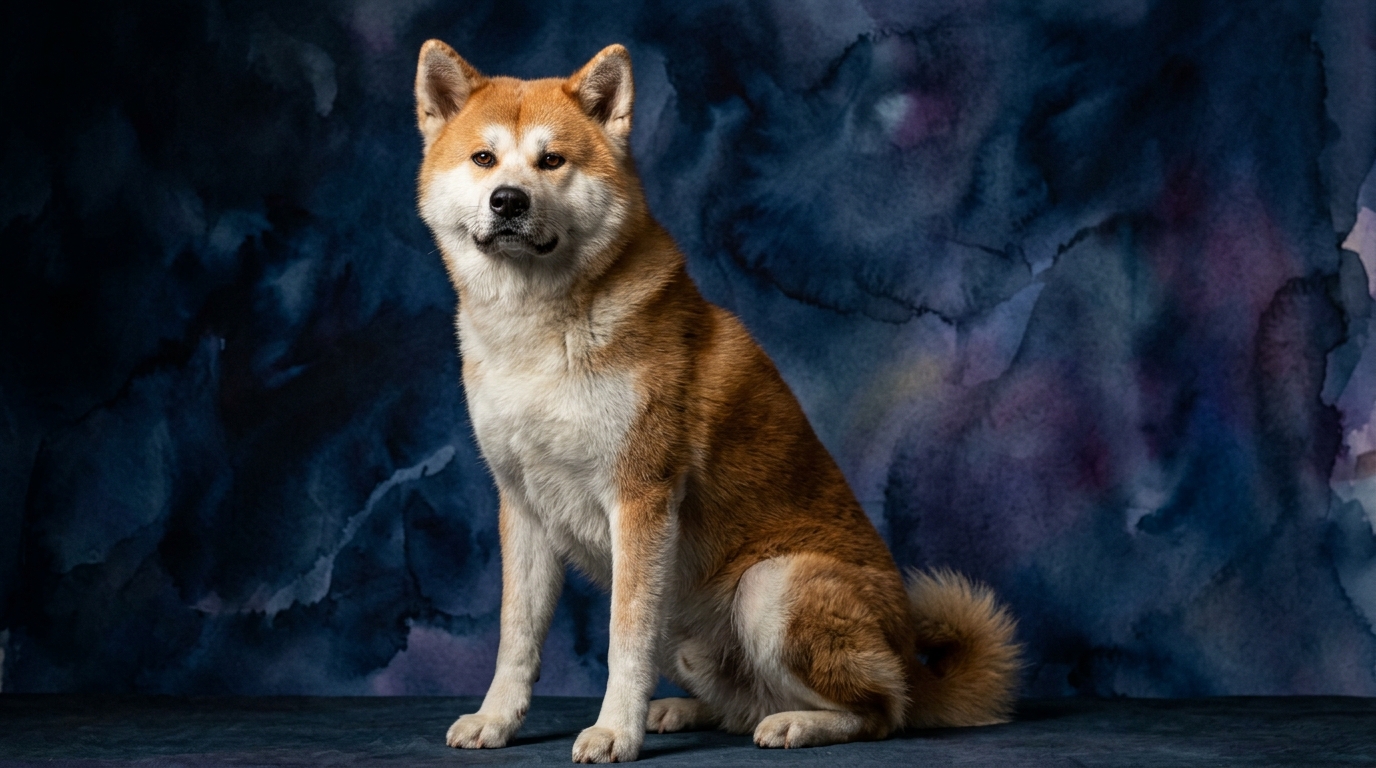
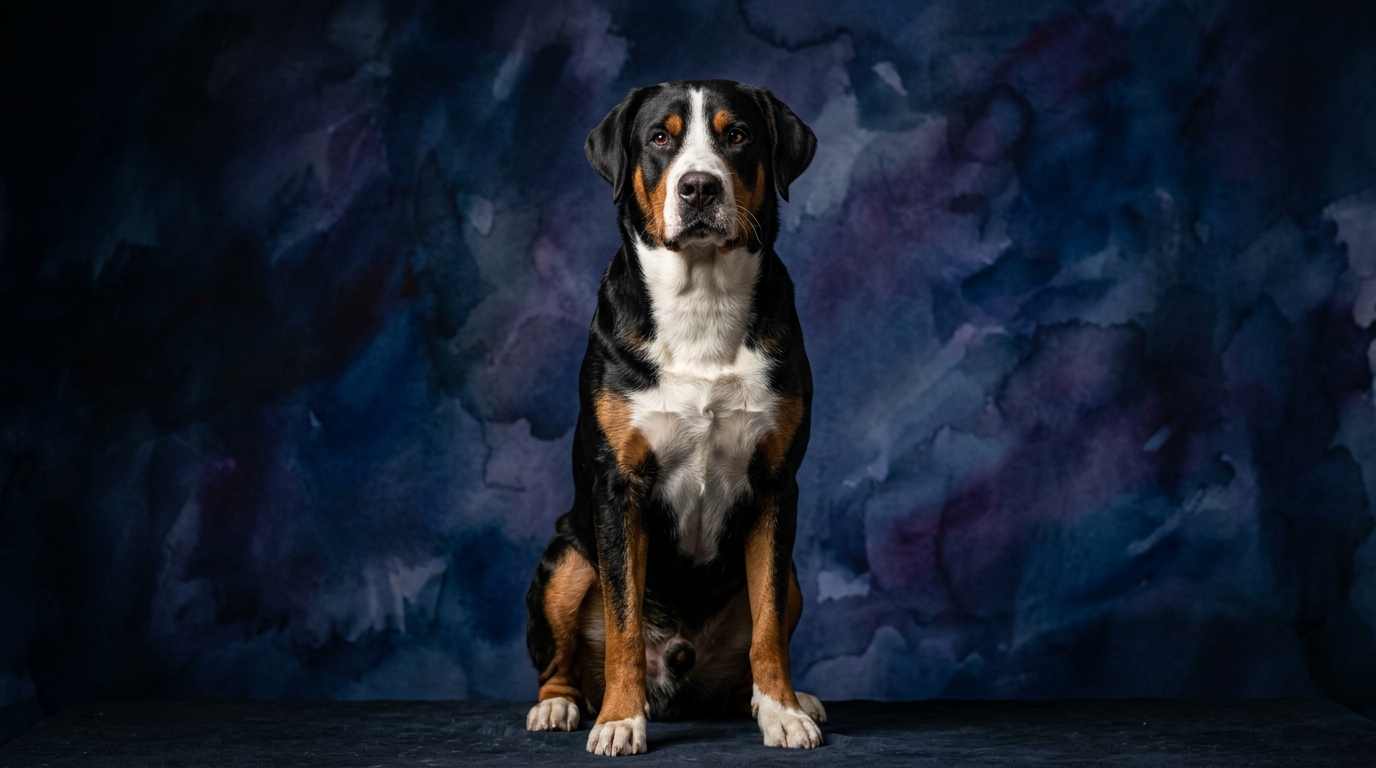
Side-by-Side IQ Profile: Akita vs. Greater Swiss Mountain Dog
The Cosmic Pet Pet IQ Lab employs a five-dimensional framework to assess canine cognition, providing a nuanced look beyond simple obedience. For the Akita, a breed historically valued for guarding and hunting, its Coren ranking at #54 hints at a specific kind of mental prowess. Its profile reveals: Problem Solving 3/5, indicating a capacity for independent thought and strategic action, often on its own terms; Training Speed 2/5, suggesting a need for patience and specific motivation in learning new commands; Social Intelligence 3/5, reflecting a deep loyalty to its inner circle but often reserve towards outsiders; Instinctive Drive 5/5, highlighting a powerful innate urge for protection and pursuit; and Memory 4/5, demonstrating an excellent recall of past events and routines that profoundly shapes future behavior.
The Greater Swiss Mountain Dog, while not Coren-ranked, presents a distinct cognitive blueprint rooted in its history as a versatile farm dog for drafting, droving, and guarding. Its IQ profile includes: Problem Solving 3/5, showing practical aptitude, particularly in task-oriented scenarios; Training Speed 3/5, indicating a moderate willingness and ability to grasp new instructions; Social Intelligence 3/5, generally manifesting as a friendly and adaptable demeanor within its social sphere; Instinctive Drive 3/5, reflecting a balanced drive for companionship and a watchful, but less intense, protective nature; and Memory 3/5, demonstrating a good recall of learned behaviors and positive interactions. These scores illustrate two distinct cognitive landscapes, each optimized for different historical functions and modern companionship roles.
Where the Akita Wins Cognitively
The Akita’s cognitive strengths are deeply rooted in its heritage as an independent hunter and guardian. Its Instinctive Drive, rated a perfect 5/5 compared to the Swissy’s 3/5, is a clear differentiator. This manifests as an unparalleled territorial awareness, a keen sense of observation for potential threats, and a powerful, deeply ingrained prey drive. Akitas often make split-second decisions based on these instincts, showcasing a self-reliance that aligns with their historical role of protecting property and family without constant human direction.
Furthermore, the Akita’s Memory, scoring 4/5 against the Swissy’s 3/5, gives it an edge in recalling complex situations and long-term consequences. This superior memory means an Akita vividly remembers past interactions, both positive and negative, which profoundly influences its future decision-making and trust levels. This robust memory, coupled with its problem-solving abilities (3/5), allows the Akita to devise independent solutions, often without seeking human input, even if those solutions aren't exactly what an owner might prefer. Their independent problem-solving is less about pleasing and more about effective, self-directed action.
Where the Greater Swiss Mountain Dog Wins Cognitively
The Greater Swiss Mountain Dog’s cognitive advantages lie in its cooperative spirit and adaptability. Its Training Speed, at 3/5 compared to the Akita’s 2/5, highlights a greater willingness and aptitude for learning new commands. Swissys generally exhibit a stronger desire to please their human companions, making them more receptive to consistent direction and enthusiastic participants in training sessions. This eagerness to engage fosters a more fluid and less challenging learning environment for both dog and owner.
While both breeds score 3/5 in Social Intelligence, the Swissy's expression of this trait often leans towards a more universally amicable disposition. This makes them generally more adaptable to various social settings, less prone to aloofness with new people, and typically more attuned to group dynamics within a family or social gathering. They are often more sensitive to human emotions and respond positively to encouragement, making them excellent partners in activities where cooperation is key. Their problem-solving, while rated equally, often manifests as cooperative problem-solving, where they observe human cues and work alongside their owner to achieve a goal, rather than solely devising their own path.
Which is Easier to Train and Why
Based on their cognitive profiles, the Greater Swiss Mountain Dog is generally easier to train than the Akita. The Swissy's Training Speed of 3/5 reflects a more agreeable and cooperative nature, coupled with a higher desire to please its owner. They tend to find satisfaction in working alongside humans and are more likely to comply with commands, making training a more rewarding experience for both parties. Their Instinctive Drive of 3/5 is less likely to override learned commands, allowing for more consistent responses.
The Akita, with a Training Speed of 2/5, presents a more significant training challenge due to its profound independence and strong will. Akitas often require a clear 'why' for every command and can quickly become bored or resistant to repetitive tasks if they don't perceive a purpose. Their powerful Instinctive Drive (5/5) means they might prioritize their own judgment or perceived duty over a command, especially if it conflicts with their natural guarding or territorial instincts. Successful Akita training demands exceptional patience, consistency, and highly engaging, positive reinforcement methods, often with shorter, varied sessions to maintain their interest. Owners must be prepared to build a relationship based on mutual respect and understanding, rather than simple obedience.
Which Suits Active Owners vs. Relaxed Owners
For owners seeking a highly engaged and active partnership, the Akita requires a specific kind of dedication. While not necessarily demanding constant high-impact physical exercise, their powerful minds and strong drives necessitate consistent mental stimulation, clear boundaries, and a confident, consistent leader. Owners must be prepared for ongoing training and socialization to manage their independent nature and strong protective instincts. Akitas thrive when given a sense of purpose and a defined role within the family structure, making them suitable for active owners who are committed to understanding and channeling their unique cognitive strengths into productive outlets, rather than simply expecting a passive companion.
The Greater Swiss Mountain Dog, conversely, often suits owners who appreciate a balanced lifestyle. They enjoy regular exercise and mental engagement, such as walks, hikes, or participation in dog sports, but are generally content to relax and be a part of family life once their needs are met. Their cooperative nature and amiable disposition make them adaptable to various household dynamics, requiring less intensive management of strong independent drives compared to an Akita. Swissys thrive on companionship and integration into family activities, making them an excellent choice for owners who desire a robust companion that can keep pace with an active family but also enjoys quiet evenings at home.
The Verdict
Choose the Akita if you are seeking a fiercely loyal, independent guardian who thrives on purpose and respects a confident, consistent leader. Be prepared for a significant commitment to training and socialization from day one, understanding that you are partnering with a dog that thinks for itself.
Choose the Greater Swiss Mountain Dog if you desire a robust, good-natured companion who enjoys working alongside you and integrates easily into family life with a generally amiable disposition. They offer a cooperative spirit and a balance of activity and relaxation, making them a versatile family member.
🧠 Find Your Pet's IQ Score
Our Pet IQ Lab assessment covers 25+ tests across 5 cognitive dimensions — personalized to your breed.
Take the Full IQ Test →Frequently Asked Questions
Is the Akita hard to train?
The Akita presents a unique training challenge due to its independent nature and strong will. While capable of learning, they require consistent, patient, and engaging methods, often needing to understand the purpose behind a command to comply. Their strong instinctive drives can also make them less inclined to blindly follow instructions.
Are Greater Swiss Mountain Dogs good family pets?
Greater Swiss Mountain Dogs generally make excellent family pets, known for their amiable and loyal disposition. They are typically good with children and other pets when properly socialized, thriving on companionship and participation in family activities. Their cooperative nature makes them adaptable to various household environments.
Which breed has a stronger protective instinct?
The Akita possesses a significantly stronger protective and guarding instinct (5/5) compared to the Greater Swiss Mountain Dog (3/5). Akitas are naturally watchful and territorial, often making independent decisions regarding perceived threats. Swissys are also protective but tend to be more vocal alarms than active deterrents.