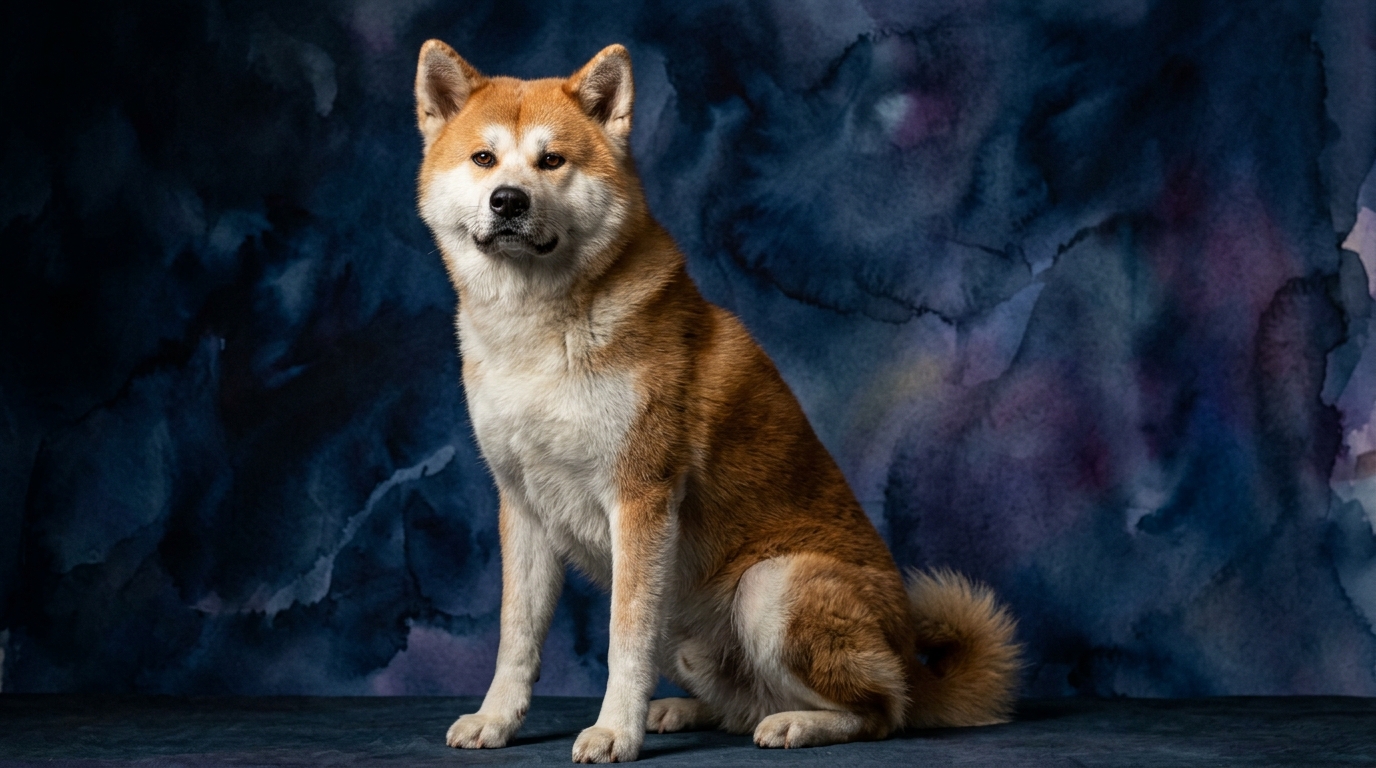

Side-by-Side Cognitive Profiles: Akita vs. Polish Lowland Sheepdog
The Cosmic Pet Pet IQ Lab employs a five-dimensional framework to assess canine cognition, providing a nuanced understanding of each breed's mental aptitudes. While both the Akita and the Polish Lowland Sheepdog score similarly in some areas, their distinct strengths and challenges become clear upon closer examination.
The Akita, a breed from the Working group, holds a Coren rank of #54. Its cognitive profile shows a Problem Solving score of 3/5, indicating a capacity for independent thought and strategic navigation of challenges. Training Speed is rated at 2/5, suggesting a deliberate learning pace that requires consistent, patient instruction. Social Intelligence stands at 3/5, reflecting a selective but deep understanding of social dynamics, particularly within its established family unit. The Akita’s Instinctive Drive is exceptionally high at 5/5, encompassing strong guarding, hunting, and protective behaviors that profoundly shape its interactions. Finally, its Memory is robust at 4/5, allowing for long-term retention of experiences and learned patterns.
The Polish Lowland Sheepdog (PLS), a Herding breed, is not Coren-ranked but presents its own distinctive cognitive blueprint. It matches the Akita with a Problem Solving score of 3/5, demonstrating an ability to figure out obstacles, often with a clever, herding-centric approach. Its Training Speed is slightly higher at 3/5, indicating a generally quicker grasp of new commands and routines. Social Intelligence also scores 3/5, suggesting an adaptable but sometimes boisterous engagement with social cues. The PLS’s Instinctive Drive is rated at 3/5, primarily focused on herding behaviors but generally more manageable than the Akita’s intense drives. Its Memory is scored at 3/5, signifying a solid ability to recall learned behaviors and past events.
Where the Akita Wins Cognitively
The Akita's cognitive strengths distinctly emerge in areas demanding profound, ingrained instinct and persistent memory. Their instinctive drive, rated at a commanding 5/5, far surpasses the Polish Lowland Sheepdog's 3/5, making them unparalleled in tasks requiring innate guarding, protective vigilance, or keen environmental awareness. This translates into a dog that operates with an almost primal understanding of territory and perceived threats, often making independent judgments based on these deep-seated drives. For an owner seeking a dog with an unwavering sense of duty and protection, this profound instinctive depth is a significant asset.
Furthermore, the Akita's memory score of 4/5 indicates a superior capacity for retaining complex past experiences and learned associations over long periods, meaning they rarely forget a lesson or a perceived slight. This robust memory, coupled with their strong instinct, allows them to develop consistent, deeply ingrained behavioral patterns, whether these are desired or challenging. This cognitive advantage contributes to their reputation for steadfast loyalty and their ability to maintain established routines with remarkable consistency, making them exceptionally reliable within their familiar structures and protective roles.
Where the Polish Lowland Sheepdog Wins Cognitively
The Polish Lowland Sheepdog showcases its cognitive advantages primarily in adaptability and the speed at which it processes new information for training. With a training speed score of 3/5 compared to the Akita’s 2/5, the PLS typically grasps new commands and routines more readily, often exhibiting a more enthusiastic engagement in the learning process. This higher trainability is a significant asset for owners seeking a responsive companion for various dog sports or advanced obedience, as they tend to be more eager to participate in structured learning.
While their problem-solving score is equal to the Akita’s, the PLS often applies its herding ingenuity in a more playful and less intense manner, demonstrating a flexible approach to novel challenges, such as figuring out puzzle toys or navigating agility courses. Their more moderate instinctive drive (3/5) compared to the Akita’s intense 5/5 means their foundational instincts, while present, are generally less overwhelming to manage in a typical home environment. This allows for a broader range of social integration without constant vigilance against deep-seated protective urges, making them generally more adaptable to varied social settings and less prone to intense territoriality.
Which Is Easier to Train and Why
When evaluating ease of training, the Polish Lowland Sheepdog generally presents a more straightforward experience due to its higher training speed and more moderate instinctive drives. The PLS's 3/5 training speed means they tend to pick up new cues and behaviors with greater alacrity and less repetition than the Akita, whose 2/5 rating suggests a more deliberate and sometimes stubborn learning curve. The PLS, as a herding breed, was historically bred to work in close cooperation with humans, responding to commands to manage livestock, which fostered a cooperative mindset and an eagerness to engage in training sessions.
In contrast, the Akita, originally a hunter and guard dog, relies more on independent judgment and strong innate drives, making them less inclined to simply 'obey' without understanding the perceived value or necessity of a command. For instance, teaching a recall to a PLS might involve a few consistent, engaging sessions, while an Akita's strong prey drive (part of its 5/5 instinctive drive) could make recall a lifelong management challenge requiring exceptional commitment and high-value rewards to override its natural inclinations. The Akita's powerful memory (4/5) also means it remembers negative training experiences vividly, demanding a highly positive, consistent, and fair approach to prevent aversion and ensure long-term cooperation.
Which Suits Active Owners vs. Engaged Owners
Both breeds demand a significant level of owner engagement, making a truly 'relaxed' owner-type challenging for either, but their needs diverge significantly in the *type* of engagement required. The Akita, with its profound 5/5 instinctive drive and 4/5 memory, requires an owner who is actively engaged in consistent, firm, and fair leadership, establishing clear boundaries and providing extensive socialization from a young age. Their mental stimulation often revolves around reinforcing their role within the family structure and managing their strong protective instincts, rather than endless physical exertion. While they enjoy purposeful walks and activities, their energy isn't typically boundless; it's their mental and emotional needs for structure, understanding, and purpose that demand an 'engaged' owner who is proactive in shaping their behavior and environment.
Conversely, the Polish Lowland Sheepdog, a herding breed, thrives with owners who can provide consistent mental and physical outlets for their 3/5 instinctive drive and adaptable 3/5 problem-solving. They are often more amenable to dog sports like agility, obedience, or herding trials, benefiting from an owner who can channel their energy into structured activities and interactive play. While not hyperactive, their historical role means they enjoy having a 'job' and will appreciate an owner who actively engages them in varied tasks and training sessions, making them suitable for 'active' owners who enjoy participation in canine activities. An owner preferring minimal interaction and a highly independent dog might find both breeds challenging, but the Akita's intense drives and memory could be particularly overwhelming without proactive, consistent management.
The Verdict
Choose the Akita if you are an experienced owner seeking a deeply loyal, protective companion who thrives on consistent, confident leadership and appreciates a dog with profound independent thought and a powerful memory for routines and relationships.
Opt for the Polish Lowland Sheepdog if you desire a lively, adaptable companion for dog sports or active family life, valuing a dog that generally responds more readily to training and thrives on engaging mental and physical activities.
🧠 Find Your Pet's IQ Score
Our Pet IQ Lab assessment covers 25+ tests across 5 cognitive dimensions — personalized to your breed.
Take the Full IQ Test →Frequently Asked Questions
Do Akitas enjoy learning new tricks?
Akitas can learn new tricks, but their 2/5 training speed means they require patient, consistent, and highly reward-based methods. They are often more motivated by purpose-driven tasks that align with their guarding or companionship instincts than by arbitrary tricks, and may perform them on their own terms.
Are Polish Lowland Sheepdogs good for first-time dog owners?
While their 3/5 training speed makes them generally more amenable to learning than some breeds, their herding instincts and need for consistent mental engagement mean they are best suited for owners willing to commit to consistent training and activity. A dedicated first-time owner who embraces their needs could find them a rewarding companion.
How do their social intelligence scores of 3/5 manifest differently?
The Akita's 3/5 social intelligence often means they are reserved, discerning, and sometimes aloof, forming deep bonds with their inner circle but showing indifference or wariness towards strangers. The Polish Lowland Sheepdog's 3/5 manifests as a more boisterous and sometimes cheeky engagement, adaptable to various social situations but still requiring appropriate introductions and socialization to prevent over-exuberance.