Side-by-Side Cognitive Profiles
To understand the unique mental landscapes of the Akita and the Treeing Walker Coonhound, The Cosmic Pet Pet IQ Lab employs a five-dimensional cognitive assessment. This framework helps us dissect their problem-solving prowess, training receptiveness, social awareness, ingrained drives, and memory capabilities.
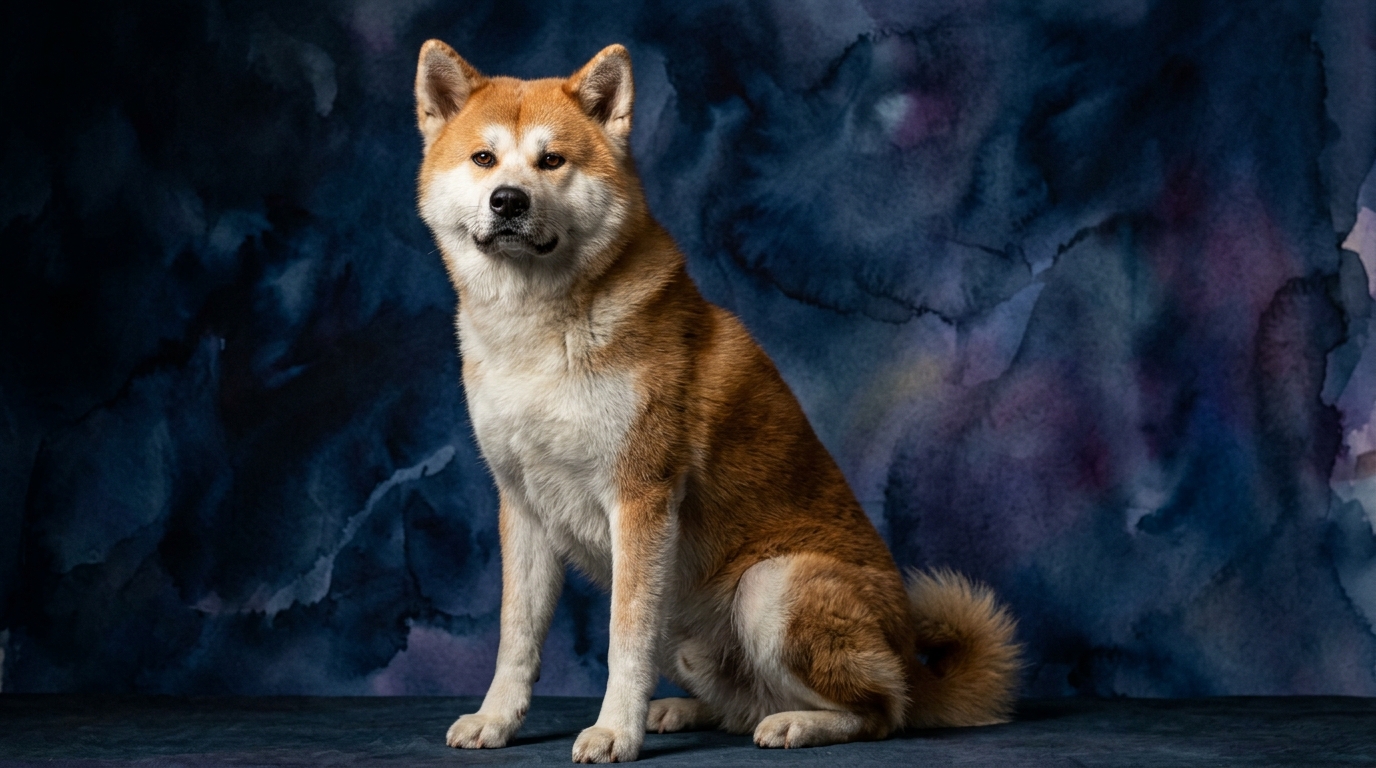
The Akita's profile reveals a dog with significant self-reliance. Their Problem Solving is rated 3/5, indicating an ability to independently navigate challenges, though often on their own terms. Training Speed, at 2/5, suggests a need for considerable patience and consistency, as this breed possesses a strong will. Social Intelligence stands at 3/5, reflecting their keen observation of human and pack dynamics, yet often expressed with a reserved demeanor towards outsiders. Their Instinctive Drive is a powerful 5/5, rooted in strong guarding instincts and a pronounced prey drive, while Memory is an impressive 4/5, enabling them to retain experiences and routines with remarkable clarity.
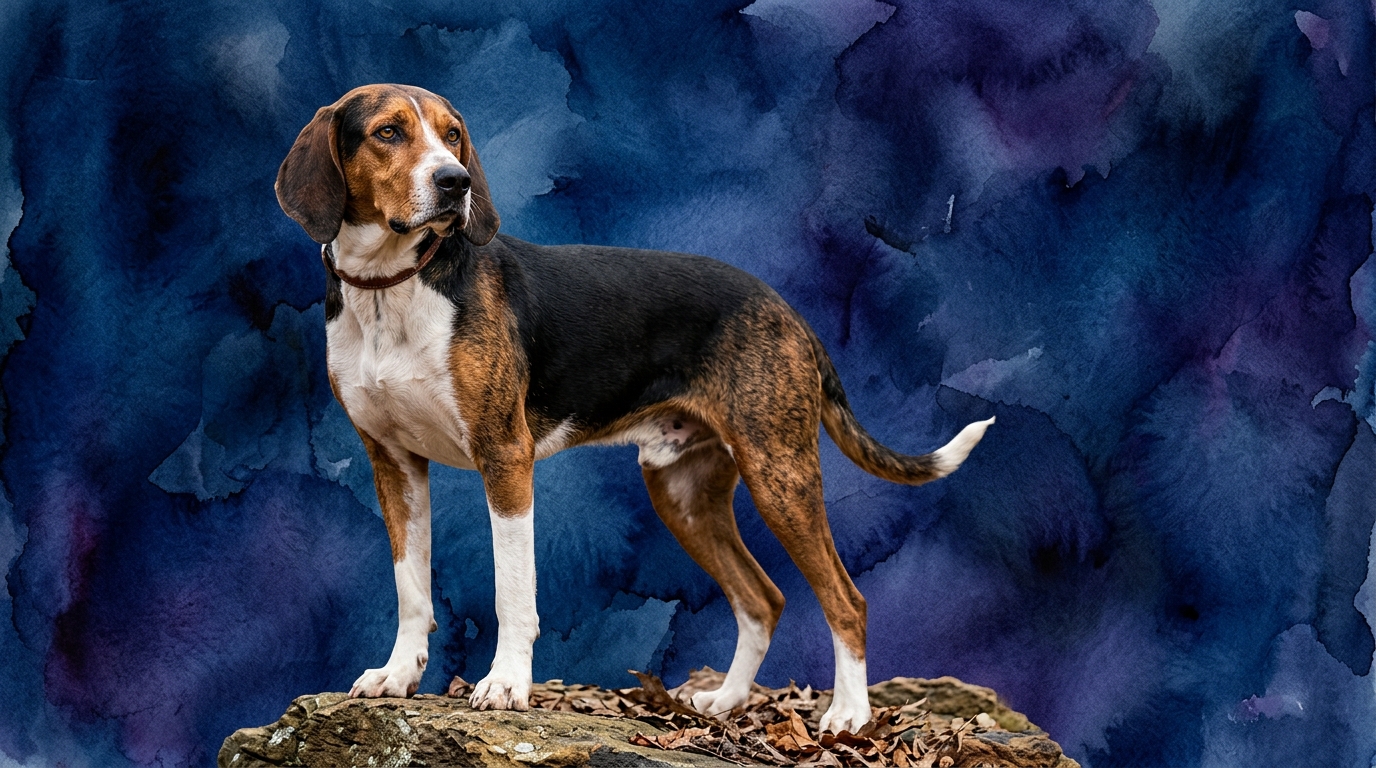
The Treeing Walker Coonhound, a breed not ranked by Coren, presents a different cognitive blueprint, shaped by centuries of dedicated scent work. Their Problem Solving is 3/5, adept at practical, sensory-based puzzles like tracking complex trails. Training Speed is rated 3/5, indicating a moderate responsiveness, often eager to please but easily diverted by environmental stimuli. Social Intelligence is 3/5, showing an affectionate nature within their family unit and an ability to read handler moods, though they can be boisterous. Instinctive Drive is 3/5, primarily focused on their powerful scenting and vocalization for tracking specific quarry. Memory, at 3/5, is solid for recalling scent patterns and familiar routes, along with established training commands when focused.
Where the Akita's Cognition Shines
The Akita’s cognitive strengths are particularly evident in areas demanding independent judgment and long-term retention. Their superior Memory score of 4/5, compared to the Coonhound’s 3/5, means an Akita can recall intricate routines, past interactions, and environmental details with remarkable precision. This depth of memory profoundly influences their trust development and long-term behavioral patterns, making them excellent at remembering who belongs and who doesn't, or which past experiences were positive versus negative.
Furthermore, the Akita’s powerful Instinctive Drive, rated 5/5, translates into an unwavering protective nature and an acute territorial awareness. This isn't merely a physical attribute; it’s a cognitive one, involving constant environmental scanning for perceived threats and a self-assured readiness to act. This breed excels in scenarios requiring self-reliance and decisive action without constant human instruction, showcasing a form of problem-solving centered around guardianship and self-preservation that differs significantly from a scent hound’s focus.
Where the Treeing Walker Coonhound Excels Cognitively
The Treeing Walker Coonhound's cognitive strengths are intrinsically linked to their heritage as a hunting companion, particularly in areas of applied sensory intelligence. Their Problem Solving, rated 3/5, is highly specialized, manifesting as an exceptional ability to interpret and follow complex scent trails, navigating varied terrains and obstacles with persistent focus. This form of practical problem-solving is distinct from the Akita's more independent, decision-making style, highlighting the Coonhound's tenacity in sensory-driven tasks.
While both breeds share a 3/5 Social Intelligence, the Coonhound often displays a more outwardly flexible and enthusiastic social demeanor once comfortable, contrasting with the Akita's characteristic reservation. Additionally, the Coonhound's slightly higher Training Speed of 3/5, compared to the Akita's 2/5, suggests a more direct and often more eager responsiveness to handler cues, especially when motivated by their innate drives or positive reinforcement. This makes them generally more amenable to learning new commands in a structured environment, provided their powerful olfactory distractions can be managed.
Training Dynamics: Akita vs. Treeing Walker Coonhound
When it comes to ease of training, the Treeing Walker Coonhound generally presents a less challenging experience than the Akita. With a Training Speed of 3/5, the Coonhound responds more readily to cues, often eager to engage with their handler, though their powerful scent drive can be a significant distraction in certain environments. Their problem-solving abilities shine when tasks are framed around their natural instincts, making scent games and tracking exercises particularly effective motivators.
In contrast, the Akita's 2/5 Training Speed is indicative of their profound independence and strong will. While they absorb information, their motivation to *comply* with commands requires consistent reinforcement, unwavering leadership, and a deep understanding of their unique personality. An Akita owner must accept that this breed evaluates requests, often choosing whether to obey based on their own perceived value of the command, a behavioral trait rooted in their self-reliant working heritage. This behavioral difference means that while a Coonhound might be momentarily sidetracked by a fascinating smell, an Akita might simply decide a command isn't worth their effort at that particular moment, demanding a more nuanced and patient training approach.
Matching Breeds to Lifestyles: Active vs. Relaxed Owners
For owners seeking a highly active companion for outdoor adventures and scent work, the Treeing Walker Coonhound is the clear choice. Their inherent drive to track and boundless energy demand extensive daily exercise, making them ideal for individuals who enjoy hiking, running, or dog sports that engage their powerful nose. Their sustained energy levels mean they are not suited for relaxed, sedentary lifestyles and require consistent, vigorous outlets for their physical and mental energy.
Conversely, the Akita, while requiring regular exercise and mental engagement, is better suited for owners who appreciate a more composed, albeit independent, presence indoors once their physical and mental needs are met. They thrive with structured routines and calm, consistent leadership, making them a fit for owners who are active in a purposeful, rather than constantly energetic, way. An Akita might enjoy a brisk walk and a focused training session, but they are generally content to relax beside their family, observing their surroundings, for much of the day, provided their initial energy needs have been met.
The Verdict
Choose the Akita if you appreciate an independent, dignified companion with strong protective instincts and are prepared for a dog that forms a deep bond built on mutual respect and consistent leadership.
Opt for the Treeing Walker Coonhound if you are a highly active individual who enjoys scent-based activities and desires an enthusiastic, though sometimes distracted, companion for extensive outdoor adventures.
🧠 Find Your Pet's IQ Score
Our Pet IQ Lab assessment covers 25+ tests across 5 cognitive dimensions — personalized to your breed.
Take the Full IQ Test →Frequently Asked Questions
Are Akitas good with other pets?
Akitas possess a high instinctive drive (5/5) and strong prey drive, making them generally unsuitable for homes with smaller pets unless raised with them from puppyhood and extensively socialized. Their territorial nature also means they often prefer to be the sole canine in the household.
How much exercise does a Treeing Walker Coonhound need?
Treeing Walker Coonhounds require significant daily exercise due to their high energy and instinctive drive (3/5 for tracking). At least 60-90 minutes of vigorous activity, ideally involving scent work or long runs, is essential to keep them mentally and physically fulfilled and prevent boredom-related behaviors.
Can a Treeing Walker Coonhound live in an apartment?
While possible with dedicated owners, a Treeing Walker Coonhound's need for extensive exercise and tendency to vocalize (bay) makes apartment living challenging. They thrive in homes with secure yards where they can explore and burn off energy, and their powerful scent drive needs regular outlets beyond short walks.