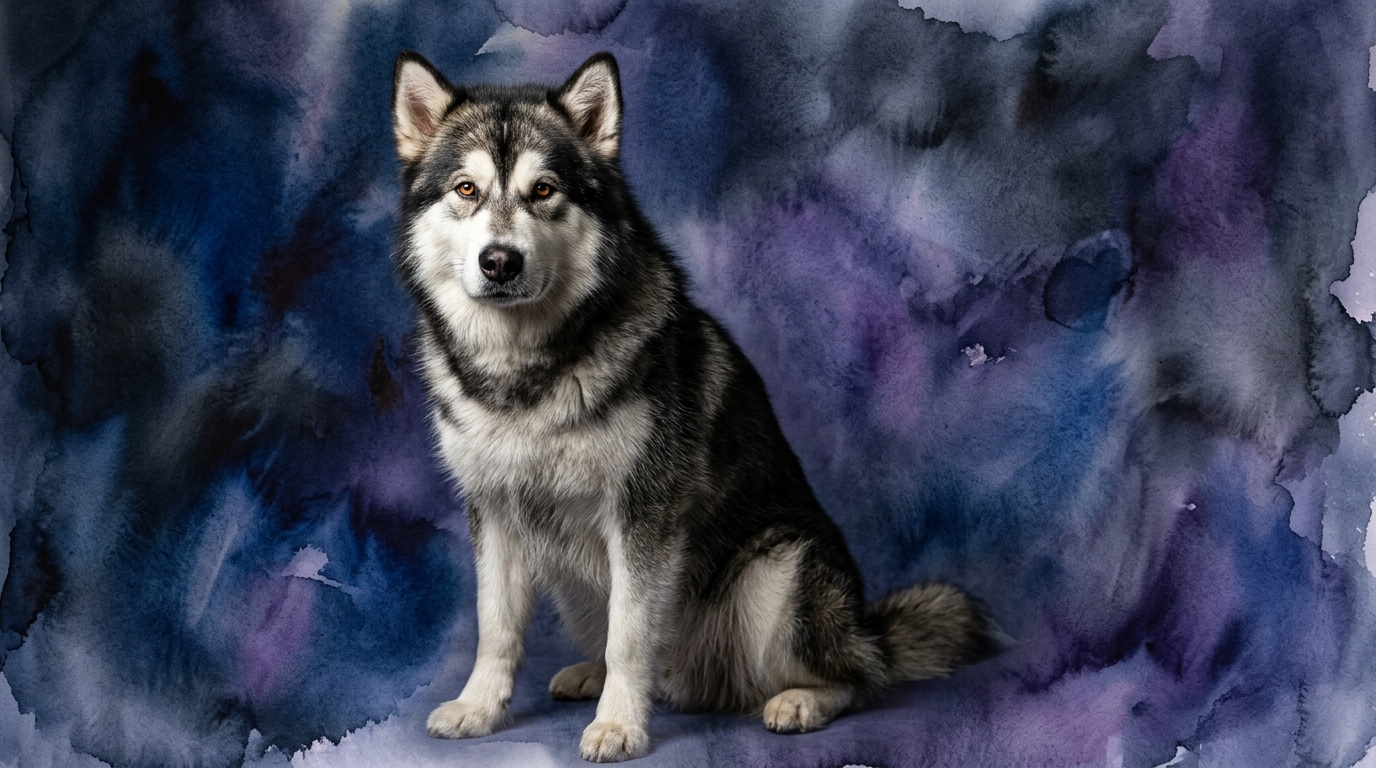
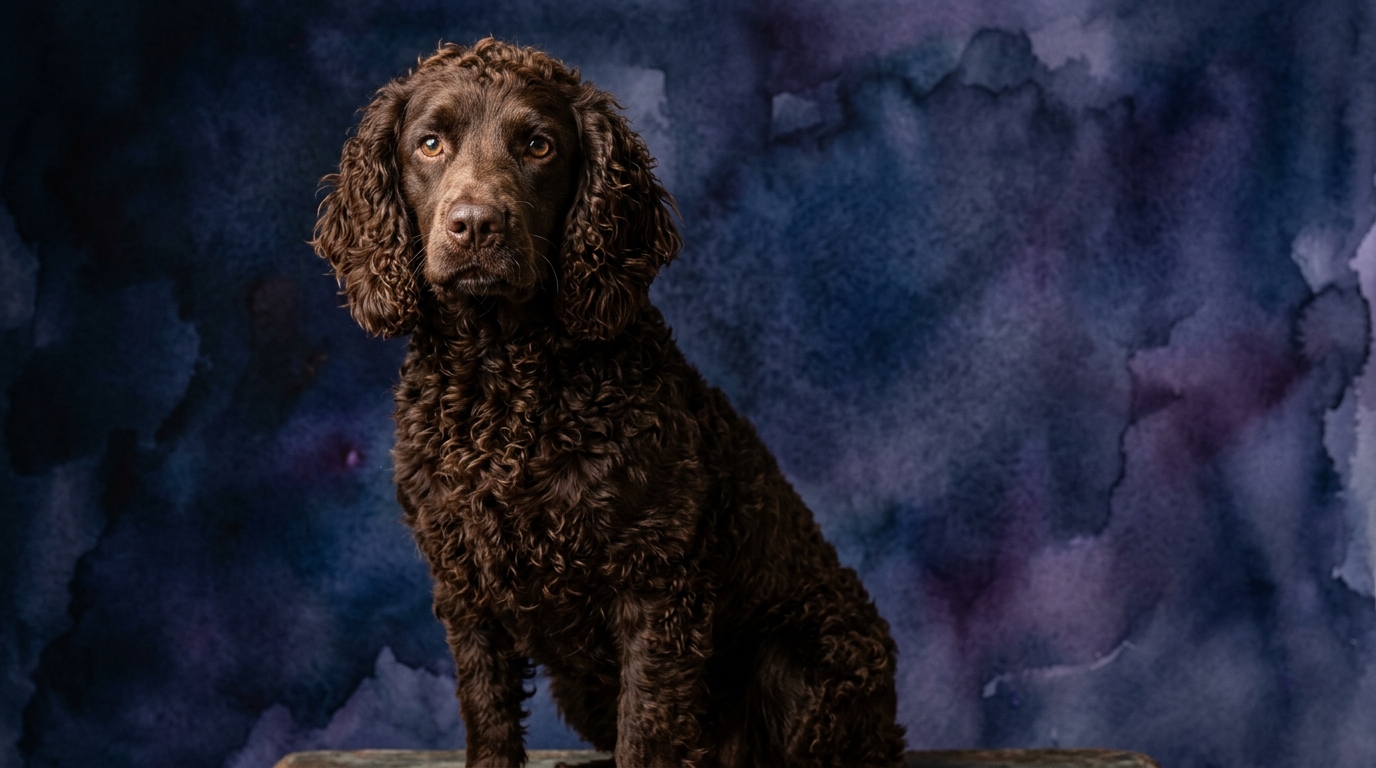
Side-by-Side Cognitive Profile
**Alaskan Malamute (Working Group, Coren Rank #50):** These powerful canines, bred for endurance and hauling, exhibit a unique cognitive blend.
**Problem Solving (4/5):** Malamutes display a strong capacity for independent thought, often devising their own solutions to obstacles, particularly when those obstacles relate to reaching a desired outcome like food or freedom. Their history as sled dogs required them to make critical decisions on challenging terrain, fostering a resourceful approach to new situations.
**Training Speed (2/5):** Malamutes are not quick to pick up new commands and often require extensive repetition and consistent motivation. Their independent nature means they frequently weigh whether a command is worth their effort, rather than simply complying, making training a marathon, not a sprint.
**Social Intelligence (3/5):** Malamutes display moderate social understanding, capable of forming strong bonds with their human families and generally coexisting well with other dogs when properly socialized. They can be discerning in new social settings, often observing before engaging, reflecting a balanced approach to their social environment.
**Instinctive Drive (5/5):** Their drive is exceptionally high, rooted in centuries of pulling heavy loads and surviving harsh environments. This manifests as a powerful urge to work, explore, and follow scents, requiring significant outlets for their natural inclinations.
**Memory (4/5):** Malamutes possess a good memory, retaining learned behaviors, routes, and experiences over time. This aids in their ability to navigate familiar territories and remember past interactions, contributing to their overall resilience and independence.
**American Water Spaniel (Sporting Group, Coren Rank #44):** As versatile gundogs, these spaniels possess a distinct set of cognitive traits tailored for their specialized role.
**Problem Solving (3/5):** American Water Spaniels demonstrate a practical level of problem-solving, adept at navigating challenges related to their retrieving tasks, such as finding downed game in dense cover. They tend to apply learned solutions rather than invent novel ones, a trait valuable for consistent performance in the field.
**Training Speed (3/5):** These spaniels show a moderate pace in acquiring new commands, generally keen to please their handlers and respond to positive reinforcement. They grasp concepts reasonably well but benefit from clear, consistent instruction to solidify new behaviors.
**Social Intelligence (3/5):** American Water Spaniels exhibit a balanced social intelligence, typically friendly and adaptable within their family unit and with familiar individuals. They are generally amiable with other dogs, provided they receive appropriate socialization, showing a cooperative demeanor.
**Instinctive Drive (3/5):** Their instinctive drive is moderate, primarily focused on retrieving and water work, reflecting their sporting heritage. While they possess a desire to work, it is less overwhelming than a Malamute's, making it more manageable for a wider range of activities.
**Memory (4/5):** American Water Spaniels have a good memory, crucial for remembering complex retrieving sequences, marking falls, and recalling specific training cues. This strong retention supports their reliability in performing specialized tasks.
Where the Alaskan Malamute Wins Cognitively
The Alaskan Malamute distinguishes itself with a superior problem-solving capacity, rated at 4/5. Unlike breeds that might wait for direction, Malamutes often assess situations and formulate their own methods to achieve goals, a legacy of their independent sledding work where quick, self-reliant decisions were essential for survival. This translates into a dog that can figure out how to open gates, access forbidden areas, or unearth hidden treasures with impressive ingenuity. Furthermore, their instinctive drive, a perfect 5/5, is unparalleled. This isn't just about energy; it’s a deep-seated urge to work, pull, and explore, which, when channeled correctly, allows them to excel in endurance activities and tasks requiring immense stamina and perseverance. Their cognitive strengths lie in their robust capacity for independent action and their relentless internal motivation to engage with and master their physical environment.
Where the American Water Spaniel Wins Cognitively
The American Water Spaniel holds a cognitive edge in its training speed, rated 3/5 compared to the Malamute's 2/5. This indicates a greater willingness and aptitude for absorbing new commands and behaviors with fewer repetitions, making the initial stages of obedience training generally smoother. Their Coren rank of #44, superior to the Malamute's #50, further suggests an overall quicker grasp of working and obedience tasks. While their problem-solving is practical rather than independently inventive, their moderate instinctive drive (3/5) is a significant advantage for many owners. This drive is focused and manageable, primarily directed towards retrieving and water activities, making it easier to satisfy and less prone to manifesting as destructive boredom compared to the Malamute's intense, all-encompassing drive. Their cognitive strengths are rooted in their cooperative spirit and task-oriented focus.
Which is Easier to Train and Why
Evaluating trainability requires looking beyond raw cognitive capacity to encompass willingness and motivation. The American Water Spaniel generally presents an easier training experience due to its 3/5 training speed and more balanced instinctive drive. They typically display a stronger desire to please their handler and are more receptive to learning through positive reinforcement. Their problem-solving (3/5) is geared towards applying learned solutions, making them less likely to 'outsmart' their trainer by finding alternative, undesirable ways to achieve a goal. In contrast, the Alaskan Malamute's 2/5 training speed combined with its 4/5 problem-solving and 5/5 instinctive drive creates a more formidable training challenge. Malamutes often approach training with a 'what's in it for me?' attitude, using their considerable problem-solving skills to test boundaries or find ways around commands they perceive as arbitrary. Their powerful instinctive drive means that if training isn't engaging or doesn't satisfy their deep-seated urges, they are more likely to follow their own agenda, such as scent trails or the urge to explore, requiring a highly patient, consistent, and creative trainer to maintain engagement.
Which Suits Active Owners vs. Relaxed Owners
The Alaskan Malamute, with its formidable 5/5 instinctive drive and 4/5 problem-solving, is unequivocally suited for highly active owners who embrace a hands-on, engaging lifestyle. These dogs thrive on purpose and require significant physical exertion, such as long hikes, sledding, or extensive play sessions, to prevent boredom and destructive behaviors. Their independent problem-solving also means owners must be prepared for a dog that will actively seek mental challenges, whether through training games, puzzle toys, or supervised exploration. A relaxed owner would quickly find themselves overwhelmed by a Malamute's unmet needs, leading to potential behavioral issues. The American Water Spaniel, with its moderate 3/5 instinctive drive and 3/5 problem-solving, offers a more adaptable fit. While still an active breed that enjoys outdoor activities, especially water-based ones, their drive is less intense and more focused. They are content with regular walks, retrieving games, and family interaction, making them suitable for active owners who enjoy consistent engagement but perhaps don't live an extreme outdoor lifestyle. They can adapt to periods of relaxation, provided their core exercise and mental stimulation needs are met, making them a good match for owners who appreciate an active companion but also value quieter moments at home.
The Verdict
Select the Alaskan Malamute if you are an experienced, highly active owner who relishes a cognitive challenge, can provide extensive physical and mental outlets, and values an independent, resourceful companion.
Opt for the American Water Spaniel if you seek an active, cooperative companion for sporting activities or family life, appreciate a more manageable instinctive drive, and prefer a dog that is generally more eager to please during training.
🧠 Find Your Pet's IQ Score
Our Pet IQ Lab assessment covers 25+ tests across 5 cognitive dimensions — personalized to your breed.
Take the Full IQ Test →Frequently Asked Questions
How does a Malamute's strong problem-solving impact daily life?
A Malamute's 4/5 problem-solving means they are adept at figuring things out, from opening latches to finding ways to reach forbidden items. This requires owners to be constantly vigilant about secure containment and to provide ample mental stimulation to channel this ingenuity constructively.
Is the American Water Spaniel's moderate instinctive drive a sign of lower energy?
Not at all; a moderate 3/5 instinctive drive in an American Water Spaniel indicates a focused, manageable energy level primarily directed towards their sporting roots like retrieving and swimming. They still require consistent activity but are less prone to the relentless, all-encompassing drive seen in some working breeds.
Which breed is better for a first-time dog owner?
Given its more cooperative nature, moderate instinctive drive, and quicker training speed, the American Water Spaniel is generally a more suitable choice for a first-time dog owner. The Alaskan Malamute's independence, intense drive, and training challenges typically require more experience and a dedicated, patient approach.