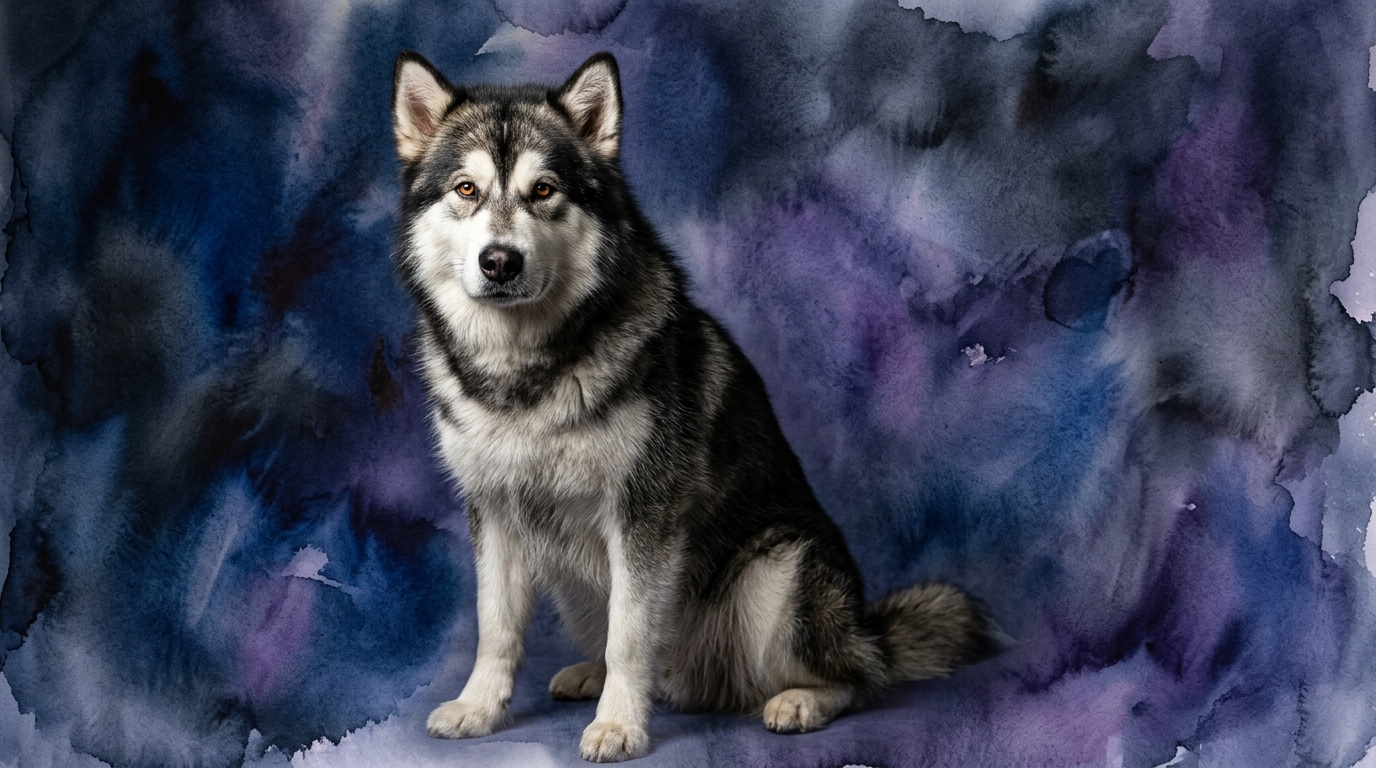
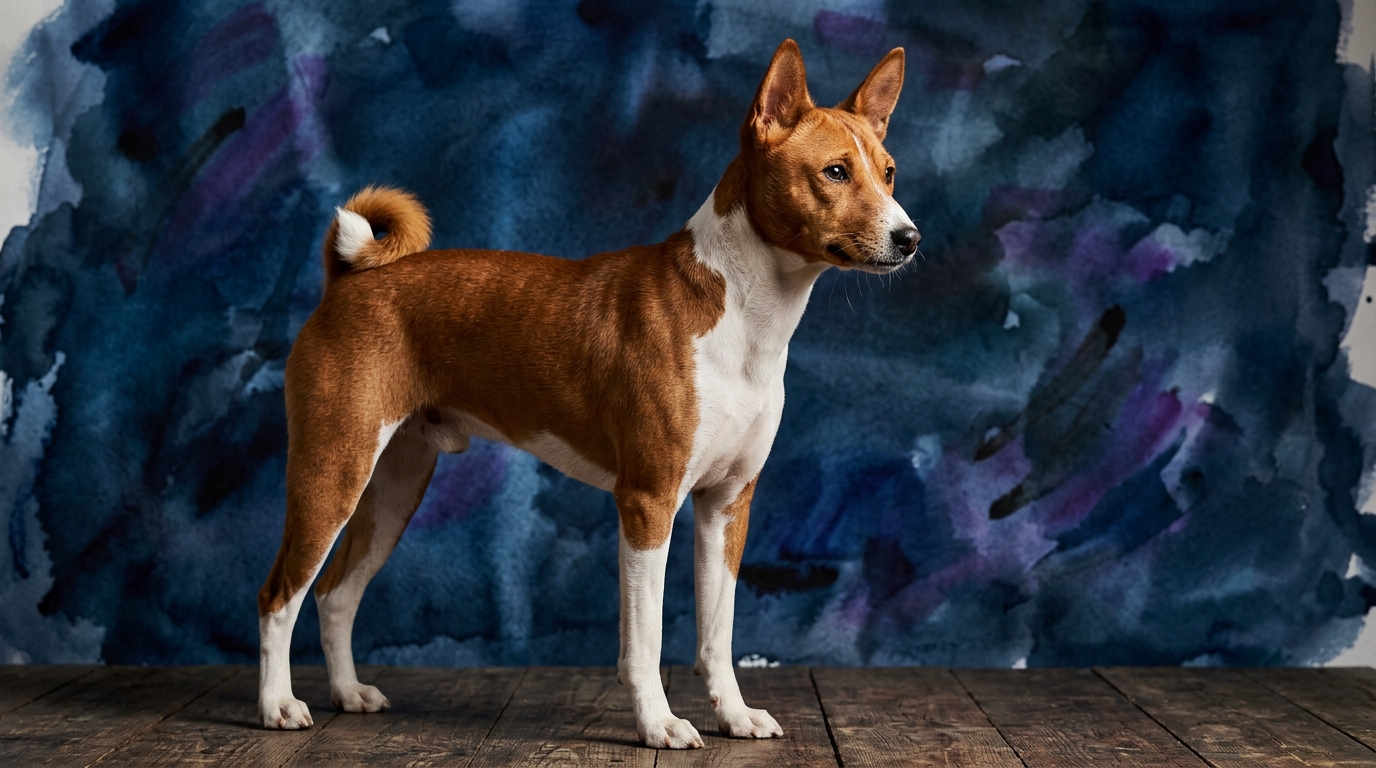
Side-by-Side Cognitive Profiles: Malamute vs. Basenji
The Alaskan Malamute, a powerful Working breed ranking #50 on the Coren scale, demonstrates a robust blend of practical intelligence and cooperative spirit. Their Problem Solving is rated at 4/5, indicating a strong capacity for navigating complex tasks and adapting to new situations, often in partnership with humans. Training Speed registers at 2/5, meaning they are capable learners but require consistent, patient guidance to master commands. Social Intelligence stands at 3/5, reflecting their ability to understand pack dynamics and human cues, though they possess a degree of independent thought. Their Instinctive Drive is a formidable 5/5, rooted in their heritage for endurance and pulling, while their Memory is a solid 4/5, allowing them to retain intricate learned behaviors and routines.
In contrast, the Basenji, an ancient Hound breed with a Coren rank of #78, presents a cognitive profile marked by exceptional ingenuity and profound independence. Their Problem Solving rockets to an impressive 5/5, showcasing a remarkable ability to figure things out for themselves, often in highly creative and self-serving ways. However, their Training Speed is a challenging 1/5, reflecting a deep-seated desire to follow their own agenda rather than human directives. Social Intelligence matches the Malamute at 3/5, indicating an awareness of social structures but often with a detached, watchful demeanor. Like the Malamute, their Instinctive Drive is a powerful 5/5, primarily geared towards hunting and exploration, and their Memory is also a strong 4/5, enabling them to recall past successes in achieving their independent goals.
Where the Alaskan Malamute Cognitively Excels
The Alaskan Malamute's cognitive strengths shine particularly in cooperative ventures and structured learning environments. Their 4/5 Problem Solving, while not as high as the Basenji's, is often applied to tasks that benefit their human companions, such as complex sled-pulling routes or multi-step obedience routines. This capacity is underpinned by their solid 4/5 Memory, allowing them to recall and execute intricate sequences of commands and learned behaviors over time, making them reliable partners in sustained activities.
Furthermore, the Malamute's 3/5 Social Intelligence, coupled with a higher Coren rank reflecting general obedience, makes them more receptive to human leadership and communication. They are adept at understanding social hierarchies within their 'pack,' whether canine or human, and respond well to clear, consistent direction. This blend of memory, problem-solving applied to cooperative tasks, and social awareness means they are more inclined to learn and perform tasks as part of a team, valuing the partnership aspect of interaction.
Where the Basenji Cognitively Excels
The Basenji's intellectual prowess is most evident in its unparalleled 5/5 Problem Solving ability, a trait that often manifests as ingenious resourcefulness and independent thought. This isn't merely about following commands; it's about autonomously devising strategies to achieve personal objectives, whether that means figuring out how to open a child-proof gate or outsmarting an owner's attempts to contain them. Their cognitive strength lies in their capacity for original, self-directed solutions to environmental challenges.
Their equally high 5/5 Instinctive Drive, combined with superior problem-solving and strong 4/5 Memory, means a Basenji can relentlessly pursue a goal, recalling previous successful tactics. This allows them to effectively navigate complex terrains, track scents over long distances, and adapt swiftly to changing circumstances in their pursuit of an objective. Their intelligence is geared towards survival and self-sufficiency, making them incredibly clever at manipulating their surroundings to their advantage, often requiring owners to be equally resourceful in their management.
Ease of Training: Behavioral Differences Unpacked
When it comes to training, the Alaskan Malamute, despite its 2/5 Training Speed, is generally considered more manageable than the Basenji. Malamutes are working dogs, bred to collaborate with humans on demanding tasks, and while they can be stubborn and require patience, they possess an inherent inclination towards partnership. Their social intelligence and memory mean that with consistent, reward-based training, they will eventually grasp and comply with commands, understanding their role within the human-dog team. Owners should expect repetition and a strong, positive reinforcement approach to channel their substantial instinctive drive into productive activities.
The Basenji, on the other hand, presents a significant training challenge, underscored by its 1/5 Training Speed. This isn't due to a lack of intelligence – quite the opposite, as their 5/5 Problem Solving suggests they are exceptionally clever – but rather a profound independence and a strong selective hearing. Basenjis learn quickly what benefits them and are often uninterested in complying with commands that don't align with their immediate desires. Their high instinctive drive means they are easily distracted by scents or potential prey, and their memory helps them recall past instances where they successfully ignored a command to pursue their own interests. Training a Basenji demands immense creativity, unwavering consistency, and an understanding that you are often negotiating, rather than commanding, a highly intelligent and self-possessed animal.
Active vs. Relaxed Owners: Matching Cognitive Needs
Neither the Alaskan Malamute nor the Basenji is ideally suited for genuinely 'relaxed' owners in the sense of a sedentary lifestyle, as both possess a 5/5 Instinctive Drive that demands significant physical and mental engagement. However, their cognitive profiles dictate different types of owner interaction. The Alaskan Malamute thrives with active owners who can provide structured, purposeful activities. Their working dog heritage means they excel in environments where their strength, endurance, and cooperative intelligence can be channeled into tasks like hiking, skijoring, or even competitive obedience. Owners who enjoy training and working with their dogs as a team will find the Malamute's cognitive makeup rewarding, as they respond well to leadership and consistent routines.
The Basenji, while also requiring considerable activity, suits owners who appreciate and can manage a highly independent and mentally agile companion. Their superior problem-solving and lower training speed mean they need owners who are prepared for a dog that will constantly test boundaries and invent its own forms of entertainment. These dogs benefit from varied mental stimulation, secure environments to prevent escapes, and owners who can engage their minds with puzzles, scent work, and games that tap into their innate curiosity and resourcefulness, rather than relying solely on repetitive command training. An owner who enjoys a canine partner with a strong personality and a mind of its own, capable of outwitting them on occasion, might find a Basenji a fascinating match.
The Verdict
Choose an Alaskan Malamute if you seek a powerful, cooperative companion for structured activities and are prepared for consistent, patient training to harness their working drive. They thrive with owners who enjoy a strong partnership and can provide ample purposeful exercise.
Opt for a Basenji if you admire profound independence and ingenious problem-solving in a dog, and are ready for the unique challenges of training a highly self-willed animal. They suit owners who appreciate a clever, curious companion that demands mental engagement and a creative approach to management.
🧠 Find Your Pet's IQ Score
Our Pet IQ Lab assessment covers 25+ tests across 5 cognitive dimensions — personalized to your breed.
Take the Full IQ Test →Frequently Asked Questions
Which breed is more prone to destructive behaviors if not mentally stimulated?
Both breeds, with their high instinctive drives, can become destructive if their mental and physical needs are neglected. However, the Basenji's superior problem-solving and independent nature might lead to more inventive forms of destruction or escape attempts, like opening cabinets or scaling fences, compared to a Malamute's more direct chewing or digging.
Do Basenjis truly never bark, and how does this relate to their intelligence?
Basenjis are often called the 'barkless dog,' but they are not mute; they produce a unique yodel-like sound. While not directly an intelligence trait, their less vocal nature might reflect their independent communication style, relying less on human-like vocalizations and more on body language and actions to express themselves, aligning with their self-sufficient cognitive profile.
Is the Coren ranking always a reliable indicator of a dog's overall intelligence?
The Coren ranking primarily measures 'obedience intelligence' or a dog's ability to learn and comply with human commands, which is a specific aspect of canine cognition. While useful for assessing trainability, it doesn't fully capture other forms of intelligence like problem-solving, social adaptability, or instinctive drive, as highlighted by the Basenji's high problem-solving despite a lower Coren rank.