Side-by-Side IQ Profile: Alaskan Malamute vs. Basset Hound
The Cosmic Pet Pet IQ Lab provides a comprehensive framework to assess canine intelligence across five key dimensions. Examining the Alaskan Malamute and Basset Hound through this lens highlights their distinct cognitive architectures, shaped by centuries of selective breeding for specific tasks. While both are domesticated canines, their mental strengths and inclinations diverge significantly, reflecting their heritage as a powerful working dog and a dedicated scent tracker.
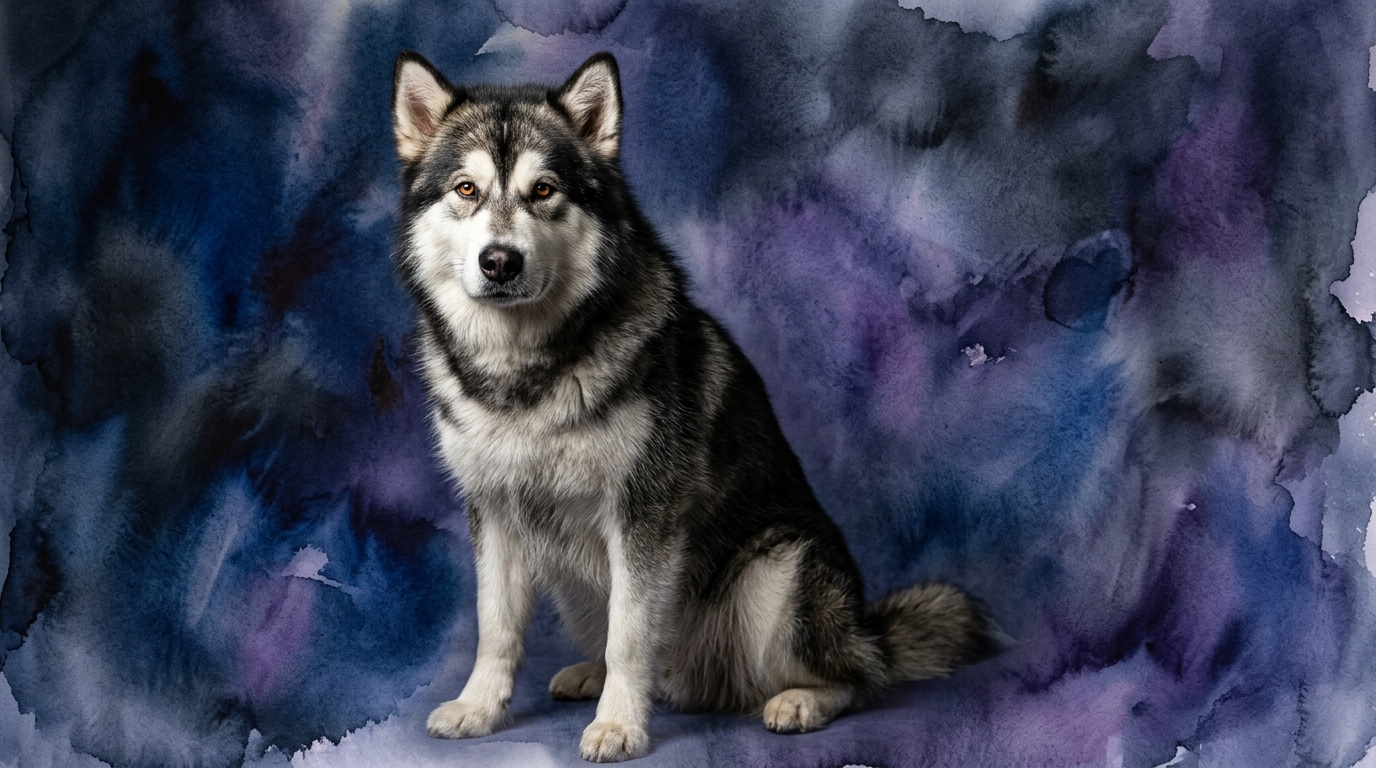
The Alaskan Malamute, a Working breed with a Coren rank of #50, demonstrates formidable cognitive capabilities geared towards endurance and independent decision-making. Their Problem Solving is rated 4/5, indicating a strong capacity to figure out complex physical challenges and navigate unfamiliar situations. Training Speed, however, is 2/5, reflecting a breed that processes commands deliberately and often prioritizes its own agenda over immediate compliance. Social Intelligence stands at 3/5, suggesting a moderate understanding of human cues but a strong sense of self-reliance. Their Instinctive Drive is an exceptional 5/5, embodying a powerful urge to pull, dig, and explore, fueled by a deep-seated prey drive. Memory is 4/5, enabling them to retain complex routes, learned behaviors, and spatial information over long periods.
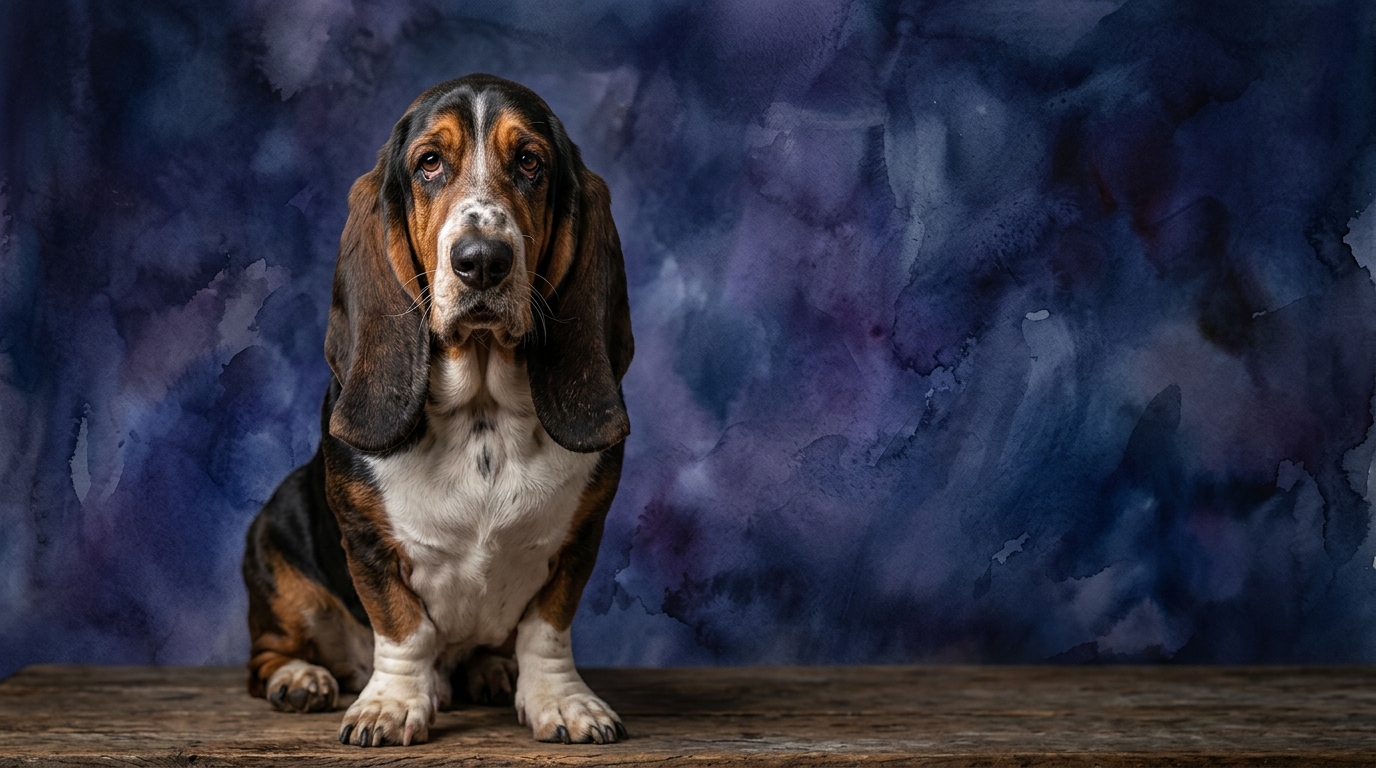
The Basset Hound, a Hound breed with a Coren rank of #71, exhibits a different set of cognitive priorities, heavily influenced by its olfactory prowess. Their Problem Solving is 3/5, primarily focused on deciphering intricate scent trails rather than complex physical puzzles. Training Speed is 3/5, indicating a moderate ability to learn commands, though their strong independent streak and sensory distractions can make consistency a challenge. Social Intelligence is 3/5, showing they are amiable and understand social dynamics, but their nose often dictates their attention. Instinctive Drive is 3/5, predominantly manifesting as an unwavering compulsion to follow a scent, rather than a broad spectrum of working behaviors. Memory is 3/5, solid for remembering scent patterns, routines, and individuals, but perhaps not as expansive for complex sequences as the Malamute.
Where the Alaskan Malamute Wins Cognitively
The Alaskan Malamute's cognitive strengths are deeply rooted in its heritage as a sled dog, requiring robust mental fortitude and adaptability in harsh environments. Their superior Problem Solving (4/5) shines in situations demanding independent thought and resourcefulness. This isn't just about opening a gate; it's about navigating treacherous terrain, finding pathways through snowdrifts, and making decisions that ensure survival or task completion without constant human direction. This cognitive agility allows them to assess situations and devise solutions to physical and environmental challenges, a critical asset for a working animal.
Furthermore, the Malamute's Memory (4/5) is particularly potent for spatial recall and long-term retention of experiences. They can remember complex routes, the location of resources, and the consequences of past actions, which is invaluable for a dog expected to travel vast distances and learn intricate tasks. This strong memory, combined with their profound Instinctive Drive (5/5), creates a dog highly motivated and capable of sustained, goal-oriented effort. Their drive isn't just about energy; it's a cognitive engine that pushes them to overcome obstacles and pursue objectives with remarkable tenacity, whether it's pulling a sled or exploring a new trail.
Where the Basset Hound Wins Cognitively
While the Basset Hound may not match the Malamute's raw problem-solving or overall drive score, its cognitive strengths are highly specialized and equally impressive in their domain. The Basset's Problem Solving (3/5) is uniquely tailored to its primary function: scent work. Their ability to process, interpret, and follow incredibly complex scent trails, often hours old and across varied terrain, is a testament to a distinct type of cognitive brilliance. This isn't about physical problem-solving but an intricate sensory and analytical process, allowing them to deconstruct a world of odors invisible to other breeds.
The Basset Hound also exhibits a more amenable Training Speed (3/5) compared to the Malamute's 2/5. Despite their reputation for stubbornness, Bassets are often more receptive to basic obedience and cooperative learning, provided the training is engaging and consistent. Their equal Social Intelligence (3/5) means they understand human interaction just as well as a Malamute, but their drives are less about independent work and more about focused pursuit. Moreover, their moderate Instinctive Drive (3/5), while powerful in scenting, means they are less prone to the overwhelming need for intense physical exertion or the destructive tendencies (like excessive digging or powerful prey drive) that can accompany a Malamute's 5/5 drive, potentially making them an easier fit for certain lifestyles.
Which Is Easier to Train and Why?
When assessing trainability, the differences between the Alaskan Malamute and the Basset Hound become quite pronounced, primarily due to their intrinsic motivations and independence levels. The Alaskan Malamute, with a Training Speed of 2/5, presents a significant challenge for many owners. Their cognitive makeup leads them to question commands and weigh them against their own perceived objectives. They are not inherently eager to please in the way some other breeds are; rather, they are independent thinkers who expect to be partners, not merely followers. Training a Malamute requires immense patience, creativity, and a deep understanding of their powerful Instinctive Drive (5/5). Owners must find ways to leverage their natural desires, such as pulling or exploring, into positive training outcomes, rather than trying to suppress their core nature. Their strong memory means they will remember inconsistencies in training or unfair treatment, making a consistent, positive, and fair approach absolutely critical.
The Basset Hound, with a Training Speed of 3/5, can be easier in some respects but equally challenging in others. While they are generally good-natured and enjoy human interaction, their singular focus on scent can be their biggest training hurdle. If a captivating scent is present, a Basset Hound can become 'selectively deaf,' with all prior training seemingly evaporating in pursuit of the olfactory stimulus. Their moderate Instinctive Drive (3/5) is almost entirely dedicated to following a trail, making recall particularly difficult in an open, scent-rich environment. Training Bassets requires short, engaging sessions, high-value rewards, and a patient approach to combat their potential for stubbornness and distraction. They are less likely to actively defy an owner than a Malamute, but their nose can lead them far astray, demanding diligent management and consistent reinforcement to keep their attention grounded.
Which Suits Active Owners vs. Relaxed Owners
The choice between an Alaskan Malamute and a Basset Hound heavily depends on an owner's lifestyle and energy levels. The Alaskan Malamute is unequivocally suited for active owners. Their 5/5 Instinctive Drive and heritage as working dogs mean they possess a profound need for physical and mental exertion. They thrive on extensive outdoor activities such as hiking, backpacking, canicross, or even recreational sledding. A Malamute requires miles of vigorous exercise daily and significant mental stimulation to prevent boredom, which can manifest as destructive behaviors like digging, chewing, or excessive vocalization. A relaxed or sedentary owner will quickly find themselves overwhelmed by a Malamute's energy and independent mind, leading to an unhappy dog and a frustrated household.
Conversely, the Basset Hound generally suits more relaxed owners, though they are far from sedentary. While they are content to lounge and enjoy a comfortable home, their moderate Instinctive Drive (3/5) still necessitates regular, moderate exercise. Daily walks, typically 30-60 minutes, are essential, with a strong emphasis on 'sniff walks' where they can engage their powerful olfactory senses. This mental stimulation is as crucial as the physical activity for a Basset. Owners who enjoy leisurely strolls and are patient with a dog that stops frequently to investigate scents will find a Basset a delightful companion. Their energy is more about exploring their world through their nose than high-intensity bursts, making them a better fit for a less demanding, but still engaged, lifestyle.
The Verdict: When to Choose Each Breed
The Verdict
Choose an Alaskan Malamute if you are an adventurous, experienced owner seeking a powerful, independent companion for demanding outdoor activities, prepared for extensive training and management of their profound drives.
Choose a Basset Hound if you desire a mellow, amiable companion, enjoy leisurely sniff-walks, are patient with a scent-driven mind, and appreciate a dog whose primary drive is to follow its nose rather than lead the pack.
🧠 Find Your Pet's IQ Score
Our Pet IQ Lab assessment covers 25+ tests across 5 cognitive dimensions — personalized to your breed.
Take the Full IQ Test →Frequently Asked Questions
Are Alaskan Malamutes suitable for first-time dog owners?
Generally no, due to their independent nature, strong drives, and significant exercise requirements. They need an owner experienced in handling strong-willed, large breeds and committed to consistent, positive training methods.
How much exercise does a Basset Hound need?
Basset Hounds require moderate daily exercise, typically 30-60 minutes of walking or sniffing activities. While they enjoy lounging, regular activity is crucial for their physical health and mental well-being, preventing obesity.
Do Basset Hounds bark a lot?
Basset Hounds are known for their distinctive baying bark, which they use to communicate, especially when on a scent or feeling lonely. While not constant barkers, their vocalizations can be loud and persistent.