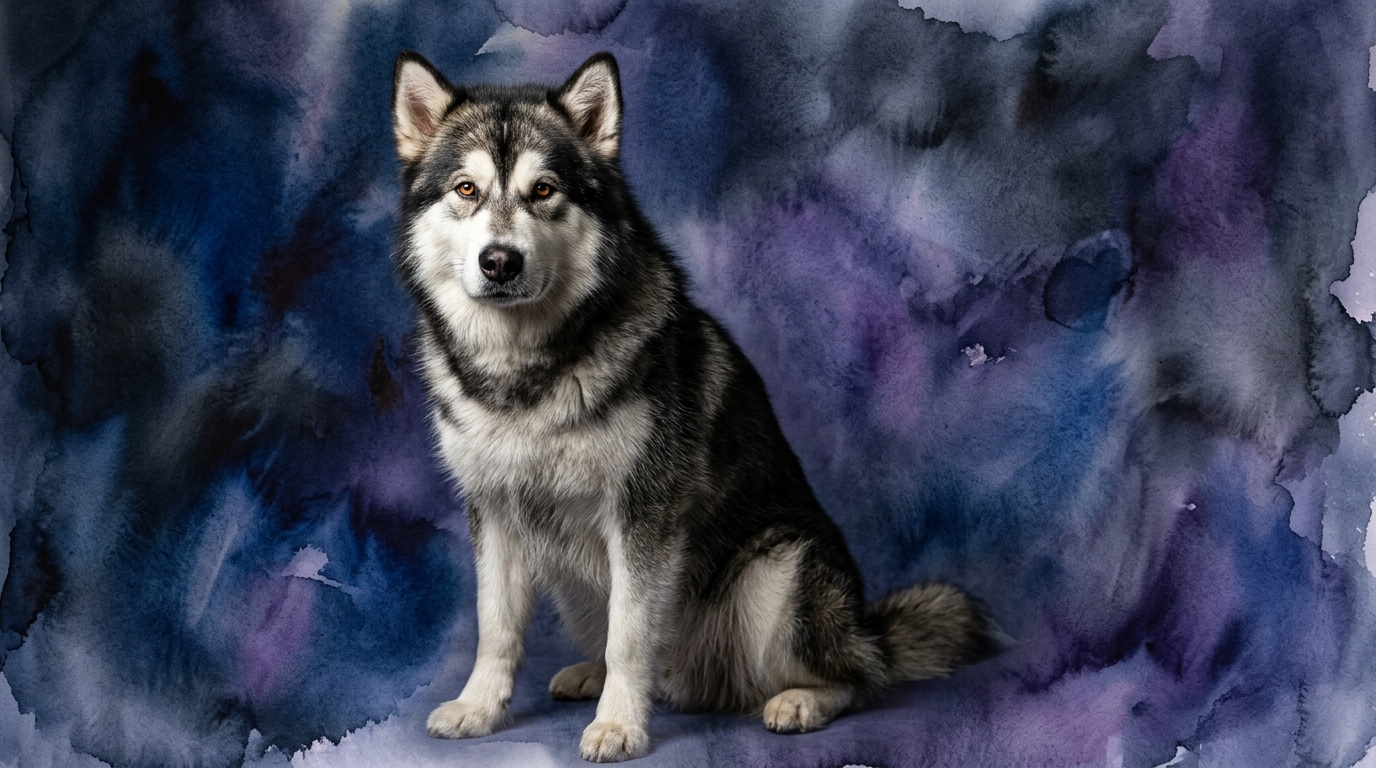
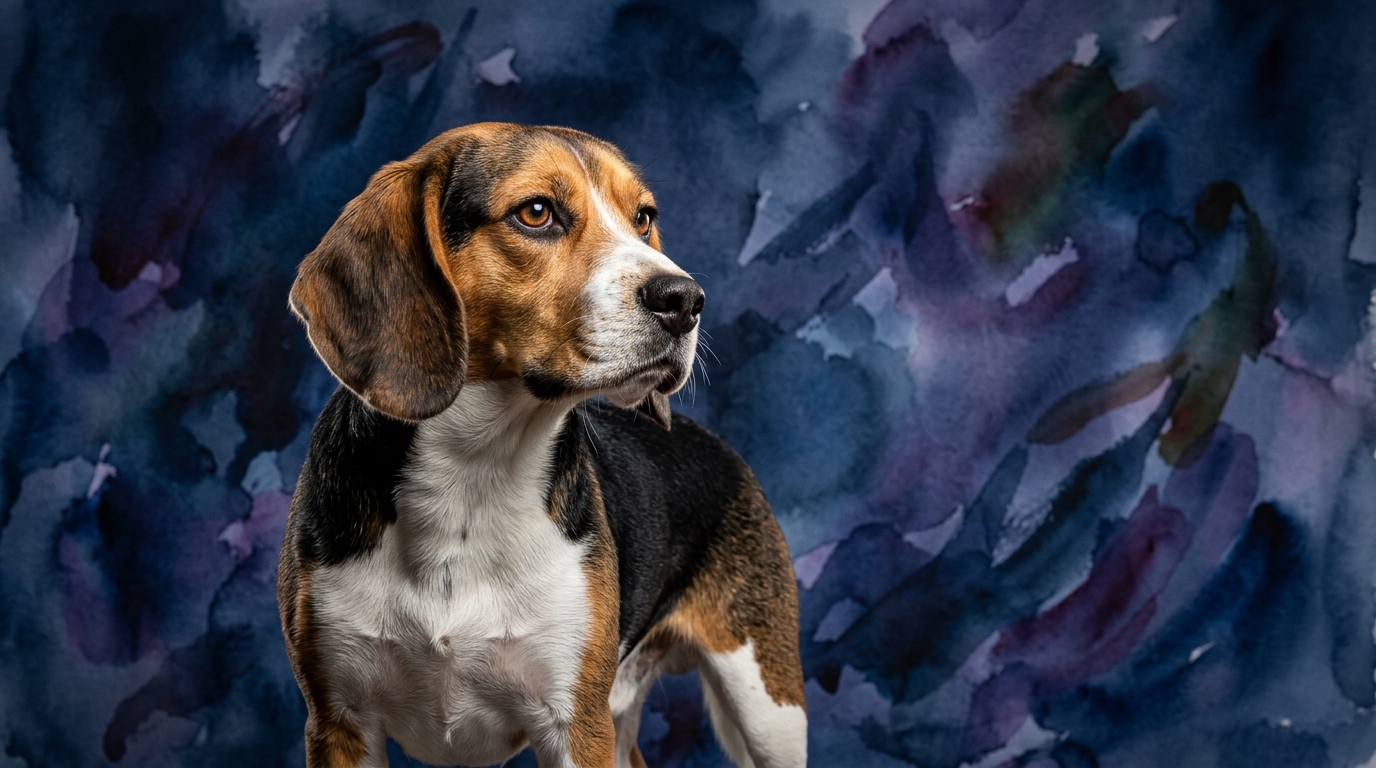
Side-by-Side Cognitive Profile: Malamute vs. Beagle
The Cosmic Pet Pet IQ Lab provides a unique lens through which to examine breed-specific cognitive traits. For the Alaskan Malamute, a majestic Working group dog, its Coren rank sits at #50, suggesting a respectable capacity for understanding and following commands. Its individual cognitive dimensions are rated as: Problem Solving 4/5, Training Speed 2/5, Social Intelligence 3/5, Instinctive Drive 5/5, and Memory 4/5. These scores paint a picture of a dog that can figure things out, remembers well, but requires patience in training, possesses strong inherent motivations, and engages socially with a moderate intensity.
In contrast, the Beagle, a spirited Hound group member, holds a Coren rank of #72. This places it lower than the Malamute in terms of general obedience and working intelligence, often implying a greater independence or focus on specific drives over human commands. Intriguingly, its individual IQ dimensions mirror the Malamute's exactly: Problem Solving 4/5, Training Speed 2/5, Social Intelligence 3/5, Instinctive Drive 5/5, and Memory 4/5. This identical breakdown across the five core cognitive areas means we must look beyond raw scores to their historical roles and breed group tendencies to truly understand their distinct cognitive strengths and challenges.
Where the Alaskan Malamute Excels Cognitively
Despite identical individual IQ scores, the Alaskan Malamute's cognitive strengths are distinctly shaped by its heritage as a powerful sled dog and companion in harsh environments. Its Problem Solving at 4/5, combined with its 4/5 Memory, allows it to navigate complex trails, remember routes, and strategize within a team pulling a sled, often making independent decisions when human guidance is limited. This is not just about solving simple puzzles, but about sustained, practical application of intellect in a challenging, dynamic setting.
The Malamute's Instinctive Drive of 5/5 is channeled into endurance, pulling, and working alongside humans in a partnership that requires mutual understanding and cooperation. While its Social Intelligence is 3/5, this score reflects a capacity for forming deep bonds within its human 'pack' and understanding social hierarchies, crucial for effective teamwork over long periods. Its higher Coren rank (#50 vs. #72) further suggests that, given the right motivation and consistent training, the Malamute generally exhibits a greater willingness to apply its problem-solving and memory to human-directed tasks beyond its primary drive, compared to the Beagle.
Where the Beagle Shines Cognitively
The Beagle, with its matching 4/5 Problem Solving and 4/5 Memory, applies these cognitive abilities in a profoundly different, yet equally impressive, manner. Its instinctive drive (5/5) is almost entirely dedicated to its sense of smell, making it a peerless tracker. A Beagle's problem-solving skills are intensely focused on deciphering scent trails, interpreting complex olfactory information, and meticulously following a path, often ignoring all other stimuli in the process.
Its Memory at 4/5 is exceptional for recalling specific scents, remembering locations where interesting odors were found, and connecting various scent markers to form a complete picture. This specialized cognitive application allows Beagles to excel in tasks requiring sustained focus on a singular sensory input, such as detection work or hunting. The Beagle's 3/5 Social Intelligence is also distinct; while capable of forming strong family bonds, it historically thrived in large packs, demonstrating a different type of social navigation focused on cooperation and hierarchy within a group of dogs, rather than the human-dog partnership of the Malamute.
Training Dynamics: Malamute vs. Beagle
Both breeds share a Training Speed score of 2/5, indicating that neither is inherently quick to pick up new commands or consistently respond without significant effort and understanding from their owners. This low score reflects a common trait among dogs bred for independent work rather than strict obedience.
For the Alaskan Malamute, their independence and strong will, a byproduct of needing to make decisions in critical situations while working, translates into training challenges. They require an owner who understands their intrinsic motivations, uses positive reinforcement consistently, and provides clear, fair leadership. Malamutes are not eager to please in the conventional sense; they respond best when they understand the purpose of a task or when it aligns with their natural drives for pulling or companionship. Their 5/5 Instinctive Drive can be harnessed for activities like sledding or canicross, which can make training more engaging for them.
The Beagle's training challenges stem from its powerful 5/5 Instinctive Drive: its nose. A scent-driven dog, the Beagle is easily distracted by novel odors, making recall and focus incredibly difficult in environments rich with interesting smells. Their problem-solving (4/5) and memory (4/5) are constantly engaged in processing scent information, often to the exclusion of human commands. Training a Beagle demands immense patience, high-value rewards, and a strategy that either incorporates scent work into training or manages distractions meticulously. Their social intelligence (3/5) means they enjoy company, but this doesn't necessarily translate into compliance with commands, especially when a compelling scent is present.
Matching Breeds to Lifestyles: Active vs. Relaxed Owners
For active owners, both the Alaskan Malamute and the Beagle present compelling, yet distinct, choices. The Alaskan Malamute demands a highly active lifestyle, requiring substantial physical exercise like hiking, running, or sledding, alongside consistent mental stimulation to prevent boredom. Owners who enjoy outdoor adventures and are prepared for a strong, independent companion who thrives on purpose-driven activities will find a Malamute a rewarding, albeit challenging, partner. Their need for routine and structure, combined with their strong pack drive, means they integrate well into a family that can provide consistent leadership and engagement.
The Beagle also suits active owners, but their activity needs are often more focused on exploration and scent work rather than pure endurance or strength. Long walks where they can sniff and investigate are paramount, as are scent games and puzzle toys that engage their keen olfactory senses and problem-solving skills. Owners who appreciate a more relaxed pace at home but are committed to daily outings focused on mental enrichment and scent-based activities will find the Beagle a delightful companion. They are generally more adaptable to apartment living than a Malamute, provided their exercise and mental stimulation needs are met.
For truly relaxed owners seeking a low-maintenance pet, neither breed is an ideal fit. Both the Malamute and the Beagle possess high instinctive drives and require dedicated engagement to prevent destructive behaviors or anxiety. While a Beagle might appear more 'relaxed' indoors, its unfulfilled drive can lead to persistent barking or escape attempts. The Malamute's sheer size and energy levels make it unsuitable for a sedentary lifestyle, leading to frustration and potential behavioral issues if not adequately exercised and challenged.
The Verdict
Choose an Alaskan Malamute if you are an experienced dog owner with an active outdoor lifestyle, prepared for a strong, independent partner who thrives on purposeful work and consistent, patient leadership.
Opt for a Beagle if you appreciate a scent-driven companion, are committed to engaging its keen nose with regular walks and scent games, and can manage its independent, often stubborn, pursuit of interesting smells.
🧠 Find Your Pet's IQ Score
Our Pet IQ Lab assessment covers 25+ tests across 5 cognitive dimensions — personalized to your breed.
Take the Full IQ Test →Frequently Asked Questions
Are Alaskan Malamutes good family dogs?
Alaskan Malamutes can be wonderful family dogs, known for their affectionate nature with their own 'pack.' However, their size, strength, and strong prey drive require supervision around small children and other pets, and they thrive best with experienced owners who can provide consistent training and socialization.
How much exercise does a Beagle need?
Beagles require a good amount of exercise, typically at least an hour a day, broken into several sessions. This should include opportunities for long sniff walks, where they can explore with their nose, as well as playtime and mental stimulation through scent games.
Which breed is better for first-time dog owners?
Neither the Alaskan Malamute nor the Beagle is typically recommended for first-time dog owners due to their independent nature, strong drives, and specific training challenges (Malamute's willfulness, Beagle's scent distraction). Both benefit greatly from owners experienced in positive reinforcement and breed-specific needs.