Side-by-Side IQ Profile: A Cognitive Snapshot
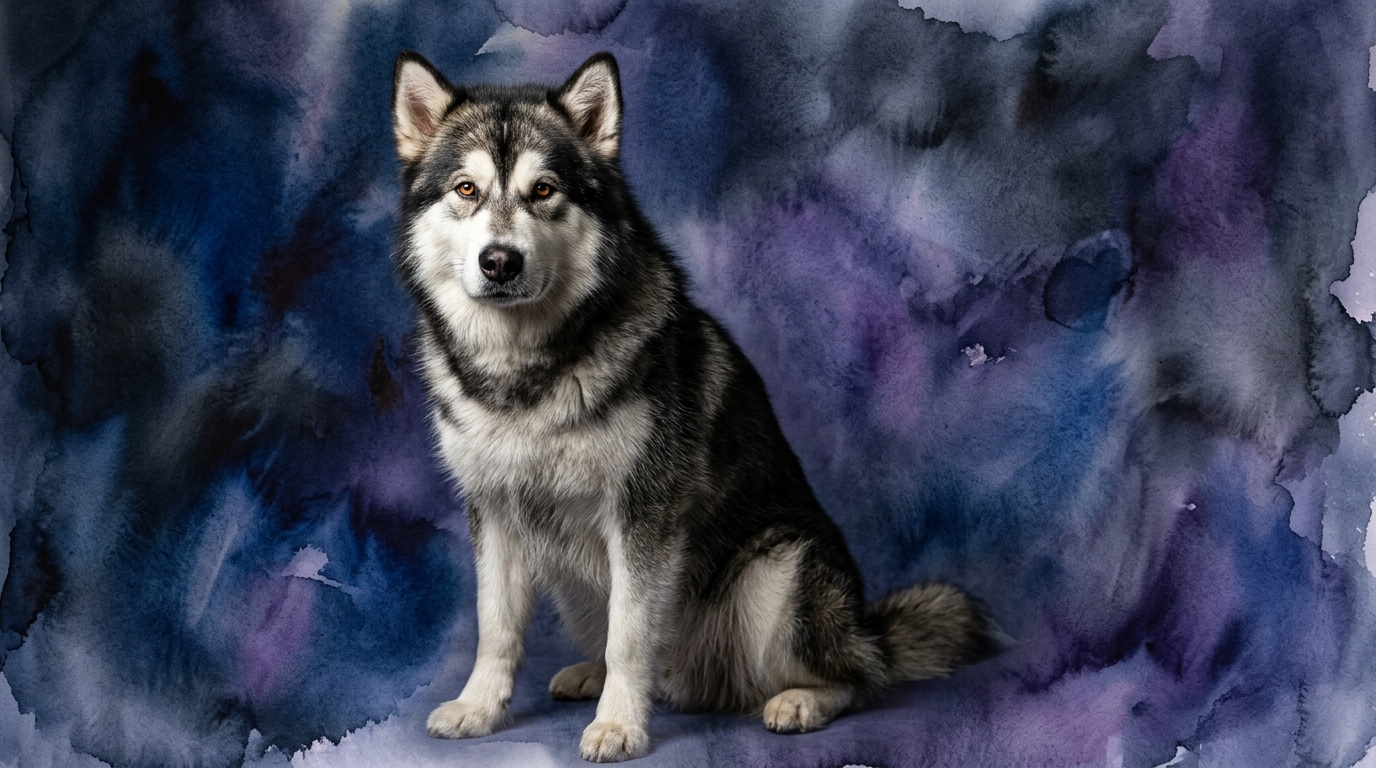
The Alaskan Malamute, a venerable member of the Working group and ranked #50 by Stanley Coren, presents a robust cognitive profile tailored for demanding tasks. Their problem-solving ability scores an impressive 4/5, reflecting their capacity for independent thought and navigating complex scenarios, often in harsh environments. Training speed, however, is a moderate 2/5, indicating a self-reliant nature that requires consistent, patient guidance rather than quick obedience. Social intelligence stands at 3/5, suggesting a capacity for strong pack bonds but also a degree of self-sufficiency. Their instinctive drive is a formidable 5/5, encompassing strong desires for pulling, hunting, and endurance, while memory is rated 4/5, crucial for recalling routes and learned behaviors over time.
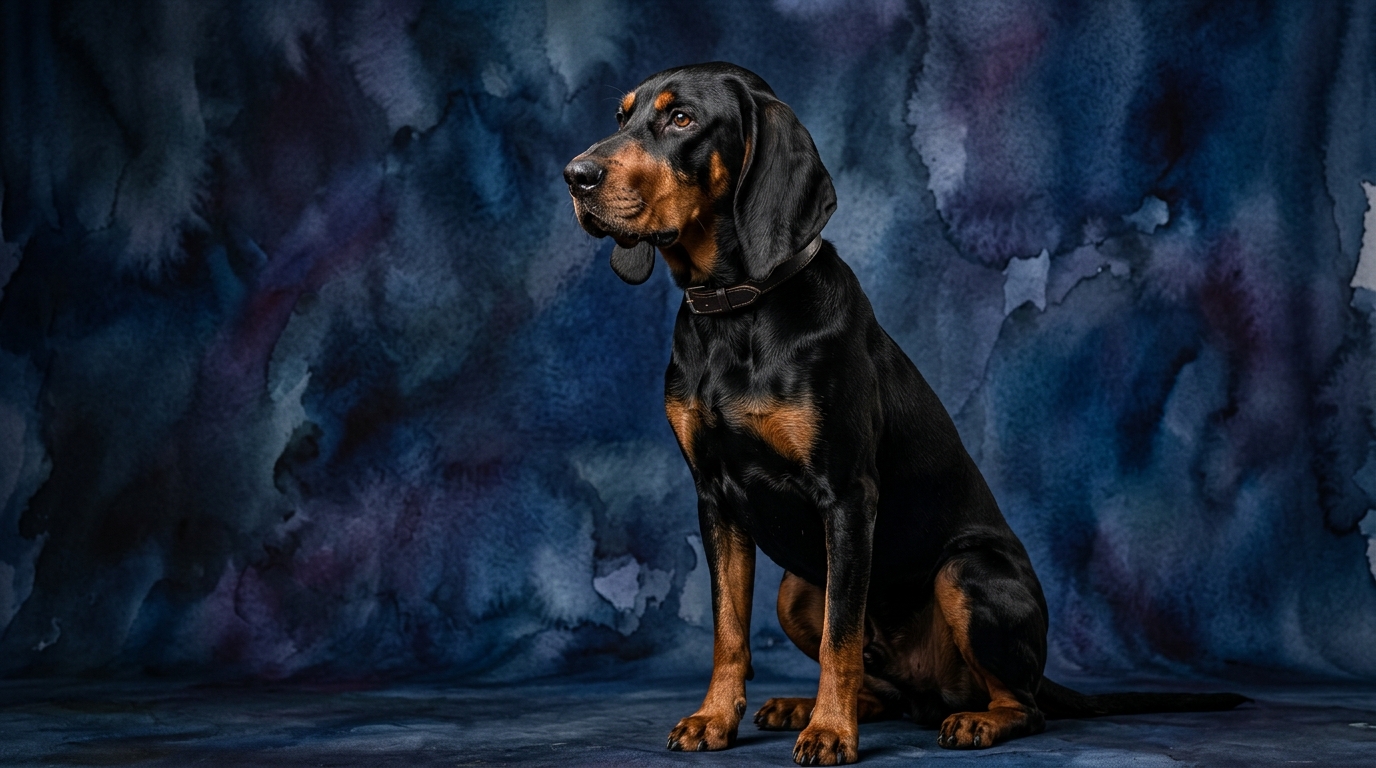
In contrast, the Black and Tan Coonhound, a dedicated Hound group member without a specific Coren ranking, exhibits a cognitive makeup finely tuned for olfactory pursuits. Their problem-solving ability is rated 3/5, primarily focused on deciphering scent puzzles rather than multi-step mechanical tasks. Training speed is a balanced 3/5, meaning they can learn, but their focus can easily be diverted by compelling smells. Social intelligence matches the Malamute at 3/5, indicating a generally amiable nature within their family unit, but often expressed through their primary focus on scent. Their instinctive drive is 3/5, concentrated on tracking and baying, while memory is also 3/5, adept at recalling specific scent trails and familiar locations.
Where the Alaskan Malamute Wins Cognitively
The Alaskan Malamute truly shines in areas demanding resourcefulness and strategic thinking in challenging physical contexts. Their 4/5 problem-solving score reflects an ability to make independent decisions, critical for a dog bred to navigate vast, often featureless, snowy terrains and pull heavy loads. This isn't just about brute strength; it's about understanding the most efficient path, conserving energy, and adapting to unforeseen obstacles. For instance, a Malamute might instinctively find a workaround for a tangled harness or choose the safest route across unstable ice, demonstrating a practical intelligence rooted in survival.
Furthermore, their superior memory (4/5) plays a pivotal role in their working capabilities. A Malamute can recall complex sledding routes, remember specific commands even after long periods, and recognize individuals and established routines with remarkable accuracy. This cognitive strength allows them to build on past experiences, making them reliable partners in tasks requiring sequential understanding and spatial awareness. Their high instinctive drive (5/5) also contributes to this, fueling their persistent efforts in endurance activities and their ability to stay focused on a long-term goal, whether it's pulling a sled or tracking larger game.
Where the Black and Tan Coonhound Wins Cognitively
The Black and Tan Coonhound's cognitive strengths are deeply rooted in their specialized sensory processing, particularly their extraordinary olfactory capabilities. While their general problem-solving is 3/5, this score doesn't fully capture their unparalleled ability to interpret and follow intricate scent trails. They excel at discriminating between multiple scents, identifying a specific target odor, and maintaining focus on that scent for hours, often over varied and difficult terrain. This is a highly specialized form of problem-solving, where the 'puzzle' is a complex tapestry of smells in the environment.
Their instinctive drive (3/5), though numerically lower than the Malamute's, is intensely focused and persistent when it comes to scent work. Once a Coonhound locks onto a trail, they exhibit a remarkable single-mindedness, demonstrating an unwavering commitment to their task that can make them seem oblivious to other stimuli. Their memory (3/5) is particularly strong for scent profiles and the geography of familiar hunting grounds, allowing them to effectively re-trace paths or recall the unique scent signatures of specific targets. This highly developed sensory intelligence is their definitive cognitive advantage.
Which is Easier to Train and Why?
When it comes to ease of training, neither breed is considered effortlessly compliant, but they present different challenges. The Alaskan Malamute, with a training speed of 2/5, can be perceived as more difficult due to their independent nature and strong will. They are not quick to respond to repetitive commands and often prefer to assess the utility of a request before complying. Their working heritage means they are bred to make decisions independently, not just follow orders. This manifests as stubbornness if training isn't engaging, consistent, and built on mutual respect and positive reinforcement. They require an owner who understands their intrinsic motivation and can make training feel like a partnership or a problem to solve together.
The Black and Tan Coonhound, with a training speed of 3/5, is moderately trainable, but their primary challenge stems from their powerful instinctive drive for scent. While they can learn commands, their focus can be instantly derailed by an interesting smell, making consistent attention difficult, especially in stimulating environments. Their 'nose-driven' nature means that while they might understand a command, the irresistible allure of a scent trail often overrides their desire to comply. Training a Coonhound requires immense patience, high-value rewards to compete with environmental distractions, and often involves incorporating scent work into their training regimen to harness, rather than fight, their natural instincts. Neither breed is for the faint of heart, but the Malamute's independence and the Coonhound's scent-fixation demand different approaches to achieve success.
Which Suits Active Owners vs. Relaxed Owners?
For the truly active owner, the Alaskan Malamute is an ideal companion. Their instinctive drive (5/5) for endurance, pulling, and vigorous activity demands an owner who can match their energy and provide ample outlets for their physical and mental needs. These dogs thrive on long hikes, backpacking trips, sledding, or skijoring. They are not content with short walks around the block; they require extensive, purposeful exercise to prevent boredom and destructive behaviors. Owners should be prepared for a strong, powerful dog that needs consistent training and socialization to channel their immense energy productively. Their robust nature and love for the outdoors make them perfect for adventurers.
The Black and Tan Coonhound, while certainly not a sedentary dog, suits an owner whose activity is geared more towards long, meandering exploration rather than intense, sustained effort. Their strong scent drive means they thrive on activities like tracking, long leash walks in varied environments where they can follow interesting smells, or participating in scent work trials. They require regular exercise to stay healthy and happy, but it's often less about speed and more about sustained sniffing and exploration. A more relaxed owner, perhaps one who enjoys exploring nature trails at a moderate pace, or who appreciates a dog that can spend hours focused on a scent puzzle in the yard, would find a better match with a Coonhound. They are less about high-octane performance and more about methodical investigation.
The Verdict
Choose the Alaskan Malamute if you are an experienced, active owner seeking a powerful, independent partner for demanding outdoor adventures and appreciate a dog capable of complex problem-solving in challenging environments.
Opt for the Black and Tan Coonhound if you value a dog with unparalleled olfactory skills, enjoy engaging in scent-based activities, and are patient with a breed whose strong instincts will often guide their actions.
🧠 Find Your Pet's IQ Score
Our Pet IQ Lab assessment covers 25+ tests across 5 cognitive dimensions — personalized to your breed.
Take the Full IQ Test →Frequently Asked Questions
Are Alaskan Malamutes good family dogs?
With a social intelligence of 3/5, Alaskan Malamutes can be devoted family members, forming strong bonds. However, their independent nature and high prey drive require consistent training and socialization, especially around children and other pets.
Do Black and Tan Coonhounds bark a lot?
Black and Tan Coonhounds are known for their distinctive 'baying' vocalization, which is part of their instinctive drive (3/5) for tracking. They can be quite vocal, particularly when following a scent or alerting their owners, which can be a consideration for apartment living.
Which breed is better for first-time dog owners?
Neither breed is typically recommended for first-time dog owners due to their strong independent streaks and specific needs. Both require dedicated, consistent training and an understanding of their unique temperaments and instinctive drives.