A Side-by-Side Look at Their Cognitive Profiles
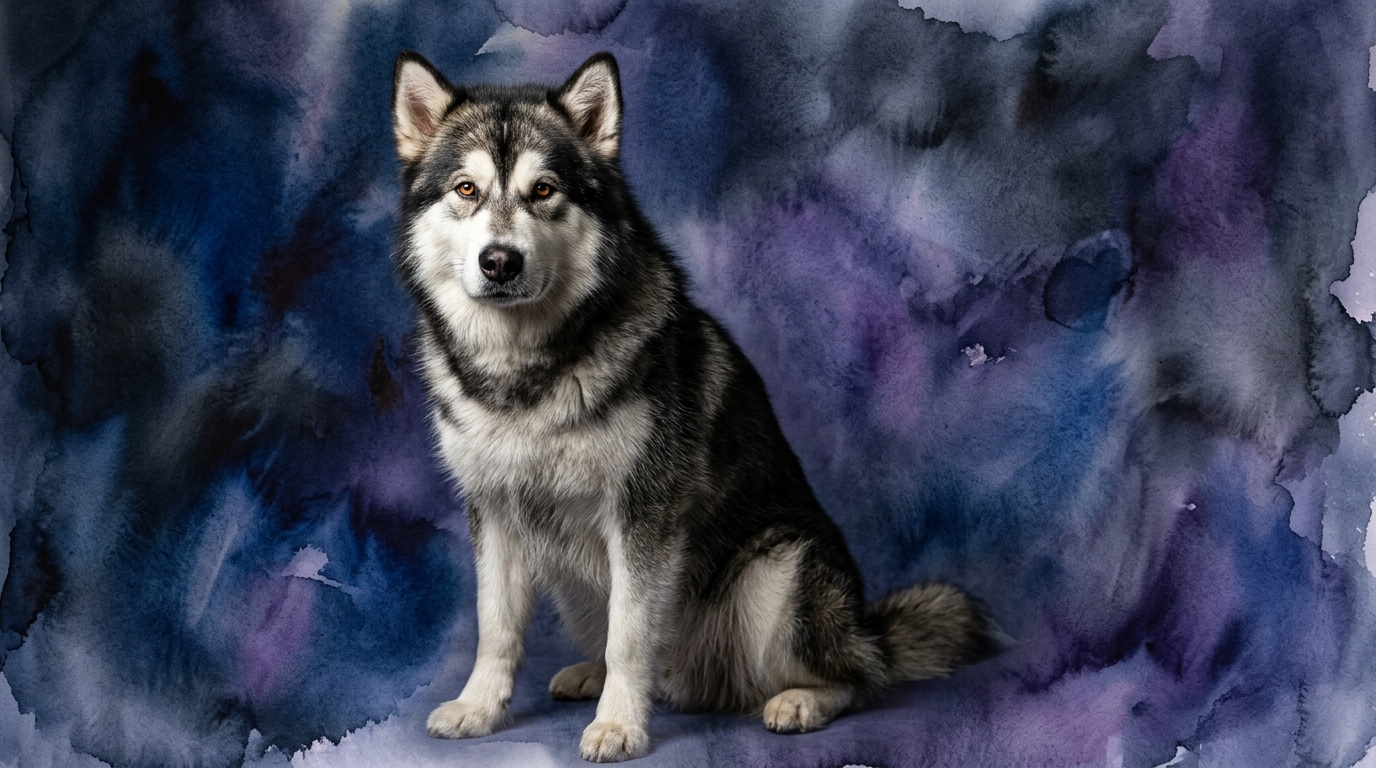
The Cosmic Pet Pet IQ Lab employs a five-dimensional framework to illuminate the unique cognitive attributes of each breed. For the Alaskan Malamute, a Working group dog, its Coren ranking at #50 offers a starting point for understanding its capacity for obedience and adaptive intelligence. Its problem-solving ability is rated at a robust 4/5, reflecting a breed accustomed to independent decision-making in challenging environments. Training speed stands at 2/5, indicating a strong will that can make rote obedience a slower process. Social intelligence scores 3/5, suggesting a capacity for pack dynamics but perhaps less focus on nuanced human interaction outside its immediate family unit. An impressive instinctive drive of 5/5 underscores its powerful urge to work and explore, while memory at 4/5 suggests a strong retention of learned experiences and routes.
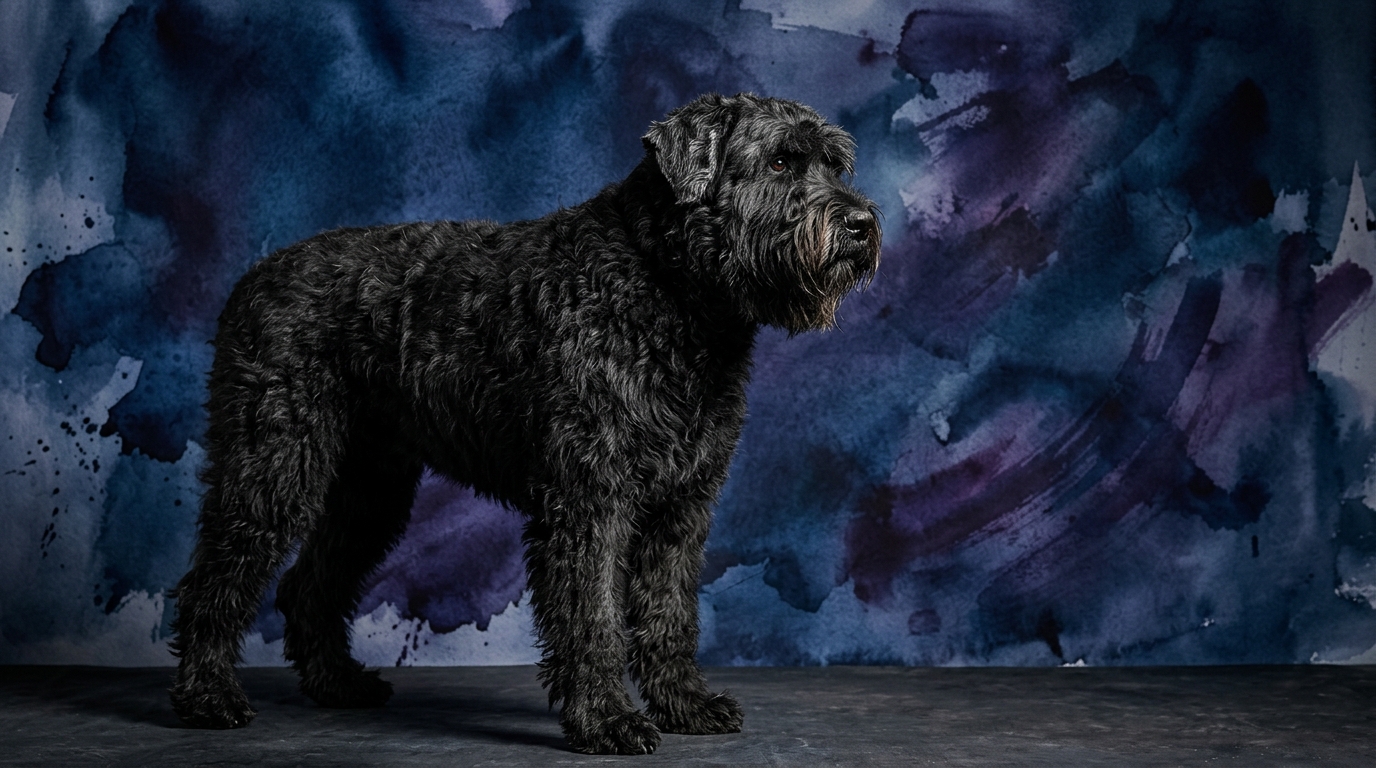
Conversely, the Bouvier des Flandres, a member of the Herding group, does not appear on traditional Coren rankings, prompting a reliance on our detailed IQ profile. This breed demonstrates a problem-solving ability of 3/5, indicative of practical intelligence suited for livestock management rather than extreme environmental navigation. Its training speed is rated 3/5, suggesting a more moderate willingness to engage in structured learning than the Malamute. Social intelligence also sits at 3/5, often manifesting as a watchful loyalty to its family and a reserved demeanor with strangers. The Bouvier's instinctive drive is 3/5, a balanced force geared towards herding and guarding rather than relentless exploration, and its memory is rated 3/5, sufficient for retaining routines and commands within its working and family life.
Where the Alaskan Malamute's Cognition Shines
The Alaskan Malamute distinguishes itself with a superior capacity for problem-solving, earning a 4/5 compared to the Bouvier's 3/5. This reflects its heritage as a sled dog navigating complex, often life-threatening Arctic terrains where independent thought and quick adaptation were crucial for survival. A Malamute's mind is geared towards assessing novel situations, finding solutions to obstacles, and making autonomous decisions without constant human direction, whether it's finding the safest path through a blizzard or locating a food source. This isn't just about physical strength; it's a mental fortitude for innovation in challenging circumstances.
Furthermore, the Malamute's instinctive drive is an unparalleled 5/5, vastly exceeding the Bouvier's 3/5. This isn't merely a physical attribute; it's a deep-seated mental commitment to sustained, purposeful work. This powerful drive fuels their endurance and desire for strenuous activity, manifesting as an unwavering focus when engaged in tasks like pulling or long-distance trekking. It's a cognitive engine that demands an outlet, channeling their mental and physical energy into productive endeavors. Their memory, rated 4/5 versus the Bouvier's 3/5, also gives them an edge in retaining complex spatial information, recalling intricate routes, and remembering past experiences, which is vital for navigation and learning from prior challenges.
Where the Bouvier des Flandres' Cognition Excels
While the Alaskan Malamute boasts impressive independent problem-solving and drive, the Bouvier des Flandres finds its cognitive advantage in areas more directly tied to cooperative human partnership, particularly in training speed. With a training speed of 3/5, the Bouvier surpasses the Malamute's 2/5, indicating a more amenable disposition to structured learning and handler-led tasks. This difference isn't about raw intelligence, but rather the *willingness* and *consistency* in responding to human directives.
The Bouvier's herding background inherently requires them to listen and react to a handler's commands to manage livestock effectively. This historical role has cultivated a mental framework that prioritizes working *with* a human, making them generally quicker to grasp and consistently perform obedience commands in typical training scenarios. Their cognitive strengths lie in their capacity for practical application of learned behaviors in a controlled environment, making them more receptive to repetitive instruction and less prone to the independent, often stubborn, decision-making tendencies seen in the Malamute during training sessions.
Training Dynamics: Which Breed Is Easier to Guide?
When it comes to ease of training, the Bouvier des Flandres generally presents a more straightforward path for handlers compared to the Alaskan Malamute. The Bouvier's training speed of 3/5, coupled with its instinctive drive of 3/5, indicates a dog that is ready and willing to work alongside its human. Their herding heritage has ingrained a desire to understand and execute commands, making them more receptive to traditional obedience training. They respond well to clear, consistent instruction and find satisfaction in performing tasks that contribute to the family or 'flock' unit. Their cognitive profile suggests a dog that is engaged by purposeful learning and less inclined to deviate from handler expectations.
In contrast, the Alaskan Malamute, with its 2/5 training speed and formidable 5/5 instinctive drive, often proves a more significant training challenge. Their powerful independence, honed by centuries of making autonomous decisions in harsh environments, means they are not naturally inclined towards rote obedience. A Malamute might understand a command but choose not to execute it if they perceive a more pressing or interesting independent pursuit. Their high prey drive and exploratory instincts can easily override handler commands, demanding exceptional patience, creativity, and consistency from their trainers. Training a Malamute requires understanding their strong will and finding ways to motivate them to *want* to cooperate, rather than simply comply.
Matching Breeds to Lifestyles: Active vs. Moderately Active Owners
The Alaskan Malamute is unequivocally suited for highly active, adventurous owners who are prepared for a profound commitment to physical and mental engagement. Their 5/5 instinctive drive demands immense daily exercise that goes beyond a simple walk; they thrive on long hikes, running, sledding, or other endurance sports. An owner who embraces an outdoor, expeditionary lifestyle will find a true partner in a Malamute. Without adequate outlets for their formidable energy and problem-solving minds, these dogs can become bored and destructive, channeling their impressive cognitive and physical capabilities into undesirable behaviors. They require an owner who understands and respects their need for independence and sustained activity.
The Bouvier des Flandres, while also a working breed requiring an active owner, fits a slightly different niche. They are better suited for active individuals or families who appreciate a robust companion for more structured activities and family-centric tasks. Their 3/5 instinctive drive suggests they need regular, purposeful exercise like long walks, agility, or herding games, but perhaps not the extreme endurance demanded by a Malamute. Bouviers enjoy being 'on duty' around the home, and their social intelligence and protective instincts make them excellent guardians. An owner who enjoys incorporating their dog into daily routines and providing mental stimulation through training and guarding tasks will find the Bouvier a loyal and engaged partner, without necessarily needing to embark on multi-day wilderness treks.
The Verdict: When to Choose Each Companion
Choosing between these two breeds hinges on a clear understanding of their distinct cognitive profiles and how they align with your lifestyle and experience level. Both are working dogs, but their definition of 'work' and their approach to human partnership differ significantly.
The Verdict
Choose the Alaskan Malamute if you are an experienced, highly active individual or family prepared to channel a powerful, independent spirit into demanding physical and mental challenges, valuing self-reliance and endurance above rote obedience.
Opt for the Bouvier des Flandres if you seek a robust, watchful companion for an active family life, appreciating a dog that combines a strong work ethic with a more amenable disposition for structured training and protective duties.
🧠 Find Your Pet's IQ Score
Our Pet IQ Lab assessment covers 25+ tests across 5 cognitive dimensions — personalized to your breed.
Take the Full IQ Test →Frequently Asked Questions
Are Alaskan Malamutes difficult to train?
Alaskan Malamutes present a training challenge due to their high independence and formidable instinctive drives. Their 2/5 training speed means they require consistent, patient, and engaging methods, often preferring to make their own decisions rather than follow repetitive commands.
How does the Bouvier des Flandres' herding background influence its intelligence?
The Bouvier's herding heritage shapes its intelligence towards practical problem-solving (3/5) and a willingness to work collaboratively with a handler, reflected in its 3/5 training speed. This background fosters a thoughtful, protective demeanor, making them adept at tasks requiring vigilance and controlled action.
Which breed is better for a first-time dog owner?
Neither breed is typically recommended for first-time dog owners due to their strong working drives and need for experienced handling. However, the Bouvier des Flandres, with its slightly higher training speed and more family-centric social intelligence, might present a marginally less challenging introduction to working breeds than the highly independent Alaskan Malamute.