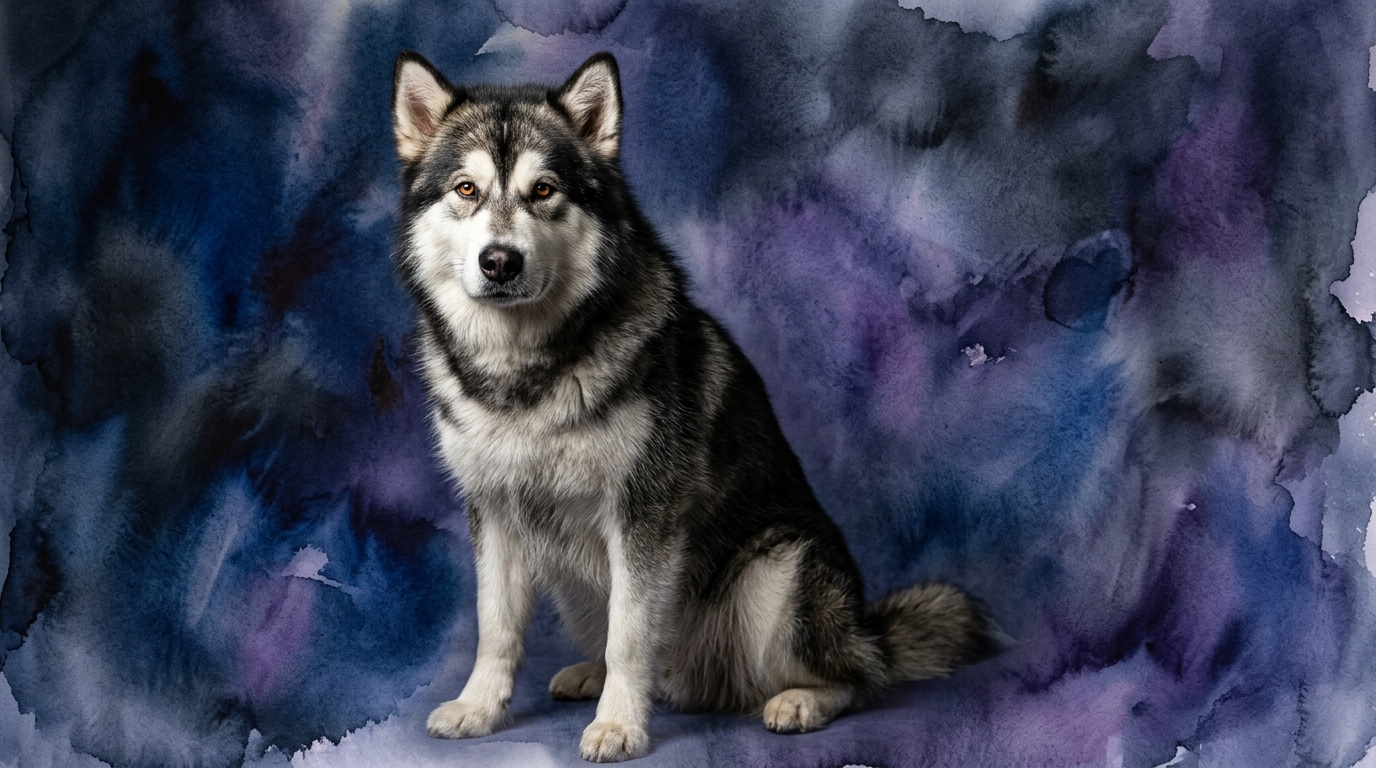
Side-by-Side IQ Profile: Alaskan Malamute
The Alaskan Malamute, ranked #50 by Coren, presents a cognitive profile shaped by centuries of demanding arctic work. Their Problem Solving score of 4/5 reflects an impressive capacity for independent thought and ingenuity, essential for navigating complex, often life-threatening, environments. This manifests in their ability to find paths, overcome physical obstacles, and strategize under pressure without constant human direction.
However, their Training Speed is 2/5, indicating a strong-willed nature that prioritizes their own assessment of a situation over immediate human compliance. Social Intelligence, at 3/5, suggests they form deep bonds within their chosen 'pack' but can be reserved or selective with outsiders. Their Instinctive Drive, a robust 5/5, is a testament to their powerful endurance, pulling instincts, and deep-seated desire to explore and work. Finally, a Memory score of 4/5 highlights their excellent recall of routes, experiences, and learned strategies, crucial for survival and task completion in their historical roles.
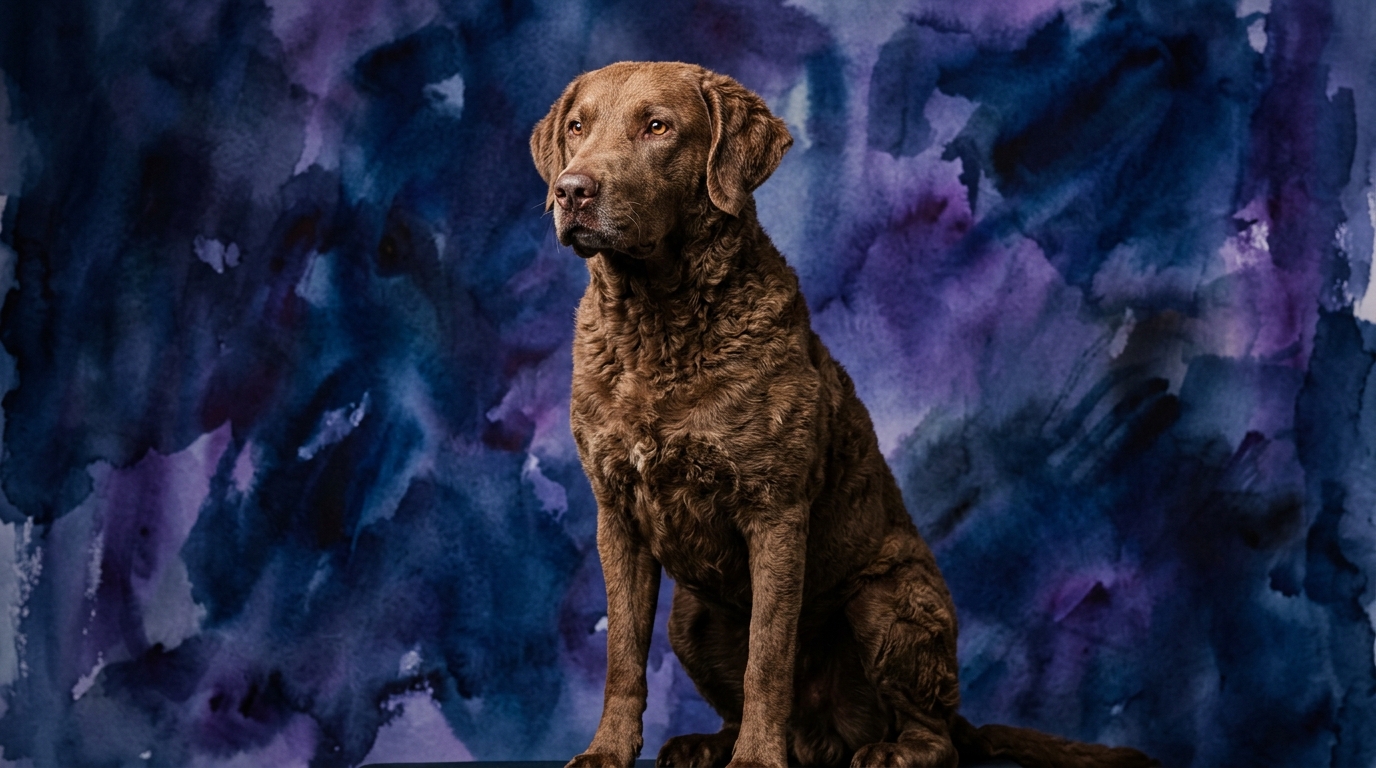
Side-by-Side IQ Profile: Chesapeake Bay Retriever
The Chesapeake Bay Retriever (CBR), with a Coren rank of #27, showcases a different but equally compelling cognitive makeup, honed for retrieving game from icy waters. Their Problem Solving also scores 4/5, but this intelligence is often directed towards specific tasks, such as strategizing the most efficient route to a downed bird, navigating dense cover, or breaking ice to reach a retrieve. They are adept at understanding the nuances of a hunting scenario and adapting their approach.
The CBR's Training Speed is notably higher at 4/5, reflecting a breed eager to cooperate and quick to grasp complex commands, a necessity for a reliable retrieving partner. Their Social Intelligence is 3/5, similar to the Malamute, meaning they are intensely loyal and protective of their family but can be aloof or watchful around strangers, requiring careful socialization. Their Instinctive Drive is 3/5, specifically channeled into retrieving, scent work, and a profound love for water. A Memory score of 4/5 ensures they retain complex retrieval patterns, locations of retrieves, and extensive training sequences, making them highly effective working dogs.
Where the Alaskan Malamute Wins Cognitively
The Alaskan Malamute's cognitive strengths truly shine in scenarios demanding self-reliance and environmental mastery. Their unparalleled Instinctive Drive (5/5), combined with a high Problem Solving score (4/5), makes them exceptional at independent navigation and long-distance endurance. This translates into a dog that can assess unfamiliar terrain, find the most efficient path through obstacles, and sustain effort over extended periods, relying on its own judgment rather than constant human direction. Their cognitive process in such situations is less about immediate obedience and more about proactive, autonomous decision-making, a trait invaluable for their historical role as sled dogs in vast, challenging landscapes.
Furthermore, their robust Memory (4/5) for routes and experiences means a Malamute can effectively learn from past journeys and apply those lessons to new situations, even weeks or months later. This isn't just about remembering a command, but recalling an entire environmental context and the successful strategies used within it. This self-directed learning and application of knowledge make them formidable partners for owners who appreciate a dog capable of independent thought and expeditionary problem-solving.
Where the Chesapeake Bay Retriever Wins Cognitively
The Chesapeake Bay Retriever excels in areas requiring focused task execution and a strong partnership with a human handler. Their superior Training Speed (4/5) is a significant cognitive advantage, indicating a breed that processes and acts upon commands with remarkable efficiency and enthusiasm. This quick uptake and desire to please make them highly effective in structured working environments, such as retrieving specific items or performing intricate sequences of commands. Their Problem Solving (4/5) is particularly potent when applied to a defined task, like calculating the trajectory of a falling bird or navigating a complex water current to make a retrieve, demonstrating a practical, goal-oriented intelligence.
Their Instinctive Drive (3/5), while not as broadly encompassing as the Malamute's, is intensely focused on retrieving and water work, providing a powerful internal motivator for specific tasks. This focused drive, combined with their strong Memory (4/5) for learned behaviors and specific task parameters, allows CBRs to develop highly refined skills. They can remember where a decoy fell, the specific hand signals for different retrieves, and the sequence of actions required for a successful hunt, making them outstanding collaborators in demanding, task-specific scenarios.
Which is Easier to Train and Why
When it comes to ease of training, the Chesapeake Bay Retriever generally presents a more straightforward path for most owners due to their higher Training Speed (4/5). CBRs possess a strong desire to cooperate and a natural aptitude for understanding and executing commands quickly. Their history as retrieving dogs means they were selectively bred for responsiveness and the ability to work closely with a handler, often off-leash in challenging environments. This inherent willingness to engage in structured learning and their quicker acquisition of new behaviors make them more amenable to traditional obedience training and complex task learning.
In contrast, the Alaskan Malamute's Training Speed of 2/5 points to a more independent and often stubborn nature. While capable of learning a vast array of commands, a Malamute will frequently weigh the utility of a command against their own instincts or desires. Their historical role required them to make independent decisions in life-or-death situations, fostering a self-reliant mindset that can translate into a 'what's in it for me?' attitude during training. This often requires more patience, consistency, and creative motivation from their handler, as well as a deep understanding of their strong prey drive and independent spirit, making them a greater challenge for the inexperienced trainer.
Which Suits Active Owners vs. Relaxed Owners
Neither the Alaskan Malamute nor the Chesapeake Bay Retriever is suited for truly relaxed owners, as both breeds demand substantial physical and mental engagement. However, their specific needs cater to different types of active lifestyles. The Alaskan Malamute thrives with owners who embrace adventurous, expedition-style activities. Their powerful Instinctive Drive (5/5) for endurance and exploration means they need extensive, often self-directed, outdoor activity—think long hikes, skijoring, or backpacking. They are partners in discovery, requiring an owner who appreciates a dog's independent spirit and can provide outlets for their significant physical and mental energy in varied, challenging environments.
The Chesapeake Bay Retriever, while equally active, suits owners who prefer more structured, task-oriented activities. Their higher Training Speed (4/5) and focused Instinctive Drive (3/5) make them exceptional companions for dog sports like retrieving trials, agility, competitive obedience, or vigorous swimming sessions. They excel when given a 'job' to do and thrive on consistent training and mental stimulation that channels their drive. Owners who enjoy engaging their dog in collaborative, goal-oriented pursuits and can provide regular, intense exercise in a structured manner will find a CBR a highly rewarding and responsive partner.
The Verdict
Choose the Alaskan Malamute if you seek a self-reliant, enduring companion for wilderness exploration and are prepared for the patience and creativity required to train an independent thinker.
Opt for the Chesapeake Bay Retriever if you value responsiveness, focused task performance, and desire a highly trainable partner for specific dog sports or structured outdoor activities.
🧠 Find Your Pet's IQ Score
Our Pet IQ Lab assessment covers 25+ tests across 5 cognitive dimensions — personalized to your breed.
Take the Full IQ Test →Frequently Asked Questions
Which breed is better for first-time dog owners?
Neither breed is ideal for first-time owners without extensive research and commitment due to their demanding needs. However, the Chesapeake Bay Retriever's higher training speed generally makes them a more manageable option for learning the ropes of dog ownership, provided their significant exercise requirements are consistently met.
Do Alaskan Malamutes and Chesapeake Bay Retrievers get along with other pets?
Both breeds can coexist with other pets if properly socialized from a young age, but caution is advised. Alaskan Malamutes have a strong prey drive which needs careful management around smaller animals, while Chesapeake Bay Retrievers can be reserved and may prefer to be the sole canine companion or require careful introductions to other dogs.
How much exercise do these breeds require daily?
Both breeds demand substantial daily exercise. Alaskan Malamutes need extensive, vigorous activity, often an hour or more of high-impact exercise like hiking or running, ideally with a job to do. Chesapeake Bay Retrievers also require significant physical and mental stimulation, including vigorous play, swimming, or structured training sessions for at least an hour daily to prevent boredom and destructive behaviors.