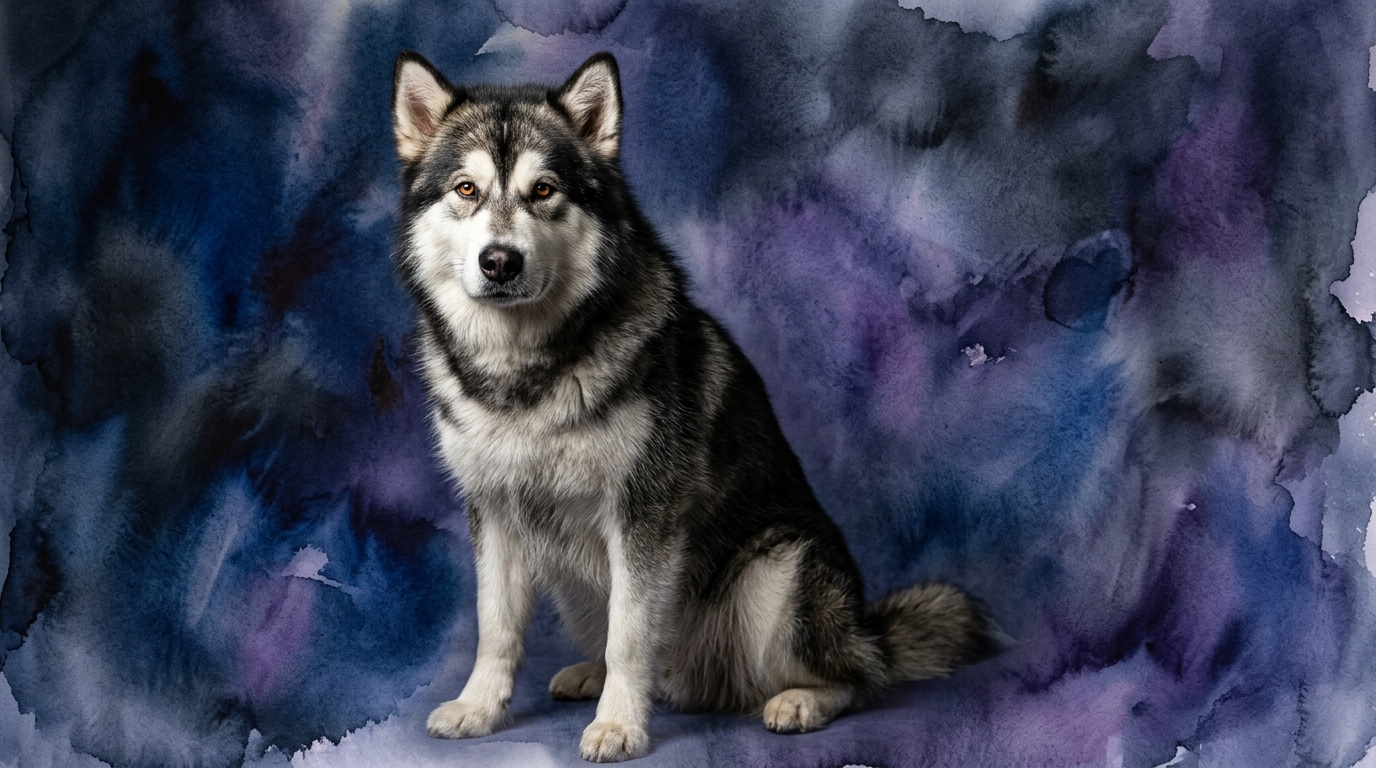
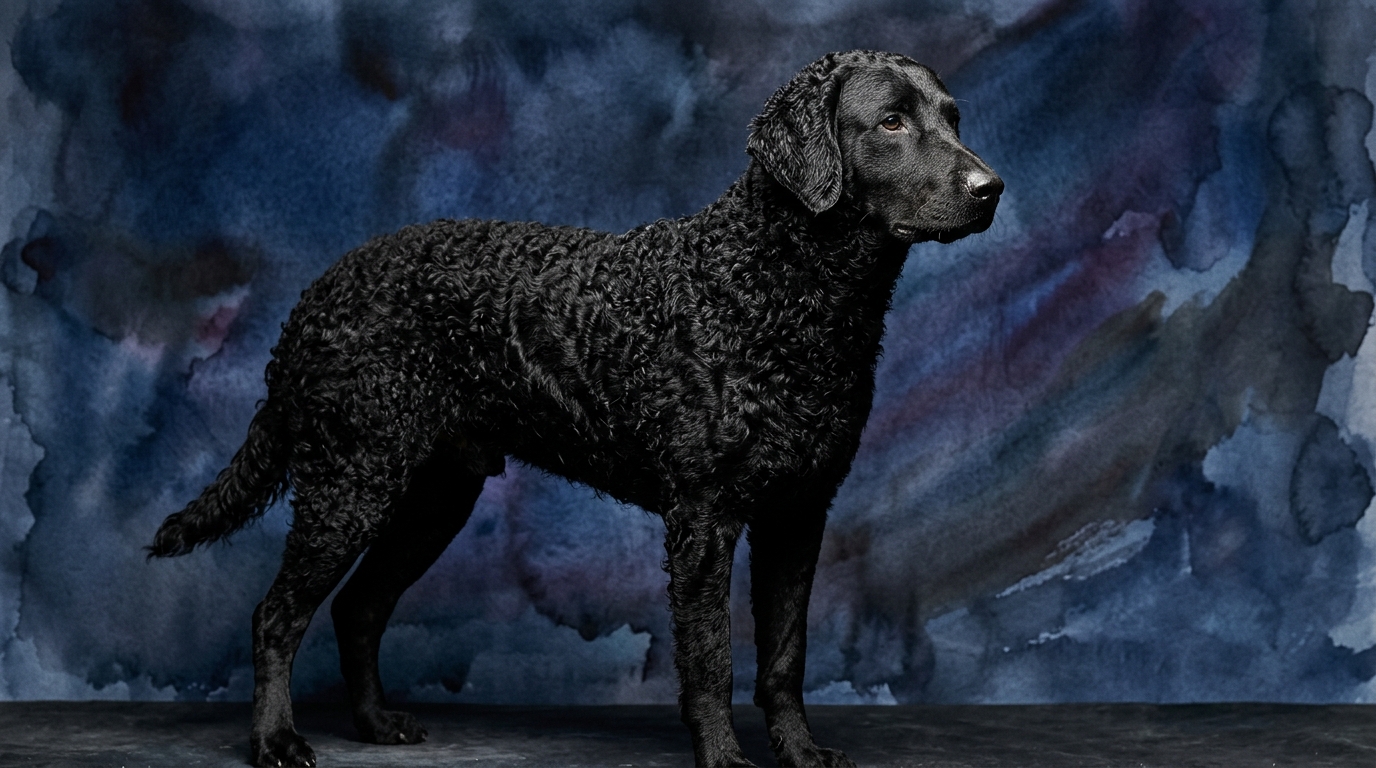
Side-by-Side IQ Profile: Malamute vs. Curly-Coated Retriever
The Cosmic Pet Pet IQ Lab provides a nuanced look at canine cognition, moving beyond simple rankings to assess five crucial dimensions. For the Alaskan Malamute, a powerful Working breed ranking #50 on the Coren scale, its profile reveals significant strengths in specific areas. Its Problem Solving is rated 4/5, indicating an impressive capacity to figure out complex challenges independently. Training Speed, however, stands at 2/5, suggesting a slower acquisition of new commands and a need for consistent, patient instruction. Social Intelligence is 3/5, meaning they can form strong bonds and understand human cues, but perhaps with a degree of independence. Instinctive Drive is a remarkable 5/5, reflecting their powerful urge to pull, explore, and work. Finally, Memory is 4/5, demonstrating a strong ability to recall learned information and routes.
In contrast, the Curly-Coated Retriever, a Sporting breed with a Coren rank of #41, presents a different cognitive blueprint. Its Problem Solving is 3/5, indicating a good but not exceptional ability to navigate new puzzles. Training Speed is 3/5, suggesting a moderate pace of learning and a generally more responsive nature to instruction compared to the Malamute. Social Intelligence is also 3/5, similar to the Malamute, showing a capacity for connection and understanding. Instinctive Drive is 3/5, reflecting a balanced drive for retrieving and activity without the extreme intensity of a sled dog. Memory for the Curly-Coated Retriever is 4/5, on par with the Malamute, indicating a solid ability to retain information and commands over time.
Where the Alaskan Malamute Excels Cognitively
The Alaskan Malamute's cognitive strengths are deeply rooted in its heritage as a heavy-duty sled dog and companion for Arctic exploration. Its Problem Solving score of 4/5 is a significant advantage when faced with complex environmental challenges. This isn't just about opening a gate; it's about navigating difficult terrain, finding paths through snowdrifts, or figuring out how to access resources. Owners will observe this as a dog that can independently assess situations and devise solutions, which can be a double-edged sword if not channeled positively, potentially leading to escape artistry or clever mischief when bored.
Furthermore, the Malamute's Instinctive Drive at 5/5 is unparalleled. This isn't merely about energy; it's an intrinsic, powerful urge to work, pull, and cover vast distances. This drive manifests as an enduring stamina and a persistent focus on a task, whether it's pulling a sled, hiking for miles, or exploring new scents. This intense drive, coupled with its 4/5 Memory, means a Malamute remembers routes, tasks, and even specific cues related to its work with impressive accuracy, making them reliable partners in demanding, repetitive tasks once trained.
Where the Curly-Coated Retriever Shines Cognitively
While the Curly-Coated Retriever doesn't boast higher scores in individual cognitive dimensions compared to the Malamute, its overall profile and Coren rank of #41 highlight a different kind of cognitive strength: cooperative intelligence and responsiveness. Its Training Speed of 3/5, which is higher than the Malamute's 2/5, means it generally picks up new commands and routines more quickly and with greater enthusiasm for pleasing its handler. This translates to a dog that is typically more eager to engage in structured training and less likely to challenge commands through sheer independence.
The Curly-Coated Retriever's balanced Instinctive Drive (3/5) combined with its solid Social Intelligence (3/5) makes it particularly adept at tasks requiring sustained cooperation, such as retrieving game or participating in dog sports like agility or obedience. While its Problem Solving at 3/5 is good, it's often applied in a context of working *with* a human, rather than solving problems entirely independently. This breed's cognitive strengths lie in its ability to integrate human direction effectively into its actions, making it a highly capable and agreeable working partner in field and home settings.
Which is Easier to Train and Why?
When considering ease of training, the Curly-Coated Retriever generally presents a more straightforward experience than the Alaskan Malamute. The Curly-Coated Retriever's Training Speed of 3/5, coupled with its moderate instinctive drive, means it is typically more attentive and less prone to independent decision-making during training sessions. They tend to have a higher desire to please and a more natural inclination to work in partnership with their human, making them responsive to positive reinforcement and clear instructions. Their retrieving instinct also makes them highly motivated by games involving objects.
The Alaskan Malamute, with its Training Speed of 2/5 and a colossal Instinctive Drive of 5/5, offers a different training challenge. Their powerful drive for independence and their deep-seated urge to explore or pull can make them appear stubborn or easily distracted. Training a Malamute requires immense patience, consistency, and a deep understanding of their motivations. They will question commands and prefer to make their own decisions, which is a testament to their problem-solving ability but can be frustrating for novice trainers. Owners often find success by turning training into a collaborative exercise and leveraging their strong memory and drive for physical activity.
Which Suits Active Owners vs. Relaxed Owners?
The choice between these two breeds significantly depends on an owner's lifestyle and commitment to activity. The Alaskan Malamute, with its astounding Instinctive Drive of 5/5 and a history of pulling heavy loads over vast distances, is unequivocally suited for highly active owners. They require extensive daily exercise that goes beyond a simple walk around the block; think long hikes, sledding, skijoring, or vigorous running. Owners who appreciate a canine partner for demanding outdoor adventures and can provide consistent mental and physical challenges will find the Malamute a fulfilling companion. A relaxed or sedentary owner would quickly find themselves overwhelmed by a Malamute's unfulfilled energy and independent problem-solving applied to escape attempts or destructive behaviors.
The Curly-Coated Retriever, with its balanced Instinctive Drive of 3/5, also requires regular activity but is generally more adaptable to a range of active lifestyles. They thrive with daily walks, runs, swimming, and engaging play sessions, particularly those involving retrieving. While they are certainly not couch potatoes, their energy demands are more manageable for an active family or an owner who enjoys regular, but perhaps not extreme, outdoor pursuits. They are an excellent fit for owners who enjoy canine sports, hunting, or simply want a companion for active family life without the intense, specific working drive of a Malamute.
The Verdict
Choose the Alaskan Malamute if you are an experienced, highly active owner seeking an independent, powerful partner for demanding outdoor adventures, capable of complex problem-solving and enduring physical feats.
Choose the Curly-Coated Retriever if you are an active owner looking for a cooperative, responsive companion for retrieving, family activities, and canine sports, valuing quicker trainability and a balanced drive.
🧠 Find Your Pet's IQ Score
Our Pet IQ Lab assessment covers 25+ tests across 5 cognitive dimensions — personalized to your breed.
Take the Full IQ Test →Frequently Asked Questions
Are Alaskan Malamutes truly stubborn?
Alaskan Malamutes are often perceived as stubborn due to their high independence and strong problem-solving skills; they prefer to make their own decisions, which requires patient and consistent training to channel effectively.
Do Curly-Coated Retrievers need a lot of grooming?
Despite their unique coat, Curly-Coated Retrievers are relatively low-maintenance in grooming; their single layer of tight curls requires only occasional brushing to remove loose hair and prevent matting.
Which breed is better with children?
Both breeds can be good with children with proper socialization and training, but the Curly-Coated Retriever's more cooperative nature and less intense instinctive drive might make it a slightly more predictable family companion for many households.