
A Side-by-Side Look at Cognitive Profiles
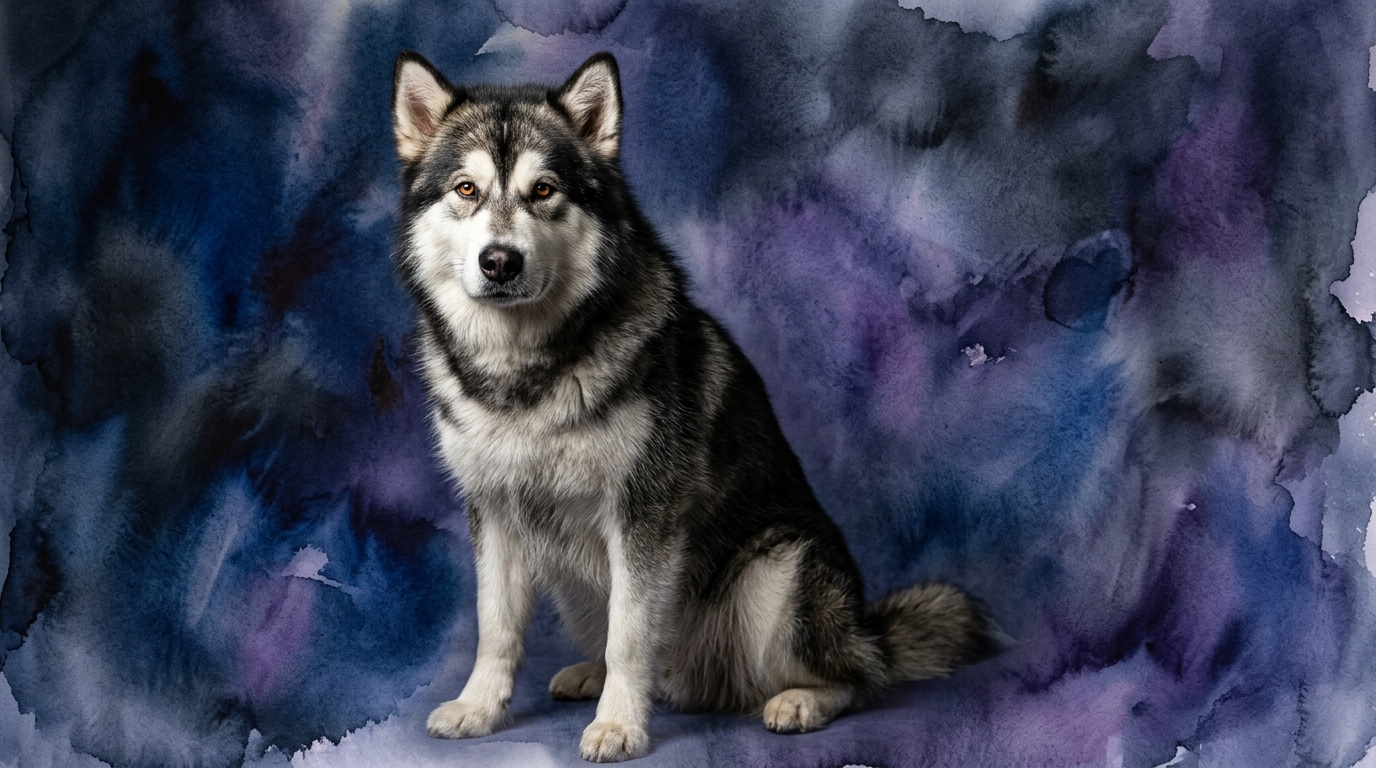
The Cosmic Pet Pet IQ Lab provides a fascinating framework for dissecting the cognitive strengths of these two distinct breeds, revealing where their minds align and diverge. For the Alaskan Malamute, classified in the Working group, its problem-solving acumen stands at a robust 4 out of 5, indicating a strong capacity to navigate complex situations and find solutions independently. Its training speed, however, is a more moderate 2 out of 5, suggesting that while it can learn, it may require more repetition or specific motivation to master new commands. Social intelligence registers at 3 out of 5, reflecting an ability to understand and interact with its social environment, though perhaps with a degree of self-reliance. Its instinctive drive is a powerful 5 out of 5, a clear nod to its heritage of pulling sleds and working in harsh environments, driven by deep-seated natural behaviors. Finally, its memory is an impressive 4 out of 5, implying a strong recall for past experiences and learned lessons.
Turning to the Dachshund, a member of the Hound group, we find a strikingly similar profile across several dimensions. Its problem-solving ability matches the Malamute at 4 out of 5, underscoring a sharp mind capable of figuring things out, often with a mischievous streak. Like the Malamute, its training speed is also 2 out of 5, indicating that while trainable, it may not be the quickest to pick up new obedience commands, frequently prioritizing its own agenda. Social intelligence for the Dachshund is 3 out of 5, mirroring the Malamute's capacity for social interaction but often expressed through its independent, sometimes stubborn, nature. Its instinctive drive also rates a perfect 5 out of 5, a testament to its profound heritage as a tenacious badger hunter, driven by scent and prey instinct. The one notable difference lies in memory, where the Dachshund scores 3 out of 5, slightly lower than the Malamute, suggesting it might not retain lessons or experiences with quite the same fidelity or perhaps is more prone to 'selective' memory when its instincts take over.
Where the Alaskan Malamute's Mind Excels
The Alaskan Malamute's cognitive advantages are deeply rooted in its heritage as a powerful sled dog and companion in unforgiving climates. Its superior memory, rated 4/5 compared to the Dachshund's 3/5, allows it to retain complex sequences of commands and recall past experiences with remarkable clarity. This means a Malamute is more likely to remember a learned route, a specific task's requirements, or the boundaries set in its environment over longer periods. Coupled with its perfect 5/5 instinctive drive, this memory enables it to execute intricate, multi-step working tasks – such as navigating a sledding trail or performing search-and-rescue operations – relying on both learned patterns and ingrained motivation. Its problem-solving (4/5) is often applied to overcoming physical obstacles or strategizing to achieve a goal, like finding the best path through snowdrifts or figuring out how to open a gate, leveraging its robust physicality and mental fortitude.
Where the Dachshund's Mind Takes the Lead
The Dachshund, despite its smaller stature, possesses a cognitive profile that thrives on tenacity and focused pursuit. Its problem-solving ability, matching the Malamute at 4/5, is frequently directed towards overcoming obstacles to reach a desired outcome, often related to its hunting instincts. A Dachshund might meticulously figure out how to dig under a fence or outsmart a puzzle toy to get a treat, demonstrating a persistent, goal-oriented intellect. Its 5/5 instinctive drive is its paramount cognitive strength, translating into an unparalleled focus when it latches onto a scent or a perceived 'prey.' This unwavering drive allows it to ignore distractions and pursue a goal with singular determination, a trait invaluable for its original purpose of flushing badgers from their burrows. While its memory is slightly lower at 3/5, this doesn't hinder its immediate, task-focused problem-solving; rather, it might allow it to approach challenges with fresh determination without being overly burdened by past failures or lengthy procedures.
Training: Navigating Independent Minds
When it comes to ease of training, both the Alaskan Malamute and the Dachshund present unique challenges, largely due to their identical 2/5 training speed and powerful 5/5 instinctive drives. Neither breed is inherently inclined to rapid, eager obedience. The Malamute's strong memory (4/5) means it will remember what it learns, but its independent working dog mentality and powerful drive for self-directed tasks (like pulling or exploring) often mean it chooses to follow its own will rather than a command, requiring consistent, patient, and highly motivating training. Its problem-solving skills might even be used to circumvent commands it deems unnecessary. Conversely, the Dachshund's equally strong drive, specifically geared towards scent and hunting, can make it notoriously stubborn. Once it locks onto a scent or a mission, its lower memory (3/5) might mean that while it eventually learns a command, it requires more consistent reinforcement to embed it, and its tenacious focus on its instincts can make it 'selectively deaf' to calls when its nose is engaged. Training both breeds effectively requires understanding their intrinsic motivations and channeling their drives rather than trying to suppress them, often through positive reinforcement and engaging activities that align with their natural tendencies.
Matching Canine Minds to Lifestyles
The cognitive makeup of these breeds dictates their suitability for different owner lifestyles. An Alaskan Malamute thrives with active owners who can provide consistent mental and physical challenges. Its 5/5 instinctive drive and 4/5 memory mean it needs outlets for its working heritage, such as sledding, skijoring, hiking, or challenging scent work. Owners must be prepared to engage its problem-solving mind with structured tasks and maintain clear leadership to guide its independent nature. A relaxed owner who cannot provide this level of engagement may find a Malamute becomes bored, destructive, or develops behavioral issues due to unfulfilled cognitive and physical needs. Its social intelligence (3/5) means it values companionship but also thrives on clear boundaries and purpose.
The Dachshund, while smaller, is far from a sedentary lap dog and also benefits from active engagement, albeit different in scope. Its 5/5 instinctive drive and 4/5 problem-solving mind are best suited for owners who appreciate its tenacious spirit and can provide outlets for its hunting instincts. This means regular walks, engaging puzzle toys, and especially scent-based games or 'nose work' activities that allow it to use its powerful sense of smell. While it can adapt to apartment living more easily than a Malamute, it still requires daily mental stimulation to prevent boredom and destructive behaviors. Relaxed owners might find its independent, sometimes stubborn, nature challenging if they don't channel its inherent drives. Its 3/5 social intelligence means it forms strong bonds but often retains an independent streak, requiring an owner who respects its unique personality.
The Verdict
Choose an Alaskan Malamute if you are an active, experienced owner ready to consistently engage a powerful, independent working mind with structured tasks and ample outdoor activity, appreciating its strong memory and drive for purpose.
Opt for a Dachshund if you appreciate a tenacious, problem-solving companion with a formidable hunting drive, prepared to engage its keen nose and persistent spirit with consistent training and stimulating scent games, even if its memory requires more reinforcement.
🧠 Find Your Pet's IQ Score
Our Pet IQ Lab assessment covers 25+ tests across 5 cognitive dimensions — personalized to your breed.
Take the Full IQ Test →Frequently Asked Questions
Are Alaskan Malamutes difficult to train?
Alaskan Malamutes are not inherently difficult to train in terms of their learning capacity, but their strong independent nature and powerful instinctive drives mean they require consistent, patient, and highly motivating training methods. Their moderate training speed of 2/5 suggests they may not pick up commands as quickly as some breeds, often choosing to follow their own agenda if not properly motivated.
Do Dachshunds really have a strong hunting drive?
Yes, Dachshunds possess an exceptionally strong hunting drive, rated 5/5 in their IQ profile. This is deeply ingrained from their history as badger hunters, manifesting as a tenacious focus on scent, a propensity for digging, and a determined pursuit of perceived 'prey.' Owners must be aware of this drive and provide appropriate outlets.
How do their Coren ranks compare if their IQ profiles are so similar?
Their similar Coren ranks (#50 for Malamute, #49 for Dachshund) reflect their similar working and obedience intelligence, indicating they are in the 'fair' category for understanding new commands and obeying them on the first attempt. The IQ profiles further break down why this is the case, highlighting their shared moderate training speed and strong instinctive drives that often make them independent thinkers, requiring more effort to train for conventional obedience.