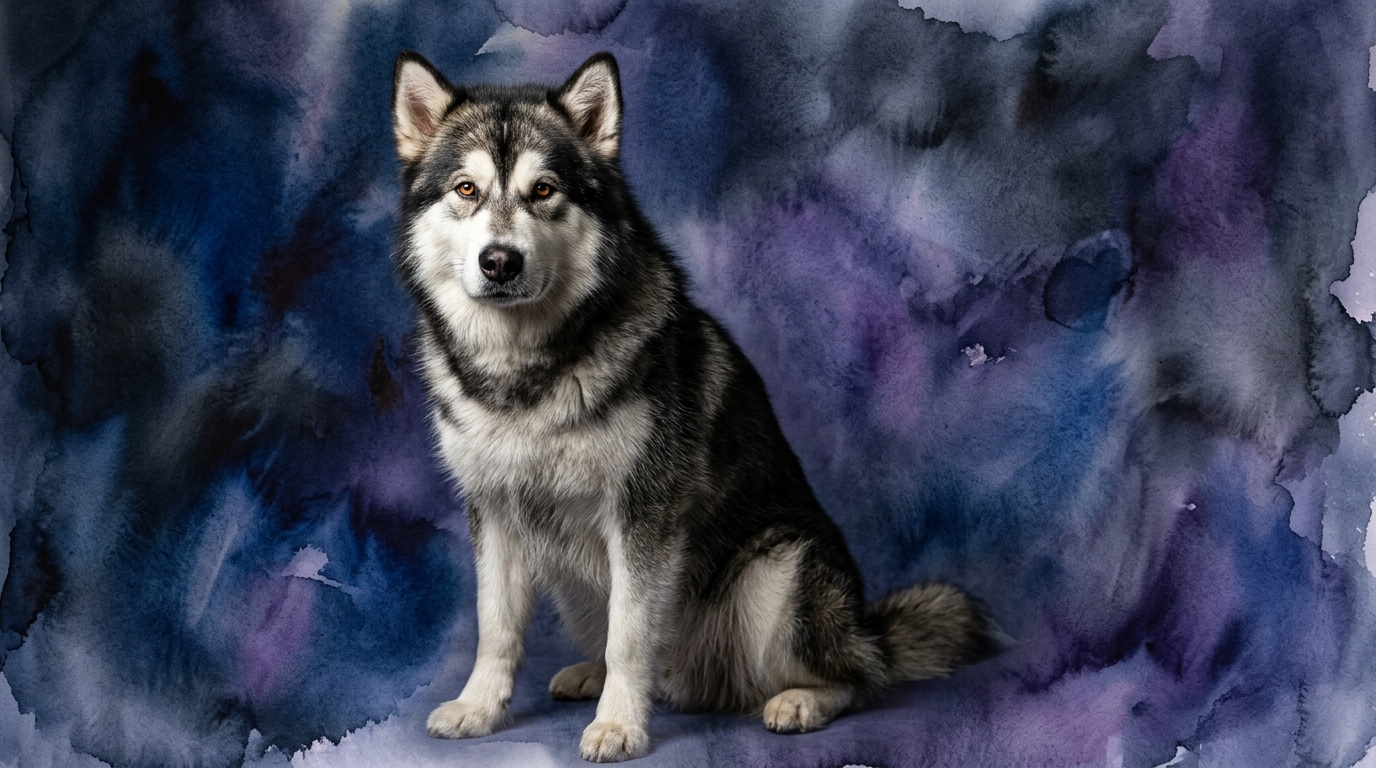
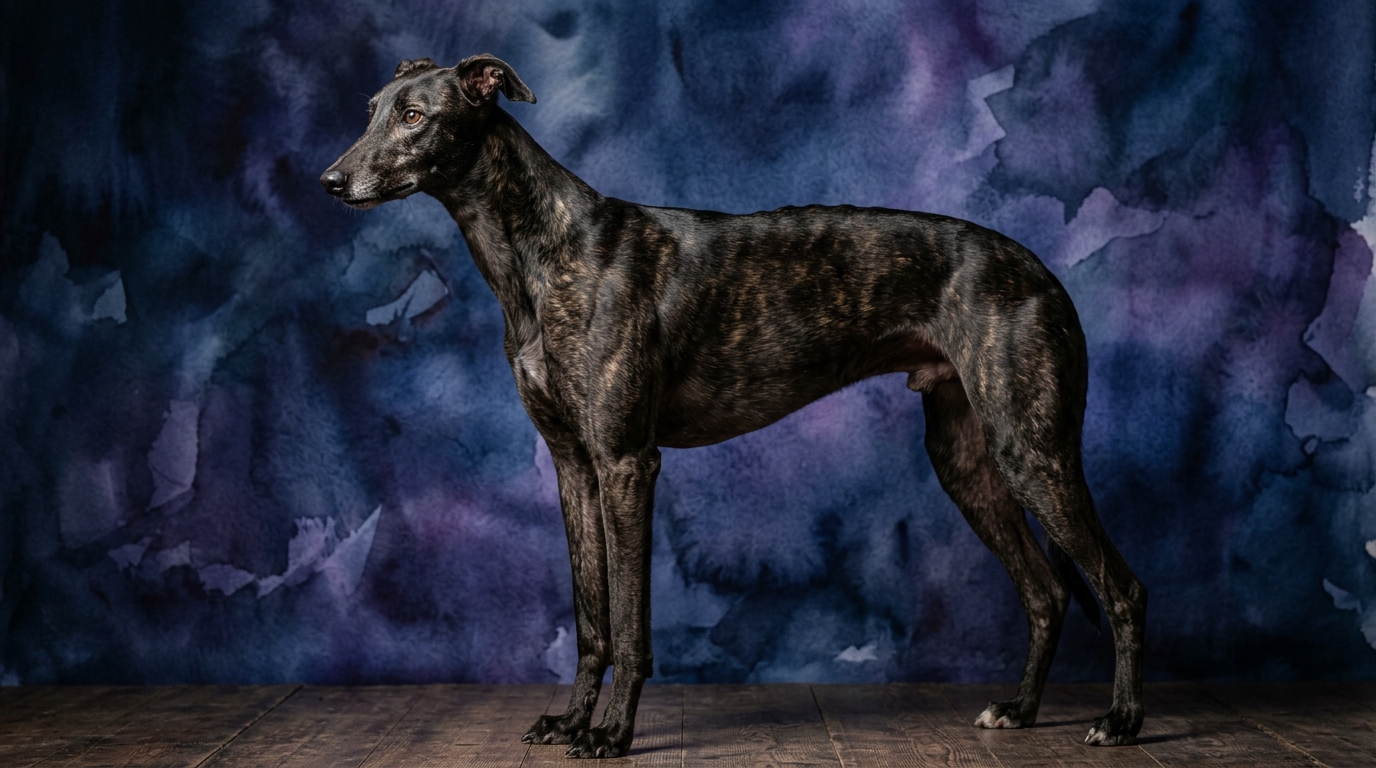
Side-by-Side IQ Profile: Alaskan Malamute vs. Greyhound
The Cosmic Pet Pet IQ Lab provides a nuanced view of canine cognitive abilities, moving beyond simple labels to assess specific dimensions of intellect. The Alaskan Malamute, a working breed, holds a Coren rank of #50, indicating a solid, though not top-tier, capacity for obedience and working intelligence. Its individual cognitive scores are robust: Problem Solving at 4/5, indicating a strong capacity for independent thought and finding solutions; Training Speed at 2/5, suggesting a deliberate learning pace; Social Intelligence at 3/5, reflecting a moderate ability to interpret and respond to social cues; Instinctive Drive at a powerful 5/5, highlighting their deep-seated urges for activities like pulling or tracking; and Memory at 4/5, showing a commendable ability to retain information and experiences.
In contrast, the Greyhound, a hound breed, boasts a slightly higher Coren rank of #46, implying a marginally quicker grasp of obedience commands in a structured setting. Its individual cognitive profile presents a different emphasis: Problem Solving at 3/5, indicating a respectable but perhaps less independent approach to novel challenges; Training Speed at 2/5, mirroring the Malamute’s pace in acquiring new skills; Social Intelligence at 3/5, suggesting a similar level of understanding human and canine social dynamics; Instinctive Drive at an equally potent 5/5, underscoring their profound urge to chase; and Memory at 3/5, indicating a functional capacity for recall that might require more reinforcement than a Malamute.
While both breeds share identical scores in Training Speed and Social Intelligence, their differing Coren ranks and distinct scores in Problem Solving and Memory point to divergent cognitive strengths. The Malamute’s higher Problem Solving and Memory scores suggest a dog that processes and retains information with greater depth and independence, often applying learned solutions to new situations. The Greyhound’s slightly higher Coren rank, despite lower individual scores in these areas, hints at a capacity for focused, task-oriented learning when the motivation aligns with their intrinsic drives, perhaps making them more amenable to specific, repetitive training protocols.
Where the Alaskan Malamute Wins Cognitively
The Alaskan Malamute clearly edges out the Greyhound in two critical cognitive dimensions: Problem Solving (4/5 vs. 3/5) and Memory (4/5 vs. 3/5). These strengths are deeply rooted in their history as Arctic sled dogs, where independent decision-making and precise recall were not just beneficial, but essential for survival. A Malamute's higher problem-solving score means they are more likely to analyze a situation, devise a strategy, and execute it, whether it's figuring out how to open a gate, navigate a complex trail, or outwit a perceived obstacle. This translates into a companion who isn't just following orders but actively engaging their mind with their environment.
Their superior memory is equally significant. A Malamute remembers not just commands, but also experiences, routes, and the consequences of their actions with impressive detail. This allows them to build a complex mental map of their world, anticipating events and remembering past successes or failures. For an owner, this means a Malamute will recall training cues over longer periods and in varied contexts, but also remember which specific approaches worked to achieve their own goals, such as finding a way to reach a coveted treat or escape a confined space. This combination of robust problem-solving and memory means a Malamute often presents a more intellectually formidable and autonomous presence.
Where the Greyhound Wins Cognitively
While the individual IQ dimensions show the Malamute with an edge in problem-solving and memory, the Greyhound's slightly higher Coren rank (#46 vs. #50) suggests a subtle but important cognitive advantage in traditional obedience and working intelligence. The Coren ranking primarily assesses how quickly and consistently a breed learns and performs obedience commands. This implies that while a Greyhound might not independently devise solutions as readily as a Malamute, they are potentially more receptive to formal instruction and can achieve a higher level of consistent obedience when appropriately motivated.
The Greyhound's cognitive strengths are intrinsically linked to their specialized role as sighthounds. Their instinctive drive (5/5) is powerfully channeled into pursuit, requiring rapid visual processing and immediate physical response. While this doesn't directly translate into 'problem-solving' in the same way a Malamute might navigate a complex environment, it represents a highly refined cognitive specialization: the ability to lock onto a moving target, calculate its trajectory, and execute a flawless chase. This focused, almost single-minded application of their intellect, coupled with their capacity for efficient learning in specific contexts, allows them to excel in tasks that leverage their innate athleticism and quick reflexes, making them exceptionally adept at activities like lure coursing.
Which is Easier to Train and Why?
When it comes to ease of training, both the Alaskan Malamute and the Greyhound present unique challenges, as reflected by their identical Training Speed scores of 2/5. Neither breed is typically described as effortlessly trainable in the conventional sense, but the *nature* of their training difficulties differs significantly due to their other cognitive traits and behavioral predispositions. The Malamute's higher Problem Solving (4/5) and strong Memory (4/5), combined with its independent working breed heritage, mean they are often quite capable of figuring things out for themselves, which can include finding creative ways to circumvent commands or pursue their own agenda. They require highly engaging, positive reinforcement methods, and an owner who can consistently outwit their cleverness and strong will. Their training is less about rote obedience and more about building a partnership based on mutual respect and understanding their motivations.
The Greyhound, despite its slightly higher Coren rank, shares the same 2/5 Training Speed, indicating they also require patience and repetition. Their lower Problem Solving (3/5) and Memory (3/5) might mean they take longer to grasp new concepts or require more consistent reinforcement to retain them. However, their primary training challenge often stems from their intense instinctive drive (5/5) for chase and a potential for disinterest in tasks that don't immediately align with their intrinsic motivations. They can be sensitive and respond poorly to harsh methods, becoming withdrawn. Successful training for Greyhounds often involves making tasks fun, short, and highly rewarding, often leveraging their prey drive in controlled, safe environments, rather than trying to suppress it entirely.
Which Suits Active Owners vs. Relaxed Owners
For the truly active owner, the Alaskan Malamute is a natural fit, but 'active' in a very specific sense. Their powerful Instinctive Drive (5/5) and robust physique demand significant, consistent physical exertion, often in endurance-based activities like hiking, canicross, or even recreational sledding. Beyond physical activity, their high Problem Solving (4/5) and Memory (4/5) mean they require substantial mental engagement to prevent boredom and destructive behaviors. They thrive on challenges, puzzle toys, and consistent training that stimulates their independent minds. A Malamute is not a dog for a relaxed owner; they require a dedicated handler who can provide both the physical outlets for their stamina and the mental stimulation for their cleverness, ensuring they remain a well-adjusted companion.
The Greyhound, surprisingly, can suit both active and more relaxed owners, depending on how 'active' is defined. While their Instinctive Drive (5/5) dictates a profound need for bursts of high-speed exercise, often through sprinting in a securely fenced area, they are famously content to be '45 mph couch potatoes' indoors. After a good run, Greyhounds are typically calm, quiet, and enjoy lounging. This makes them suitable for owners who can commit to providing those intense, short bursts of exercise daily, but who also appreciate a serene companion for the rest of the day. They may not demand the same level of constant mental problem-solving engagement as a Malamute, making them a good choice for those who want a dog with a powerful athletic outlet without the incessant demand for complex cognitive tasks throughout the day.
The Verdict
Choose an Alaskan Malamute if you are an experienced owner who thrives on a partnership with an independent, strong-willed, and mentally robust companion, prepared for consistent, engaging training and ample physical outlets that challenge both their body and clever mind.
Choose a Greyhound if you appreciate a calm, affectionate home presence combined with the need for dedicated sprint exercise in a safe environment, and who can manage a powerful prey drive with patience and positive reinforcement, valuing elegance and speed over constant intellectual sparring.
🧠 Find Your Pet's IQ Score
Our Pet IQ Lab assessment covers 25+ tests across 5 cognitive dimensions — personalized to your breed.
Take the Full IQ Test →Frequently Asked Questions
Is an Alaskan Malamute difficult to train?
Based on their Training Speed of 2/5 and high Problem Solving (4/5), Alaskan Malamutes can be challenging to train in conventional obedience. They are independent thinkers who need consistent, positive, and engaging methods, often requiring an owner who understands their working dog mentality and strong will.
Do Greyhounds need a lot of exercise?
Greyhounds have a powerful Instinctive Drive (5/5) for speed and require daily opportunities for full-out sprinting in a safe, securely fenced area. However, they are not endurance athletes like Malamutes; outside of these intense bursts, they are typically quite relaxed and enjoy lounging, making them '45 mph couch potatoes'.
Which breed is better with other pets?
Both breeds have a Social Intelligence of 3/5, suggesting moderate social adaptability, but their high Instinctive Drive (5/5) is crucial. Malamutes, with their pack drive, can often coexist with other dogs if properly socialized, but their prey drive can be a concern with smaller animals. Greyhounds, with their strong chase instinct, typically require very careful introductions and supervision with smaller pets, including cats and small dogs, as their prey drive is highly specialized for pursuit.