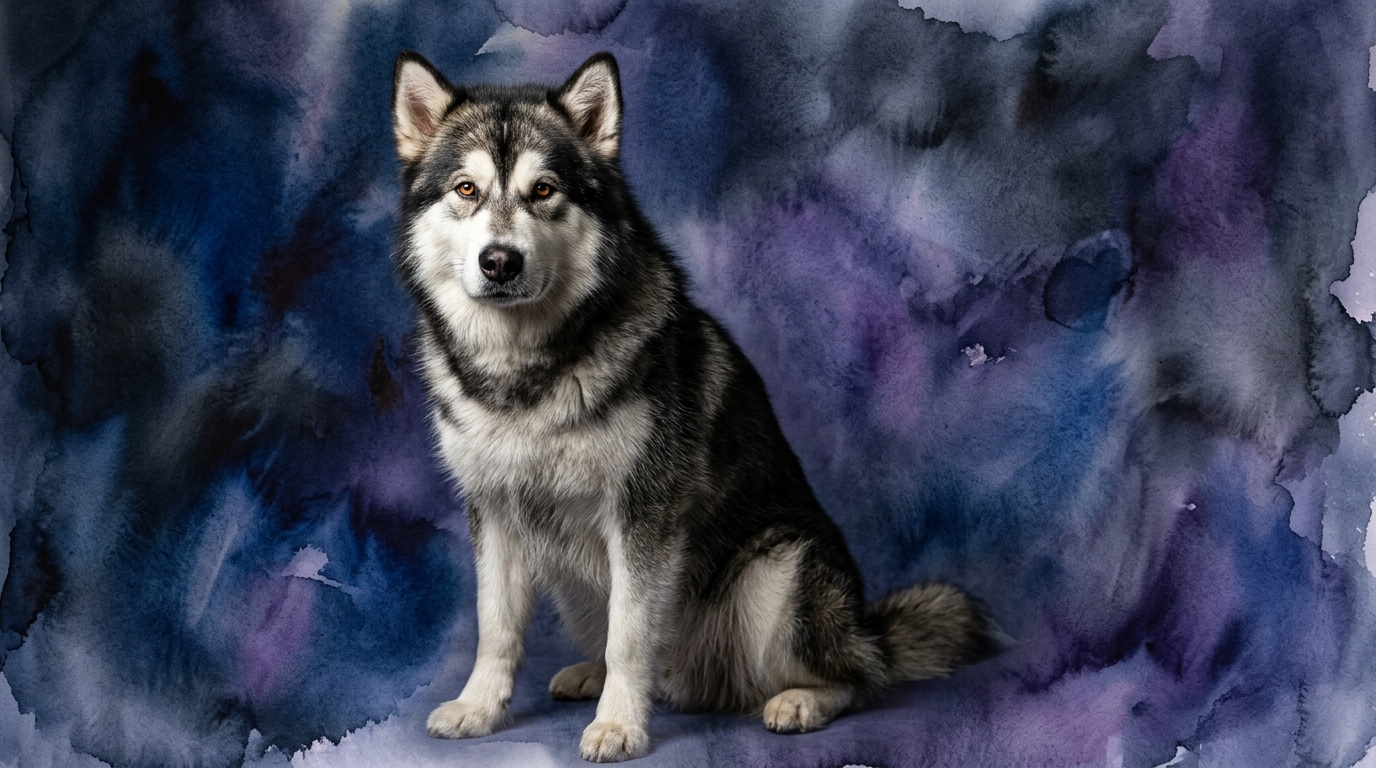
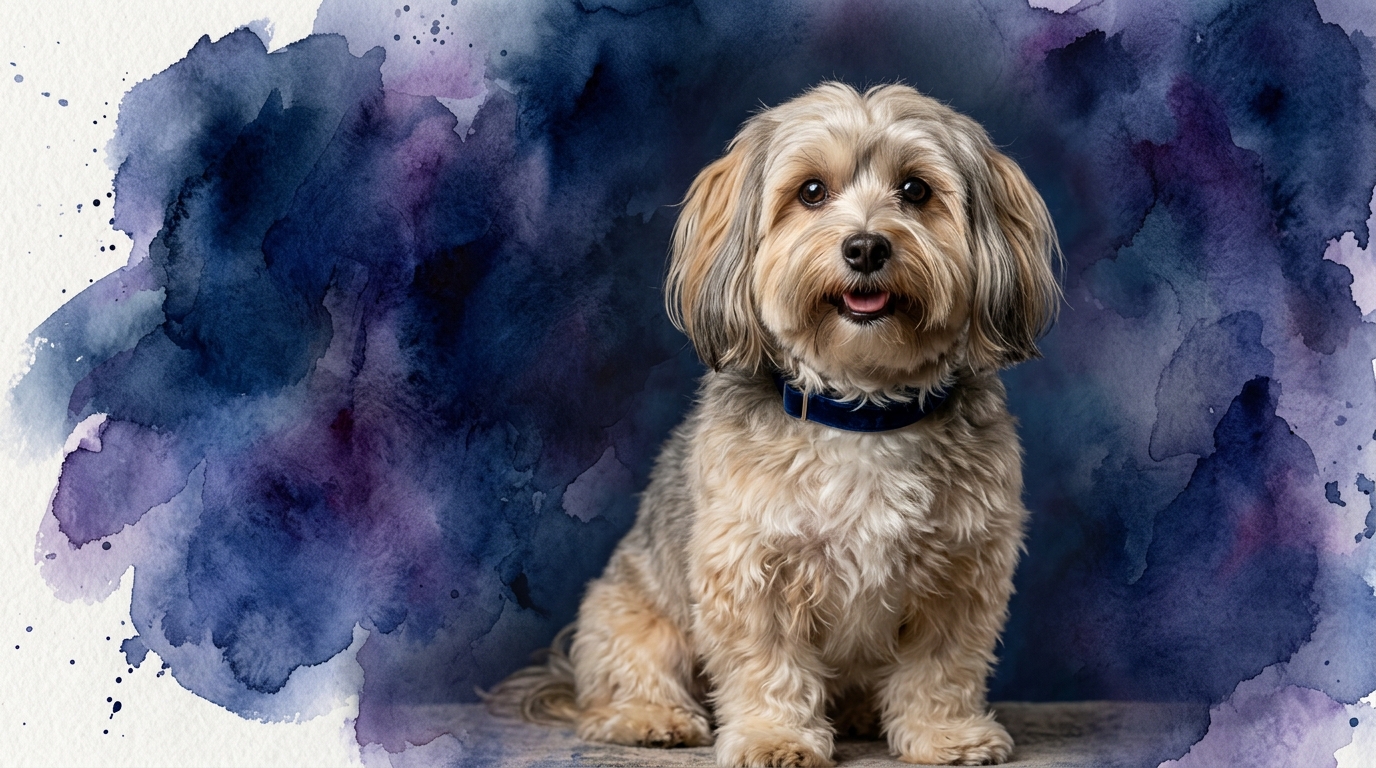
Side-by-Side IQ Profile: Alaskan Malamute vs. Havanese
The Cosmic Pet Pet IQ Lab employs a multi-dimensional approach to assess canine cognition, moving beyond simple obedience metrics to evaluate problem-solving, training speed, social intelligence, instinctive drive, and memory. These five dimensions paint a nuanced picture of a breed's cognitive architecture, reflecting their historical roles and evolutionary pressures.
The Alaskan Malamute, a powerful working dog, exhibits a robust cognitive profile tailored for demanding tasks in harsh environments. Their problem-solving capacity scores a strong 4 out of 5, reflecting their ability to independently navigate complex situations and overcome obstacles. However, their training speed is a more moderate 2 out of 5, indicating a preference for independent thought over immediate compliance. Social intelligence for the Malamute stands at 3 out of 5, suggesting competence in group dynamics but perhaps less focus on human emotional nuances. Their instinctive drive is exceptionally high at 5 out of 5, powering their endurance and task focus, while memory registers a solid 4 out of 5, crucial for recalling routes and complex learned behaviors.
In contrast, the Havanese, a charming toy breed, presents a cognitive profile optimized for companionship and close human interaction. Their problem-solving ability is rated 3 out of 5, sufficient for navigating household challenges but not geared towards complex independent tasks. Training speed for the Havanese is a balanced 3 out of 5, demonstrating a willingness to learn without the Malamute's independent streak. Where the Havanese truly shines is in social intelligence, scoring an impressive 5 out of 5, reflecting their exceptional ability to read and respond to human emotions and social cues. Their instinctive drive is lower at 2 out of 5, aligning with their role as a companion rather than a working animal, and their memory is a respectable 3 out of 5, adequate for household routines and social interactions.
These distinct profiles underscore how different breeds have evolved specialized cognitive toolkits. The Malamute's scores highlight a mind built for physical and mental endurance, independent decision-making, and navigating the natural world, while the Havanese's profile emphasizes emotional acuity, social adaptability, and a strong desire for connection within a human family.
Where the Alaskan Malamute Wins Cognitively
The Alaskan Malamute's cognitive strengths are deeply rooted in their heritage as powerful sled dogs. Their superior problem-solving (4/5) manifests in practical, goal-oriented ways, such as figuring out how to open gates, bypass fences, or strategize to reach a desired object. This isn't about solving abstract puzzles, but rather applying ingenuity to overcome real-world physical barriers or challenges to achieve an objective, often one tied to their strong drives.
Furthermore, their exceptional instinctive drive (5/5) coupled with strong memory (4/5) allows them to excel in tasks requiring sustained effort and recall of complex sequences, like navigating long, intricate trails or remembering specific commands over extended periods. This combination makes them adept at activities demanding stamina and purpose, whether it's pulling a sled, carrying a pack, or engaging in demanding canine sports, where their independence allows for self-directed action within a larger goal.
Where the Havanese Wins Cognitively
The Havanese truly excels in the realm of social intelligence (5/5), making them masters of human-canine interaction. They possess an uncanny ability to read subtle shifts in human mood, body language, and vocal tone, allowing them to adapt their behavior to maintain harmony and connection. This high social acuity enables them to integrate seamlessly into diverse family dynamics, often anticipating needs and offering comfort without direct prompting, acting as natural emotional barometers.
Their cognitive wins also extend to their adaptability within social contexts. While their problem-solving (3/5) is not as geared towards physical challenges as the Malamute's, it is highly effective in navigating social situations, such as understanding household rules, learning complex social routines, and even manipulating human attention in endearing ways. This blend of social understanding and moderate problem-solving makes them exceptionally well-suited for roles requiring close human partnership, such as therapy work, where emotional responsiveness is paramount.
Which is Easier to Train and Why
When it comes to ease of training, the Havanese generally presents a less challenging experience for most owners compared to the Alaskan Malamute. The Havanese's training speed of 3 out of 5, combined with their exceptional social intelligence of 5 out of 5, means they are highly motivated by pleasing their human companions and thrive on positive social reinforcement. They are eager to engage in learning activities that strengthen their bond and are generally more receptive to commands, making them quicker to pick up new behaviors and routines.
The Alaskan Malamute, with a training speed of 2 out of 5 and a high instinctive drive of 5 out of 5, approaches training with a different mindset. They are independent thinkers, often questioning the necessity or immediate benefit of a command before complying. This isn't a lack of ability, but rather a strong will and a history of making their own decisions in demanding environments. Training a Malamute requires immense patience, consistency, and a deep understanding of their motivations, often needing to convince them that a command is worth their effort or aligns with their own interests. Their behavioral differences stem from their purpose: the Havanese was bred to be a responsive companion, while the Malamute was bred to be a resilient, self-sufficient worker.
Which Suits Active Owners vs. Relaxed Owners
The choice between an Alaskan Malamute and a Havanese largely depends on an owner's lifestyle and energy levels. Active owners who thrive on outdoor adventures and physical challenges will find a compatible partner in the Alaskan Malamute. Their high instinctive drive (5/5) demands significant daily exercise, structured activities like hiking, running, or sledding, and consistent mental engagement to prevent boredom and destructive behaviors. Owners who enjoy training for demanding tasks and can provide firm, consistent leadership will appreciate the Malamute's robust capabilities and independent spirit.
Conversely, more relaxed owners or those living in smaller spaces will likely find the Havanese a much better fit. While they still require regular walks and playtime, their lower instinctive drive (2/5) means their exercise needs are considerably less intense than a Malamute's. Their exceptional social intelligence (5/5) makes them content with being the center of family life, thriving on companionship and indoor activities that involve their human family. They are highly adaptable to various living situations, making them ideal for individuals or families seeking a devoted, emotionally responsive companion without the demands of a high-endurance working breed.
The Verdict: When to Choose Each Breed
The decision between an Alaskan Malamute and a Havanese hinges on a clear understanding of their distinct cognitive blueprints and the lifestyle each breed requires. The Malamute is a magnificent choice for experienced, active individuals or families who can commit to extensive physical exercise, consistent and patient training, and who appreciate an independent, resilient companion for outdoor adventures.
The Havanese is the perfect companion for those seeking a highly social, adaptable, and emotionally intelligent dog that thrives on close human interaction and fits comfortably into a less demanding, often indoor-centric lifestyle. They are ideal for first-time owners or those desiring a devoted, responsive family member.
The Verdict
Choose an Alaskan Malamute if you are an experienced, active owner seeking a resilient, independent companion for demanding outdoor activities and can provide consistent, firm training.
Opt for a Havanese if you desire a highly social, adaptable, and emotionally intelligent companion for a less strenuous lifestyle, prioritizing close human interaction and responsiveness.
🧠 Find Your Pet's IQ Score
Our Pet IQ Lab assessment covers 25+ tests across 5 cognitive dimensions — personalized to your breed.
Take the Full IQ Test →Frequently Asked Questions
Is an Alaskan Malamute a good choice for a first-time dog owner?
Generally, an Alaskan Malamute is not recommended for first-time owners due to their strong will, high exercise requirements, and independent nature which demand consistent, experienced handling and training. Their cognitive profile leans towards self-sufficiency, requiring an owner prepared for a significant commitment.
Do Havanese dogs require a lot of grooming due to their coat?
Yes, Havanese dogs do require regular grooming to maintain their long, silky coat, which can easily mat without daily brushing. While their cognitive needs are less demanding than a Malamute's, their physical maintenance, particularly coat care, is a daily commitment to prevent tangles and skin issues.
Which breed is better with children: Alaskan Malamute or Havanese?
Both breeds can be good with children, but in different ways. Havanese, with their high social intelligence, are often gentle and patient companions, adapting well to family dynamics. Alaskan Malamutes can be good family dogs but their size, strength, and high energy require careful supervision with very young children, and their independent nature means they may not always seek interaction.