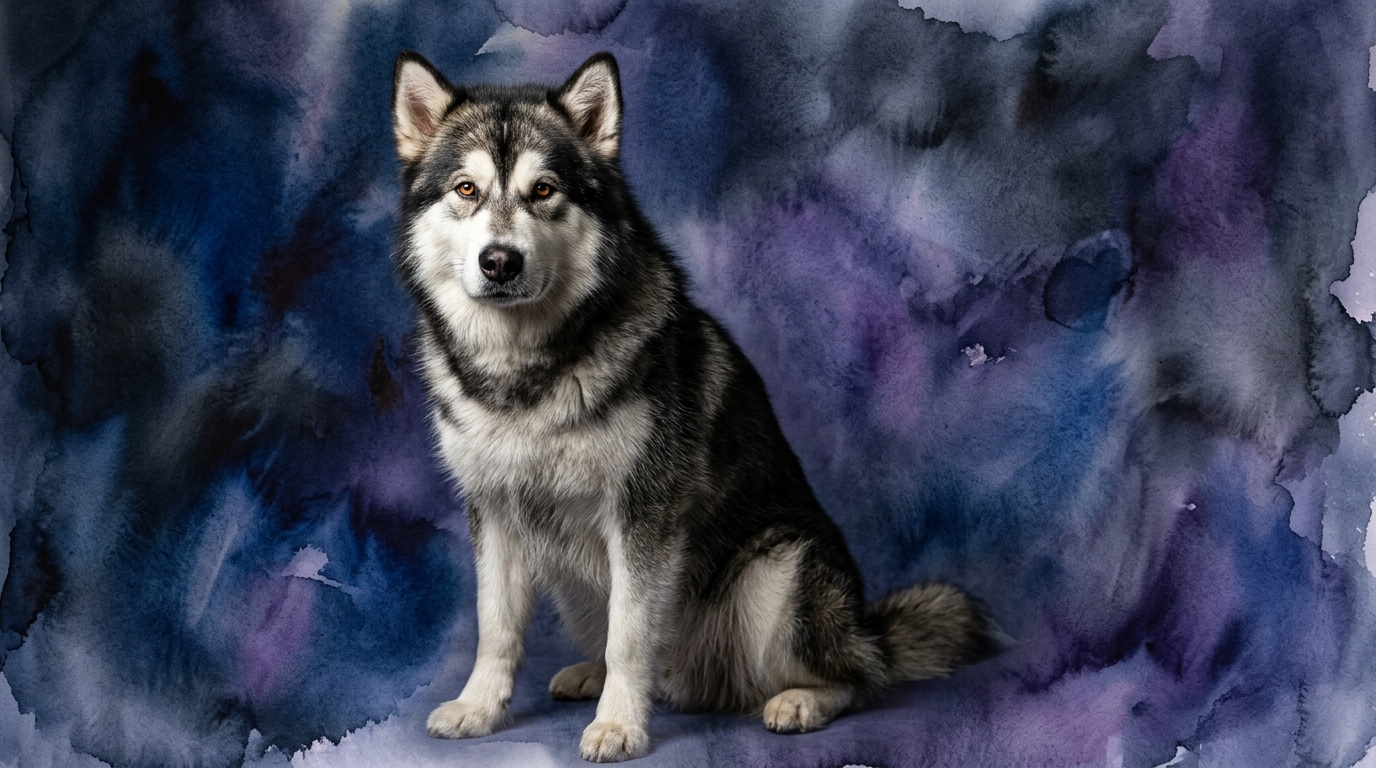
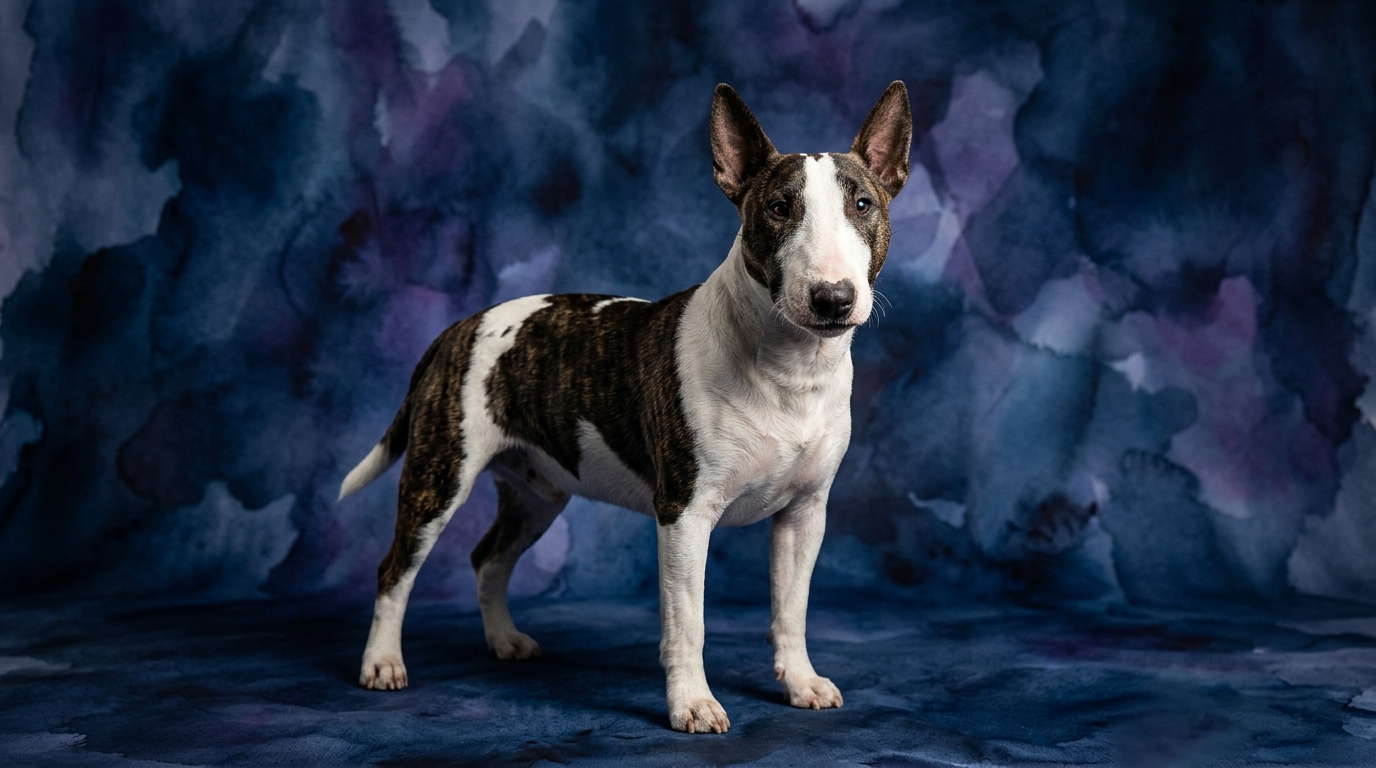
Side-by-Side Cognitive Profiles
At The Cosmic Pet Pet IQ Lab, we evaluate canine intelligence across five key dimensions, revealing the unique cognitive strengths of each breed. Understanding these profiles is crucial for potential owners seeking a harmonious partnership.
The **Alaskan Malamute**, a stalwart Working breed, boasts a Problem Solving score of 4/5, indicating a deep capacity for independent thought and strategic action, essential for their demanding historical roles. Their Training Speed is 2/5, reflecting a strong independent streak that prioritizes self-sufficiency over immediate compliance. Social Intelligence stands at 3/5, suggesting a moderate ability to navigate complex social dynamics, while their Instinctive Drive is an unparalleled 5/5, underpinning their powerful motivation for specific tasks. Finally, their Memory is rated 4/5, allowing for excellent recall of routes, tasks, and experiences.
In contrast, the **Miniature Bull Terrier**, a tenacious Terrier breed, presents a different cognitive landscape. Their Problem Solving score is 3/5, demonstrating a solid, practical aptitude for everyday challenges. Notably, their Training Speed is 3/5, indicating a more moderate willingness to engage with human instruction compared to the Malamute. Social Intelligence is also 3/5, suggesting a similar capacity for forming bonds and understanding social cues. Their Instinctive Drive is 3/5, present but less all-encompassing, and their Memory is also 3/5, providing competent recall for routines and experiences.
Where the Alaskan Malamute Wins Cognitively
The Alaskan Malamute undeniably triumphs in areas demanding profound cognitive depth for survival and complex, multi-stage tasks. Their superior Problem Solving score of 4/5, against the Miniature Bull Terrier's 3/5, reflects an innate ability to independently assess situations, strategically devise solutions, and overcome obstacles, whether it’s navigating a blizzard or cleverly opening a 'dog-proof' latch. This isn't about quick obedience, but a deep, strategic thinking that allows them to make effective decisions in challenging environments.
Furthermore, the Malamute's Memory, also rated 4/5 compared to the Miniature Bull Terrier's 3/5, allows them to retain intricate details of environments, routes, and learned sequences over extended periods. This exceptional cognitive recall is invaluable for multi-stage activities or recalling prior training, even if their independent nature means they don't always *choose* to act on it immediately. Perhaps their most striking cognitive 'win' is their Instinctive Drive, scoring a perfect 5/5 against the Miniature Bull Terrier's 3/5. This isn't just physical energy; it's a powerful, ingrained cognitive motivation that directs their focus and determination towards specific, ancestral behaviors like pulling, exploring, and scenting. This profound drive means they are intrinsically wired to excel at demanding, purposeful work, requiring an owner who can understand and channel this specific mental framework.
Where the Miniature Bull Terrier Wins Cognitively
While the Miniature Bull Terrier may not boast the same raw scores in problem-solving or memory as the Malamute, their cognitive profile offers distinct advantages, particularly in the context of companion life. Their most notable cognitive 'win' lies in their Training Speed, scoring 3/5 compared to the Malamute's 2/5. This higher score indicates a greater willingness to engage with human instruction and a quicker grasp of new commands, making foundational obedience and trick training generally more straightforward for the average owner.
This isn't to say they are always perfectly compliant – their terrier tenacity is real – but they are often more amenable to structured learning sessions, responding well to consistent, positive reinforcement. Furthermore, their more balanced Instinctive Drive (3/5 versus the Malamute's overwhelming 5/5) can be seen as a cognitive advantage for the typical pet owner. While they retain a playful prey drive and love to dig, these instincts are less intense and all-consuming, making them easier to manage in a household environment without requiring a specific, demanding working outlet to prevent frustration or destructive behaviors. Their moderate problem-solving and memory scores mean they are adaptable and capable learners for typical pet demands, without the potential for the extreme independence that can accompany a Malamute's higher scores in those areas.
Ease of Training: Behavioral Differences
Based on their respective training speed scores, the Miniature Bull Terrier (3/5) is generally easier to train than the Alaskan Malamute (2/5). The Malamute's lower score reflects their profound independence and self-reliance, traits honed over centuries of working in harsh, unforgiving environments where making their own decisions was often crucial for survival. This translates into a dog that often questions commands, weighing their perceived value or necessity against their own desires. Training a Malamute requires immense patience, consistency, and a deep understanding of their motivations, often relying on positive reinforcement that makes them *want* to cooperate rather than simply obey.
They respond best when they feel they are part of the decision-making process, or when the task aligns with their natural drives. In contrast, the Miniature Bull Terrier, while still possessing a terrier's characteristic assertiveness and occasional stubbornness, is typically more eager to please and more receptive to traditional training methods. Their moderate training speed means they pick up commands at a reasonable pace and are generally more willing to follow cues, especially when highly motivated by food or play. While they still require firm, consistent leadership to prevent their strong personalities from dominating, their cognitive disposition makes them more amenable to structured obedience, making the initial stages of training less of a cognitive battle than with a Malamute.
Matching Breeds to Owner Lifestyles
Neither the Alaskan Malamute nor the Miniature Bull Terrier could accurately be described as suiting 'relaxed' owners in the sense of minimal daily engagement. Both breeds require significant mental and physical stimulation, but their needs differ in intensity and type. The Alaskan Malamute, with its 5/5 instinctive drive and history as a working sled dog, is unequivocally suited for highly active, experienced owners. These dogs demand daily, vigorous exercise that ideally taps into their pulling instincts, like canicross, bikejoring, or long hikes.
Their robust problem-solving and memory also mean they need mental challenges beyond just physical exertion; puzzle toys, scent work, and complex obedience routines are vital to prevent boredom and destructive behaviors. They thrive with owners who embrace an outdoor, adventurous lifestyle and have the time and dedication to channel their formidable energy and independent intellect. The Miniature Bull Terrier, while also requiring an active lifestyle, has a more balanced energy profile. Their 3/5 instinctive drive means they need regular exercise and engaging play, but perhaps not the same sustained, endurance-based output as a Malamute. They enjoy walks, playtime in a secure yard, and dog sports like agility or earthdog trials that tap into their terrier instincts in a controlled manner. Their moderate problem-solving and memory benefit from consistent training and interactive games that keep their minds engaged. They suit active owners who enjoy daily walks, interactive play, and consistent mental stimulation, but who might not be prepared for the extreme physical demands and independent problem-solving of a true working sled dog. Owners seeking a dog for casual strolls and minimal engagement would find both breeds overwhelming.
The Verdict
Choose an Alaskan Malamute if you are an experienced, highly active individual or family prepared for a dog with immense physical stamina, profound independence, and a powerful, deeply ingrained working drive. You must be willing to commit to extensive daily exercise, consistent training that respects their self-reliance, and provide ample mental stimulation that channels their superior problem-solving and memory for purposeful activities.
Opt for a Miniature Bull Terrier if you are an active owner who appreciates a spirited, tenacious companion with a moderate, manageable energy level and a quicker aptitude for training compared to the Malamute. You should be prepared for consistent, positive training to manage their terrier assertiveness and provide regular physical activity and interactive mental games to keep them happy and engaged.
🧠 Find Your Pet's IQ Score
Our Pet IQ Lab assessment covers 25+ tests across 5 cognitive dimensions — personalized to your breed.
Take the Full IQ Test →Frequently Asked Questions
Is the Alaskan Malamute difficult to live with due to its high instinctive drive?
The Malamute's 5/5 instinctive drive means they are highly motivated by ancestral behaviors like pulling, digging, and scenting. If these drives are not adequately channeled through appropriate activities and training, they can indeed lead to challenges like escape attempts, excessive digging, or leash pulling, making them a demanding companion for unprepared owners.
Does the Miniature Bull Terrier's moderate problem-solving mean they aren't smart?
Not at all. Their 3/5 problem-solving score indicates a practical, capable intelligence suitable for navigating daily life and learning routines effectively. While they might not devise complex strategies like a Malamute, they are adept at figuring out how to get what they want using terrier tenacity, making them perfectly capable and engaging companions.
How do their social intelligence scores of 3/5 impact their family life?
A social intelligence score of 3/5 for both breeds suggests they are capable of forming strong bonds and understanding family dynamics, but neither is typically overly effusive or solely focused on human appeasement. Malamutes can be reserved with strangers, while Mini Bull Terriers are often exuberant but might require socialization to channel their energy appropriately around others, thriving best with consistent interaction from their immediate family.