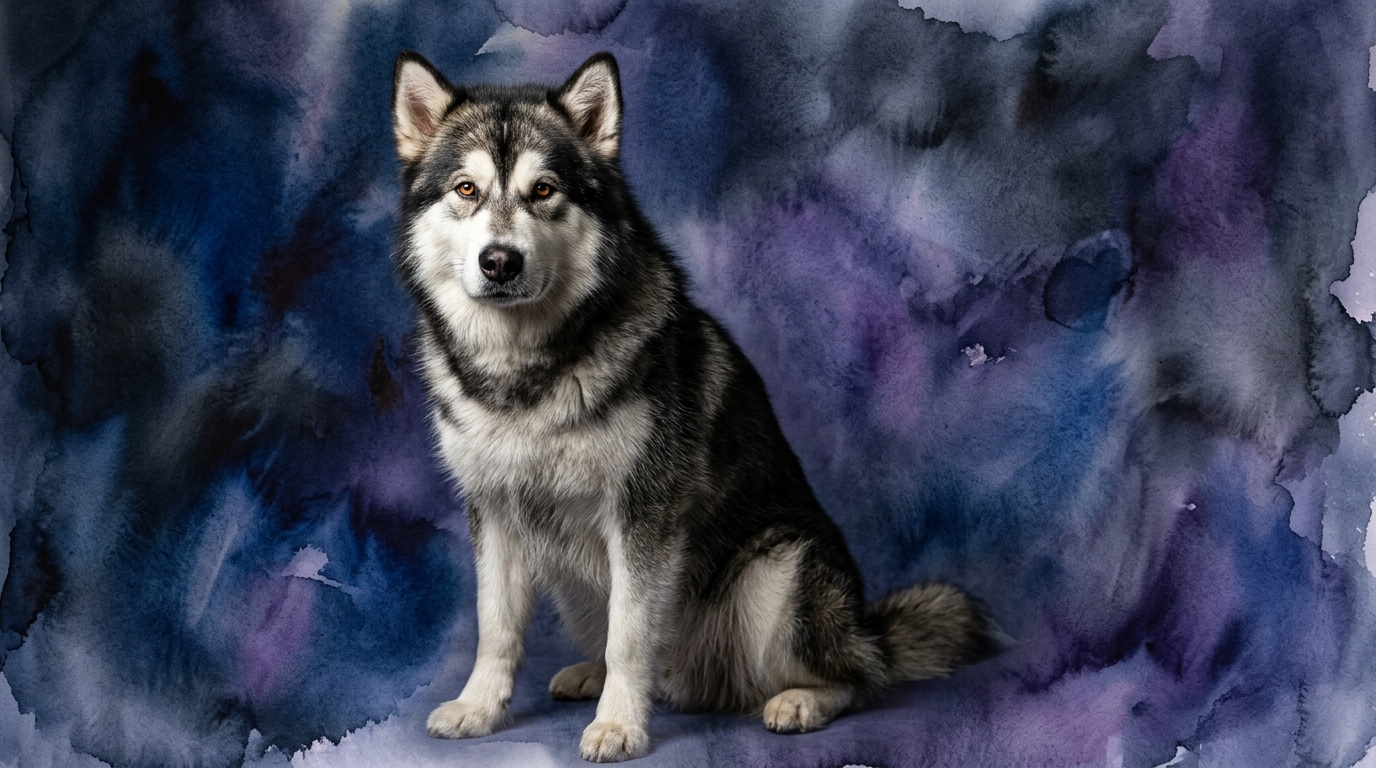
Side-by-Side IQ Profile: Alaskan Malamute
The Alaskan Malamute, a majestic Working breed, holds a Coren rank of #50, placing them in the category of average working/obedience intelligence. This ranking suggests they typically grasp new commands after 25-40 repetitions and obey on the first command about 50% of the time. However, this metric primarily gauges compliance in formal obedience, not the full spectrum of their cognitive abilities.
Their IQ profile from The Cosmic Pet Pet IQ Lab paints a more nuanced picture: Problem Solving 4/5, Training Speed 2/5, Social Intelligence 3/5, Instinctive Drive 5/5, and Memory 4/5. Malamutes exhibit robust practical problem-solving skills, particularly when navigating their environment or strategizing to achieve a desired outcome, like finding a hidden resource. Their training speed is moderate; while capable learners, their independent nature and strong will often mean they require more repetitions and compelling motivation to integrate new commands into their repertoire. Socially, they form deep bonds with their human families and understand pack dynamics, though they can be discerning with strangers. Their instinctive drive is exceptionally strong, manifesting in powerful urges to pull, dig, and explore, a direct legacy of their sled dog ancestry. Complementing this, Malamutes possess a good memory, vital for retaining complex routes and learned experiences over vast terrains.
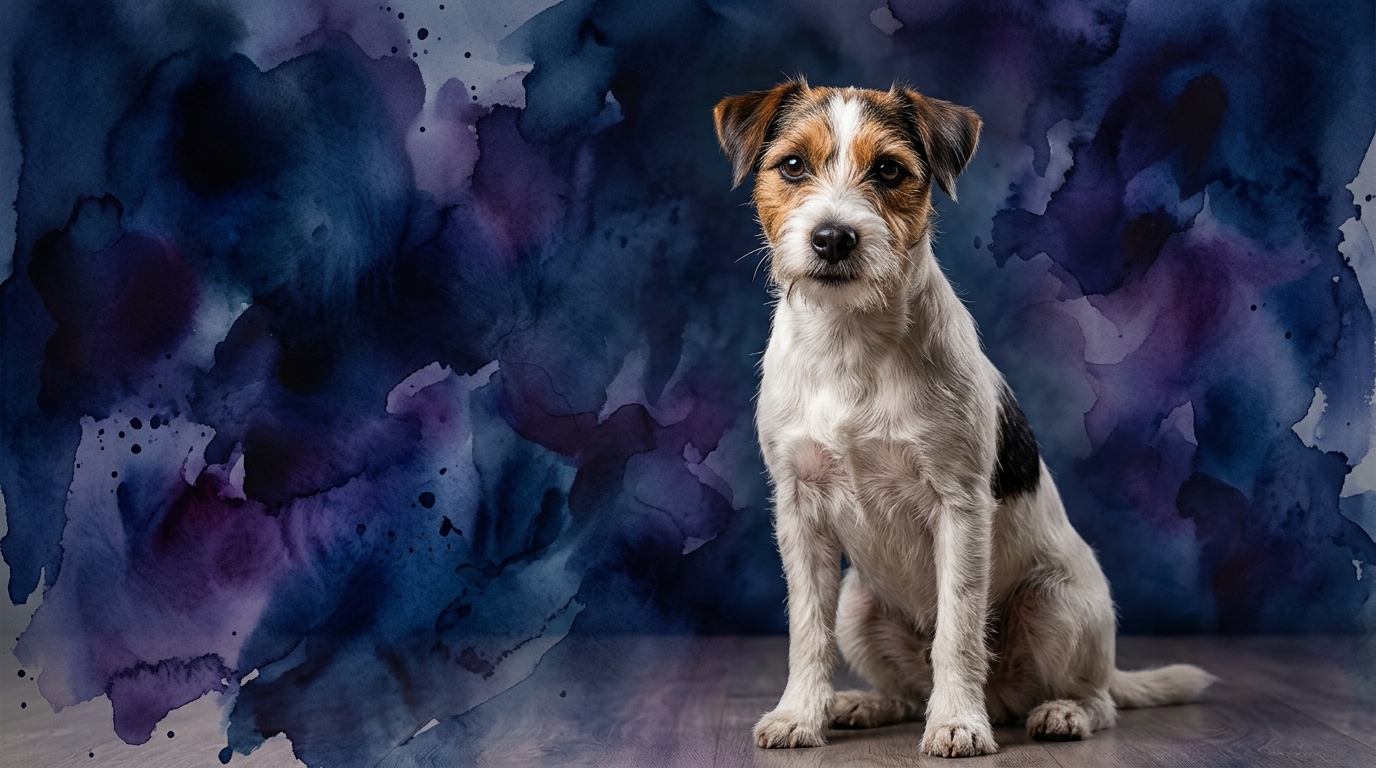
Side-by-Side IQ Profile: Parson Russell Terrier
The Parson Russell Terrier, a vibrant member of the Terrier group, is not included in Coren's ranking system, which means their intelligence shines through different practical applications rather than standardized obedience trials. Their cognitive strengths are deeply intertwined with their historical role as agile, persistent hunters.
The Parson Russell Terrier's IQ profile reveals: Problem Solving 3/5, Training Speed 3/5, Social Intelligence 3/5, Instinctive Drive 3/5, and Memory 3/5. These terriers are adept at solving problems related to their hunting heritage, such as figuring out how to access a perceived 'prey' or navigating tight, confined spaces with agility and determination. Their training speed is moderate, often picking up new commands with consistent, engaging methods, though their quick wit can sometimes lead to them devising their own, often mischievous, 'solutions' if not adequately stimulated. Socially, Parson Russells are generally aware, forming strong attachments to their families and often demonstrating a clear understanding of human emotions and household routines. Their instinctive drive, while strong, is primarily focused on scenting, digging, and chasing small quarry. They also possess a solid memory for routines, commands, and the locations of interesting smells or hidden toys, allowing them to effectively navigate familiar environments and recall past training cues.
Where the Alaskan Malamute Wins Cognitively
The Alaskan Malamute demonstrates superior cognitive strengths in areas demanding endurance, environmental navigation, and strategic resource acquisition. Their Problem Solving score of 4/5 reflects an impressive ability to analyze and overcome complex physical challenges, such as finding the most efficient path through varied terrain or figuring out how to access a secured food puzzle through multiple steps. This skill is rooted in their ancestral need to make independent decisions while pulling sleds over long distances in challenging conditions.
Furthermore, the Malamute's Instinctive Drive of 5/5 is unmatched, providing a powerful, sustained motivation for tasks that align with their deep-seated desires for pulling, digging, and exploration. This translates into a remarkable cognitive persistence in goal-oriented activities that tap into these drives. Their Memory score of 4/5 supports this, allowing them to retain vast amounts of spatial information and complex sequences, essential for remembering trails, scent markers, and the locations of resources over extended periods, making them exceptional at tasks requiring long-term recall and navigation.
Where the Parson Russell Terrier Wins Cognitively
The Parson Russell Terrier's cognitive advantages manifest in their agility of thought and their focused, immediate problem-solving skills, particularly in confined or stimulating environments. While their Problem Solving is rated 3/5, it excels in scenarios requiring quick wit, dexterity, and a tenacious approach to smaller-scale challenges, such as extracting a toy from a tight space or outsmarting a puzzle feeder designed for smaller paws. This reflects their history of working independently to flush prey from dens.
Their Training Speed of 3/5, slightly higher than the Malamute's, indicates a quicker uptake of new commands when engaged, often responding well to short, energetic training sessions. This responsiveness is coupled with an adaptability to novel situations within a domestic setting, often processing new stimuli with less hesitation. While their Instinctive Drive is 3/5, it is intensely concentrated on scenting and chasing, allowing them to maintain laser-like focus on tasks that simulate these predatory behaviors, often demonstrating a sharp, immediate cognitive response to environmental cues related to their drive.
Which is Easier to Train and Why
For many owners, the Parson Russell Terrier is generally perceived as easier to train, especially in conventional obedience. Their Training Speed of 3/5 means they often pick up commands more readily than a Malamute, particularly when training is kept engaging and varied. Parson Russells tend to be highly food-motivated and eager to engage in short bursts of activity, making positive reinforcement a very effective tool. Their smaller stature also simplifies physical handling during training, reducing the potential for challenges related to sheer strength. While they possess a tenacious personality, their drive can be channeled into focused tasks more directly than the Malamute's broader, more independent instincts.
Conversely, the Alaskan Malamute, despite its problem-solving and memory strengths, presents a greater training challenge, particularly for inexperienced handlers, due to its Training Speed of 2/5 and profound Instinctive Drive of 5/5. Malamutes are independent thinkers, often weighing the benefit of compliance against their own desires, which can manifest as stubbornness. Their immense physical strength and high prey drive also demand a highly consistent, firm, and experienced approach to training and socialization, especially during their adolescent phases. Their training requires significant patience, creativity in motivation, and a deep understanding of their innate working dog mentality to foster cooperation rather than conflict.
Which Suits Active Owners vs. Relaxed Owners
Both the Alaskan Malamute and the Parson Russell Terrier demand owners who are prepared for an active lifestyle, though the nature of that activity differs significantly. The Alaskan Malamute is ideally suited for owners who are not just active but truly endurance-focused. They require extensive, sustained periods of physical exertion that tap into their robust Instinctive Drive, such as long-distance hiking, backpacking, cani-cross, or sledding/carting. A relaxed owner will quickly find themselves overwhelmed by a Malamute's unfulfilled energy, which often translates into destructive behaviors, incessant digging, or vocalizations. Their mental and physical well-being relies on consistent, challenging work.
The Parson Russell Terrier, while smaller, is equally demanding of an active lifestyle, but one characterized by varied, high-intensity bursts of activity. They thrive with owners who enjoy activities like agility, earthdog trials, flyball, long walks with ample sniffing opportunities, and interactive games that challenge their quick minds and tenacious spirit. They need significant mental stimulation alongside physical exertion to prevent boredom and the development of undesirable behaviors. Neither breed is suitable for truly relaxed owners; both require substantial daily engagement, exercise, and consistent mental enrichment to be well-adjusted companions. A Parson Russell might tolerate a slightly less intense daily routine than a Malamute, but only if that routine still includes plenty of interaction and structured mental tasks.
The Verdict
Choose an Alaskan Malamute if you are an experienced, patient owner dedicated to providing extensive, endurance-based physical activity and appreciate an independent, thoughtful canine companion with a strong work ethic and deep memory for navigation.
Choose a Parson Russell Terrier if you seek an energetic, quick-witted partner for varied, high-intensity activities and enjoy the challenge of channeling a tenacious, curious personality into engaging tasks that leverage their agility and focused problem-solving.
🧠 Find Your Pet's IQ Score
Our Pet IQ Lab assessment covers 25+ tests across 5 cognitive dimensions — personalized to your breed.
Take the Full IQ Test →Frequently Asked Questions
Are Alaskan Malamutes difficult to train?
Alaskan Malamutes can be challenging to train for the inexperienced owner due to their independent nature, strong instinctive drives, and moderate training speed. They require consistent, positive reinforcement, patience, and a deep understanding of their motivations to succeed, often thriving with an experienced handler.
Do Parson Russell Terriers need a lot of exercise?
Yes, Parson Russell Terriers need significant daily exercise and mental stimulation to thrive. Their high energy levels and strong prey drive mean they require regular vigorous activity, such as long walks, running, and interactive games, to prevent boredom and destructive behaviors.
Which breed is better with children?
Both breeds can be good with children when properly socialized and supervised, but their approaches differ. Malamutes are generally gentle giants but can be overwhelming due to size; Parson Russells are robust and playful but their terrier tenacity means they need boundaries with children to prevent nipping during over-excitement.