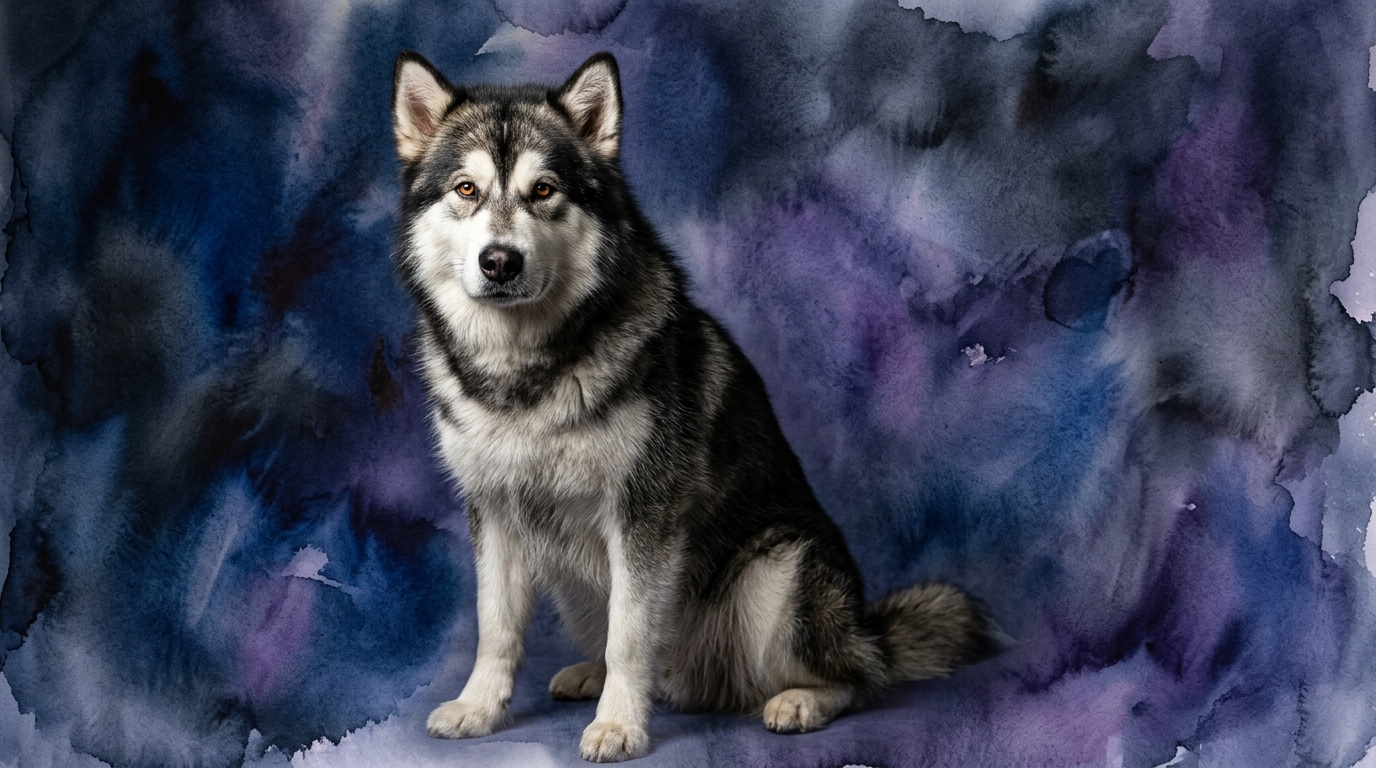
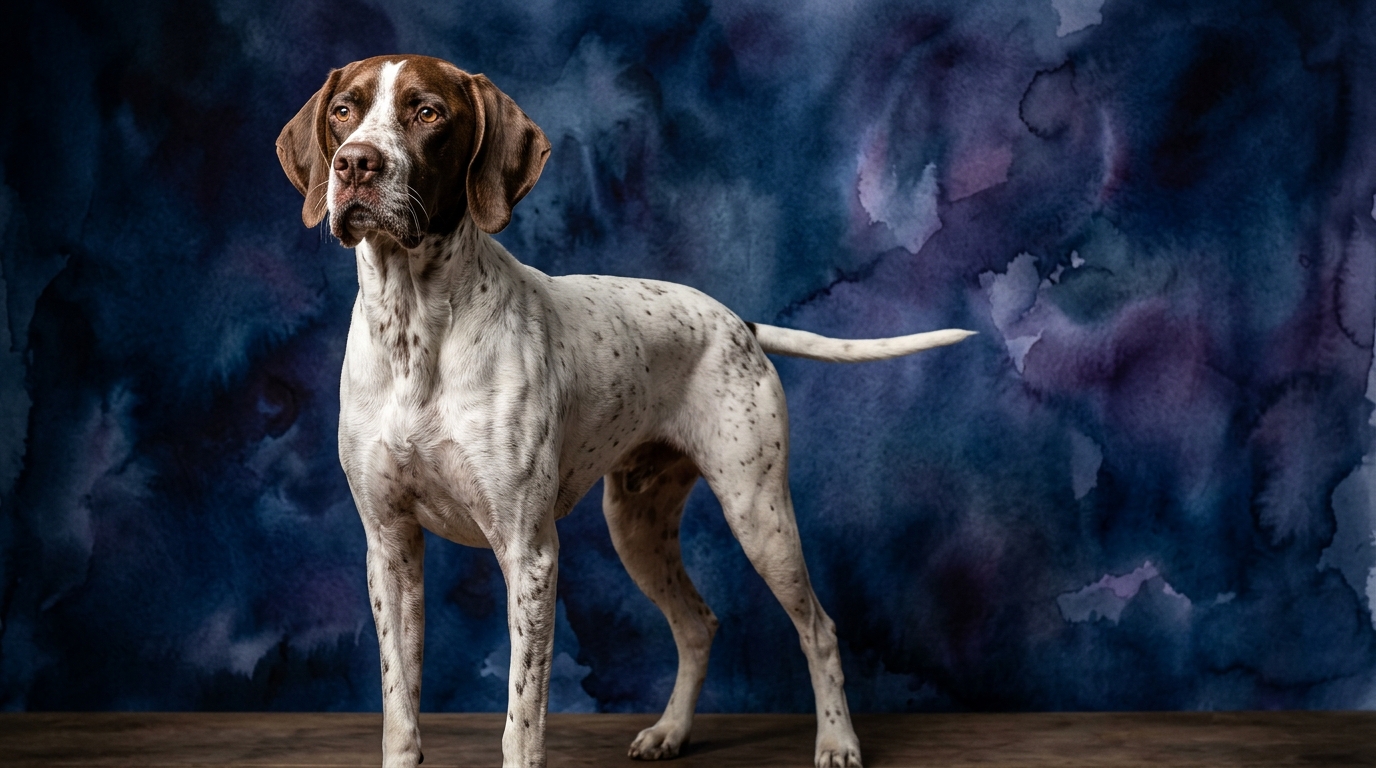
Side-by-Side IQ Profile: Alaskan Malamute vs. Pointer
To understand the unique cognitive landscapes of the Alaskan Malamute and the Pointer, The Cosmic Pet Pet IQ Lab employs a five-dimensional intelligence framework. This allows us to move beyond generalities and pinpoint specific areas where each breed excels or requires a different approach.
The Alaskan Malamute, a powerful Working breed with a Coren ranking of #50, demonstrates a Problem Solving score of 4/5, indicating a high capacity for independent thought and resourceful solutions. Their Training Speed is rated 2/5, reflecting a strong-willed nature that often prioritizes their own agenda. Social Intelligence stands at 3/5, suggesting a good understanding of pack dynamics but often with an independent streak. A remarkable Instinctive Drive of 5/5 highlights their profound urge to pull, hunt, and explore, deeply rooted in their heritage. Finally, their Memory is strong at 4/5, enabling them to recall complex routes and past experiences.
The Pointer, a dedicated Sporting breed, while not Coren-ranked, presents a distinct cognitive profile. Their Problem Solving score is 3/5, demonstrating competence in specific, task-oriented challenges, particularly those related to their hunting purpose. Training Speed is 3/5, indicating a more biddable nature and readiness to learn commands from their handler. Social Intelligence is also 3/5, showing a good connection with their human partners, especially when engaged in cooperative activities. An Instinctive Drive of 3/5 reflects their focused hunting and pointing instincts, which are powerful but generally less broad than the Malamute's. Their Memory is rated 3/5, sufficient for recalling learned commands and navigating familiar hunting grounds.
Where the Alaskan Malamute's Cognition Shines
The Alaskan Malamute's cognitive prowess is most evident in its exceptional problem-solving abilities and profound instinctive drives. With a 4/5 rating in Problem Solving, these dogs are adept at figuring out complex situations independently, a trait honed by centuries of needing to make decisions in harsh, unforgiving environments while pulling sleds. This means a Malamute might skillfully unlatch a gate, open a pantry door, or devise a method to retrieve a coveted toy from a difficult spot, often surprising owners with their ingenuity. Their resourcefulness is not merely about obedience but about independent thought and execution.
Their Instinctive Drive, a perfect 5/5, is another area of significant cognitive strength. This drive is not just about physical endurance; it's deeply integrated with their spatial reasoning and navigational memory. Malamutes excel at remembering vast terrains, routes, and even subtle environmental cues, which is crucial for a sled dog navigating miles of snow. This translates into a dog that can often find its way home from unfamiliar places or remember where a hidden treat was buried weeks ago. Their Memory score of 4/5 directly supports this, allowing them to retain vast amounts of information related to their environment and experiences, making them excellent long-term navigators and strategists in their own right. They are often masters of assessing their surroundings and anticipating outcomes based on past observations.
Where the Pointer's Cognition Excels
The Pointer's cognitive strengths are finely tuned to its purpose: precise, cooperative hunting. While their Problem Solving is rated 3/5, this score reflects a specialized intelligence rather than a general ingenuity. Pointers excel at solving problems directly related to their field work, such as efficiently quartering a field to locate game, interpreting subtle scent trails, or understanding the wind direction's impact on their search. Their focus is less on independent escape artistry and more on methodical, task-specific efficacy, making them highly effective in their chosen domain.
Their Training Speed, rated 3/5, combined with a Social Intelligence of 3/5, highlights their capacity for close partnership and responsiveness to human direction. Pointers thrive on clear commands and consistent communication, learning complex sequences of actions vital for hunting with remarkable consistency. This isn't just rote memorization; it's about understanding the context and purpose of each command within a larger cooperative goal. They are adept at reading their handler's body language and cues, demonstrating a strong desire to work *with* their human companions. Their Instinctive Drive (3/5) is highly specific, channeling intense focus into pointing and retrieving, rather than a broad spectrum of survival behaviors. This focused drive allows them to maintain unwavering concentration on a bird, ignoring distractions, which is a significant cognitive feat in itself. Their memory (3/5) serves them well in recalling specific commands and patterns of movement essential for their work.
Training Dynamics: Which Breed Learns Faster?
When it comes to training speed, the Pointer generally presents a more straightforward path for the average owner. With a Training Speed of 3/5 and a cooperative nature, Pointers are typically eager to please and respond well to consistent, positive reinforcement. They thrive on structure and clear expectations, quickly learning commands when they understand the desired outcome and are rewarded for compliance. Their focused instinctive drive can be channeled effectively into training, particularly when it involves activities that mimic their natural hunting behaviors, such as retrieving or scent work. This makes them good candidates for obedience, agility, and field trials where precision and responsiveness are key.
The Alaskan Malamute, with a Training Speed of 2/5, offers a different training experience altogether. Their strong independence and high problem-solving capacity mean they often question the utility of a command or prefer to figure things out on their own. Training a Malamute is less about quick compliance and more about building a strong, respectful partnership where the dog feels motivated to participate. They require immense patience, consistency, and creative methods to make training feel like a collaborative effort rather than a directive. A Malamute might learn a command but choose not to execute it if they don't see the immediate benefit or if a more enticing distraction arises. This isn't a lack of ability to learn, but rather a strong will and independent decision-making process that influences their responsiveness.
Matching Breeds to Lifestyles: Active vs. Relaxed Owners
For owners seeking a companion, understanding these cognitive profiles helps in selecting a breed that aligns with their lifestyle. The Alaskan Malamute, with its robust instinctive drives and independent problem-solving, is best suited for highly active owners who embrace outdoor adventures and can provide consistent mental and physical challenges. They need a 'job' – be it sledding, carting, or extensive hiking – to satisfy their innate urges and prevent boredom-induced behaviors. Owners must be prepared for a dog that thinks for itself and requires patient, engaging training. This breed is not for the relaxed owner who prefers quiet evenings without significant outdoor commitments, as their unmet needs can lead to frustration for both dog and human.
The Pointer, while also requiring significant activity, fits a slightly different niche of active owner. Their focused instinctive drive and cooperative nature make them ideal for individuals who enjoy structured outdoor pursuits like running, long walks, or field sports. They thrive on having a purpose and working closely with their handler, making them excellent partners for activities such as hunting, competitive obedience, or even search and rescue. While they can be calm indoors after sufficient exercise, their daily need for vigorous activity is non-negotiable. They are a good fit for active owners who appreciate a biddable, task-oriented companion and are willing to engage in regular, stimulating activities that tap into their natural abilities.
The Verdict: When to Choose Each Companion
The Verdict
Choose an Alaskan Malamute if you are an experienced, active owner who values an independent, resourceful companion, is prepared for consistent, patient training, and can provide ample physical and mental challenges that satisfy their strong working drives and problem-solving nature.
Choose a Pointer if you are an active owner seeking an energetic, cooperative partner for structured outdoor pursuits, especially field sports or long runs, who appreciates a dog that thrives on direction and a clear, shared purpose.
🧠 Find Your Pet's IQ Score
Our Pet IQ Lab assessment covers 25+ tests across 5 cognitive dimensions — personalized to your breed.
Take the Full IQ Test →Frequently Asked Questions
Are Alaskan Malamutes harder to train than Pointers?
Generally, yes, due to their strong independence and lower training speed score of 2/5. Malamutes often require more creativity and patience from their trainers, as they need to be convinced a task is worthwhile rather than simply complying. Pointers, with their eagerness to please and focus, tend to respond more readily to traditional training methods.
Which breed is better at problem-solving?
The Alaskan Malamute typically exhibits stronger general problem-solving skills, rated at 4/5, compared to the Pointer's 3/5. Malamutes are known for their resourcefulness in figuring out how to achieve their goals, a trait honed by their history of independent decision-making in challenging environments. Pointers excel in task-specific intelligence but are less inclined towards novel problem-solving outside their domain.
How do their instinctive drives differ in everyday life?
The Alaskan Malamute possesses a powerful, broad instinctive drive (5/5), manifesting as a strong urge to pull, dig, and chase, requiring outlets like sledding or carting to manage. The Pointer's instinctive drive (3/5) is primarily focused and channeled towards hunting and pointing, making them excellent at scent work and field activities, but generally less prone to independent 'survival' behaviors in a domestic setting, instead seeking to work cooperatively with their handler.