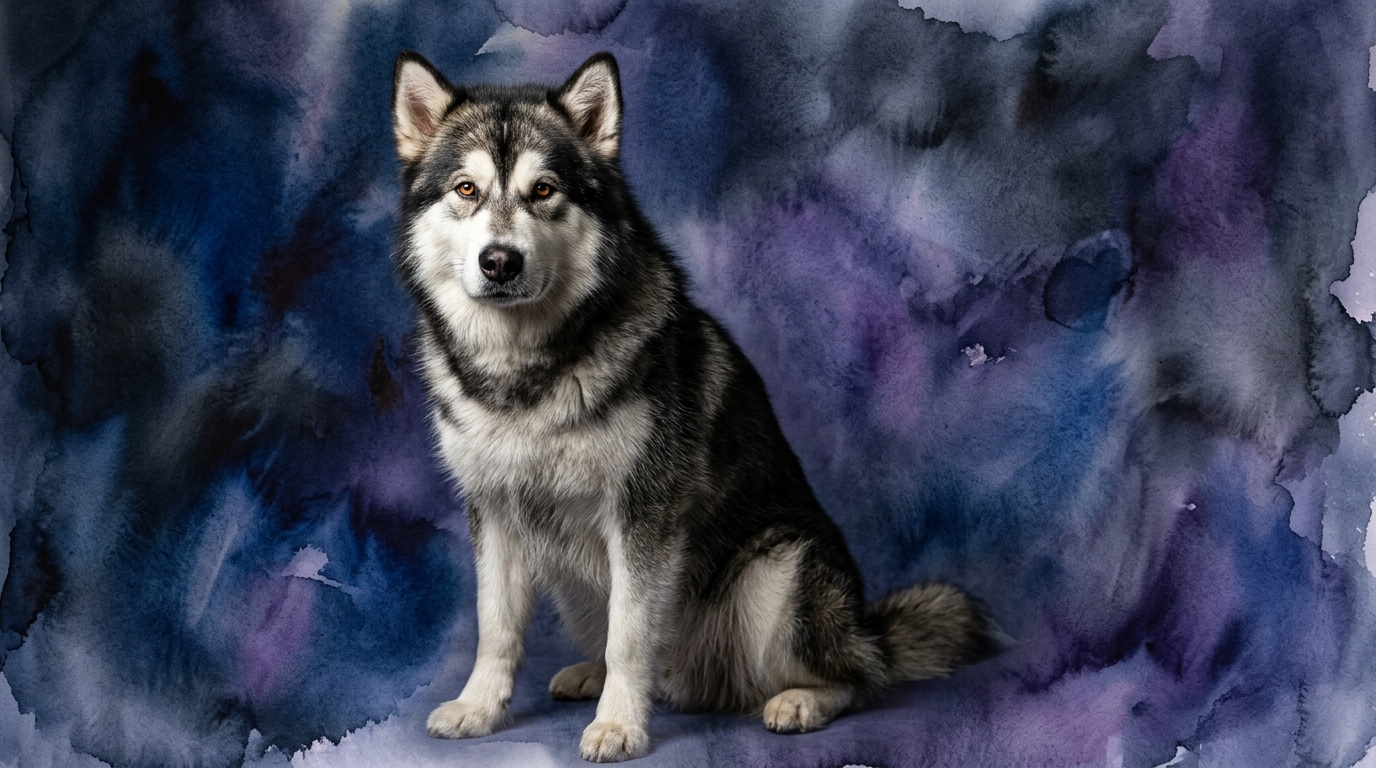

Side-by-Side Cognitive Profile
At The Cosmic Pet Pet IQ Lab, we analyze canine cognition across five key dimensions to provide a nuanced understanding of each breed's mental aptitudes. The Alaskan Malamute, a Working group dog, and the Rat Terrier, a dynamic Terrier, present distinct cognitive landscapes shaped by their historical roles and selective breeding.
For the Alaskan Malamute (Coren rank #50):
Problem Solving (4/5): These dogs excel at complex, multi-step tasks, particularly those involving navigation, resourcefulness in challenging environments, and strategic thinking to overcome physical obstacles. Their historical role as sled dogs demanded ingenuity in finding paths and conserving energy, requiring them to assess terrain and make independent decisions far from human guidance.
Training Speed (2/5): While capable of learning, Malamutes often exhibit a strong independent streak and a 'what's in it for me?' attitude, reflecting their heritage of making autonomous decisions in harsh conditions. This means they require consistent, patient training with high-value rewards, and they may not respond to commands with the same immediate enthusiasm as some other breeds, preferring to evaluate the instruction first.
Social Intelligence (3/5): Malamutes possess a moderate level of social intelligence, understanding pack dynamics and human intentions within their established social circles. They can form deep bonds with their family but are not typically 'people pleasers' and might be reserved with strangers, evaluating new individuals rather than immediately seeking interaction.
Instinctive Drive (5/5): Their drive is exceptionally high, rooted in their historical purpose. This manifests as a powerful urge to pull, dig, 'hunt' small prey, and explore vast territories. This instinct is a core part of their being and needs appropriate, structured outlets to prevent misdirection.
Memory (4/5): Malamutes have an excellent memory, particularly for routes, commands, and experiences, both positive and negative. They remember routines and can recall learned behaviors even after long periods, which aids in complex tasks but also means they won't forget past inconsistencies or perceived injustices.
For the Rat Terrier (Not Coren-ranked):
Problem Solving (3/5): Rat Terriers demonstrate practical problem-solving skills, particularly in tasks requiring agility, quick thinking, and adaptability to changing situations, such as navigating tight spaces or outsmarting small prey. Their solutions tend to be direct, efficient, and often involve rapid trial-and-error, a trait honed by their need to quickly dispatch vermin.
Training Speed (3/5): These terriers are generally eager to learn and responsive, making them moderately quick to pick up new commands and cues. Their desire to engage with their primary handler, combined with a keen observational ability, contributes to a respectable training speed, especially when tasks are varied and stimulating.
Social Intelligence (3/5): Rat Terriers show a moderate level of social intelligence, capable of forming strong attachments and understanding human moods. They can be quite sensitive to their family's emotions and are generally outgoing, though some may exhibit typical terrier wariness of strangers, requiring proper introductions.
Instinctive Drive (3/5): Their instinctive drive is balanced, primarily focused on hunting small vermin, digging, and exploring their immediate environment. While present and sometimes intense, it's typically less overwhelming than a Malamute's and can be channeled with consistent training and enrichment activities.
Memory (3/5): Rat Terriers possess a solid memory for routines, commands, and experiences, retaining learned behaviors well. They can recall sequences and adapt to various environments effectively, which supports their training and their ability to navigate complex household dynamics.
Where the Alaskan Malamute Wins Cognitively
The Alaskan Malamute's cognitive strengths shine brightest in scenarios demanding sustained effort, strategic planning, and environmental mastery. Their 4/5 problem-solving ability, combined with a formidable 5/5 instinctive drive, equips them for tasks requiring foresight and resilience over long durations. For instance, a Malamute can meticulously plan an escape route from an enclosure, not through brute force alone, but by systematically testing weak points, remembering which methods yielded partial success, and patiently executing a multi-step plan.
This isn't just about physical strength; it's about applying memory (4/5) to past failures and successes to refine their approach. Their excellent memory also extends to complex navigation, allowing them to recall intricate trails or multi-step sequences of actions, crucial for their historical role as sled dogs traversing vast, often featureless, landscapes. This breed excels when presented with a 'job' that requires independent thought and the consistent application of learned skills over time, such as advanced scent work that mimics tracking, or obstacle courses that necessitate deliberate, sequential problem-solving rather than frantic speed. Their cognitive prowess here is less about rapid-fire responses and more about deep, methodical engagement with a task, often leveraging their powerful physical capabilities as an integral part of their intellectual solution.
Where the Rat Terrier Wins Cognitively
The Rat Terrier's cognitive profile, while different from the Malamute's, offers distinct advantages, particularly in adaptability and quick, practical application of skills. Their balanced 3/5 problem-solving and 3/5 training speed make them adept at swiftly assessing new situations and formulating immediate solutions. Unlike the Malamute’s often deliberate approach, a Rat Terrier might quickly pivot between strategies to achieve a goal, such as retrieving a toy from under furniture by trying different angles or nudging it with their nose and paws in rapid succession, demonstrating nimble cognitive flexibility.
Their instinctive drive (3/5), focused on agility and pursuit, translates into a cognitive nimbleness that allows them to excel in dynamic environments. They are particularly skilled at 'thinking on their feet' in fast-paced activities like canine sports, where split-second decisions and rapid execution are paramount. Furthermore, their moderate social intelligence (3/5) means they are often attuned to subtle human cues, allowing them to adjust their behavior in real-time during training or interactive play, making them highly responsive partners for varied daily activities. Their cognitive strength lies in their versatility and capacity for efficient, immediate action, making them quick studies in diverse, rapidly changing scenarios where swift adaptation is key.
Which Is Easier to Train and Why
When considering ease of training for the average owner, the Rat Terrier generally presents a more straightforward path compared to the Alaskan Malamute. The Rat Terrier's training speed is rated at 3/5, indicating a respectable eagerness to learn and respond to cues. They often exhibit a strong desire to please their primary handler, which, when combined with their moderate instinctive drive, makes them receptive to positive reinforcement methods. Their practical problem-solving (3/5) allows them to quickly grasp the connection between a command and a desired action, especially when the reward is clear and immediate, making them gratifying students for varied tasks.
In contrast, the Alaskan Malamute's training speed is rated at a lower 2/5. This isn't due to a lack of capacity, but rather their inherent independence and the 'what's in it for me?' mindset. Malamutes, with their powerful instinctive drive (5/5) and strong memory (4/5), will remember commands, but they will often weigh the perceived benefit against the effort required. They are not easily coerced and respond best to patient, consistent, and highly motivational training that appeals to their specific drives, such as pulling or exploring. While a Rat Terrier might learn 'sit' in a few sessions, a Malamute might take longer and require more compelling reasons to perform it reliably, especially in distracting environments, reflecting their historical role as independent decision-makers rather than strictly obedient followers.
Which Suits Active Owners vs. Relaxed Owners
The choice between an Alaskan Malamute and a Rat Terrier significantly depends on an owner's lifestyle regarding activity levels. The Alaskan Malamute, with its exceptional 5/5 instinctive drive and robust physical build, is unequivocally suited for highly active owners. These dogs require substantial daily exercise that goes beyond a simple walk; they thrive on activities that engage their powerful urge to pull, run, and explore, such as sledding, skijoring, long hikes, or vigorous play sessions that challenge both their bodies and minds. Their problem-solving (4/5) and memory (4/5) also mean they need consistent mental stimulation to prevent boredom, which can lead to behaviors like excessive digging or chewing. A relaxed owner would quickly find themselves overwhelmed by a Malamute's unfulfilled energy and cognitive needs.
Conversely, the Rat Terrier, with its balanced 3/5 instinctive drive, is more adaptable and can suit a broader range of active owners, even those who might describe themselves as moderately active rather than intensely so. While they certainly enjoy and benefit from regular exercise, including walks, runs, and interactive play, their needs are not as demanding or specialized as the Malamute's. Their practical problem-solving (3/5) and moderate energy make them content with varied activities, from agility courses to fetch in the yard, without requiring the same level of endurance or specialized equipment. A Rat Terrier can comfortably settle down after a good play session, making them suitable for owners who enjoy daily activity but also appreciate downtime and a companion that doesn't demand constant, intense engagement.
The Verdict
Choose an Alaskan Malamute if you are a highly active, experienced owner eager to engage with a powerful, independent thinking dog for demanding outdoor activities and enjoy consistent, patient training.
Choose a Rat Terrier if you seek an agile, adaptable, and responsive companion for varied daily activities, valuing a quicker training response and a more manageable energy level.
🧠 Find Your Pet's IQ Score
Our Pet IQ Lab assessment covers 25+ tests across 5 cognitive dimensions — personalized to your breed.
Take the Full IQ Test →Frequently Asked Questions
Is the Alaskan Malamute difficult to train due to its low training speed rating?
The Malamute's 2/5 training speed doesn't indicate a lack of intelligence, but rather a strong independent streak and a need for highly motivating, consistent training. They learn, but often require a compelling reason to comply, making patience and high-value rewards essential for success.
Can a Rat Terrier live in an apartment despite its active nature?
Yes, a Rat Terrier can thrive in an apartment if their exercise and mental stimulation needs are consistently met through daily walks, playtime, and engaging activities. Their moderate size and adaptability make them suitable for smaller living spaces, provided their owners are committed to their physical and cognitive enrichment.
How do their social intelligence ratings impact their interactions with other pets or children?
Both breeds have a 3/5 social intelligence rating, meaning they can form strong bonds within their family. Malamutes might be more reserved with strangers and require careful socialization with other pets due to their strong prey drive, while Rat Terriers are generally outgoing but can be sensitive, requiring supervision with very young children or boisterous playmates.