Side-by-Side Cognitive Profiles
Delving into the specific cognitive dimensions for both the Alaskan Malamute and the Skye Terrier provides a clear picture of their intrinsic mental makeups. The Cosmic Pet Pet IQ Lab employs a comprehensive five-dimensional framework to assess canine intelligence, moving beyond simplistic labels to highlight nuanced strengths.
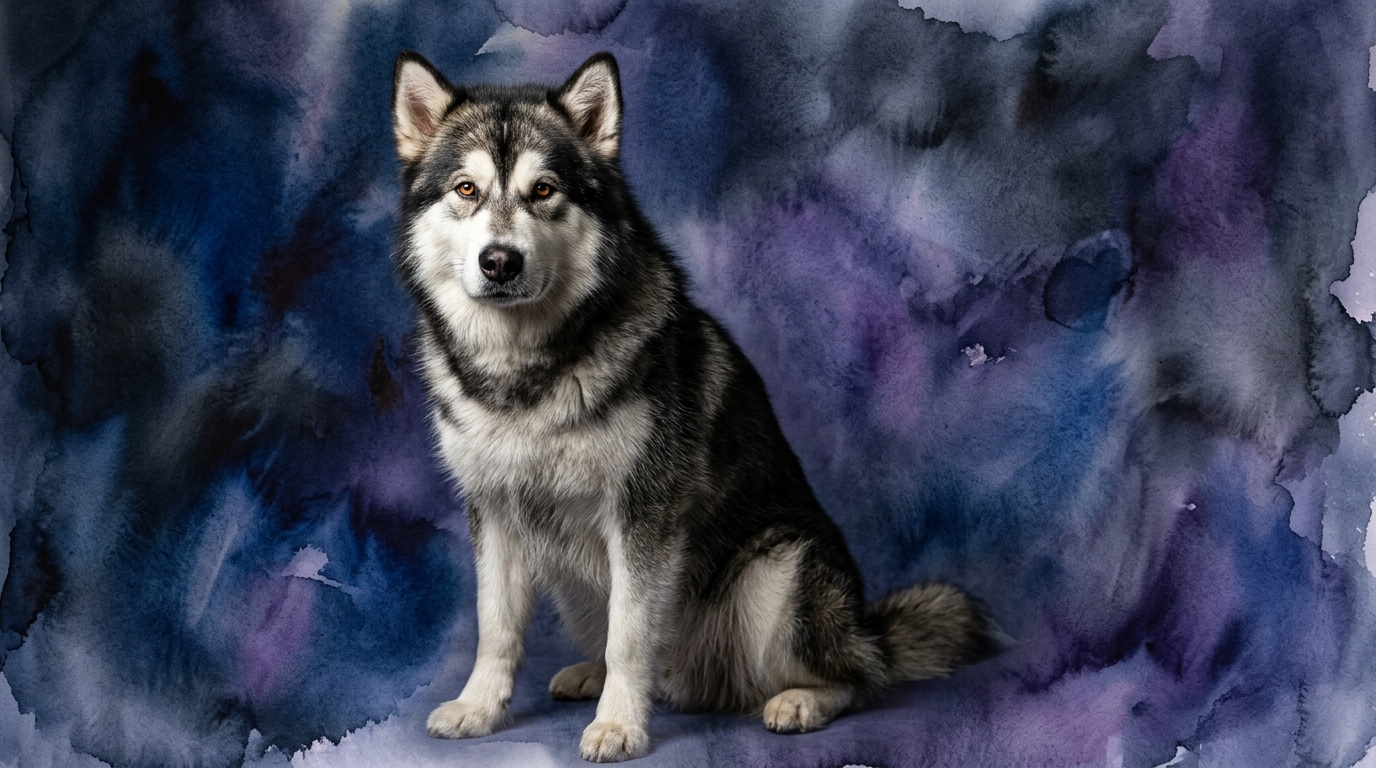
The Alaskan Malamute, a member of the Working Group, exhibits a distinct cognitive pattern. Its Problem Solving ability rates a strong 4/5, reflecting its historical role in navigating challenging terrains and overcoming environmental obstacles. These dogs are adept at figuring out complex physical puzzles, such as how to access a food source or bypass an unexpected barrier on a trail. Their Training Speed is rated 2/5, indicating a slower uptake of new commands and a need for consistent, patient reinforcement, often due to their independent nature. Social Intelligence stands at 3/5; while capable of forming deep bonds with their immediate family, Malamutes can be somewhat reserved with strangers and possess a sophisticated understanding of pack dynamics. Their Instinctive Drive is exceptionally high at 5/5, manifesting as a powerful urge to pull, dig, and explore, deeply rooted in their heritage as sled dogs. Finally, their Memory is rated 4/5, allowing them to retain complex routes, learned tasks, and past experiences over extended periods, crucial for long-distance travel and repetitive work.
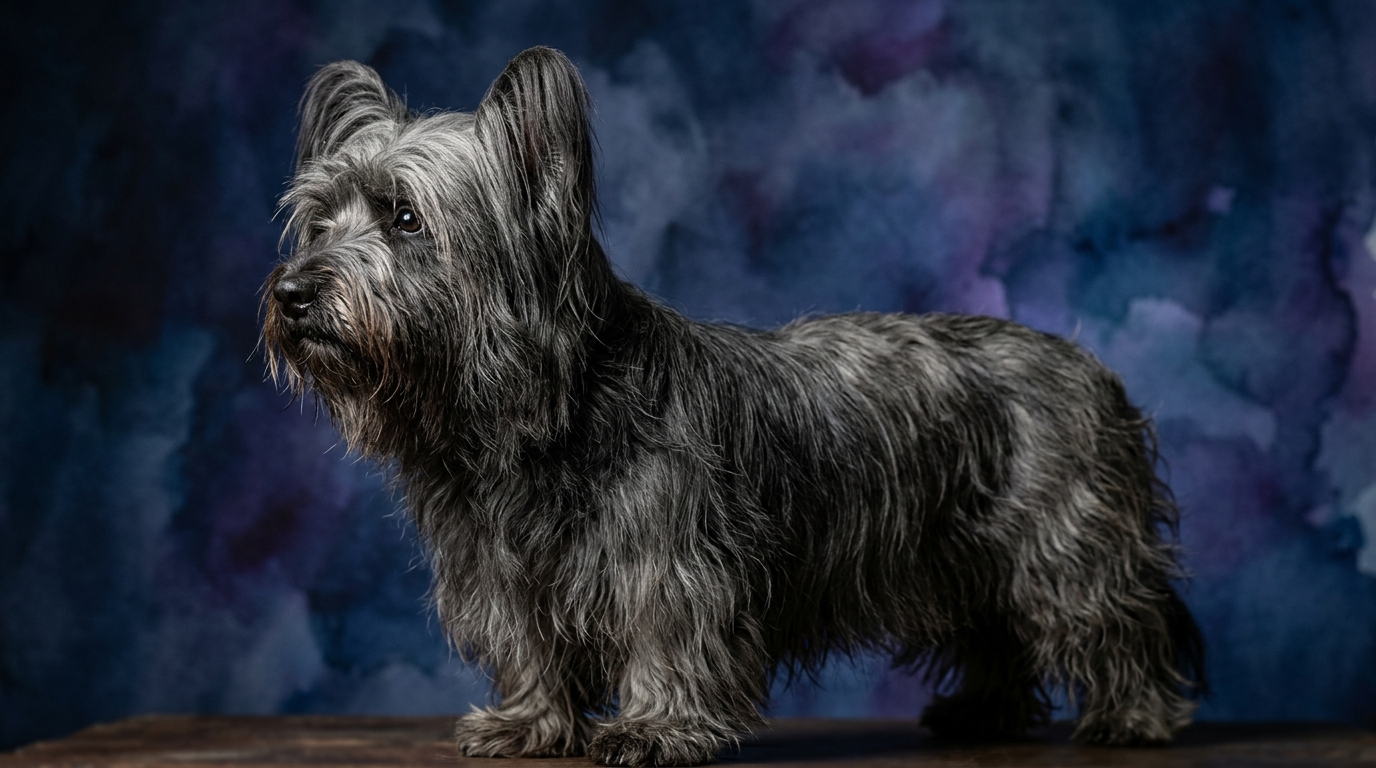
The Skye Terrier, a member of the Terrier Group and not Coren-ranked, presents a different cognitive blueprint. Its Problem Solving capacity is rated 3/5, demonstrating competence in overcoming obstacles, particularly those related to their traditional role in hunting vermin. They can strategize effectively to corner prey or navigate tight, confined spaces. The Skye Terrier’s Training Speed is 3/5, suggesting a moderate learning curve for new commands and a responsiveness to positive reinforcement methods. Their Social Intelligence is also 3/5; these dogs develop profound loyalty to their family but often maintain a dignified reserve around unfamiliar individuals, understanding social cues within their established circle. Instinctive Drive is assessed at 3/5, present in urges for digging, chasing small animals, and guarding, though less intense or broadly applied than a working breed like the Malamute. Their Memory is rated 3/5, allowing them to recall commands and routines adequately, recognizing familiar people and places without the exceptional detail seen in breeds with higher scores.
Where the Alaskan Malamute Excels Cognitively
The Alaskan Malamute’s cognitive strengths are deeply intertwined with its history as a powerful, self-sufficient working dog in demanding environments. One significant area of advantage lies in its superior Problem Solving (4/5 versus Skye Terrier’s 3/5) when it comes to large-scale, environmental challenges. Malamutes demonstrate an exceptional ability for spatial reasoning, crucial for navigating vast, featureless landscapes or strategizing how to move heavy loads. They can assess complex physical obstacles and devise multi-step solutions, such as finding the weakest point in a fence or planning the most efficient path through deep snow, a level of strategic thinking honed by generations of survival and work. This isn't just about brute force; it's about the cognitive mapping and planning required for extensive journeys.
Furthermore, the Malamute's Instinctive Drive (5/5 versus Skye Terrier’s 3/5) is an unparalleled cognitive asset for sustained effort. This isn't just physical energy; it's a deep-seated mental motivation that allows them to push through fatigue and maintain focus on a goal, whether it's pulling a sled for miles or persistently digging a den. This intense drive dictates their perception of rewards and challenges, making them incredibly resilient and determined when pursuing tasks aligned with their natural inclinations. Their Memory (4/5 versus Skye Terrier’s 3/5) also offers an edge, particularly in retaining complex sequences and environmental details over long periods, essential for remembering vast territories, safe routes, or the location of resources, skills vital for their ancestral roles.
Where the Skye Terrier Shines Cognitively
While the Alaskan Malamute excels in grand-scale problem-solving and sustained effort, the Skye Terrier demonstrates its own unique cognitive advantages, particularly suited to its historical role as a tenacious hunter. The most notable difference lies in Training Speed (3/5 versus Malamute’s 2/5). Skye Terriers generally exhibit a quicker uptake of new commands and cues, responding more readily to structured obedience training sessions. Their cognitive processing for learning specific instructions and associating them with actions tends to be more agile, making them more amenable to consistent, positive reinforcement training methods.
Moreover, the Skye Terrier often displays a more focused and intricate approach to Problem Solving within a confined scope. While their overall problem-solving score is lower, their terrier tenacity translates into persistent, concentrated effort on smaller, specific tasks. They are adept at outsmarting a small quarry, meticulously investigating a scent trail, or retrieving a hidden toy from a tight space, demonstrating a sharp, detail-oriented cognitive focus. This isn't about navigating miles, but about intense, localized mental application. Their Social Intelligence (3/5), while matching the Malamute's score, often manifests as a more nuanced understanding of immediate family dynamics, making them highly attuned to the emotional states and routines of their primary caregivers within a home environment, fostering a deep, empathetic connection.
Training Ease: Malamute vs. Skye Terrier
When evaluating which breed is generally easier to train, the Skye Terrier typically holds the advantage, largely due to its higher Training Speed (3/5) compared to the Alaskan Malamute’s 2/5. Skye Terriers are often more eager to engage with their handler in structured training scenarios, processing new commands with greater alacrity. Their instinctive drives, while present, are generally less overwhelming and more manageable, allowing them to maintain focus on human instruction. For instance, a Skye Terrier, while still possessing a chase drive, might be more inclined to check in with its handler for direction after spotting a squirrel, whereas a Malamute might be more prone to commit fully to the chase, overriding learned commands.
The Alaskan Malamute's independent nature and exceptionally high Instinctive Drive (5/5) present a greater challenge in training. Their deep-seated urges for pulling, digging, and exploring can frequently supersede their desire to comply with human commands, especially if those commands conflict with their powerful internal motivations. For example, a Malamute might prioritize investigating an intriguing scent trail or attempting to dig under a fence over responding to a 'come' command, even with consistent prior training. Their lower training speed means that achieving reliability requires significantly more repetition, patience, and creative motivation strategies, often involving channeling their drives into acceptable outlets like weight pulling or structured scent work, rather than attempting to suppress them entirely. Owners must understand that a Malamute’s 'stubbornness' is often a manifestation of its strong, innate working dog intellect and drive, not a lack of capacity.
Ideal Owner Match: Active vs. Relaxed Lifestyles
Matching a dog's cognitive and physical needs to an owner's lifestyle is crucial for a harmonious relationship. The Alaskan Malamute is unequivocally suited for active owners who are prepared for a substantial, ongoing commitment to physical activity and mental engagement. Their exceptionally high Instinctive Drive (5/5) and robust Problem Solving abilities (4/5) demand outlets that go far beyond a casual daily walk. These dogs thrive on long hikes, running, sledding, carting, or other demanding outdoor activities that allow them to utilize their powerful bodies and minds. An owner must be capable of providing consistent, challenging mental stimulation to prevent boredom and potential destructive behaviors, which can arise from an unfulfilled intellect. For a relaxed owner, a Malamute's unmet needs would likely lead to significant household challenges, as their cognitive energy would be redirected into less desirable activities like excessive digging, chewing, or escaping.
In contrast, the Skye Terrier can comfortably fit with moderately active owners or even those with a more relaxed lifestyle, provided their specific needs are met. While they require daily walks and engaging playtime to satisfy their moderate Instinctive Drive (3/5) and maintain their physical condition, they do not demand the same intense, sustained exertion as a Malamute. Their Problem Solving (3/5) and Memory (3/5) are well-maintained through interactive games, puzzle toys, and consistent training sessions, rather than extensive outdoor work. A Skye Terrier appreciates a comfortable home environment and forms deep bonds with its family, making them excellent companions for owners who enjoy a balance of activity and calm companionship. They are less prone to the broad-scale destructive behaviors stemming from extreme boredom, though their terrier instincts for digging and chasing still require appropriate management and outlets.
The Verdict
Choose the Alaskan Malamute if you are an experienced, active owner dedicated to providing extensive physical exertion, profound mental stimulation, and patient, consistent training for a powerful, independent, and highly driven companion for outdoor adventures.
Choose the Skye Terrier if you seek a loyal, resilient companion with moderate activity requirements, valuing a dog with a focused mind for specific tasks and a deep, empathetic bond with its family, without the extreme demands of a large working breed.
🧠 Find Your Pet's IQ Score
Our Pet IQ Lab assessment covers 25+ tests across 5 cognitive dimensions — personalized to your breed.
Take the Full IQ Test →Frequently Asked Questions
Are Alaskan Malamutes good family dogs?
Alaskan Malamutes can be excellent family dogs, forming strong bonds with their human "pack." Their social intelligence allows them to understand family dynamics, but their size, power, and high energy mean they are best suited for families who can provide consistent training, ample exercise, and supervision, especially around very young children.
Do Skye Terriers bark a lot?
Skye Terriers can be prone to barking, particularly if left alone for extended periods, bored, or when alerted to strangers or perceived threats. Their historical role as guardians and hunters means they possess a watchful nature, which often translates into vocal communication. Consistent training and early socialization can help manage excessive barking.
What kind of mental stimulation do these breeds need?
Alaskan Malamutes require complex problem-solving challenges like advanced obedience, carting, sledding, or intricate puzzle toys to satisfy their high cognitive drive. Skye Terriers benefit from consistent training, scent work, agility, and interactive puzzle toys that engage their focused problem-solving skills and moderate instinctive drives.