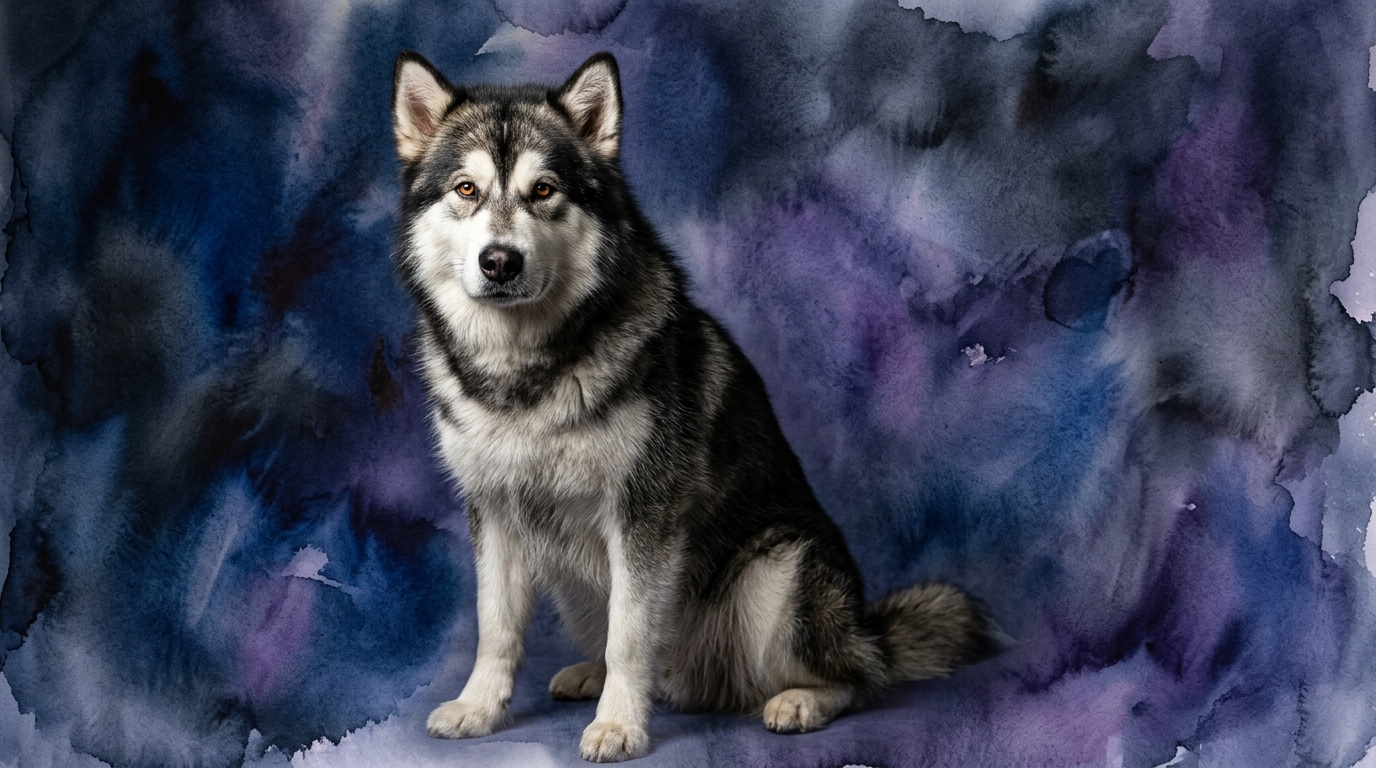
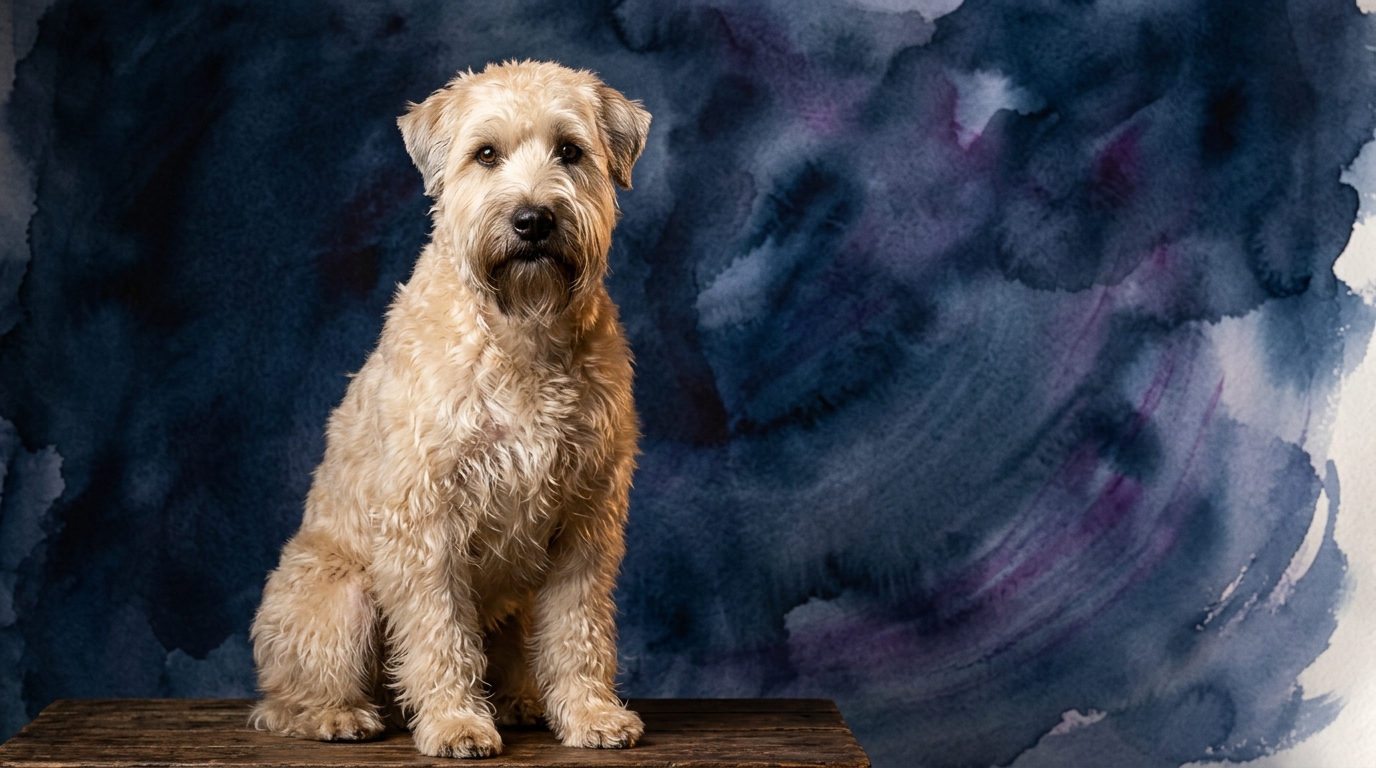
Side-by-Side Cognitive Profiles: Alaskan Malamute vs. Soft Coated Wheaten Terrier
To truly understand the cognitive landscape of these two breeds, The Cosmic Pet Pet IQ Lab analyzes five key dimensions. The Alaskan Malamute, ranked #50 by Coren, presents a profile shaped by its rigorous working heritage. Its Problem Solving is rated 4/5, indicating strong practical abilities in navigating complex environments or overcoming obstacles to achieve a goal. Training Speed scores 2/5, reflecting a deliberate pace and independent streak. Social Intelligence is 3/5, showing a balanced understanding of pack dynamics. Instinctive Drive is a perfect 5/5, highlighting powerful urges for pulling and endurance. Finally, Memory is 4/5, demonstrating robust recall for routines and locations. These scores paint a picture of a dog whose mind is geared for purposeful, self-reliant action.
The Soft Coated Wheaten Terrier, while not Coren-ranked, offers a different cognitive blueprint. Its Problem Solving is 3/5, indicating a moderate capacity, often employing persistence or trial-and-error. Training Speed is 3/5, suggesting enthusiastic learning and good responsiveness, despite occasional terrier spiritedness. Social Intelligence is also 3/5, showcasing a socially adept nature that forms strong family bonds. Instinctive Drive is 3/5, present but more balanced compared to a specialized working breed. Memory scores 3/5, exhibiting solid retention for routines and commands. This profile points to a dog that thrives on interaction and adaptability within a domestic setting.
Where the Alaskan Malamute Wins Cognitively
The Alaskan Malamute's cognitive framework shines brightest in areas demanding strategic thinking, profound instinctive engagement, and enduring recall. Their superior problem-solving acumen, rated 4 out of 5, reflects a breed forged where independent decision-making was paramount for survival. This involves evaluating situations, understanding cause and effect, and often devising multi-step solutions to achieve goals, like escaping enclosures or navigating complex terrain, stemming from generations of pulling heavy loads in challenging landscapes. This capability isn't just about simple puzzles; it's about practical application in real-world scenarios.
Furthermore, their instinctive drive, a perfect 5 out of 5, is an overwhelming cognitive asset for sustained focus on tasks like pulling, tracking, and endurance over vast distances. Their minds are wired for purpose-driven activity, making them exceptionally adept at tasks requiring stamina and unwavering commitment. Complementing this is their robust memory (4/5), allowing them to retain intricate mental maps, recall complex action sequences, and remember specific cues or routines over long periods, crucial for navigation and consistent performance of demanding tasks that define their working heritage.
Where the Soft Coated Wheaten Terrier Wins Cognitively
While the Alaskan Malamute excels in raw, purposeful drive, the Soft Coated Wheaten Terrier demonstrates a distinct cognitive advantage in human-centric interaction and adaptability, particularly in training responsiveness. With a training speed score of 3 out of 5, compared to the Malamute's 2, Wheatens typically exhibit a more enthusiastic and cooperative approach to learning new commands and behaviors. Their desire to engage and please, combined with less independent self-motivation than a sled dog, makes them more amenable to structured training. They are often quick to form associations between actions and rewards, leading to faster acquisition of obedience and tricks.
This slightly swifter training speed is often underpinned by their balanced social intelligence (3/5). Wheatens lean into human interaction with buoyant energy, making them highly receptive to feedback and positive reinforcement. Their cognitive processing, while not geared towards large-scale problem-solving in the same way as a Malamute, is finely tuned to picking up on social cues and adapting their behavior to fit a family environment. Their moderate instinctive drive (3/5) also means fewer competing internal urges to override training commands, allowing for a more focused learning experience.
Which is Easier to Train and Why
When evaluating ease of training, the Soft Coated Wheaten Terrier generally presents a more straightforward experience for the average owner. Their training speed of 3 out of 5 indicates a willingness to learn and a responsiveness to commands that often surpasses the Alaskan Malamute's 2 out of 5. Wheatens typically possess an eager-to-please disposition and a playful curiosity, which makes them highly motivated by positive reinforcement and engaging training methods. They enjoy the interaction and mental stimulation of learning, making them relatively quick to grasp new concepts and integrate them into their behavior. While they retain a terrier's spirited nature and can display moments of selective hearing, their primary inclination is often to cooperate.
In contrast, the Alaskan Malamute's training journey, while ultimately rewarding, requires a different approach and a higher degree of consistency and understanding from their human counterpart. Their lower training speed score isn't an indicator of a lack of cognitive capacity, but rather a reflection of their profound independence and powerful instinctive drives. A Malamute's mind is wired for self-reliance and purpose-driven action; they often question the *why* behind a command, rather than simply complying. Their strong instinctive drive (5/5), particularly for pulling, scenting, and exploring, can easily override human directives if not properly channeled or managed. This means training a Malamute involves consistent motivation, establishing clear leadership, and making training feel like a collaborative, purposeful activity rather than mere obedience.
Which Suits Active Owners vs. Relaxed Owners
The choice between an Alaskan Malamute and a Soft Coated Wheaten Terrier largely hinges on an owner's lifestyle, particularly their capacity and desire for activity and engagement. An Alaskan Malamute is unequivocally suited for active owners who not only embrace but thrive on outdoor adventures and consistent mental and physical challenges. Their unparalleled instinctive drive (5/5) means they possess an enduring need for purpose-driven activity. These are not dogs content with a leisurely stroll; they require extensive exercise, such as long hikes, jogging, sledding, or carting, to satisfy their innate urge to work and cover ground. Their high problem-solving capacity (4/5) also necessitates mental engagement through advanced training, puzzle toys, or structured "jobs" to prevent boredom and destructive behaviors. Owners must be prepared to integrate their Malamute into a very active lifestyle, understanding that an under-exercised Malamute is a frustrated Malamute.
Conversely, while still requiring regular exercise, the Soft Coated Wheaten Terrier can be a more accommodating companion for owners who might describe themselves as active but not necessarily extreme adventurers. Their instinctive drive (3/5) and moderate energy levels mean they enjoy daily walks, playful romps in a secure yard, and interactive games, but typically don't demand the same intense, enduring output as a Malamute. Their moderate problem-solving (3/5) and training speed (3/5) indicate they benefit from consistent training and mental stimulation through toys and social interaction, but without the relentless drive to constantly "work" or explore vast territories. A Wheaten can happily join an owner for an evening run or a weekend hike, but is often equally content curling up on the couch after a good play session. They are an excellent fit for owners seeking an engaged, playful companion who enjoys activity but also appreciates moments of calm and family togetherness, rather than a breed whose very being is defined by strenuous, purposeful exertion.
The Verdict
Select an Alaskan Malamute if your lifestyle embraces consistent, vigorous outdoor activity and you are prepared to channel a powerful, independent working drive with patient, purpose-driven training.
Opt for a Soft Coated Wheaten Terrier if you seek a spirited, engaging companion who enjoys regular activity and interaction but also thrives within a family setting with more moderate exercise demands.
🧠 Find Your Pet's IQ Score
Our Pet IQ Lab assessment covers 25+ tests across 5 cognitive dimensions — personalized to your breed.
Take the Full IQ Test →Frequently Asked Questions
Are Alaskan Malamutes difficult to train?
Alaskan Malamutes are not difficult due to a lack of intelligence, but rather their strong independence and powerful instinctive drives. Training requires consistency, clear leadership, and methods that make learning feel purposeful and rewarding to their working mindset.
Do Soft Coated Wheaten Terriers need a lot of exercise?
Soft Coated Wheaten Terriers require regular daily exercise, including walks and playtime, to satisfy their moderate energy levels and terrier instincts. They enjoy activity but generally don't demand the same intensity or endurance as some other working breeds.
Which breed is better with children?
Both breeds can be good with children when properly socialized and trained, but their approaches differ. Wheatens are often more playful and effusive in a family setting, while Malamutes can be gentle but sometimes too large or independent for very small children without close supervision.