Side-by-Side Cognitive Profiles: Decoding AWS and Lundehund IQ
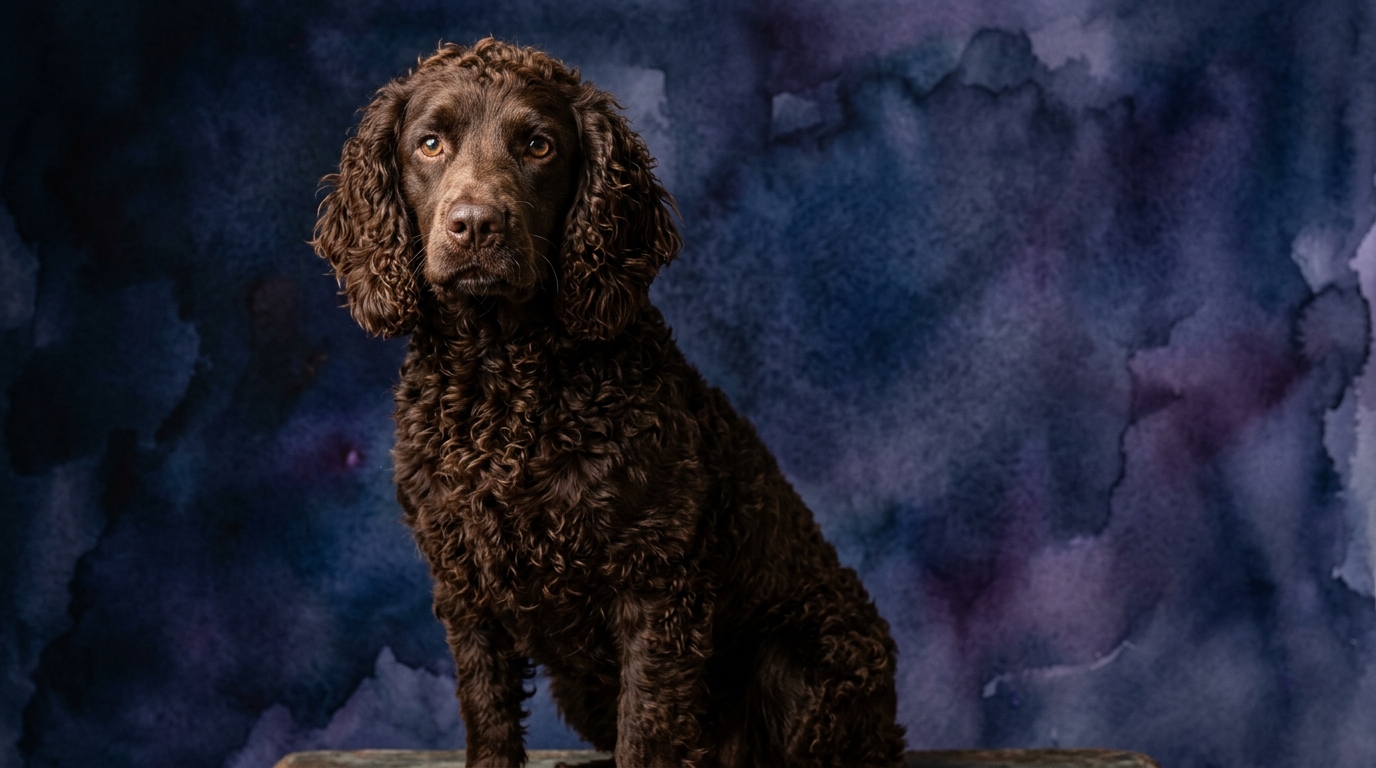
The Cosmic Pet Pet IQ Lab employs a five-dimensional framework to assess canine intelligence, offering a nuanced view beyond mere obedience. For the American Water Spaniel, a Coren-ranked breed at #44, its profile presents a balanced aptitude: Problem Solving (3/5) indicates a moderate capacity for independent thought and figuring out novel situations, while Training Speed (3/5) suggests they learn new commands at an average pace. Their Social Intelligence (3/5) reflects a moderate ability to interpret human cues and navigate social interactions, and their Instinctive Drive (3/5) points to a moderate expression of natural behaviors like retrieving or tracking. A notable strength is their Memory (4/5), indicating a strong ability to retain learned behaviors and recall past experiences.
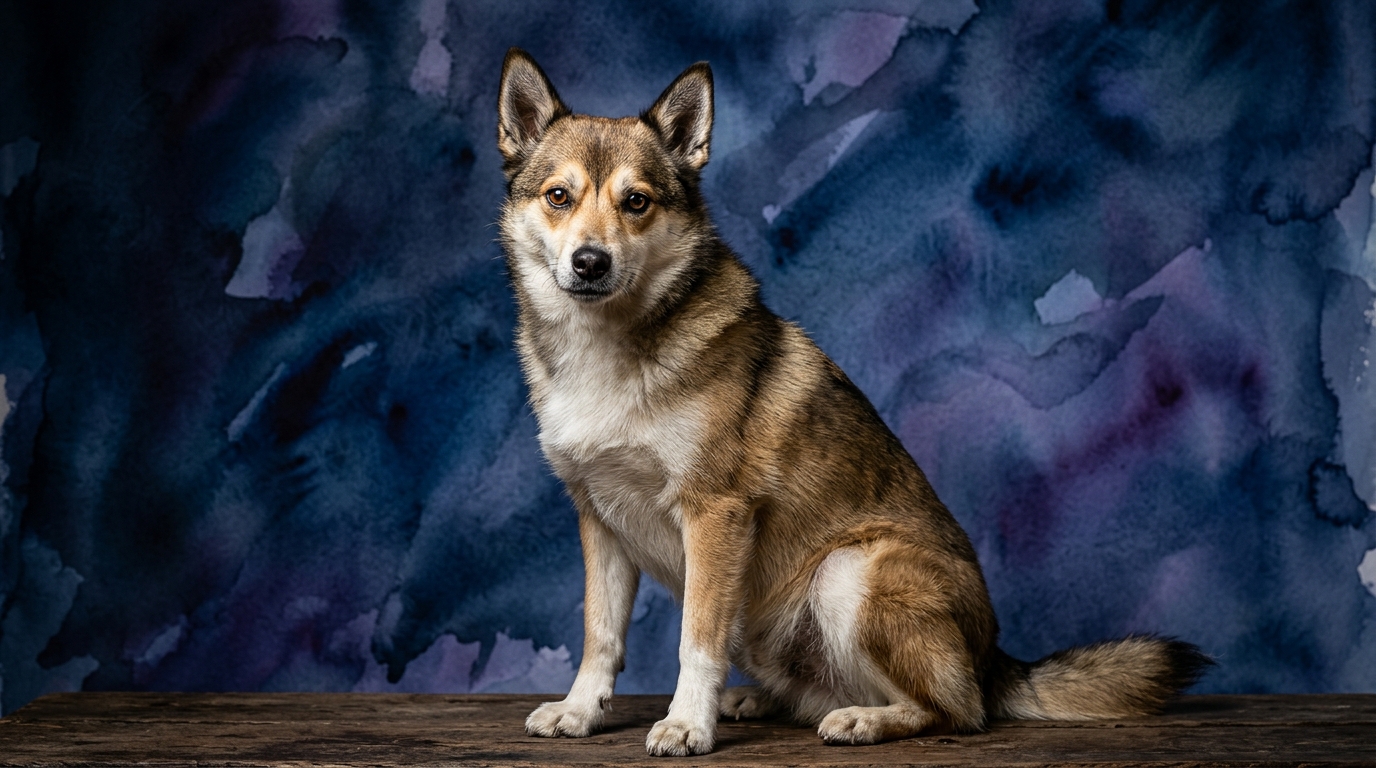
In contrast, the Norwegian Lundehund, a breed not evaluated by Coren's traditional ranking system, shares several cognitive scores with the AWS. They too exhibit Problem Solving (3/5), Training Speed (3/5), Social Intelligence (3/5), and Instinctive Drive (3/5), suggesting a similar baseline for these intellectual facets. However, where the Lundehund diverges is in Memory, scoring 3/5, which implies an average capacity for recalling information and experiences. This side-by-side view immediately highlights memory as a key differentiator, with the AWS demonstrating a superior ability in this specific cognitive domain.
Where the American Water Spaniel Cognitively Excels
The American Water Spaniel's primary cognitive advantage, as indicated by The Cosmic Pet Pet IQ Lab data, lies squarely in its Memory, scoring an impressive 4/5 compared to the Lundehund's 3/5. This superior recall isn't just an abstract number; it translates directly into practical applications for owners. A dog with stronger memory will typically retain learned commands and routines more consistently over time, requiring fewer refreshers and exhibiting greater reliability in executing known behaviors, even after periods of inactivity.
This enhanced memory also contributes to their overall adaptability and ability to learn complex sequences. For a breed historically tasked with retrieving game from diverse aquatic environments, remembering specific scent trails, the location of fallen birds, or intricate multi-step commands would have been paramount. Their capacity to form robust associations between cues and actions, and to recall past successful strategies, means that once a behavior is ingrained, it is likely to stick, making them a more predictable and consistent partner in structured activities and daily life.
Where the Norwegian Lundehund Demonstrates Unique Cognitive Strengths
While the Norwegian Lundehund shares identical scores with the AWS across Problem Solving, Training Speed, Social Intelligence, and Instinctive Drive, its unique historical role suggests a different kind of cognitive specialization, particularly in its application of these scores within a highly specific environment. Bred for hunting puffins on rugged, vertical Norwegian cliffs, the Lundehund developed an instinctive drive (3/5) that manifests as exceptional agility, body awareness, and a remarkable ability to navigate complex, precarious terrain. This drive, combined with its problem-solving (3/5) aptitude, would have been crucial for independently locating and extracting birds from narrow crevices.
Their physical adaptations—such as extra toes and a flexible spine—are not just anatomical curiosities but reflect a cognitive-physical synergy. Their problem-solving might be uniquely geared towards spatial reasoning and environmental manipulation; figuring out how to scale a rock face or maneuver through tight spaces requires a specific kind of 'situational intelligence' not always captured by generalized metrics. This suggests an independent, self-reliant problem-solving approach, where the dog assesses and adapts to physical challenges without constant human direction, making them uniquely suited for environments requiring intricate physical navigation and autonomous decision-making.
Training Differences: American Water Spaniel vs. Norwegian Lundehund
When it comes to ease of training, the American Water Spaniel generally holds an edge, primarily due to its superior Memory (4/5) and its sporting group heritage. While both breeds share a Training Speed of 3/5, meaning they learn new commands at a moderate initial pace, the AWS's stronger memory ensures these commands are retained more effectively over the long term. This means that once an AWS learns a cue, it is less likely to 'forget' it, leading to greater consistency and requiring fewer remedial sessions. Their sporting background also often instills a natural inclination to work cooperatively with a handler, seeking to please and engage in structured tasks, which further facilitates the training process.
The Norwegian Lundehund, with its Memory of 3/5 and its history as an independent puffin hunter, presents a different training dynamic. While capable of learning at a moderate pace, their retention might require more consistent reinforcement. More significantly, their historical role fostered a strong sense of independence; they were expected to operate autonomously on the cliffs, making their own decisions rather than constantly deferring to a human. This independence can manifest as a 'what's in it for me?' attitude during training, where they might question commands or prioritize their own interests over immediate compliance. Owners must therefore employ highly motivating, positive reinforcement techniques and understand that the Lundehund might not always offer the same eager biddability as a traditional working or sporting breed.
Ideal Owners: Active vs. Relaxed Lifestyles
For owners seeking an active and engaged companion who thrives on shared activities, the American Water Spaniel is often a more natural fit. As a sporting breed, they possess a moderate instinctive drive (3/5) that translates into a need for consistent physical exercise and mental stimulation, often in partnership with their human. They excel in activities like retrieving, swimming, and various dog sports, and their superior memory makes them excellent candidates for advanced obedience, agility, or field trials. An AWS will flourish with an owner who enjoys outdoor adventures, provides structured training, and values a dog that is eager to participate in family activities and bond through cooperative work.
The Norwegian Lundehund, while sharing a 3/5 instinctive drive, channels this energy differently. Their historical purpose demanded incredible stamina and agility in navigating treacherous terrain independently. This means they require significant physical activity, but it doesn't always need to be handler-directed or highly structured. They are suited for active owners who can provide varied environments for exploration, engage them in activities that challenge their unique physical capabilities (like climbing or navigating obstacle courses), and appreciate a dog with a strong independent streak. While they can adapt to a more relaxed home environment, neglecting their need for mental and physical engagement can lead to boredom and potentially mischievous behaviors. They are less about constant 'work' with an owner and more about autonomous exploration and problem-solving within their environment.
The Verdict
Opt for the American Water Spaniel if you desire a highly trainable companion with excellent memory, eager to participate in sporting activities or consistent obedience, and who thrives on a strong cooperative bond.
Select the Norwegian Lundehund if you are an experienced owner fascinated by a unique, independent breed with specialized physical and cognitive adaptations, capable of providing varied environmental stimulation to engage their self-reliant problem-solving.
🧠 Find Your Pet's IQ Score
Our Pet IQ Lab assessment covers 25+ tests across 5 cognitive dimensions — personalized to your breed.
Take the Full IQ Test →Frequently Asked Questions
Does the American Water Spaniel shed a lot?
The American Water Spaniel has a dense, curly double coat that provides insulation for water work. While not excessive, they do shed moderately, particularly seasonally, and require regular grooming to prevent matting and maintain coat health.
Are Norwegian Lundehunds good with children?
Norwegian Lundehunds can be good with respectful children, especially if raised with them and properly socialized from a young age. Their independent nature means they might tolerate rather than actively seek out constant interaction, so supervision is always recommended to ensure positive experiences for both dog and child.
How much exercise do these breeds need daily?
The American Water Spaniel requires at least 60-90 minutes of vigorous exercise daily, including swimming, retrieving, or long walks, combined with mental stimulation. The Norwegian Lundehund also needs substantial daily activity, often 60 minutes or more, that ideally includes varied terrain or opportunities for independent exploration to satisfy their agile and curious nature.