Side-by-Side IQ Profile: Deconstructing Canine Cognition
At The Cosmic Pet Pet IQ Lab, we evaluate canine intelligence across five key dimensions: Problem Solving, Training Speed, Social Intelligence, Instinctive Drive, and Memory. While both breeds exhibit impressive mental faculties, their specific scores highlight unique strengths and approaches to cognitive tasks.
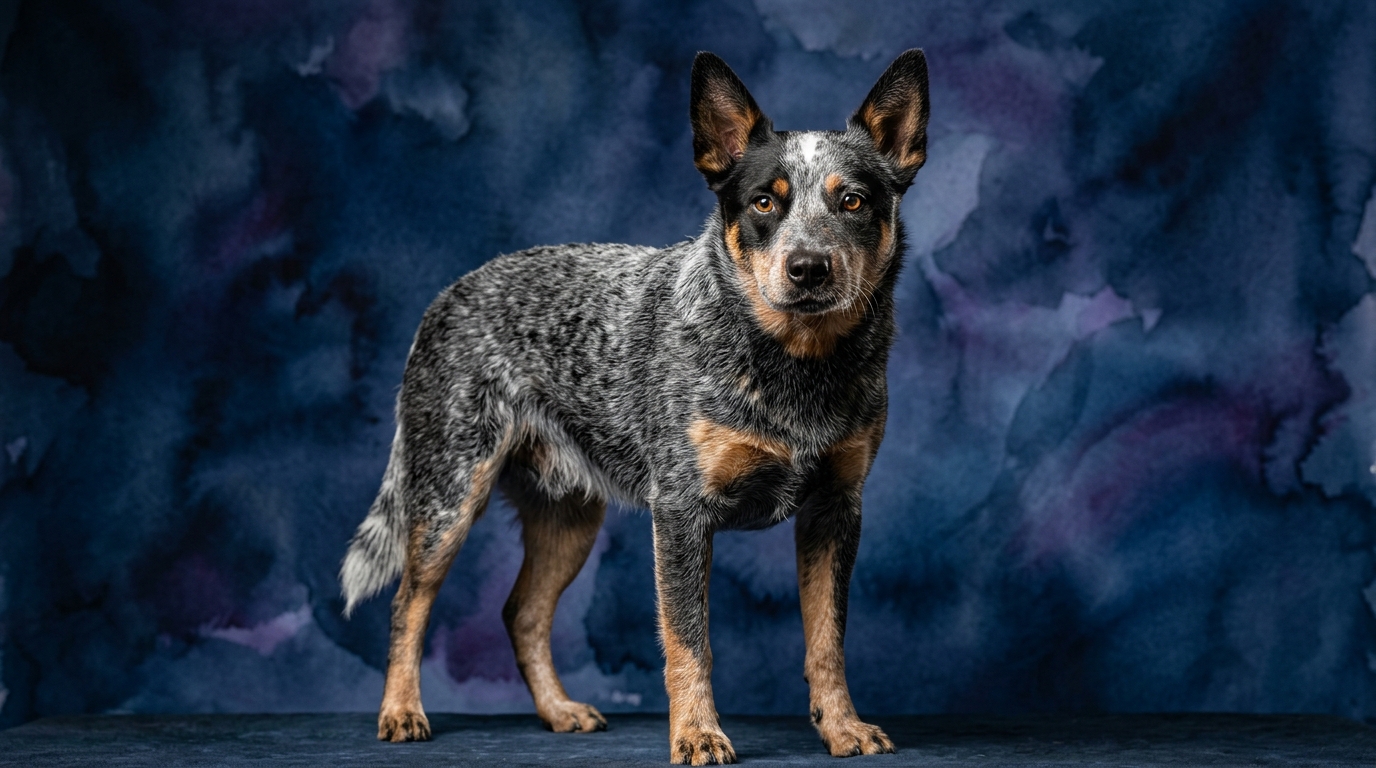
The Australian Cattle Dog, a breed recognized for its working prowess, holds a Coren rank of #10, placing it among the top echelons in obedience and working intelligence. Its IQ scores are notably robust across the board: Problem Solving 5/5, Training Speed 5/5, Social Intelligence 3/5, Instinctive Drive 5/5, and Memory 5/5. This profile paints a picture of a highly capable, task-focused individual who excels at independent thought and action.
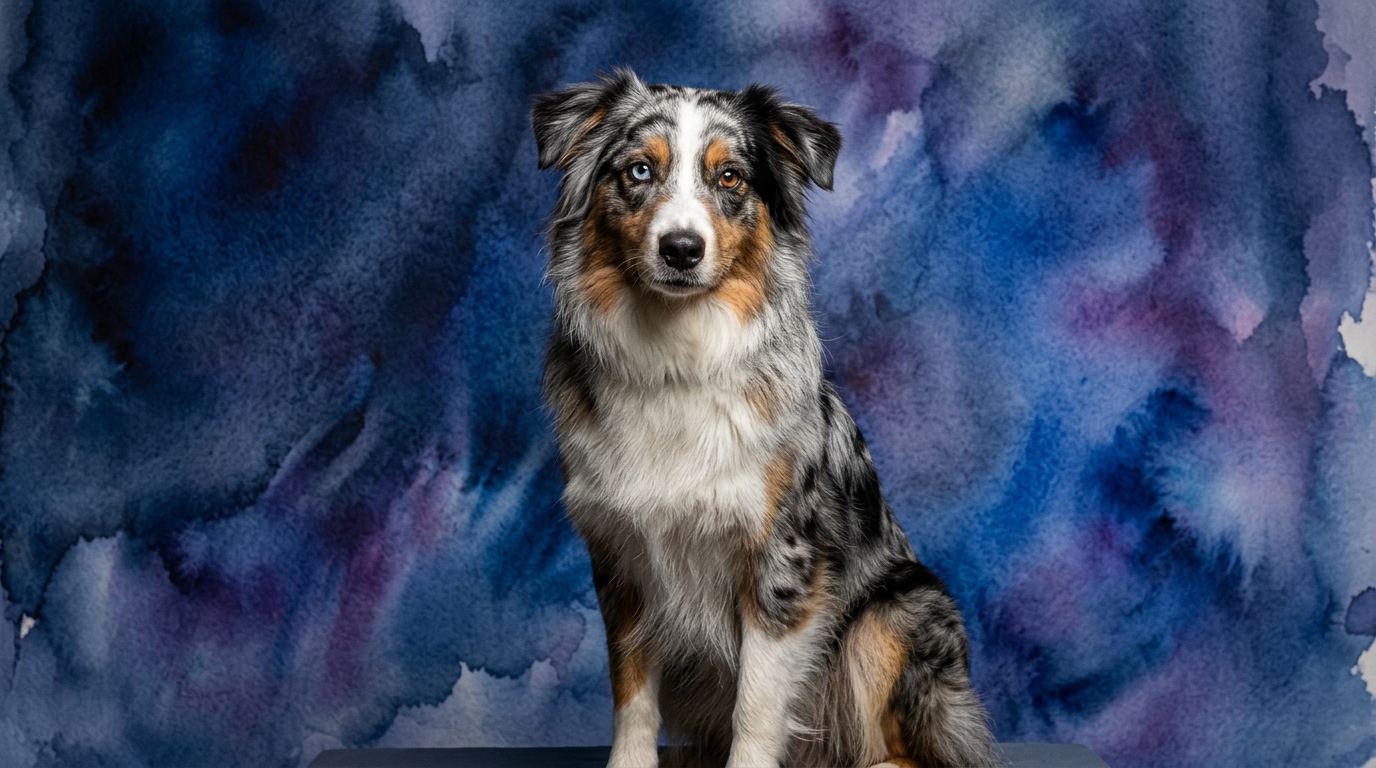
The Australian Shepherd, while not Coren-ranked, presents an equally compelling cognitive profile, albeit with a slight variation in its social dimension. Its scores are: Problem Solving 5/5, Training Speed 5/5, Social Intelligence 4/5, Instinctive Drive 5/5, and Memory 5/5. This suggests a dog with comparable abilities in learning and task execution, but with a heightened capacity for social engagement and understanding human cues.
A direct comparison reveals that both breeds possess exceptional aptitudes for learning and retaining information, coupled with a potent, innate drive to work. The primary distinction arises in their social intelligence, where the Australian Shepherd demonstrates a higher score, indicating a more outwardly expressive and human-attuned disposition compared to the Australian Cattle Dog's more reserved approach.
Problem Solving (5/5 for both): Both breeds exhibit a profound ability to independently navigate complex challenges. The Australian Cattle Dog excels at figuring things out on its own, relying on instinct and observation to overcome obstacles in dynamic environments. The Australian Shepherd, while equally adept, often integrates its social understanding into its problem-solving, potentially seeking human collaboration or adapting its approach based on observed cues.
Training Speed (5/5 for both): Rapid acquisition of commands and new concepts is a hallmark of both breeds. They absorb information quickly and efficiently, making them highly receptive to structured learning environments. Their eagerness to engage mentally ensures that new behaviors and tasks are integrated into their repertoire with considerable swiftness.
Social Intelligence (ACD 3/5, Aussie 4/5): This is where a key difference emerges. The Australian Cattle Dog's 3/5 score suggests a more independent and task-oriented social style. While deeply loyal to its chosen family, it might be less inclined to read subtle human emotional cues and can appear aloof with strangers. The Australian Shepherd's 4/5 score indicates a greater attunement to human moods and intentions, fostering a more collaborative and interactive social dynamic, making them more adaptable in varied social settings.
Instinctive Drive (5/5 for both): Both breeds possess an incredibly powerful herding instinct and a relentless drive to work. This 5/5 score signifies their profound motivation for purposeful activity, whether it involves gathering livestock, engaging in dog sports, or performing other tasks. This drive is a fundamental aspect of their cognitive makeup, demanding consistent outlets.
Memory (5/5 for both): Both the Australian Cattle Dog and Australian Shepherd demonstrate exceptional recall for learned routines, commands, and spatial information. They retain vast numbers of experiences and apply past learning efficiently, making them highly reliable partners in complex tasks and consistent in their learned behaviors.
Where the Australian Cattle Dog Wins Cognitively
The Australian Cattle Dog's cognitive strengths lie in its profound independence and unwavering focus on tasks. Its Coren rank of #10 underscores its superior capacity for obedience and working directives, often executed with a self-assured precision. This breed excels at processing complex, sequential information and applying it to intricate herding patterns or obstacle courses, demonstrating a remarkable ability to remember and execute multi-step commands.
Its 5/5 Problem Solving combined with a 3/5 Social Intelligence suggests a dog that thrives on figuring things out autonomously. When faced with a novel challenge, the ACD is less likely to look for human guidance and more inclined to devise its own solution, making it an exceptional choice for roles requiring self-reliance and initiative in dynamic, unpredictable environments. This cognitive style makes them particularly adept at roles where a dog must make quick, independent decisions, such as working with stubborn livestock or navigating complex terrain without constant handler input.
Where the Australian Shepherd Wins Cognitively
The Australian Shepherd's cognitive edge is most apparent in its superior Social Intelligence, scoring 4/5 compared to the ACD’s 3/5. This higher social aptitude translates into a greater ability to understand and respond to human communication, subtle cues, and emotional states. This makes them exceptionally collaborative partners, often anticipating their handler's next move and working in close concert.
While both breeds share a 5/5 Problem Solving score, the Australian Shepherd's approach is often more integrated with its social understanding. They excel at tasks requiring nuanced interaction with people or other animals, demonstrating a creative problem-solving style that can adapt to social feedback. This makes them particularly adept in dog sports like agility, where precise timing and partnership with a human are paramount, or in roles like therapy work where reading human emotion is key.
Which is Easier to Train and Why?
Both the Australian Cattle Dog and Australian Shepherd boast a 5/5 Training Speed, indicating they learn new commands and concepts with remarkable swiftness. However, the 'ease' of training extends beyond just speed, touching upon the behavioral differences driven by their distinct social intelligence scores and instinctive drives.
The Australian Shepherd, with its 4/5 Social Intelligence, often feels 'easier' to train for many owners. This higher social aptitude means they are generally more receptive to human-centric training methods, often eager to please and highly motivated by social rewards and positive reinforcement from their handler. They are keenly attuned to their owner's expressions and intentions, which can make the training process feel more collaborative and less challenging, even forgiving occasional handler errors.
Conversely, the Australian Cattle Dog, with its 3/5 Social Intelligence, while learning commands just as quickly, might require a different training approach. They are less driven by social approval alone; their motivation often stems from the utility and purpose of the task itself, or the outlet it provides for their powerful instinctive drive. Training an ACD demands a clear, consistent, and logical framework, where commands have a practical application. If the training lacks clear utility or structure, an ACD might challenge the handler more, not out of stubbornness, but from a cognitive preference for purposeful engagement rather than mere compliance for social appeasement. They learn *for the task*, rather than primarily *for you*.
Which Suits Active Owners vs. Relaxed Owners?
Given that both the Australian Cattle Dog and Australian Shepherd possess a 5/5 Instinctive Drive, it's crucial to clarify that neither breed is suitable for 'relaxed' owners. Both demand significant, consistent physical activity and mental engagement to thrive. Their high drive means they will find their own 'work' if not provided with appropriate outlets, which can manifest in undesirable behaviors like excessive herding of people or other pets, or destructive tendencies.
For active owners, the choice hinges on the *type* of activity preferred. The Australian Cattle Dog thrives on rigorous physical and mental challenges that often involve independent decision-making and problem-solving, such as complex herding scenarios, long-distance hiking, or challenging scent work. Owners must be prepared for a dog that needs a 'job' that engages its self-reliant cognitive style. The Australian Shepherd also requires substantial activity, but its higher social intelligence often makes it more content with human-directed, collaborative activities like agility, flyball, obedience trials, or long hikes and runs alongside its owner, where the partnership is central to the enjoyment. They need to feel like an integral part of a working team.
The Verdict
Choose the Australian Cattle Dog if you seek a fiercely independent, self-reliant working partner who excels at complex, task-oriented challenges and can make autonomous decisions in demanding environments.
Choose the Australian Shepherd if you desire a highly collaborative, socially attuned companion who thrives on shared activities, responds keenly to human interaction, and adapts well to various social settings.
🧠 Find Your Pet's IQ Score
Our Pet IQ Lab assessment covers 25+ tests across 5 cognitive dimensions — personalized to your breed.
Take the Full IQ Test →Frequently Asked Questions
Do Australian Cattle Dogs and Australian Shepherds get along with other pets?
Australian Cattle Dogs, with their strong herding drive and lower social intelligence, can be selective and may require careful socialization with other pets. Australian Shepherds, possessing higher social intelligence, generally adapt more readily to multi-pet households, though their herding instincts still necessitate proper introductions and supervision.
What are the primary differences in their problem-solving approaches?
While both score 5/5 in problem-solving, Australian Cattle Dogs tend towards independent, resourceful solutions, relying on their own judgment in dynamic situations. Australian Shepherds often prefer collaborative problem-solving, using their social intelligence to seek cues from their human partners and adapt their strategies based on interaction.
Which breed is better for first-time dog owners?
Neither breed is typically recommended for first-time owners due to their intense drive and need for consistent, experienced handling and extensive mental stimulation. However, the Australian Shepherd's higher social intelligence might make it slightly more forgiving and easier to guide for a dedicated novice willing to commit to comprehensive training and engagement.