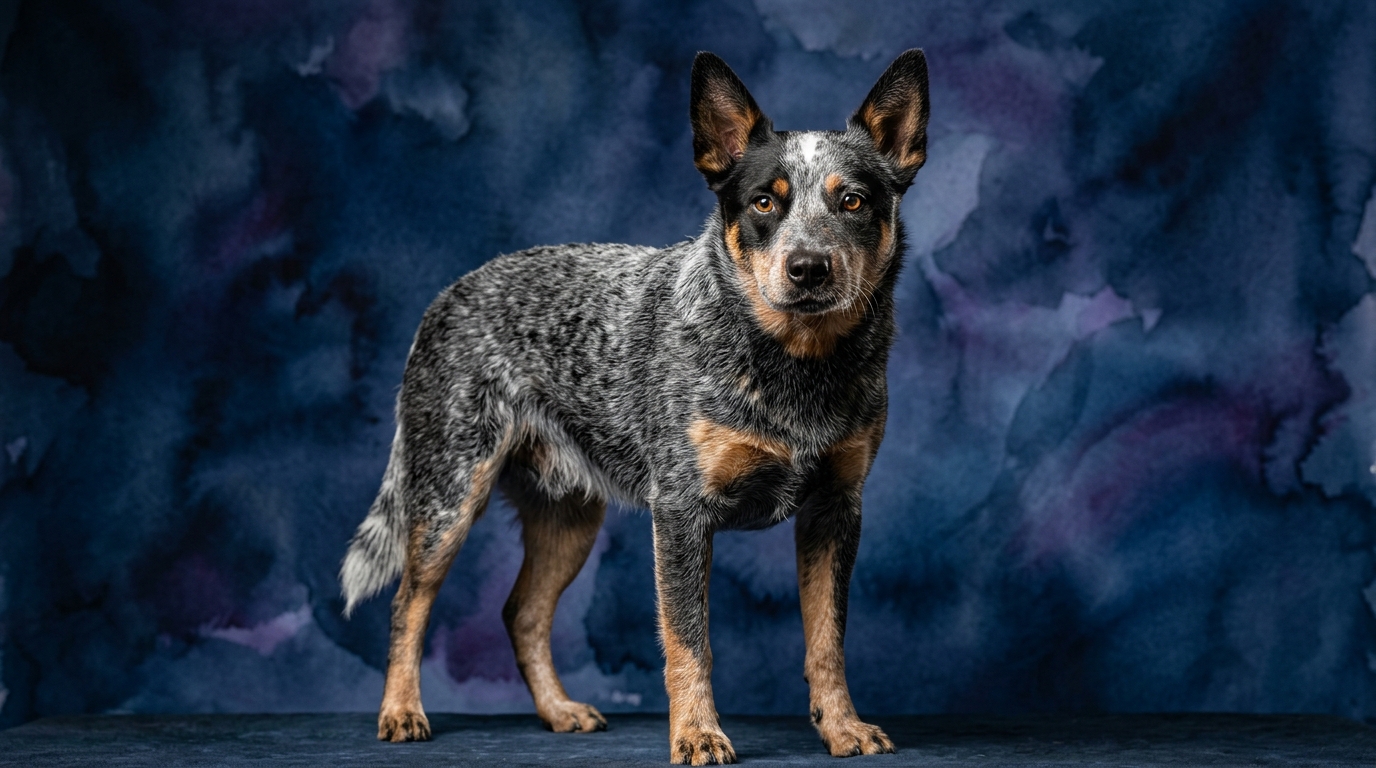
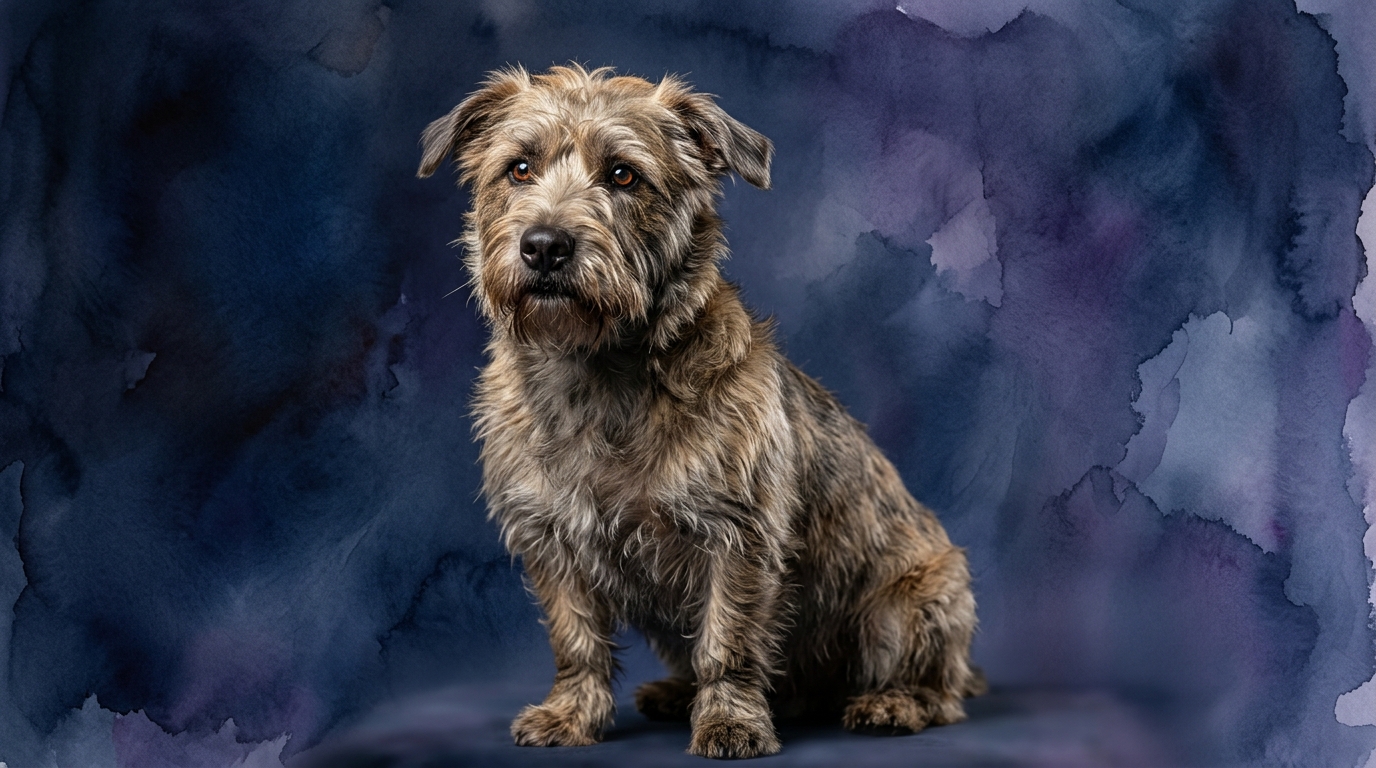
Side-by-Side Cognitive Profiles
At The Cosmic Pet Pet IQ Lab, we analyze canine cognition across five key dimensions, revealing the unique mental landscapes of different breeds. The Australian Cattle Dog, a herding powerhouse, consistently scores at the pinnacle in several areas. Their Problem Solving is rated 5/5, reflecting their capacity for intricate strategic thinking required to manage livestock across varied terrains and situations. Training Speed also hits a perfect 5/5, as these dogs absorb commands and routines with remarkable rapidity, eager to engage their minds in productive tasks. Their Social Intelligence stands at 3/5, meaning they form deep, loyal bonds with their core family but often exhibit a reserved demeanor towards strangers, prioritizing their working relationship over broad social pleasantries. Instinctive Drive is a commanding 5/5, channeled intensely into their herding purpose, providing an unwavering focus. Finally, their Memory is an impressive 5/5, allowing them to retain complex sequences of commands, environmental layouts, and the nuanced behaviors of animals.
In contrast, the Glen of Imaal Terrier, a robust member of the terrier group, presents a different cognitive blueprint, tailored to its historical role as an earthdog. Their Problem Solving is rated 3/5, indicating a resourceful mind primarily focused on independent tasks like navigating subterranean tunnels to flush out vermin, rather than complex, collaborative puzzles. Training Speed is also 3/5; while capable of learning, they require more patience and consistent motivation, often preferring to follow their own instincts than immediate human instruction. Like the Cattle Dog, their Social Intelligence is 3/5, showcasing loyalty to their family but a typical terrier independence and wariness of new acquaintances. Their Instinctive Drive, rated 3/5, is strong in areas like digging and prey pursuit, yet it's often more self-directed and less amenable to human control than a herding dog’s drive. Their Memory, at 3/5, is adequate for retaining learned information and routines, though perhaps not with the same breadth or immediate recall for multi-step tasks as their herding counterpart.
Where the Australian Cattle Dog Cognitively Excels
The Australian Cattle Dog's cognitive strengths lie in its capacity for highly structured, collaborative, and adaptable work. Their 5/5 Problem Solving and Memory allow them to master complex sequences of commands, such as those seen in advanced obedience or agility trials, where they must recall and execute multiple steps in rapid succession. For instance, an ACD can quickly learn to differentiate between specific livestock, direct them with precision, and adapt their strategy if an animal deviates, all while remembering a handler's subtle cues. This breed thrives on mental challenges that involve multi-layered decision-making and rapid processing of new information, making them adept at tasks requiring significant foresight and planning. Their superior Training Speed means they can be proofed on commands in diverse environments faster, maintaining accuracy even with distractions, a testament to their focused intellect and desire to work in tandem with their human partner.
Where the Glen of Imaal Terrier Cognitively Shines
While the Glen of Imaal Terrier's cognitive profile differs from the ACD, their strengths are perfectly suited to their original purpose. Their 3/5 Problem Solving, though lower than the ACD's, is characterized by tenacious, independent ingenuity. A Glen excels at persistent, self-directed tasks, such as figuring out how to access a challenging scent or navigating a complex underground maze. They don't rely on constant human direction; instead, they apply their intelligence to overcome obstacles through sheer determination and a singular focus on their objective. This breed’s cognitive 'win' is in its ability to operate effectively with minimal oversight, using its instinctual drive (3/5) to solve problems through perseverance and a sturdy, unwavering approach. Their memory, while not photographic, is perfectly sufficient for recalling the layout of a familiar hunting ground or the location of a favored digging spot, demonstrating a practical, purpose-driven intelligence.
Training Dynamics: A Tale of Two Approaches
The significant differences in Training Speed (ACD 5/5 vs. GIT 3/5) and Instinctive Drive (ACD 5/5 vs. GIT 3/5) directly translate into vastly different training experiences. The Australian Cattle Dog is generally easier to train due to its inherent desire to work, rapid learning capacity, and strong memory. They are often described as 'velcro dogs' who live to please their handler, quickly grasping new concepts and striving for perfection in execution. Their herding drive, when properly channeled, makes them highly responsive to direction and eager for structured activities, meaning they learn complex commands and routines with impressive efficiency and enthusiasm. Behavioral differences include their intense focus on their handler during training sessions and their ability to generalize learned behaviors to new contexts quickly.
Conversely, training a Glen of Imaal Terrier demands more patience, creativity, and understanding of their independent terrier spirit. Their lower training speed means repetitions will be more numerous, and motivation must be consistently high and varied to hold their interest. Their instinctive drive, while present, is less about collaborative work and more about independent exploration and pursuit of scents or digging opportunities. This can manifest as stubbornness or selective hearing when their instincts conflict with a command. Real behavioral differences include their tendency to follow their nose rather than a verbal cue, or their inclination to problem-solve a task in their own way rather than strictly adhering to human instructions. Successful training with a Glen relies on positive reinforcement, short engaging sessions, and a deep appreciation for their spirited, self-reliant nature.
Suitability for Owners: Active Engagement vs. Relaxed Companionship
The cognitive profiles of these breeds clearly delineate their suitability for different lifestyles. The Australian Cattle Dog is an ideal match for highly active, engaged owners who seek a canine partner for sports, work, or extensive outdoor adventures. Their 5/5 Problem Solving, Training Speed, and Instinctive Drive mean they thrive when given a job to do, whether it's competitive agility, advanced obedience, herding, or even complex scent work. They require owners who can provide consistent mental stimulation and physical exercise to prevent boredom and destructive behaviors that can arise from an underutilized mind. An ACD needs an owner who actively participates in their cognitive development and provides ample opportunities to engage their sharp intellect and powerful drive.
The Glen of Imaal Terrier, on the other hand, suits owners who appreciate a more independent, sturdy, and less demanding companion, though still one that enjoys activity. While they are not couch potatoes, their exercise needs are generally moderate compared to the ACD, and their cognitive engagement leans more towards independent exploration and scent-driven activities rather than structured, collaborative tasks. They are well-suited for owners who enjoy regular walks, opportunities for digging in designated areas, or participation in earthdog trials, which align with their natural drives. A Glen thrives with owners who understand and respect their terrier tenacity and independence, providing a relaxed yet stimulating home environment without expecting the intense focus and collaborative spirit of a working herding dog.
The Verdict
Choose an Australian Cattle Dog if you desire a highly trainable, intensely focused, and mentally agile partner for complex tasks, sports, or demanding work, and are prepared to provide extensive mental and physical engagement.
Opt for a Glen of Imaal Terrier if you appreciate an independent, tenacious companion with a resourceful mind for self-directed problem-solving, and seek a loyal, sturdy dog that enjoys exploration over structured collaborative work.
🧠 Find Your Pet's IQ Score
Our Pet IQ Lab assessment covers 25+ tests across 5 cognitive dimensions — personalized to your breed.
Take the Full IQ Test →Frequently Asked Questions
Is the Australian Cattle Dog genuinely smarter than the Glen of Imaal Terrier?
Based on our IQ metrics, the Australian Cattle Dog exhibits superior cognitive abilities in areas like problem-solving for collaborative tasks, training speed, and memory for complex sequences. However, 'smarter' is subjective; the Glen of Imaal Terrier possesses a specialized, tenacious intelligence for independent tasks suited to its breed purpose.
Which breed is better for a first-time dog owner?
Neither breed is typically recommended for first-time dog owners without significant research and commitment. The Australian Cattle Dog requires an experienced handler due to its intense drive and mental needs, while the Glen of Imaal Terrier's independence and terrier tenacity can be challenging for novices.
Do both breeds get along well with other pets or children?
Both breeds have a Social Intelligence rating of 3/5, indicating they bond well with their immediate family but can be reserved or independent. Early socialization is crucial for both, especially the ACD with its strong herding instincts and the GIT with its prey drive, to ensure harmonious relationships with other pets and respectful interactions with children.