Side-by-Side IQ Profile: Herding Acumen vs. Working Steadfastness
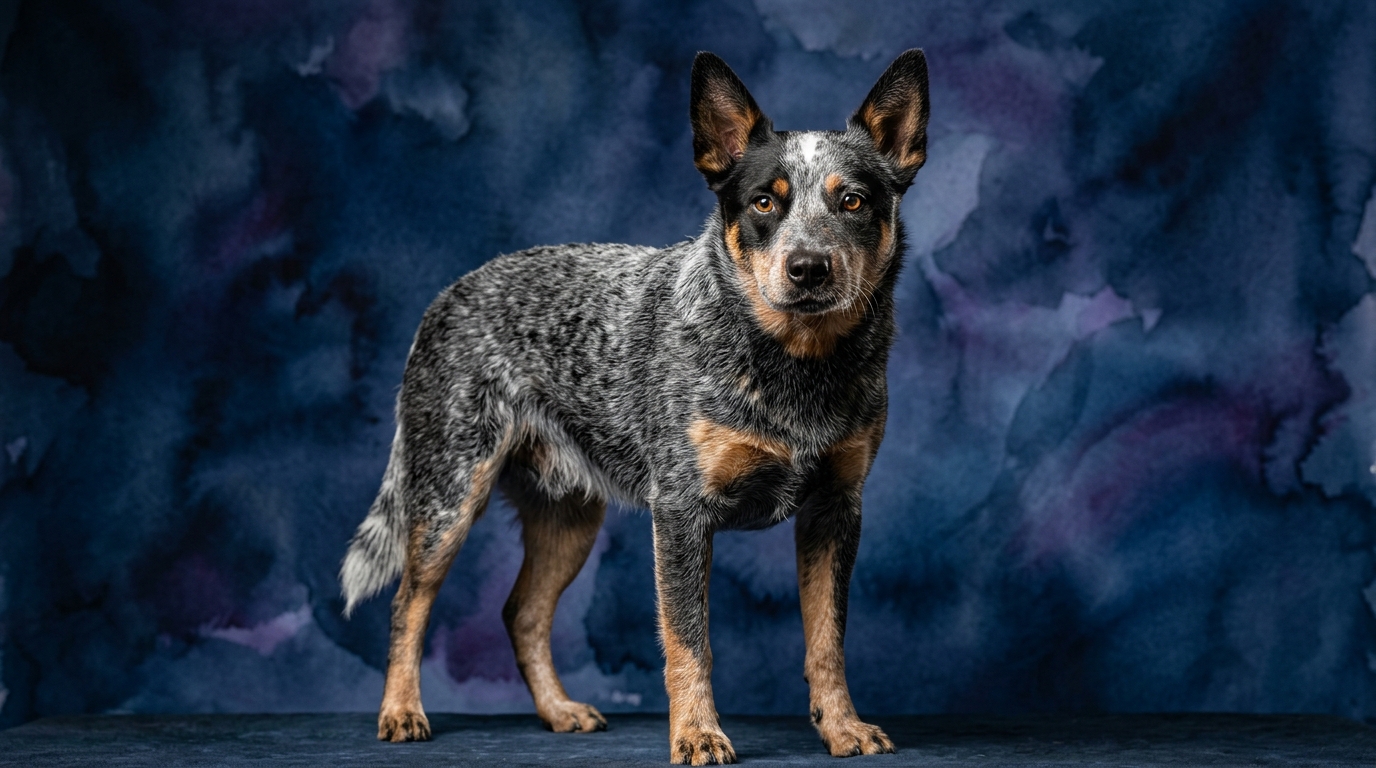
The Cosmic Pet Pet IQ Lab employs a five-dimensional framework to assess canine intelligence, offering a nuanced view beyond simple rankings. For the Australian Cattle Dog, a breed celebrated for its herding prowess and ranked #10 by Coren, its profile is dominated by high scores across most metrics. Its problem-solving ability stands at a formidable 5/5, indicating a dog capable of complex reasoning, strategic planning, and innovative solutions to environmental challenges. Training speed also rates a perfect 5/5, signifying a remarkable capacity for rapid acquisition of new commands and behaviors, often requiring minimal repetition. Memory is equally impressive at 5/5, allowing ACDs to retain vast amounts of information, from complex routines to the precise location of objects or livestock. Instinctive drive, crucial for its working role, is a powerful 5/5, reflecting an innate urge to control, gather, and manage. Social intelligence, however, is a moderate 3/5, suggesting they are capable of understanding social cues but may not always prioritize intricate human-dog or dog-dog interactions over their task-oriented focus.
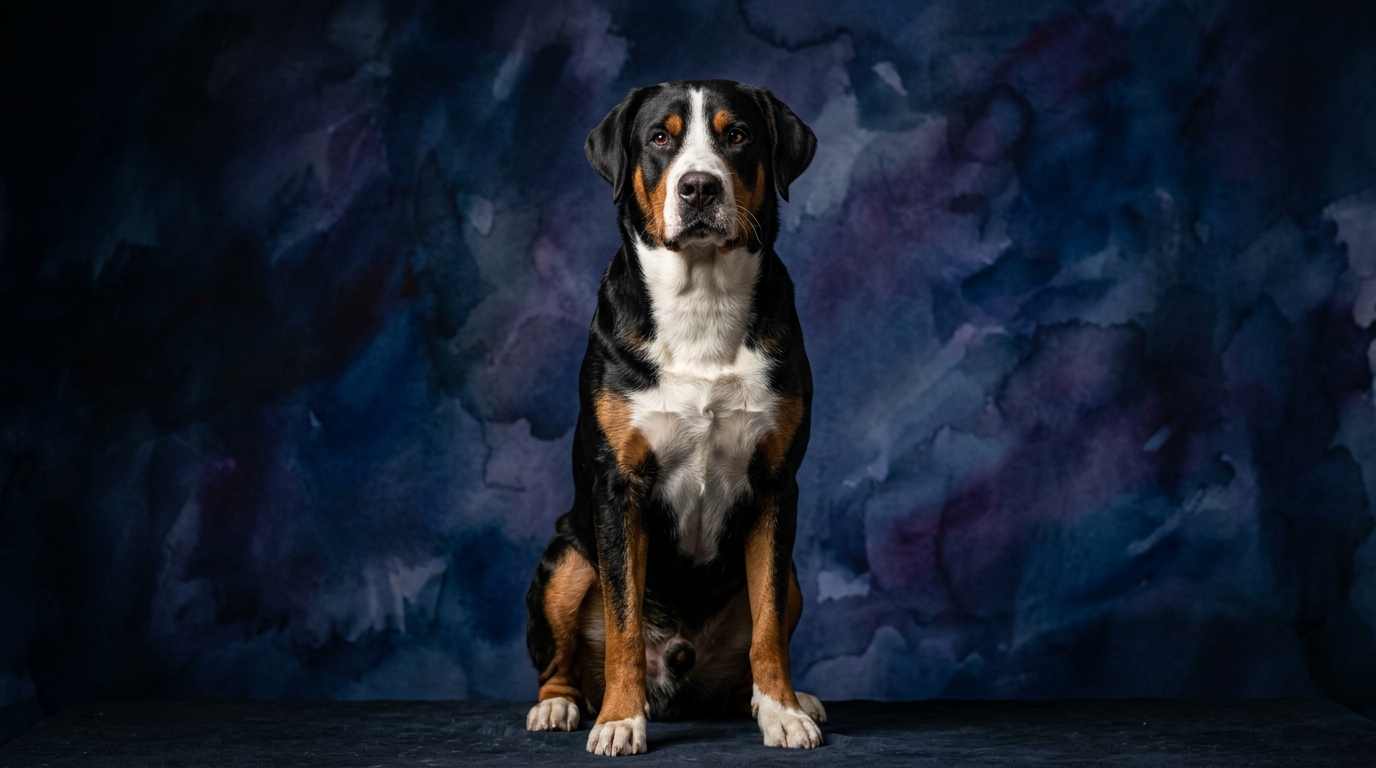
In contrast, the Greater Swiss Mountain Dog, a powerful Working Group breed without a specific Coren rank, presents a different cognitive landscape tailored to its historical roles of drafting, droving, and guarding. This breed scores a consistent 3/5 across all five IQ dimensions. Their problem-solving at 3/5 means they are competent at navigating straightforward challenges and learning established routines, though they may not independently devise novel solutions with the same frequency as an ACD. Training speed at 3/5 indicates they are certainly trainable, but they require more consistent repetition and patience compared to the lightning-fast ACD. Their memory, also 3/5, allows them to learn and retain commands and family routines, but perhaps not with the intricate detail or long-term recall of a herding breed. Instinctive drive at 3/5 reflects a solid work ethic for physical tasks like pulling or guarding, rather than the intense, predatory-sequence-driven focus of a herder. Social intelligence at 3/5 suggests they are generally amenable to human interaction and can coexist well with others, but might not possess the same nuanced sensitivity or desire for deep social engagement as some companion breeds.
Where the Australian Cattle Dog Excels Cognitively
The Australian Cattle Dog's cognitive strengths are deeply rooted in its herding heritage, demanding a specific blend of mental agility. Their 5/5 problem-solving isn't just about figuring out puzzles; it translates into a proactive, strategic approach to their environment. A Cattle Dog can quickly assess a situation, like a scattered flock or a fence breach, and independently formulate a multi-step plan to resolve it. This might involve anticipating the movement of livestock, blocking escape routes, or even devising a novel way to retrieve an object. This cognitive flexibility means they thrive on tasks that require sequential thinking and adapting to unpredictable variables.
Furthermore, their perfect 5/5 in training speed and memory makes them exceptionally efficient learners. An ACD can pick up complex command sequences or elaborate tricks with astonishing speed, often after only a few repetitions. This isn't just about obedience; it's about their capacity to rapidly encode and recall intricate information. For an owner, this means advanced obedience, agility, or even search and rescue training can progress at a swift pace, as the dog remembers not just the command, but the subtle cues and context surrounding its execution. Their high instinctive drive (5/5) means they are intensely motivated to engage in 'work,' channeling their natural impulses into focused, goal-oriented behaviors, making them incredibly driven partners in any task they undertake.
Where the Greater Swiss Mountain Dog Shines Cognitively
While the Greater Swiss Mountain Dog's IQ scores are consistently moderate, their cognitive profile represents a different kind of strength—one of steady reliability and robust application rather than rapid, intricate problem-solving. Their 3/5 problem-solving, for instance, isn't a deficit but a preference for consistency. They excel at learning established routines and performing physical tasks with unwavering dedication. A GSMD tasked with pulling a cart will learn the route and the commands with diligence, applying its substantial physical and mental fortitude to the task without seeking to innovate or deviate. This steadfastness is a cognitive asset in roles demanding endurance and predictable execution.
The GSMD's 3/5 social intelligence, combined with its 3/5 instinctive drive, points to a dog that is generally even-tempered and self-possessed. They are observant guardians, capable of discerning normal from unusual, but without the overthinking or intense focus on social dynamics that might distract a more socially sensitive breed from its duties. This means they are less prone to anxiety from subtle social cues and can maintain a calm, authoritative presence. Their memory and training speed, while not top-tier, ensure that once a behavior is learned through consistent, clear training, it becomes deeply ingrained and reliably performed. This cognitive steadfastness makes them excellent partners for owners who value a predictable, dependable temperament and a dog that can commit to a learned task with calm resolve.
Which Breed is Easier to Train and Why?
When evaluating ease of training, the Australian Cattle Dog holds a clear advantage in terms of initial learning speed and retention. Their 5/5 training speed means they grasp new concepts and commands almost instantaneously, often requiring just a few repetitions before they understand what's expected. This rapid acquisition, coupled with a 5/5 memory, allows them to build a vast repertoire of behaviors quickly. However, this cognitive prowess comes with a caveat: ACDs demand mental engagement. If training isn't stimulating or challenging enough, their high problem-solving ability might be redirected towards finding their own 'work,' which can manifest as undesirable behaviors like herding children or nipping at heels. Training an ACD is 'easier' in terms of how fast they learn, but requires a trainer who can consistently provide intellectual stimulation and direction.
The Greater Swiss Mountain Dog, with its 3/5 training speed and memory, requires a more patient and consistent approach. They are not 'difficult' to train, but they learn at a slower, more deliberate pace. Repetition and clear, concise commands are key. Unlike the ACD who might anticipate the next step, the GSMD benefits from a structured approach where each step is taught thoroughly before moving on. Their lower instinctive drive also means they are less prone to channeling intense natural urges into training, requiring more external motivation through positive reinforcement. While they may take longer to master a command, once a GSMD learns it, their 3/5 memory ensures reliable recall. Therefore, 'easier' is relative: ACDs are easier for quick learning, while GSMDs are easier for owners who prefer a steady, predictable pace and value consistency over lightning-fast progress.
Which Suits Active Owners vs. Relaxed Owners?
The Australian Cattle Dog is unequivocally suited for highly active owners who are prepared to provide significant physical and mental stimulation daily. Their intense instinctive drive (5/5) and high problem-solving capacity (5/5) mean they are not content with simple walks or backyard play. They require a 'job'—whether it's advanced obedience, agility, herding, disc dog, or long, challenging hikes. Owners who thrive on outdoor adventures, participate in dog sports, or are keen on engaging in complex training will find an ACD an unparalleled partner. A relaxed or sedentary owner would quickly find an ACD becoming restless, bored, and potentially destructive as it attempts to entertain itself or find its own work.
The Greater Swiss Mountain Dog, while also an active breed from the Working Group, suits a slightly different type of active owner. Their 3/5 instinctive drive means they appreciate regular exercise—walks, hikes, and opportunities to stretch their powerful bodies—but they don't possess the same relentless, mentally driven 'need to work' as an ACD. They are content with a structured routine that includes daily activity, but they are also generally calmer indoors and less prone to neurotic behaviors if their mental stimulation isn't constantly pushed to its limits. They are a good fit for owners who enjoy consistent outdoor activities, but also appreciate a dog that can settle down and be a composed family member without constant engagement. A truly 'relaxed' owner might still find the GSMD's exercise needs substantial, but they are a more forgiving choice than the perpetually-on-the-go ACD.
The Verdict
Choose the Australian Cattle Dog if you are an experienced, highly active owner eager for a sharp, driven partner in dog sports, complex training, or demanding outdoor adventures.
Opt for the Greater Swiss Mountain Dog if you seek a steadfast, physically robust companion for consistent outdoor activities, valuing a dependable temperament and a more predictable, calmer presence indoors.
🧠 Find Your Pet's IQ Score
Our Pet IQ Lab assessment covers 25+ tests across 5 cognitive dimensions — personalized to your breed.
Take the Full IQ Test →Frequently Asked Questions
Which breed is better for first-time dog owners?
The Greater Swiss Mountain Dog is generally a more forgiving choice for first-time owners due to its more moderate cognitive demands and less intense drive. Australian Cattle Dogs require significant experience to manage their high mental and physical energy effectively.
Do Australian Cattle Dogs or Greater Swiss Mountain Dogs shed more?
Both breeds shed, but the Australian Cattle Dog has a dense double coat that sheds moderately year-round and more heavily seasonally. The Greater Swiss Mountain Dog has a thick double coat that also sheds, but the amount can vary and is often manageable with regular grooming.
Which breed is more prone to separation anxiety?
Neither breed is inherently more prone to separation anxiety, but an under-stimulated Australian Cattle Dog, due to its high need for engagement, might display destructive behaviors if left alone too long. A well-exercised and trained individual of either breed can generally cope well with appropriate time alone.