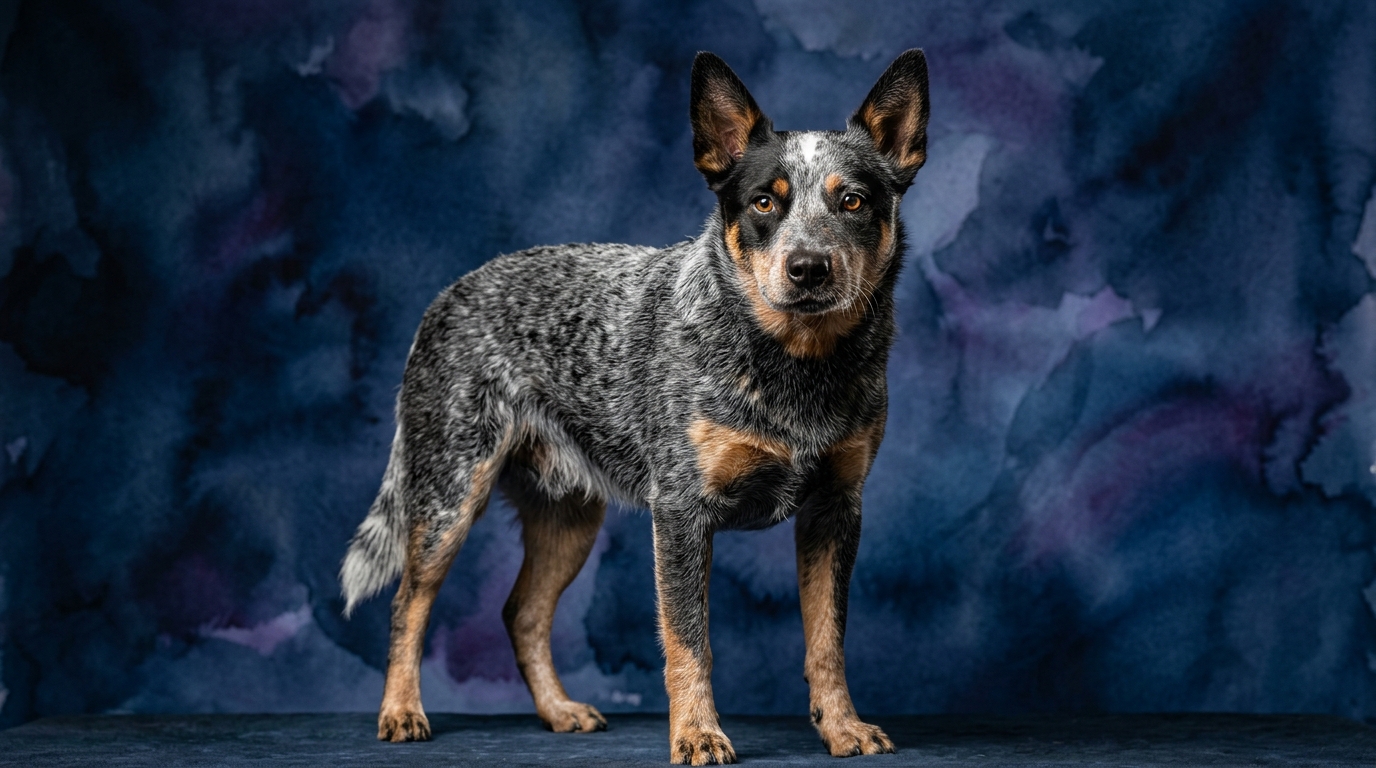
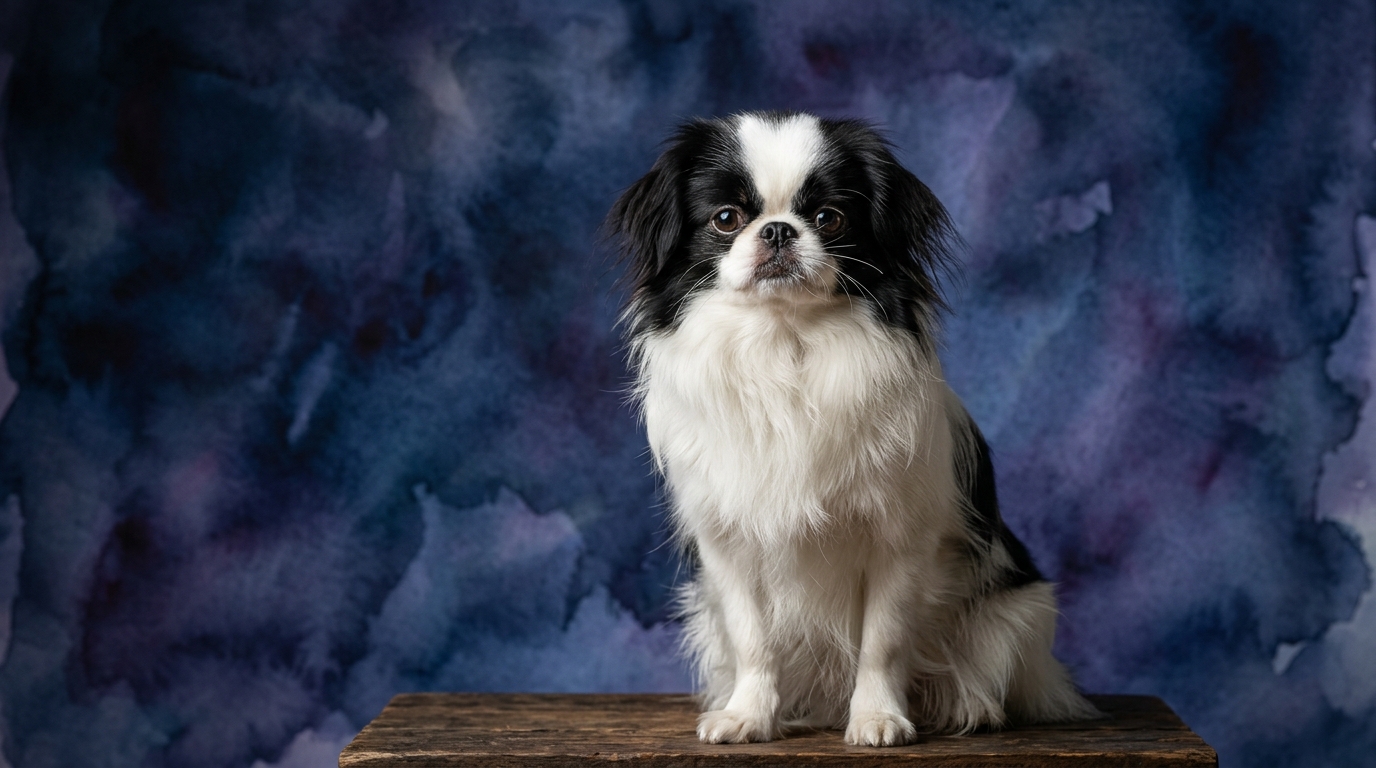
Side-by-Side Cognitive Profiles
The Australian Cattle Dog (ACD) exhibits a cognitive profile meticulously honed for demanding work: their Problem Solving (5/5) is exceptional, allowing them to independently navigate complex situations and strategize solutions in dynamic environments; Training Speed (5/5) is remarkable, as they absorb and retain commands with minimal repetition, eager for purpose; Social Intelligence (3/5) is more utilitarian, focused on partnership with their handler rather than broad communal engagement, often reserved with strangers; an intense Instinctive Drive (5/5) for herding dominates their motivation, manifesting as a persistent urge to gather and control; finally, their Memory (5/5) is outstanding, enabling them to recall vast repertoires of commands and apply past experiences to new challenges effectively.
In contrast, the Japanese Chin's cognitive strengths are tailored for devoted companionship: their Problem Solving (3/5) is sufficient for domestic life, enabling them to navigate home environments and learn household routines, though not geared for complex tasks; Training Speed (3/5) is moderate, responding well to consistent, positive methods for basic obedience and charming tricks without the ACD's rapid absorption; Social Intelligence (3/5) shines in their empathetic connection with owners, adapting to moods and seeking comfort, yet they can be reserved with new people; their Instinctive Drive (3/5) is primarily for companionship and comfort, a gentle inclination towards playful interaction rather than intense work; and their Memory (3/5) is good for routines, favored individuals, and pleasant experiences, ensuring they recall beloved family members and treat locations.
Where the Australian Cattle Dog Excels Cognitively
The Australian Cattle Dog displays a cognitive architecture built for independent action and sustained mental engagement. Their problem-solving acumen, rated 5/5, is evident in their capacity to strategize, such as figuring out how to re-route a stubborn cow or finding the most efficient path to gather a dispersed flock. This isn't about simple obedience; it's about adaptive reasoning in dynamic, often challenging, environments.
Their training speed, also 5/5, reflects a deep-seated desire for purpose and a rapid absorption of information. An ACD can master a complex sequence of agility obstacles or learn a multi-stage scent detection task with fewer repetitions than many other breeds. This quick uptake is fueled by their sharp memory (5/5), allowing them to retain vast repertoires of commands and experiences, applying past lessons to new challenges with impressive recall and precision.
Where the Japanese Chin Shines Cognitively
While raw numerical ratings might suggest parity in some areas, the Japanese Chin's cognitive strengths are profoundly tailored to their role as devoted companions. Their social intelligence, rated 3/5, manifests differently than a working breed's; it's an exquisite sensitivity to human emotion and household dynamics. Chins often demonstrate an intuitive understanding of their owner's mood, offering comfort or initiating play at just the right moment, a nuanced form of social cognition.
Their problem-solving (3/5) and training speed (3/5) are perfectly adequate for navigating a domestic setting and learning household routines, often with a charming, independent streak. They might not be solving complex puzzles, but they excel at "solving" the puzzle of human affection, learning which behaviors elicit positive responses and attention. Crucially, their moderate instinctive drive (3/5) is a cognitive advantage for a companion dog, as their mental energy isn't dominated by an incessant need to herd or hunt, allowing them to be content in a less demanding environment.
Training Dynamics: ACD vs. Japanese Chin
When considering ease of training, it's crucial to define the desired outcomes. The Australian Cattle Dog, with its 5/5 training speed and 5/5 memory, absorbs commands and complex sequences with remarkable alacrity. They are inherently eager to learn and work, making them exceptionally responsive to structured training for tasks like agility, advanced obedience, or herding, driven by their strong instinctive drive.
However, this same drive, coupled with their 5/5 problem-solving, can make them challenging without consistent guidance; they will "problem-solve" independently if not given clear directives, potentially leading to undesired behaviors like herding family members or outsmarting enclosures. The Japanese Chin, with 3/5 ratings, offers a different training experience; they are generally easier to train for basic house manners due to their moderate instinctive drive and desire for companionship, often less inclined to challenge authority or invent their own "tasks." While they may not learn as quickly, their lower cognitive demands for mental stimulation make them a more straightforward choice for well-mannered household pets.
Matching Breeds to Lifestyles: Active vs. Relaxed Owners
The choice between these two breeds heavily depends on an owner's lifestyle. Australian Cattle Dogs are unequivocally suited for active owners. Their 5/5 instinctive drive and problem-solving capacity demand substantial physical exercise and rigorous mental engagement. These dogs thrive when given a purpose, whether it's herding, dog sports, or extensive hiking.
An ACD needs an owner who can commit to daily, stimulating activities that challenge both their body and their astute mind, preventing the boredom that can lead to destructive or disruptive behaviors. Conversely, the Japanese Chin is an ideal match for more relaxed owners. With a moderate 3/5 instinctive drive and problem-solving focus, their needs are centered around companionship rather than intense activity. They are perfectly content with short, leisurely strolls and indoor playtime, preferring to spend the majority of their time in close proximity to their human family.
The Verdict
Opt for an Australian Cattle Dog if you are an experienced, active owner seeking a highly trainable, driven partner for dog sports, working roles, or an intensely engaged lifestyle demanding constant mental stimulation.
Select a Japanese Chin if you desire a charming, sensitive companion for a calm household, valuing their gentle nature and moderate exercise needs over intense cognitive challenges or demanding work.
🧠 Find Your Pet's IQ Score
Our Pet IQ Lab assessment covers 25+ tests across 5 cognitive dimensions — personalized to your breed.
Take the Full IQ Test →Frequently Asked Questions
Are Australian Cattle Dogs good family pets?
Australian Cattle Dogs can be loyal family members, especially with older, respectful children who understand their herding instincts. Their strong drive and need for mental stimulation mean they thrive in active households that provide consistent training and a clear "job" to channel their cognitive energy.
Do Japanese Chins bark a lot?
Japanese Chins are not typically excessive barkers, often using their voice to alert to strangers or express excitement. They possess a unique "Chin spin" or "Chin snort" rather than constant vocalizations, making them suitable for apartment living and generally quieter households.
How much exercise does an Australian Cattle Dog need daily?
An Australian Cattle Dog requires significant daily exercise, typically an hour or more of vigorous activity like running, hiking, or mentally stimulating games. Their high instinctive drive means physical exertion coupled with mental challenges is crucial to their well-being and cognitive fulfillment.