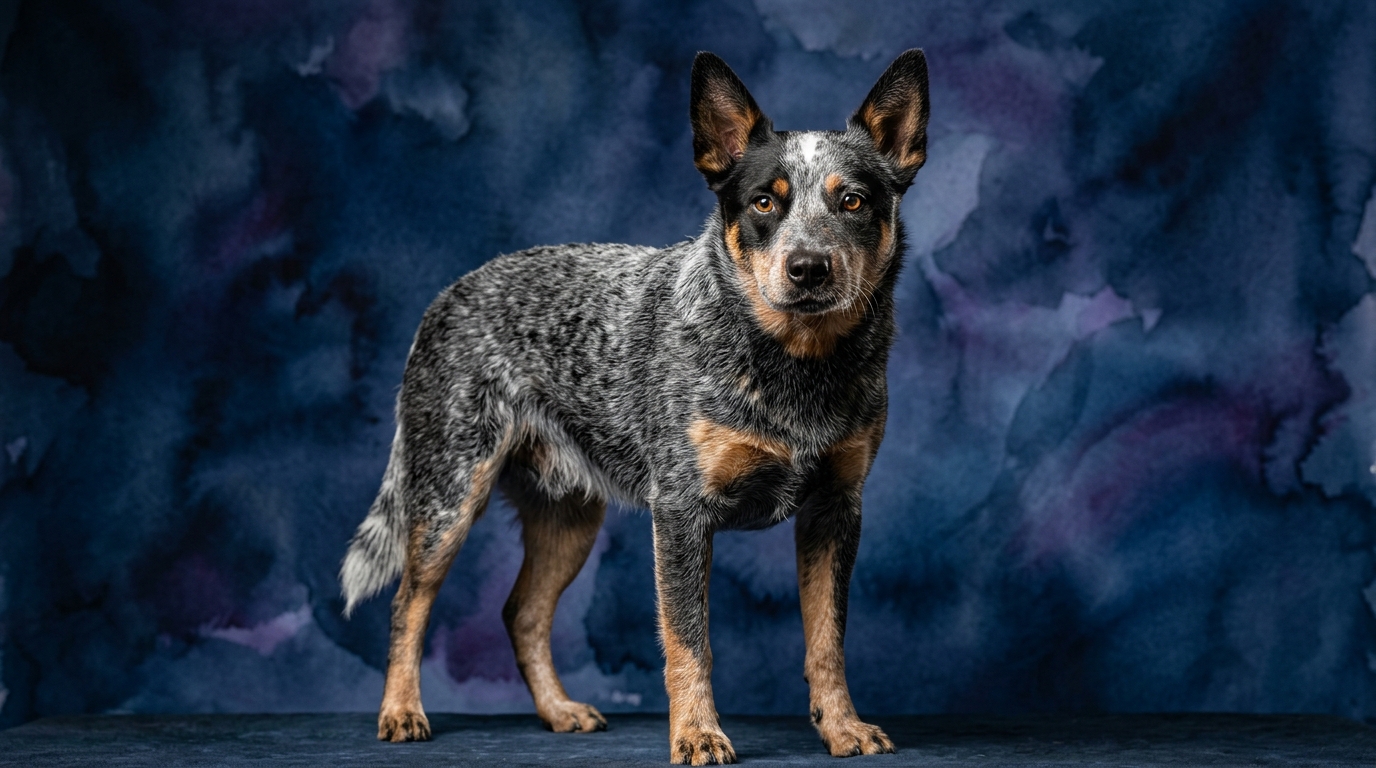
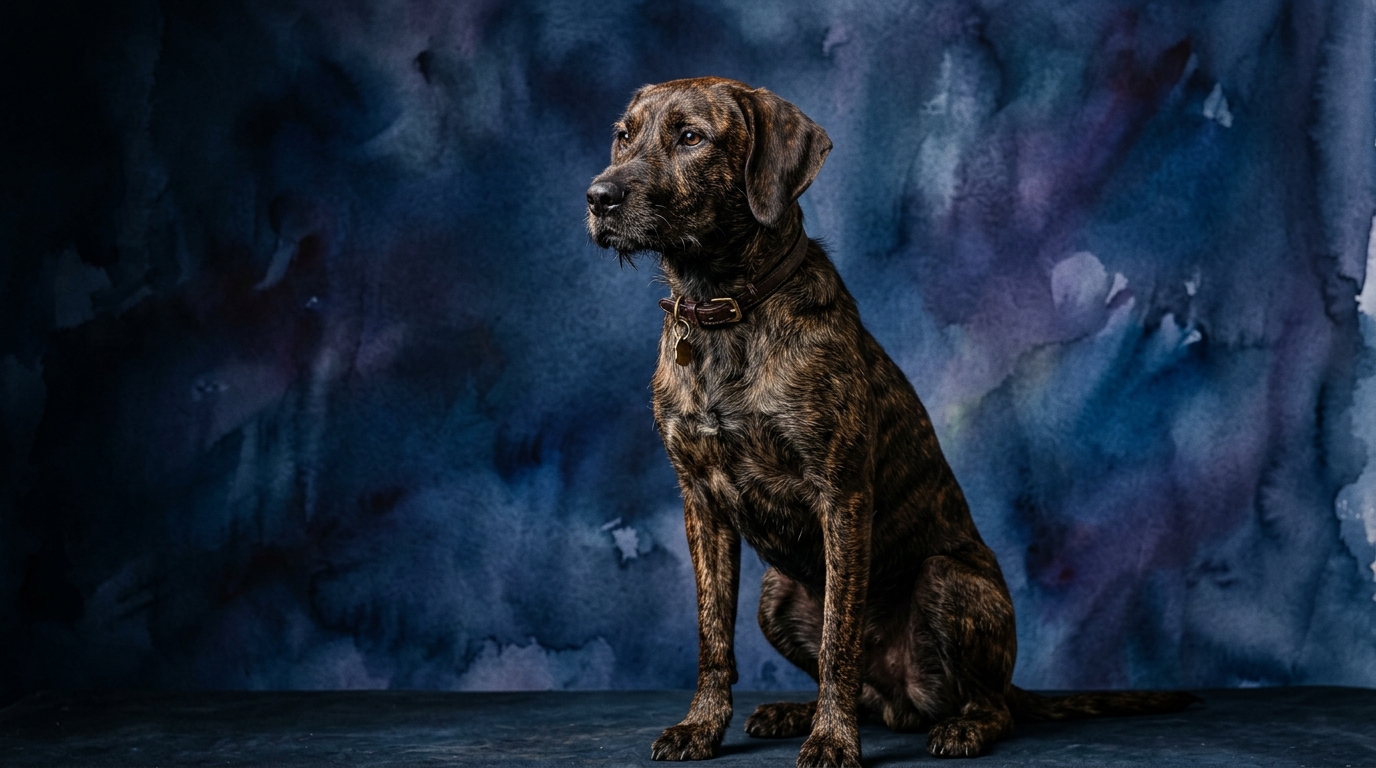
Side-by-Side IQ Profile
The Cosmic Pet Pet IQ Lab evaluates canine intelligence across five key dimensions, offering a granular view of each breed's cognitive architecture. For the Australian Cattle Dog (ACD), problem-solving ability rates a top-tier 5/5, manifesting in their capacity to devise strategies for complex tasks like herding or agility. Their training speed also earns a perfect 5/5, reflecting a rapid grasp of new commands and the ability to generalize learned behaviors. Social intelligence, at 3/5, indicates a strong bond with their primary handler and family, yet a more reserved approach to strangers. Instinctive drive is a potent 5/5, embodying their ingrained urge to herd and control movement. Finally, their memory, a robust 5/5, allows them to retain extensive command vocabularies and complex routines over long periods.
In contrast, the Plott Hound presents a different cognitive landscape. Their problem-solving ability scores 3/5, primarily centered on scent-based puzzles and persistent trail following rather than abstract conceptual tasks. Training speed, also 3/5, suggests they are capable learners, but often require more repetition and specific motivation, with instinctual drives frequently taking precedence. Social intelligence, matching the ACD at 3/5, points to their strong pack mentality and loyalty to their immediate human family, though their primary social focus during work is often with fellow hounds or quarry. Instinctive drive, rated 3/5, is powerfully directed towards tracking and hunting, characterized by unwavering persistence on a scent trail. Their memory, at 3/5, is proficient for recalling scent pathways and familiar hunting grounds, though less for lengthy abstract command sequences.
Where Australian Cattle Dog Wins Cognitively
The Australian Cattle Dog's cognitive strengths shine brightest in areas demanding strategic thought and rapid assimilation of information. Their 5/5 problem-solving isn't just about following instructions; it's about anticipating, adapting, and innovating solutions to novel challenges, such as independently maneuvering objects or figuring out how to open a gate. Their unparalleled training speed (5/5) means they quickly grasp new commands and generalize concepts, excelling in complex dog sports like obedience and agility. This breed's 5/5 memory underpins their ability to perform intricate routines flawlessly and retain a vast repertoire of cues, making them highly reliable partners in dynamic, fast-paced working scenarios where precision and recall are paramount. They exhibit a remarkable capacity for understanding sequences and patterns, executing multi-step tasks with minimal guidance.
Where Plott Hound Wins Cognitively
The Plott Hound's cognitive triumphs are deeply rooted in their specialized sensory world and unwavering dedication to a task. Their problem-solving, though rated 3/5 generally, soars to 5/5 within the domain of olfaction. They possess an extraordinary ability to decipher complex scent puzzles, following faint, aged, or intermingled trails with remarkable accuracy and persistence. This isn't just sniffing; it's processing vast sensory data, prioritizing relevant information, and making complex navigational decisions based solely on odor. Their instinctive drive (3/5) is uniquely channeled into this pursuit, allowing them to maintain intense focus on a scent trail for hours, filtering out environmental distractions. This persistence, combined with their olfactory memory (exceptional for scent), means they can recall specific scents and trails over time, demonstrating a deep, specialized form of cognitive mapping based on smell.
Which is Easier to Train and Why
When assessing ease of training, the Australian Cattle Dog holds a clear advantage due to their superior scores in Training Speed (5/5), Problem Solving (5/5), and Memory (5/5). They are inherently eager to engage with their handler, viewing training as a stimulating activity and a form of cooperation. An ACD typically grasps new commands in very few repetitions, often showing an intuitive understanding of expectations. Their strong desire to work and please, coupled with their cognitive capacity for complex learning, makes them highly responsive to traditional training methods and quick to excel at advanced tasks.
The Plott Hound, while trainable, presents different challenges. Their 3/5 scores in Training Speed, Problem Solving, and Memory (in a general sense) mean that while they learn, it often requires more patience, repetition, and understanding of their primary motivators. A Plott's world is dominated by scent, and their instinctive drive to follow a trail can frequently override human commands; they are often "distracted" by their nose rather than disobedient. Training a Plott Hound often involves harnessing this powerful drive, using scent-based rewards and incorporating nose work, requiring creative, consistent approaches acknowledging their specialized cognition.
Which Suits Active Owners vs Relaxed Owners
Both the Australian Cattle Dog and the Plott Hound demand active owners, but the nature of that activity differs significantly, stemming directly from their cognitive profiles. The Australian Cattle Dog, with its 5/5 Problem Solving, 5/5 Instinctive Drive, and 5/5 Memory, requires an owner who can consistently provide intense mental and physical engagement. This breed needs a "job"—whether competitive dog sports, advanced obedience, complex puzzle toys, or extensive, structured exercise. A relaxed owner unable to channel the ACD's high-octane intellect and drive will likely face a bored, potentially destructive, and frustrated companion.
The Plott Hound also requires an active owner, but one who understands and caters to its specialized scent drive (3/5 Instinctive Drive). While not demanding the same abstract problem-solving as an ACD, their need to use their nose is paramount. This means extensive outdoor activities where they can track and explore scents, such as long hikes, scent work classes, or supervised "hunting" for hidden treats. A relaxed owner unable to accommodate the Plott's persistent desire to follow a trail or its characteristic vocalizations (baying) will struggle. Their physical stamina and independent, scent-driven nature make them unsuitable for a sedentary lifestyle, needing an outlet for their specialized activity and cognitive engagement.
The Verdict
Choose an Australian Cattle Dog if you are an owner seeking a highly biddable, quick-thinking partner for advanced training, competitive dog sports, or a working role requiring precision, complex problem-solving, and unwavering focus on human direction. You must be prepared to provide consistent mental stimulation, structured exercise, and thrive on a dog that constantly seeks a "job" to do.
Opt for a Plott Hound if you are an owner passionate about scent work, tracking, or hunting, who deeply appreciates a dog's independent, persistent problem-solving through olfaction. You must be patient, understand the unique motivations of a hound, and be able to provide ample opportunities for your dog to engage its powerful nose and physical stamina in outdoor environments.
🧠 Find Your Pet's IQ Score
Our Pet IQ Lab assessment covers 25+ tests across 5 cognitive dimensions — personalized to your breed.
Take the Full IQ Test →Frequently Asked Questions
Are Australian Cattle Dogs good family pets despite their high drive?
Yes, with proper socialization, training, and sufficient mental and physical outlets, Australian Cattle Dogs can be devoted family members. Their social intelligence of 3/5 means they bond strongly with their immediate family, though they may be reserved with strangers.
How do Plott Hounds interact with other dogs, given their pack background?
Plott Hounds generally get along well with other dogs, especially if socialized from a young age, due to their inherent pack nature. Their social intelligence of 3/5 allows them to integrate into a multi-dog household, often enjoying the companionship of other canines.
What are the main challenges in living with an Australian Cattle Dog's high IQ?
The primary challenge is managing their intense cognitive needs; without sufficient mental stimulation and a "job," their 5/5 problem-solving and instinctive drive can lead to boredom, destructive behaviors, or attempting to "herd" family members. Owners must commit to consistent engagement to prevent these issues.