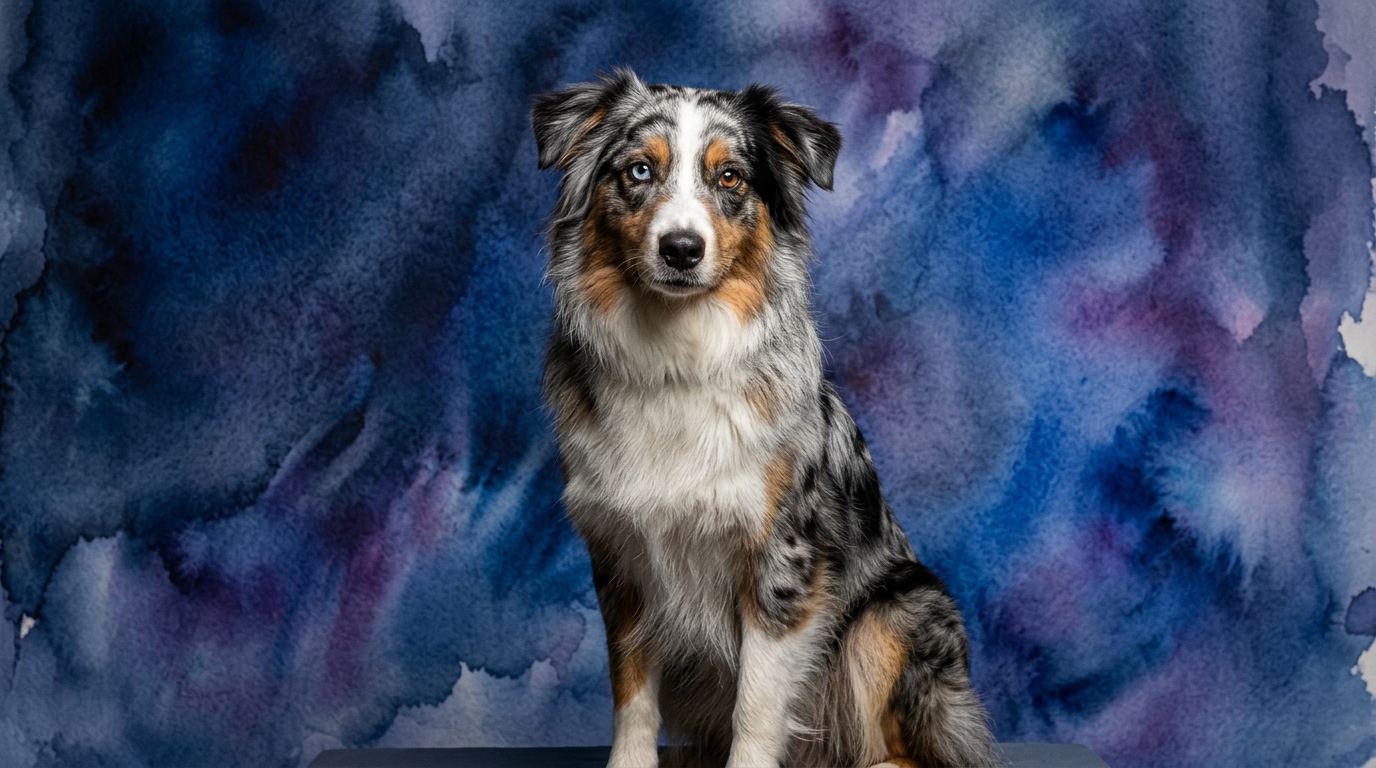
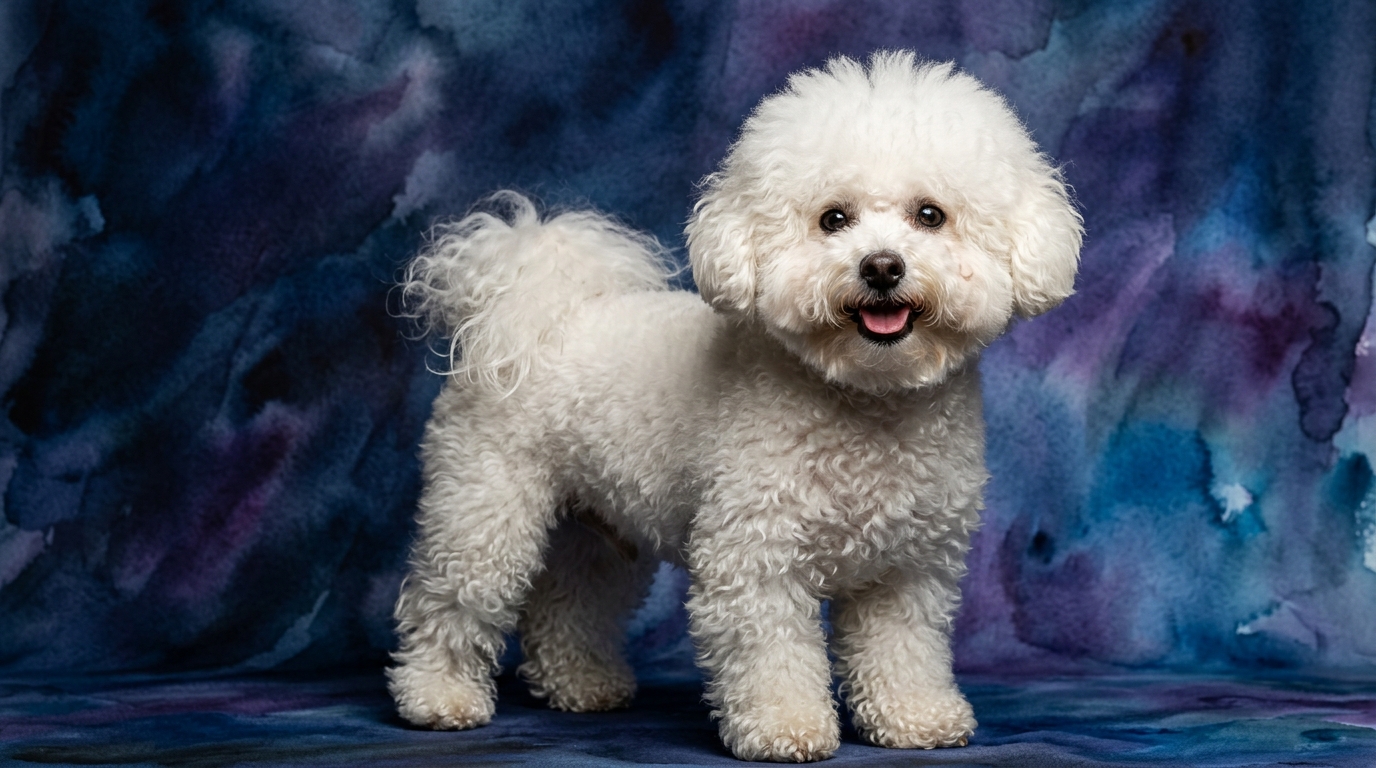
Side-by-Side IQ Profile: Australian Shepherd vs. Bichon Frisé
The Cosmic Pet Pet IQ Lab employs a five-dimensional framework to assess canine intelligence, offering a nuanced view beyond traditional rankings. For the Australian Shepherd, a breed originating from a working lineage, the scores reflect a robust, task-oriented mind: Problem Solving 5/5, Training Speed 5/5, Social Intelligence 4/5, Instinctive Drive 5/5, and Memory 5/5. These metrics paint a picture of a dog built for complex tasks, rapid learning, and purposeful engagement, with a strong capacity for recall and an innate drive to work.
In contrast, the Bichon Frisé, a delightful companion breed, presents a different cognitive signature, highlighting strengths geared towards social interaction and adaptability. Their scores are: Problem Solving 3/5, Training Speed 3/5, Social Intelligence 5/5, Instinctive Drive 2/5, and Memory 3/5. While not achieving the same high marks in task-oriented cognition as the Australian Shepherd, the Bichon Frisé truly excels in understanding and navigating social environments, a crucial attribute for a cherished family member. It's worth noting that the Bichon Frisé holds a #45 rank in Coren's traditional intelligence scale, whereas the Australian Shepherd, often recognized for its working capabilities, is not specifically ranked in that system, prompting us to rely heavily on our detailed IQ Lab metrics for this comparison.
Where the Australian Shepherd Wins Cognitively
The Australian Shepherd's cognitive profile showcases a mind exceptionally suited for intricate tasks and swift learning. Their 5/5 score in Problem Solving indicates an ability to independently navigate complex situations, figure out puzzles, and devise strategies to achieve goals, a direct legacy of their herding ancestry where they had to make split-second decisions to manage livestock. This isn't just about obedience; it's about adaptive reasoning.
Complementing this is their 5/5 Training Speed and 5/5 Memory. An Australian Shepherd can grasp new commands, multi-step routines, and even intricate agility courses with remarkable alacrity. They retain this information over long periods, making them reliable partners in competitive dog sports, service work, or advanced obedience. Their 5/5 Instinctive Drive further fuels this, providing an inherent motivation to engage in purposeful activities, whether it's moving a flock of sheep or excelling in a scent-detection challenge, finding intrinsic reward in the 'work' itself. While their Social Intelligence at 4/5 is strong, it's their prowess in these other domains that truly sets them apart as a canine intellectual powerhouse focused on practical application.
Where the Bichon Frisé Wins Cognitively
The Bichon Frisé's cognitive strengths lie profoundly in the realm of social interaction, reflected by their outstanding 5/5 score in Social Intelligence. This isn't merely about being friendly; it signifies a deep capacity to read human emotions, interpret subtle social cues, and adapt their behavior to fit various social contexts. They possess an innate understanding of family dynamics, often knowing when to offer comfort, when to instigate play, or when to simply be a quiet presence. This exceptional social acumen allows them to integrate seamlessly into diverse households and form remarkably strong, empathetic bonds with their human companions.
While their Problem Solving, Training Speed, and Memory scores are moderate at 3/5, these are perfectly adequate for a companion animal. A Bichon Frisé can certainly learn commands and routines; their learning style simply leans more towards motivation through positive social reinforcement rather than an inherent drive for complex task completion. Their lower 2/5 Instinctive Drive means they aren't constantly seeking a 'job,' freeing up their cognitive resources to focus on their primary role: providing companionship and emotional connection. Their brilliance shines in their ability to be perfectly attuned to the emotional landscape of their human family.
Which is Easier to Train and Why
When it comes to ease of training, the Australian Shepherd, with its 5/5 Training Speed and 5/5 Instinctive Drive, generally presents a smoother and faster learning curve for complex tasks. Their inherent desire to work and please, combined with their superior memory, means they often pick up new commands and multi-step behaviors with fewer repetitions. They thrive on consistency, clear direction, and the mental challenge of learning, making them highly responsive to advanced obedience, agility, or herding training. Their behavioral predisposition is to seek engagement and structure, which translates into an eager and compliant student.
The Bichon Frisé, with a 3/5 Training Speed, is absolutely trainable but may require a different approach and more patience. They respond best to positive reinforcement, short and engaging sessions, and a training methodology that emphasizes fun and social interaction over rigorous task-oriented drills. While they may not master intricate sequences as rapidly as an Australian Shepherd, their high social intelligence means they are highly motivated by praise, affection, and food rewards from their beloved humans. Their lower instinctive drive means they might not initiate training or seek out 'work' in the same way, but they are eager to please their family, making them receptive to foundational obedience and house manners with consistent, gentle guidance.
Which Suits Active Owners vs. Relaxed Owners
The Australian Shepherd is unequivocally suited for active and engaged owners. Their high scores in Problem Solving, Instinctive Drive, and Memory necessitate significant mental and physical stimulation to prevent boredom and potential behavioral issues. These dogs thrive with owners who are committed to daily vigorous exercise, such as long runs, hikes, or extensive play sessions, and who are eager to participate in dog sports like agility, flyball, or advanced obedience. An owner who enjoys structured training, provides consistent challenges, and views their dog as a partner in activities will find an Australian Shepherd incredibly rewarding and fulfilling. Without adequate outlets for their cognitive and physical energy, an Australian Shepherd can become destructive or overly vocal.
Conversely, the Bichon Frisé is an ideal companion for more relaxed owners or those with moderate activity levels. While playful and enjoying their daily walks and indoor games, their energy requirements are not as demanding as a working breed. Their exceptional social intelligence means they thrive on human companionship and emotional connection above all else. Owners who desire a devoted, affectionate lap dog that is content with shorter playtimes, regular walks around the neighborhood, and abundant cuddle sessions will find the Bichon Frisé to be a perfect match. They are adaptable to apartment living and prefer being close to their family, making them excellent companions for those seeking a less physically intensive, yet deeply connected, canine presence.
The Verdict
Choose an Australian Shepherd if you are an active individual or family seeking a highly engaged, trainable partner for dog sports, extensive outdoor activities, or service work, and are prepared to provide consistent mental and physical challenges.
Opt for a Bichon Frisé if you desire a charming, emotionally attuned companion who thrives on close family interaction, requires moderate exercise, and offers abundant affection, making them a wonderful fit for relaxed households.
🧠 Find Your Pet's IQ Score
Our Pet IQ Lab assessment covers 25+ tests across 5 cognitive dimensions — personalized to your breed.
Take the Full IQ Test →Frequently Asked Questions
Do Australian Shepherds need a 'job'?
Yes, their high instinctive drive and problem-solving scores mean they thrive when given tasks, whether it's herding, agility, or obedience training, to prevent boredom and channel their energy constructively. Providing a 'job' helps satisfy their inherent need for purpose and engagement, contributing significantly to their overall well-being and temperament.
Are Bichon Frisés good family dogs?
Absolutely, their exceptional social intelligence makes them adept at understanding family dynamics and bonding deeply with all members, adapting well to various household environments provided they receive consistent attention. They excel at being charming, affectionate companions who enjoy being at the heart of family life and are generally good with children and other pets, given proper socialization.
How do the memory scores affect daily life?
An Australian Shepherd's 5/5 memory means they recall commands, routes, and routines with impressive accuracy, making them reliable in complex scenarios and quick to build on past training. A Bichon Frisé's 3/5 memory suggests they may need more repetition for new information and might not retain intricate sequences as long, but they will still remember crucial routines, people, and basic commands with consistent reinforcement.