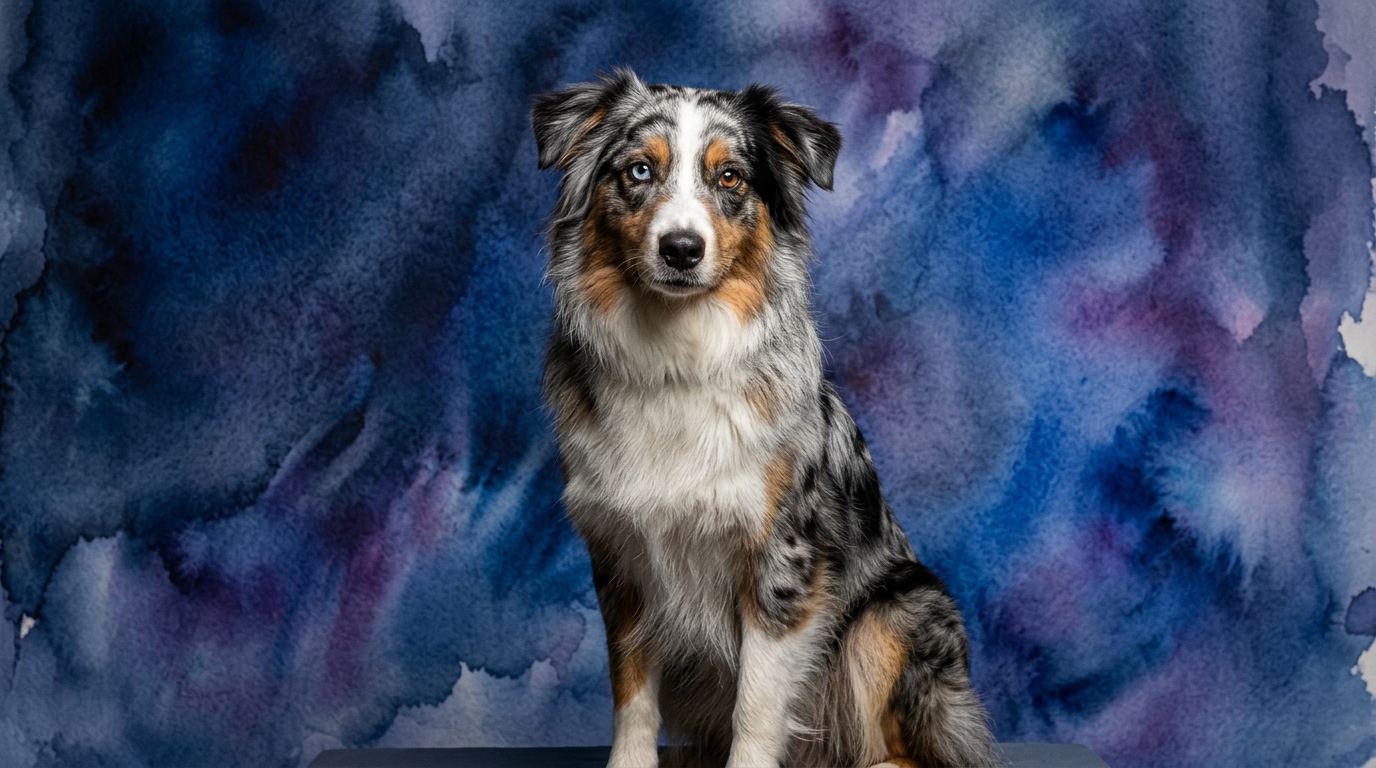
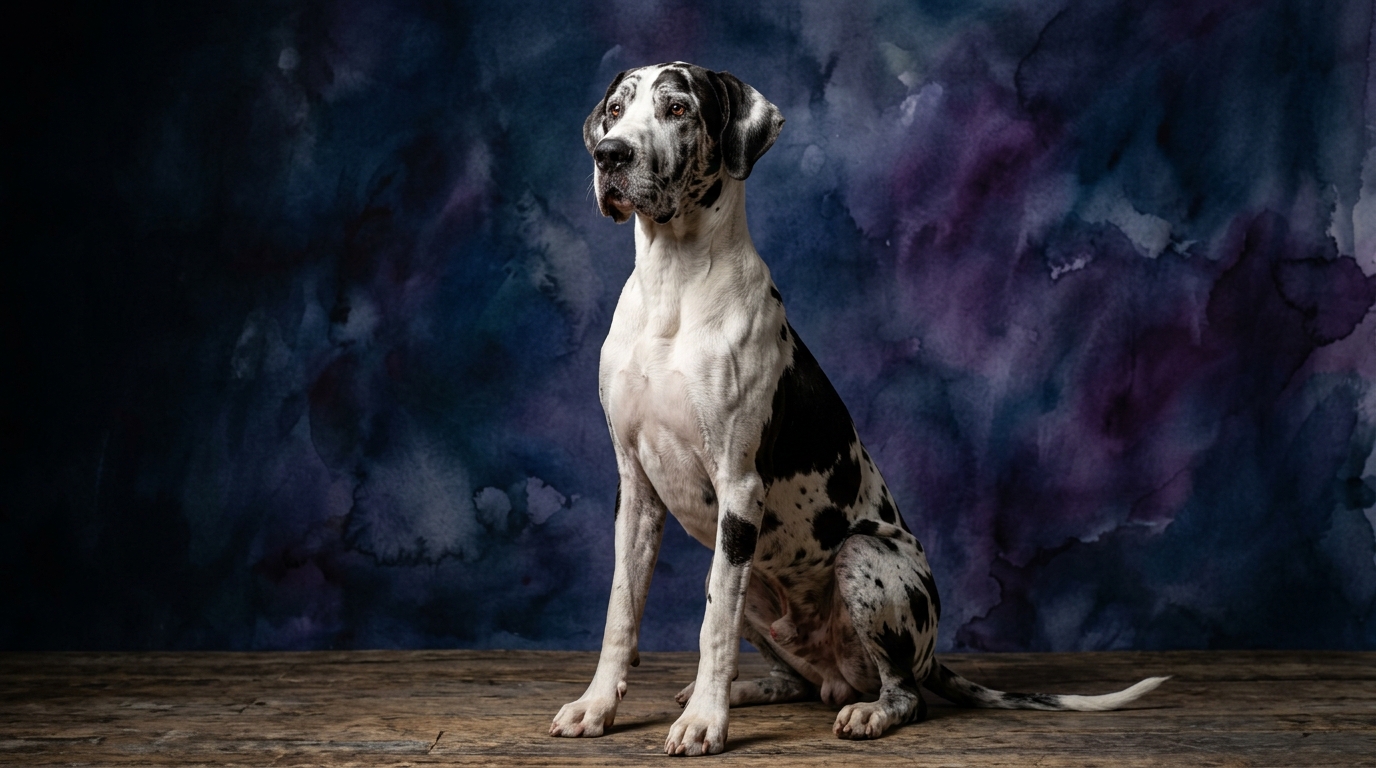
Side-by-Side IQ Profile: Australian Shepherd vs. Great Dane
The Cosmic Pet Pet IQ Lab provides a structured framework for understanding canine cognition across five crucial dimensions. For the Australian Shepherd, a breed renowned for its working capacity, the scores paint a picture of sharp mental acuity: Problem Solving 5/5, Training Speed 5/5, Social Intelligence 4/5, Instinctive Drive 5/5, and Memory 5/5. This profile suggests a canine capable of rapid learning, independent thought, and strong task orientation.
In contrast, the Great Dane, a majestic and gentle giant, presents a different cognitive landscape. Its scores are: Problem Solving 3/5, Training Speed 3/5, Social Intelligence 4/5, Instinctive Drive 3/5, and Memory 3/5. While these scores are more moderate, they reflect a breed designed for companionship and a more measured approach to challenges, rather than intense, continuous work. It's important to note that a Coren rank of #48 for the Great Dane places it in a respectable position for obedience intelligence, while the Australian Shepherd, as a herding breed, is not Coren-ranked but is widely recognized for its working intellect.
Where the Australian Shepherd Excels Cognitively
The Australian Shepherd's cognitive profile shines brightest in areas demanding rapid learning, complex problem-solving, and robust instinctive application. Their 5/5 rating in Problem Solving indicates a dog that doesn't just follow instructions but actively analyzes situations, devising solutions to obstacles – whether it's figuring out how to open a tricky gate or navigating an agility course with minimal handler input. This translates into a dog that enjoys mental puzzles and thrives on the challenge of learning new, intricate sequences of behaviors.
The 5/5 in Training Speed is a direct consequence of this problem-solving prowess combined with a fervent desire to engage, allowing them to pick up new commands and multi-step tasks with remarkable efficiency, often mastering a concept in just a handful of repetitions. Their Instinctive Drive, also rated 5/5, fuels this learning, providing an intrinsic motivation to work and accomplish, making them highly responsive to tasks that tap into their herding heritage. Coupled with a perfect 5/5 in Memory, an Australian Shepherd will retain these complex learnings and problem-solving strategies for extended periods, building an impressive repertoire of skills and knowledge throughout their lives.
Where the Great Dane Shows Its Cognitive Strengths
While the Great Dane's cognitive scores might appear more moderate compared to the Australian Shepherd's, their strengths are distinct and perfectly suited to their role as a companion. Their 4/5 Social Intelligence rating is particularly noteworthy, matching the Australian Shepherd, but manifesting differently. A Great Dane often displays a profound empathy and sensitivity to human emotions, making them exceptional at reading the subtle cues of their family members.
This isn't about solving complex mechanical puzzles, but about understanding and responding to the nuances of human interaction – offering a comforting nudge or a quiet presence when sensing distress. Their moderate Instinctive Drive (3/5) means they are generally less driven by intense work urges and more by a desire for affectionate companionship and watchful guardianship. This translates into a dog that is typically calm and composed, less prone to frantic activity, and more focused on their immediate social group. Their Problem Solving (3/5), Training Speed (3/5), and Memory (3/5) are solid for a companion breed, allowing them to learn and retain essential household rules and routines effectively, albeit at a pace that requires patience and positive reinforcement, rather than intense intellectual challenge.
Training Ease: Australian Shepherd vs. Great Dane
Based on the Pet IQ Lab metrics, the Australian Shepherd demonstrably presents as the easier breed to train, primarily due to their superior Training Speed (5/5) and Problem Solving (5/5). An Australian Shepherd's inherent drive to work and solve puzzles means they often approach training sessions with eagerness and focus, quickly grasping new concepts. Their strong instinctive drive (5/5) means they are often self-motivated to engage in structured activities, making them highly receptive to cues and eager to please. This manifests in behaviors like rapidly understanding complex multi-step commands for agility or disc dog sports, or quickly learning to differentiate between various objects.
Conversely, the Great Dane, with a Training Speed of 3/5 and Problem Solving of 3/5, requires a more patient and consistent approach. While they are certainly capable of learning, they may need more repetitions and a clearer, more predictable training environment to solidify new behaviors. Their moderate instinctive drive means they might not always possess the same intrinsic motivation for rigorous, complex training tasks, preferring instead a calm companionship. For instance, an Aussie might figure out how to open a child-proof gate after a few attempts, while a Great Dane might wait patiently for human assistance, not because they lack the ability, but because their cognitive energy isn't primarily directed towards independent mechanical problem-solving.
Matching Canine Cognition to Owner Lifestyle
The choice between an Australian Shepherd and a Great Dane heavily depends on an owner's lifestyle and their capacity to meet a dog's cognitive and physical needs. The Australian Shepherd, with its perfect 5/5 scores in Problem Solving, Training Speed, Instinctive Drive, and Memory, is unequivocally suited for active owners. These are individuals who thrive on engaging in high-energy activities like dog sports (agility, flyball, obedience), extensive hiking, or even farm work. Their powerful instinctive drive and need for mental stimulation mean they require consistent 'jobs' or challenging activities to prevent boredom, which can otherwise lead to unwanted behaviors. An Aussie needs an owner who is not only physically active but also mentally engaged, willing to teach complex tricks, participate in advanced training, and provide ample opportunities for their dog to 'think' and solve problems.
The Great Dane, on the other hand, with its more moderate scores across the board (3/5 for problem-solving, training speed, instinctive drive, and memory, and 4/5 for social intelligence), is an excellent match for relaxed owners. While they are large and require regular, moderate exercise, their cognitive profile doesn't demand the same intense mental workload as an Australian Shepherd. They are content with daily walks, ample cuddle time on the couch, and being a calm, gentle presence within the home. Their high social intelligence means they deeply value companionship, making them ideal for owners who prioritize a loving, empathetic bond over competitive dog sports. They fit well into a home environment that values routine, comfort, and a steady, predictable pace of life.
The Verdict
Choose an Australian Shepherd if you are an experienced, active owner eager to provide consistent mental challenges and physical outlets for a highly driven, quick-learning companion.
Opt for a Great Dane if you seek a gentle, empathetic giant, valuing calm companionship and moderate activity, and are prepared for patient, consistent training.
🧠 Find Your Pet's IQ Score
Our Pet IQ Lab assessment covers 25+ tests across 5 cognitive dimensions — personalized to your breed.
Take the Full IQ Test →Frequently Asked Questions
Do Australian Shepherds get bored easily?
Yes, their high problem-solving and instinctive drive mean they require significant mental stimulation and tasks to prevent boredom, often manifesting as destructive behavior or excessive barking if under-exercised.
Are Great Danes difficult to train because of their size?
Their size is a factor in managing them physically, but their training difficulty stems more from their moderate training speed and drive, requiring consistent, positive reinforcement rather than intense intellectual challenge.
Which breed is better for a first-time dog owner?
The Great Dane is generally more forgiving for a first-time owner due to their calmer temperament and lower intense mental demands, provided the owner is prepared for their size and moderate exercise needs. An Australian Shepherd's intense drive and cognitive needs can be overwhelming for novices.