Side-by-Side Cognitive Profiles: Aussie vs. Chin
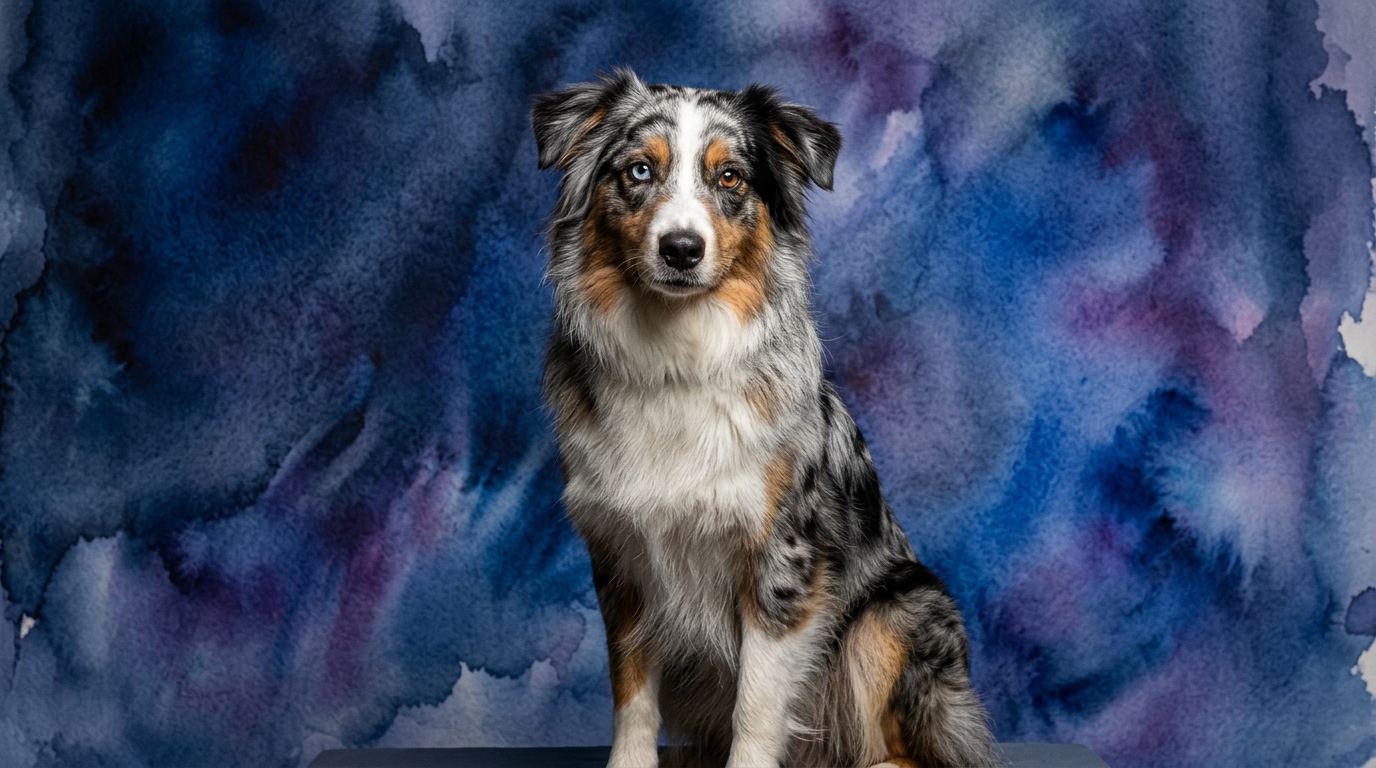
The Cosmic Pet Pet IQ Lab assesses canine intelligence across five distinct dimensions, offering a nuanced look beyond simple 'smart' labels. For the Australian Shepherd, a breed rooted in herding, its profile reflects a mind built for work and independent thought. They score a perfect 5/5 in Problem Solving, indicating an exceptional ability to navigate complex situations and devise solutions. Their Training Speed also rates 5/5, meaning they grasp new commands and concepts with impressive rapidity, often requiring minimal repetition. Social Intelligence is strong at 4/5, demonstrating a keen awareness of human cues and family dynamics. Their Instinctive Drive is a powerful 5/5, reflecting a deep-seated desire to work and manage, a direct inheritance from their herding lineage. Finally, their Memory is also a top-tier 5/5, allowing for excellent retention of learned behaviors and experiences.
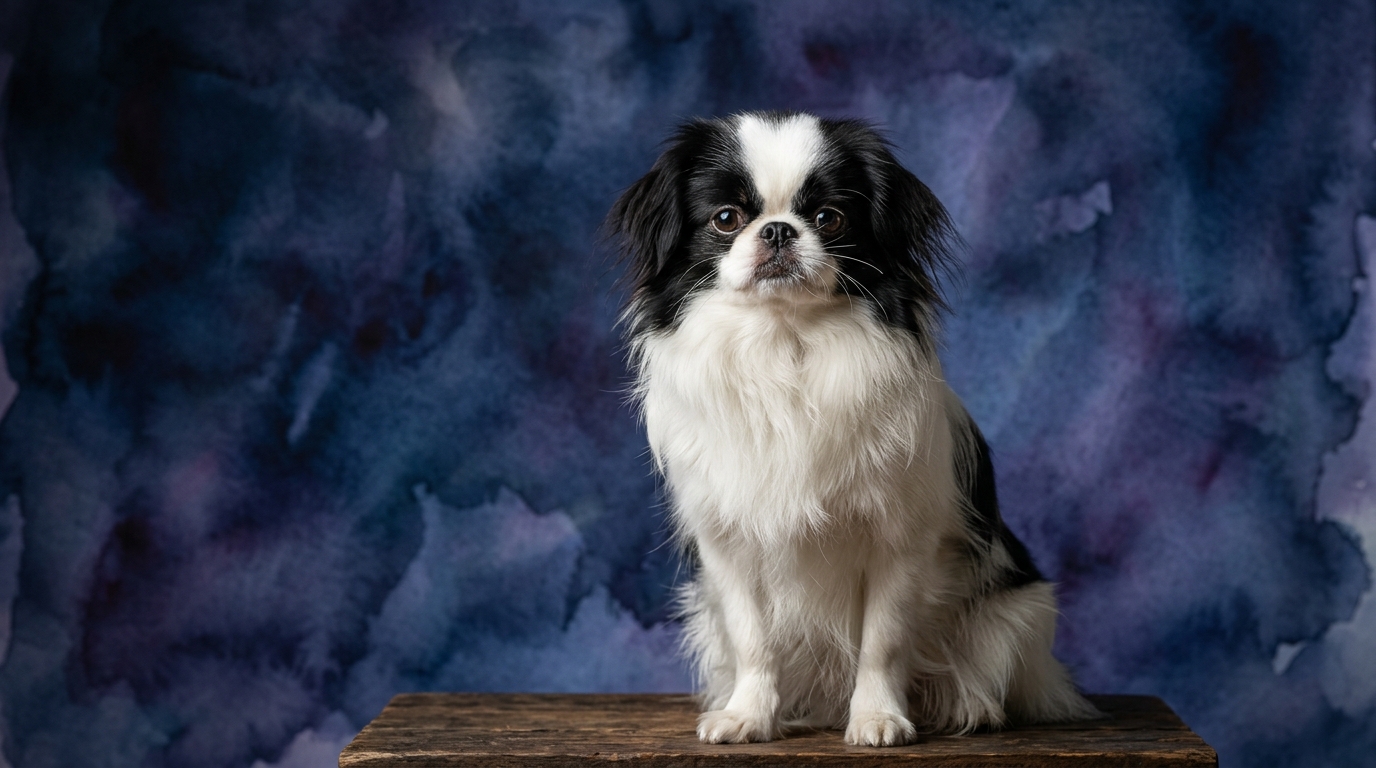
In contrast, the Japanese Chin, a breed historically cherished for companionship, presents a cognitive profile suited to a life of intimate connection rather than demanding tasks. Their Problem Solving capability is rated 3/5, suggesting they can learn routines and simpler solutions but may require more guidance for intricate challenges. Training Speed is also 3/5, meaning they learn at a moderate pace, benefiting from consistent, patient instruction. Social Intelligence stands at 3/5, allowing them to form affectionate bonds and understand basic social cues within their immediate human circle. Their Instinctive Drive is a moderate 3/5, reflecting a preference for comfort and companionship over intense, task-oriented behaviors. Their Memory also registers at 3/5, indicating a solid recall for familiar commands and people, though perhaps not with the extensive detail of a working breed.
Where the Australian Shepherd Excels Cognitively
The Australian Shepherd's cognitive strengths are evident across multiple dimensions. Their 5/5 Problem Solving ability means they are adept at independent thought, whether it's figuring out how to open a childproof gate or devising a strategy during a complex agility course. This contrasts sharply with the Chin's more moderate approach, where human guidance often plays a larger role in task resolution. The Aussie's 5/5 Training Speed is another clear advantage; they absorb new information like a sponge, making advanced obedience, trick training, or specialized tasks highly achievable in relatively short periods. This rapid uptake allows them to progress quickly through training stages that might take other breeds considerably longer.
Furthermore, the Australian Shepherd's potent 5/5 Instinctive Drive provides an intrinsic motivation for engagement and purpose. This isn't just about physical activity; it's a cognitive drive to organize, control, and work, which can be channeled into various constructive outlets. Their 5/5 Memory supports all these traits, ensuring that once a lesson is learned or a solution discovered, it is retained for the long term, contributing to their reputation as reliable and capable working partners. Their 4/5 Social Intelligence allows them to deeply attune to their owner's intentions and desires, forming a highly collaborative partnership.
Where the Japanese Chin's Cognition Shines
While the Japanese Chin's cognitive scores are generally lower than the Australian Shepherd's, their profile presents distinct advantages perfectly aligning with their role as a dedicated companion. The Chin's 3/5 Social Intelligence, for instance, is perfectly scaled for intimate, one-on-one human connection. Their cognitive energy isn't dispersed across managing a 'flock' but rather focused on understanding and responding to the subtle cues of their primary caregivers within a close domestic setting. This allows for an exceptionally deep and personal bond, where their understanding of individual human moods and preferences is highly tuned.
The Japanese Chin's 3/5 Instinctive Drive is a cognitive 'win' for owners seeking a calm, less demanding companion. Their internal world is not constantly seeking a task or a complex problem to solve, allowing them to settle contentedly into a relaxed household routine. This reduced internal pressure means they are often less prone to developing problematic behaviors stemming from unfulfilled working drives, making them remarkably placid and adaptable to a quieter home environment. Their moderate Problem Solving (3/5) and Memory (3/5) are more than sufficient for navigating a comfortable home life, learning household rules, and remembering their favorite cuddle spots and routines, without the need for constant, demanding mental stimulation.
Ease of Training: A Tale of Two Temperaments
When it comes to ease of training, the Australian Shepherd generally presents a more straightforward path. Their 5/5 Training Speed means they grasp new commands with remarkable swiftness, often requiring only a few repetitions to solidify a behavior. Coupled with their 5/5 Problem Solving, they are not only quick to learn but also adept at generalizing commands to new environments and applying learned principles to novel situations. Their powerful 5/5 Instinctive Drive provides inherent motivation; they desire to work and please, making them eager participants in training sessions. For example, an Aussie might master a multi-step fetch command in a single session and consistently execute it thereafter, driven by their intrinsic purpose and sharp recall.
The Japanese Chin, with a 3/5 Training Speed, requires a more patient and consistent approach. While certainly trainable, they may take longer to process and internalize new commands, necessitating more repetitions and shorter, positive-reinforcement-focused sessions to maintain engagement. Their 3/5 Instinctive Drive means they aren't driven by a strong desire to work in the same way an Aussie is; their motivation often stems from comfort, treats, or affection, rather than an innate drive to perform a task. For instance, a Chin might eventually learn 'sit,' but consistent practice across various settings will be crucial, and their focus might wane if sessions are too long or repetitive without high-value rewards. Understanding their preference for companionship over task-oriented work is key to successful training.
Matching Cognitive Profiles to Lifestyles: Active vs. Relaxed Owners
The distinct cognitive profiles of these two breeds make them ideally suited for very different owner lifestyles. The Australian Shepherd, with its perfect 5/5 scores in Problem Solving, Training Speed, Instinctive Drive, and Memory, demands an active and engaged owner. These dogs thrive when given a 'job,' whether it's participating in dog sports like agility or frisbee, accompanying owners on long hikes, or engaging in complex puzzle games. Their cognitive energy and drive require significant outlets; without consistent mental and physical stimulation, a bored Aussie can become inventive in undesirable ways, often manifesting in destructive behaviors or excessive vocalization. They are perfect for owners who enjoy an active, outdoor lifestyle and are prepared to dedicate substantial time to training and enrichment.
Conversely, the Japanese Chin's balanced 3/5 scores across most cognitive dimensions, particularly its moderate Instinctive Drive, aligns perfectly with a more relaxed and home-centric owner. These charming companions are content with moderate daily exercise, often satisfied with indoor play sessions, short strolls around the block, and ample cuddle time on the sofa. Their cognitive focus is on forming deep, affectionate bonds and enjoying the comforts of home, rather than seeking out complex challenges or demanding tasks. They are an excellent choice for individuals or families who appreciate a quiet, devoted companion and whose lifestyle doesn't involve demanding physical activities or extensive training regimens.
The Verdict
If you seek a canine partner for demanding activities, eager to learn complex tasks, and capable of independent problem-solving, the Australian Shepherd will thrive in an environment providing ample mental and physical challenges.
Opt for the Japanese Chin if your lifestyle is more relaxed, and you desire a charming, affectionate companion whose cognitive focus is primarily on intimate human connection and comfortable domestic routines.
🧠 Find Your Pet's IQ Score
Our Pet IQ Lab assessment covers 25+ tests across 5 cognitive dimensions — personalized to your breed.
Take the Full IQ Test →Frequently Asked Questions
Do Australian Shepherds need a 'job' to be content?
Yes, their 5/5 instinctive drive and problem-solving abilities mean they thrive on purpose. Without consistent mental and physical engagement, they can become bored and develop undesirable behaviors, making a 'job' essential for their well-being.
Is the Japanese Chin difficult to train because of its lower IQ scores?
While their training speed is rated 3/5, meaning they may require more patience and repetition, they are certainly trainable. Their motivation often stems from positive reinforcement and bonding, making consistent, gentle methods effective for learning household commands.
How do their social intelligence scores impact their family life?
The Australian Shepherd's 4/5 social intelligence allows them to keenly read family dynamics and anticipate needs, often forming deep, active bonds with multiple family members. The Japanese Chin's 3/5 score means they excel in focused, intimate companionship, often forming a very strong, devoted bond with a primary caregiver within the home.