Side-by-Side IQ Profile: Australian Shepherd vs. Keeshond
The Cosmic Pet Pet IQ Lab evaluates canine cognition across five crucial dimensions: Problem Solving, Training Speed, Social Intelligence, Instinctive Drive, and Memory. These metrics offer a granular view of how each breed processes information, learns, interacts, and is motivated, painting a clear picture of their cognitive strengths and tendencies.
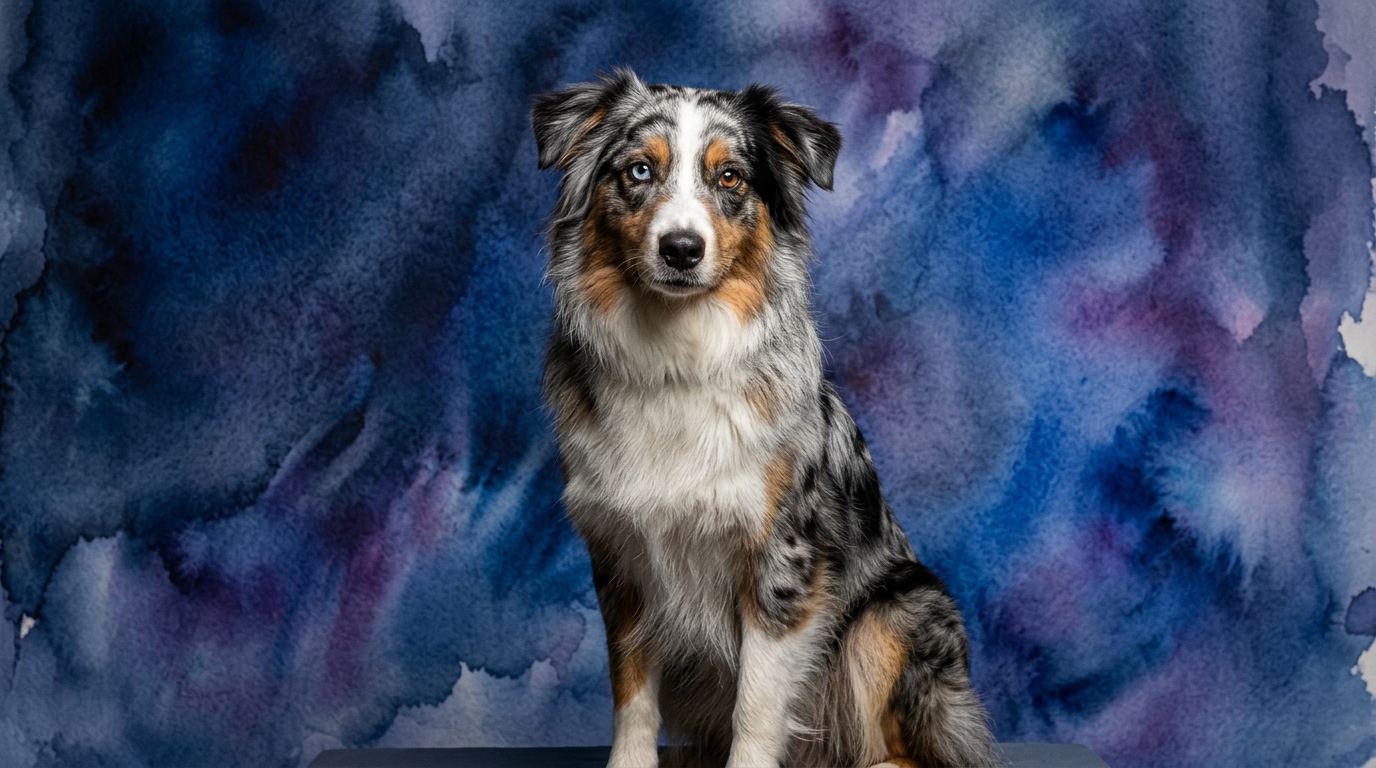
The Australian Shepherd, a Herding breed, presents a profile geared for demanding work: Problem Solving 5/5, Training Speed 5/5, Social Intelligence 4/5, Instinctive Drive 5/5, and Memory 5/5. This blueprint suggests a dog equipped for complex, independent tasks, rapid learning, and profound retention, with a strong internal motivation to engage and work.
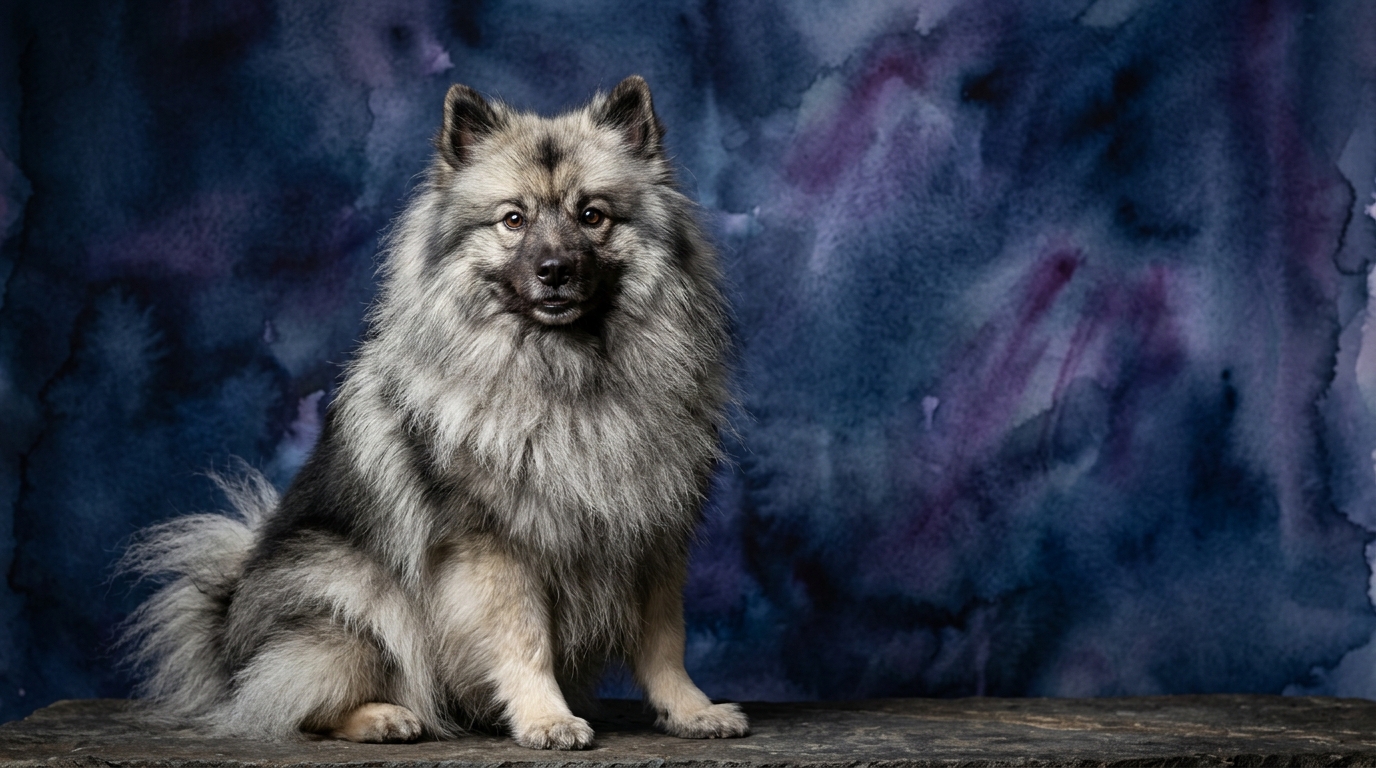
In contrast, the Keeshond, a Non-Sporting breed with a Coren rank of #16, shows a different cognitive emphasis: Problem Solving 4/5, Training Speed 4/5, Social Intelligence 3/5, Instinctive Drive 3/5, and Memory 5/5. This profile indicates a clever, trainable companion with excellent memory, whose drive is more centered on interaction and observation rather than intense, sustained physical work.
Where the Australian Shepherd's Mind Shines
The Australian Shepherd's cognitive prowess is deeply rooted in its heritage as a working herding dog, demanding quick, independent thinking and decisive action. Their exceptional Problem Solving (5/5) and Instinctive Drive (5/5) are not merely high scores but reflections of a mind built for strategic engagement.
Their top-tier Problem Solving means they excel at tasks requiring multi-step solutions, navigating complex environments, or even anticipating the movements of livestock. This isn't just about following commands; it's about independent thought and tactical execution. Coupled with a 5/5 Instinctive Drive, their cognitive engagement is fueled by a profound need for purpose, making them seek out challenges and responsibilities.
The Australian Shepherd's 5/5 Training Speed further highlights their cognitive agility. They absorb complex sequences and adapt to new rules with remarkable efficiency, often mastering new commands or intricate routines in very few repetitions. This rapid acquisition of skills makes them exceptional candidates for competitive dog sports like agility, obedience, or advanced trick training, where their mental and physical coordination are paramount.
The Keeshond's Unique Cognitive Strengths
While not a traditional working breed, the Keeshond's cognitive profile emphasizes qualities that make them exceptional companions and observant members of a household. Their intelligence is geared towards connection, awareness, and subtle interaction.
A standout trait is their perfect 5/5 Memory. This isn't just about remembering specific commands; it encompasses a profound recall of people, routines, and past experiences. This exceptional memory allows them to form deep, lasting bonds, anticipate daily schedules, and learn from every interaction, contributing to their steadfast and reliable companionship.
The Keeshond's 4/5 Problem Solving and 4/5 Training Speed, while slightly less intense than an Aussie's, are still very respectable. They are clever in their own right, often figuring out how to gain attention, access a desired treat, or manipulate their environment in subtle ways. Their good training speed means they readily master a wide array of commands and tricks, responding well to consistent, positive reinforcement that fosters their bond with their handler.
Ease of Training: A Behavioral Deep Dive
When considering ease of training, the Australian Shepherd and Keeshond present different approaches to learning, influenced by their distinct cognitive profiles. While both are capable, their underlying motivations and responses to instruction vary significantly.
The Australian Shepherd's 5/5 Training Speed and high Instinctive Drive mean they often approach training with an eager, task-oriented mindset. They thrive on challenges and quick feedback, making complex obedience or agility training relatively straightforward. Their motivation frequently stems from the satisfaction of performing a job and engaging their active mind, making them highly responsive to structured learning environments.
The Keeshond's 4/5 Training Speed indicates good trainability, but their lower Social Intelligence (3/5) and Instinctive Drive (3/5) suggest they may be more sensitive to handler mood or less inherently driven by the 'job' itself. They respond best to positive reinforcement, play, and rewards that strengthen their bond, rather than relying solely on task completion. A Keeshond might exhibit more independent thought or require more varied motivation if not properly engaged, which can sometimes be misinterpreted as stubbornness rather than a different cognitive style.
Matching Minds to Lifestyles: Active vs. Relaxed Owners
The cognitive blueprint of each breed offers clear insights into which lifestyle they are best suited for. An owner's activity level and commitment to mental stimulation are crucial factors in ensuring a harmonious relationship with either an Australian Shepherd or a Keeshond.
The Australian Shepherd's 5/5 Instinctive Drive and Problem Solving capacity demand an active, mentally stimulating environment. Owners must provide consistent outlets for their herding instincts and intellectual curiosity, whether through dog sports, extensive daily training sessions, or a 'job' around the home. An owner seeking a relaxed, low-engagement companion might find an Aussie's unmet cognitive needs leading to restless, bored, or potentially destructive behaviors as they invent their own tasks.
With a moderate 3/5 Instinctive Drive and a focus on social connection, Keeshonds are better suited for owners who enjoy consistent, loving companionship. While they appreciate regular walks and interactive play, their cognitive needs are more about consistent interaction and routine, rather than intense, prolonged tasks. A relaxed owner who values a devoted, observant presence and is prepared for regular, but not extreme, engagement will find a Keeshond a fulfilling and clever companion.
The Verdict
Choose an Australian Shepherd if you are an active individual or family seeking a highly engaged partner for complex training, dog sports, or a working role, prepared to channel their profound drive and problem-solving acumen daily.
Opt for a Keeshond if you desire a devoted, observant companion who thrives on consistent social interaction and a stable routine, appreciating their excellent memory and clever problem-solving in a home environment.
🧠 Find Your Pet's IQ Score
Our Pet IQ Lab assessment covers 25+ tests across 5 cognitive dimensions — personalized to your breed.
Take the Full IQ Test →Frequently Asked Questions
Which breed is better for first-time owners?
Australian Shepherds require significant time and experience to manage their high drive and complex cognitive needs, often making them less suitable for novice owners. Keeshonds, while still needing consistent training, are generally more adaptable to first-time owners who are committed to positive reinforcement and regular social engagement.
Do Keeshonds need less exercise than Australian Shepherds?
Yes, Keeshonds typically have lower physical and mental exercise requirements compared to Australian Shepherds. While Keeshonds enjoy regular walks and playtime, Aussies require substantial daily physical activity coupled with mentally challenging tasks to prevent boredom and behavioral issues.
How does their social intelligence differ with strangers?
Australian Shepherds (4/5 Social Intelligence) are often reserved with strangers, evaluating new people before engaging, a trait useful for their herding background. Keeshonds (3/5 Social Intelligence) are typically friendly and outgoing but can be quite vocal, using their observation skills to 'alert' their family to new arrivals rather than critically assessing their intent.