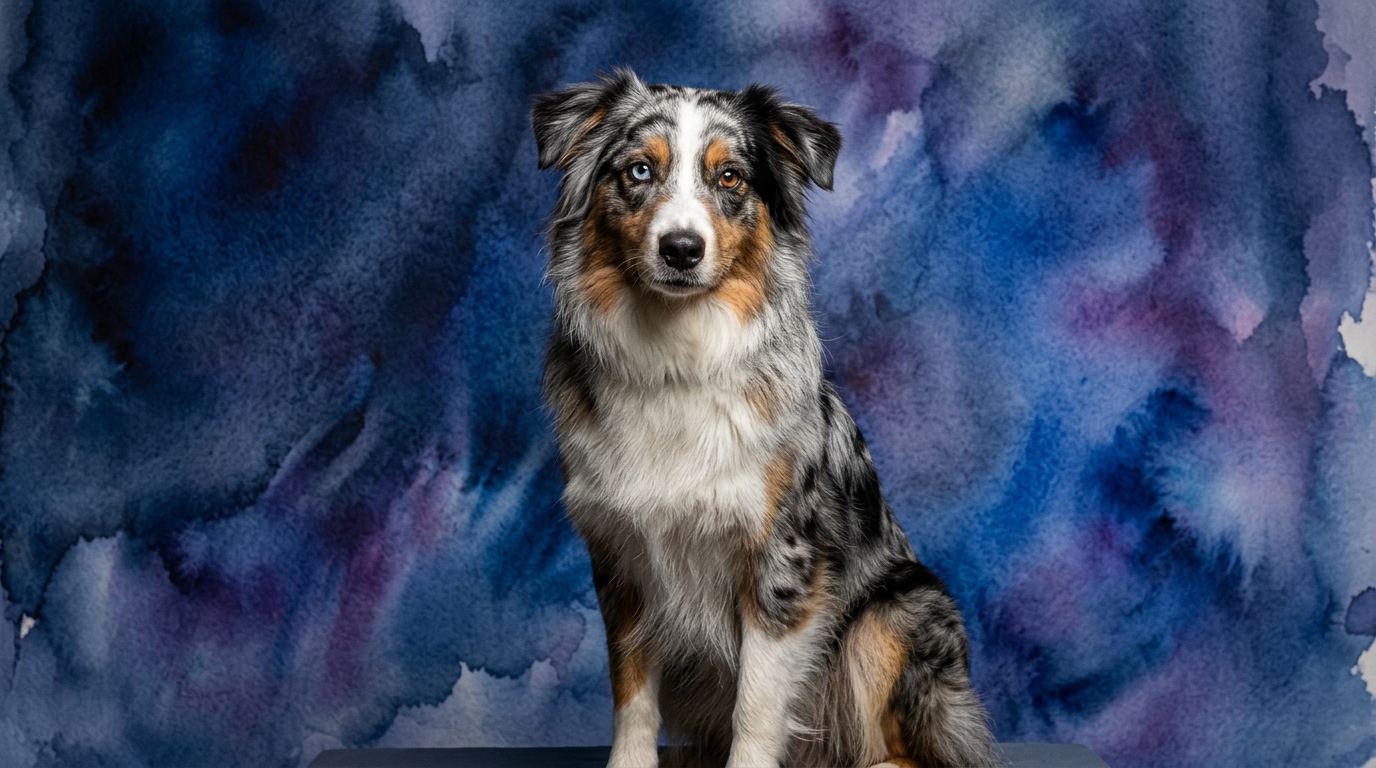
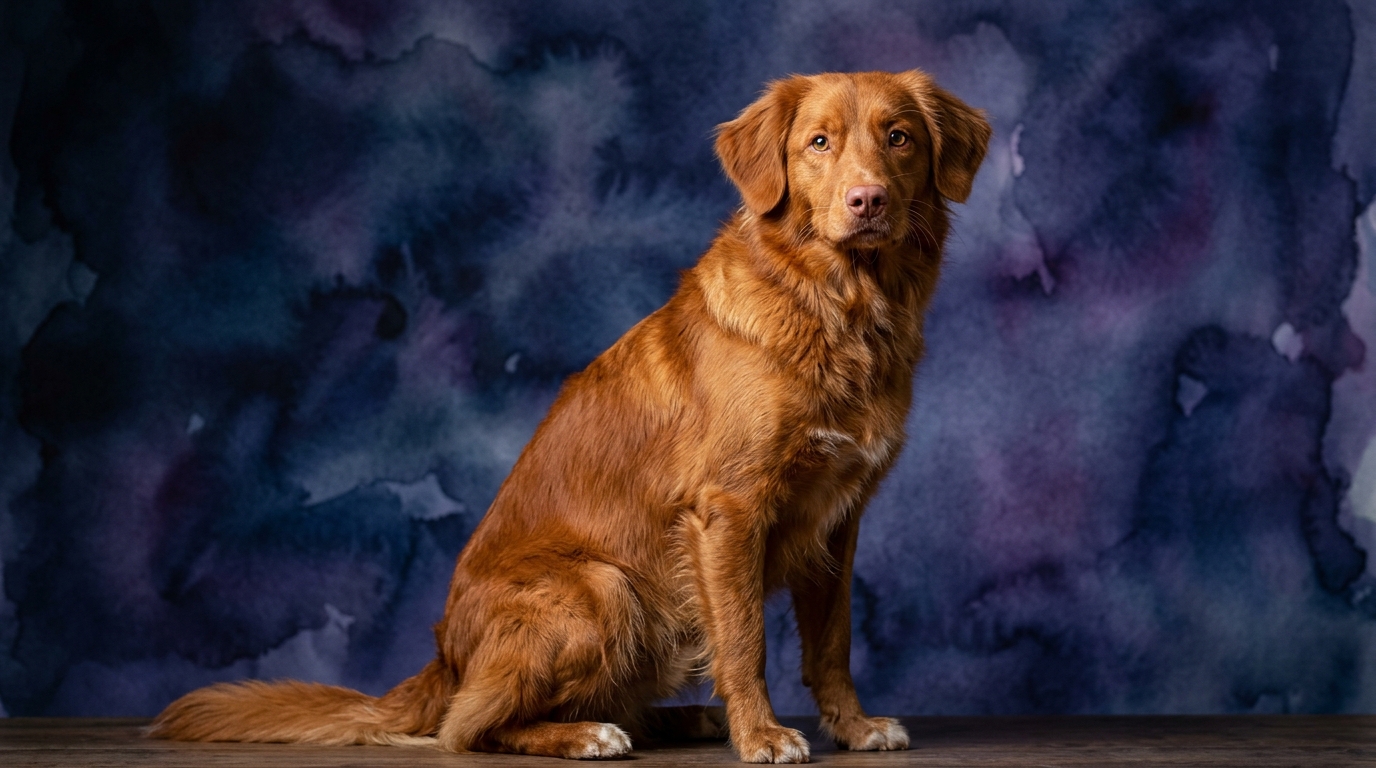
Side-by-Side Cognitive Profiles
The Cosmic Pet Pet IQ Lab employs five core dimensions to map a breed's cognitive strengths, offering a nuanced view beyond simple labels. Let's dissect how the Australian Shepherd and the Nova Scotia Duck Tolling Retriever measure up.
The Australian Shepherd, a formidable herding dog, consistently scores at the top of our cognitive scale. Its Problem Solving is rated 5/5, indicating an exceptional capacity to analyze complex situations, devise novel solutions, and navigate intricate environments. This breed doesn't just react; it strategizes. Training Speed is also a perfect 5/5, meaning Aussies typically grasp new commands and multi-step routines with remarkable swiftness, often requiring minimal repetition. Their Social Intelligence, at 4/5, reflects a keen awareness of human cues and emotional states, allowing for nuanced interactions, though sometimes leading to overthinking social dynamics. An Instinctive Drive of 5/5 underscores their powerful, pervasive urge to manage and organize, rooted in their herding heritage, which translates into intense focus and sustained effort in various tasks. Finally, their Memory, rated 5/5, enables them to retain vast repertoires of commands, learned behaviors, and environmental details over long periods, making them masters of recall and routine.
In contrast, the Nova Scotia Duck Tolling Retriever, a dedicated sporting dog, presents a more specialized cognitive profile. Its Problem Solving is rated 3/5, suggesting a capable but more direct approach to challenges; Tollers solve problems effectively within established parameters but may be less inclined to invent complex, multi-step solutions independently. Training Speed, at 3/5, means they learn new commands at a moderate pace, requiring consistent, patient repetition to solidify new behaviors. Their Social Intelligence, also 3/5, indicates a generally amiable and cooperative disposition, eager to please but perhaps less attuned to subtle human emotional shifts than their herding counterparts. The Toller's Instinctive Drive, rated 3/5, is specifically channeled towards retrieving, showcasing intense focus and endurance when engaged in tasks related to their heritage, but without the broad, all-encompassing drive of a herding breed. Their Memory, scoring 3/5, allows them to retain essential commands and routines reliably, though perhaps not the extensive, layered information an Aussie might store.
Where the Australian Shepherd Excels Cognitively
The Australian Shepherd's superior cognitive ratings translate into several distinct areas of excellence. With a 5/5 in Problem Solving, Aussies demonstrate an unparalleled ability to independently figure out how to open gates, navigate complex agility courses, or even manipulate objects to achieve a goal. This isn't just about following instructions; it's about active, adaptive thinking.
Their 5/5 Training Speed means an Aussie can master a new trick or command in significantly fewer repetitions than many other breeds. This rapid acquisition makes them exceptional candidates for advanced obedience, competitive dog sports, and service roles where a diverse skill set is paramount. Coupled with a 5/5 Memory, once an Aussie learns something, it's typically ingrained for life, allowing them to perform intricate sequences and recall commands flawlessly even after long breaks. The 5/5 Instinctive Drive fuels their relentless work ethic and focus, enabling them to sustain attention on demanding tasks for extended periods, whether it's herding livestock, tracking, or performing in a theatrical setting. This breed thrives on intellectual challenge and opportunities to apply their extensive cognitive toolkit.
Where the Nova Scotia Duck Tolling Retriever's Cognitive Profile Offers Distinct Advantages
While the Toller's scores are generally lower than the Aussie's, their specific cognitive makeup offers unique advantages, particularly for owners seeking a more focused and predictable working companion. Their 3/5 Problem Solving, for instance, means they are less likely to become 'self-employed' by devising complex mischief like opening latched cupboards or escaping intricate enclosures out of sheer boredom. They are intelligent enough to excel at directed tasks without constantly seeking to outsmart their environment or handler.
The Toller's 3/5 Instinctive Drive is intensely specialized for retrieving, making them exceptionally good at what they were bred for. This focused drive means that while they might not possess the broad, pervasive drive of a herding dog, they exhibit remarkable endurance and enthusiasm for repetitive retrieving tasks, making them ideal partners for hunting or retrieve-based dog sports. Their 3/5 Social Intelligence often translates to a straightforward, less emotionally complex interaction style; Tollers are generally eager to please and cooperative without the intense sensitivity or tendency to 'read' every micro-expression that can sometimes accompany higher social intelligence scores. This can make them easier to manage for owners who prefer clear, direct communication over nuanced social navigation.
Which is Easier to Train and Why
When assessing ease of training, it's crucial to distinguish between rapid learning and straightforward management. The Australian Shepherd, with its 5/5 Training Speed and 5/5 Memory, undeniably learns new commands and concepts at an astonishing pace. They pick up on cues quickly and can string together complex behaviors with minimal effort from the trainer. However, this cognitive prowess also means they demand consistent, engaging, and mentally stimulating training to prevent boredom, which can lead to them inventing their own 'jobs' or nuisance behaviors if not adequately challenged.
The Nova Scotia Duck Tolling Retriever, with its 3/5 Training Speed and 3/5 Memory, requires more repetition and patience during the initial learning phase. New commands will take longer to solidify, but once mastered, they tend to be deeply ingrained. Tollers are generally eager to please, and their more focused 3/5 Problem Solving and Instinctive Drive mean they are less likely to 'overthink' commands or attempt to creatively deviate from instructions. For an owner seeking a dog that follows directions reliably without constant mental gymnastics, and who is prepared for a more methodical training approach, the Toller can be a very rewarding and, in some ways, less demanding partner in the long run. The 'easier' dog to train depends on the owner's experience and willingness to manage either a lightning-fast learner with high cognitive demands or a steady learner with more focused drives.
Suitability for Active vs. Relaxed Owners
For owners with an active lifestyle and a desire for an intensely engaged canine partner, the Australian Shepherd stands out. Their 5/5 Instinctive Drive, coupled with exceptional Problem Solving and Memory, means they thrive on constant mental and physical stimulation. They are ideal for individuals or families involved in dog sports like agility, obedience, flyball, or herding, and those who enjoy extensive outdoor activities such as hiking, running, or even complex trick training. An Aussie expects to be a working member of the family, constantly seeking input and opportunities to use their formidable cognitive abilities. Owners must be prepared to provide daily, dedicated engagement to prevent boredom and subsequent behavioral issues.
The Nova Scotia Duck Tolling Retriever, while certainly not a 'relaxed' dog, offers a different flavor of activity that might suit owners seeking focused engagement rather than the pervasive cognitive demands of a herding breed. Tollers are energetic and require substantial physical exercise, particularly involving their retrieving instincts, such as swimming, fetch, or scent work. However, their 3/5 Problem Solving and Instinctive Drive, being more specialized, means they might be content with a vigorous retrieving session or a long walk, and then settle more readily indoors compared to an Aussie who might still be 'on duty.' They are excellent for active owners who enjoy specific outdoor activities and want a cooperative companion for those pursuits, but perhaps prefer a dog that is less likely to constantly seek out new intellectual challenges on its own during downtime. They suit owners who appreciate a dog with a clear, directed purpose, without the intense, broad-spectrum cognitive management an Aussie requires.
The Verdict
Choose an Australian Shepherd if you are an experienced owner prepared to provide extensive daily mental and physical challenges for a highly strategic and rapidly learning companion.
Opt for a Nova Scotia Duck Tolling Retriever if you seek an active, focused partner for specific retrieving or sporting activities, valuing a cooperative and more straightforward cognitive approach.
🧠 Find Your Pet's IQ Score
Our Pet IQ Lab assessment covers 25+ tests across 5 cognitive dimensions — personalized to your breed.
Take the Full IQ Test →Frequently Asked Questions
Do Australian Shepherds need a 'job' to be content?
Yes, absolutely. With 5/5 Problem Solving and Instinctive Drive, Australian Shepherds are wired to work. Without a job, whether it's herding, dog sports, or complex training, they can become bored, leading to destructive behaviors or excessive barking as they invent their own tasks.
Are Nova Scotia Duck Tolling Retrievers good for first-time dog owners?
Tollers can be suitable for dedicated first-time owners who understand their needs for consistent training and daily exercise, especially involving retrieving. Their more focused drive and moderate cognitive demands can be less overwhelming than a herding breed, but they still require a significant commitment to activity and socialization.
Which breed is better for competitive dog sports?
Both breeds excel in dog sports, but in different ways. Australian Shepherds often dominate in agility and obedience due to their rapid learning, problem-solving, and memory, mastering complex courses with ease. Nova Scotia Duck Tolling Retrievers shine in retrieving trials, dock diving, and scent work, where their specialized drive and endurance for specific tasks are unmatched.