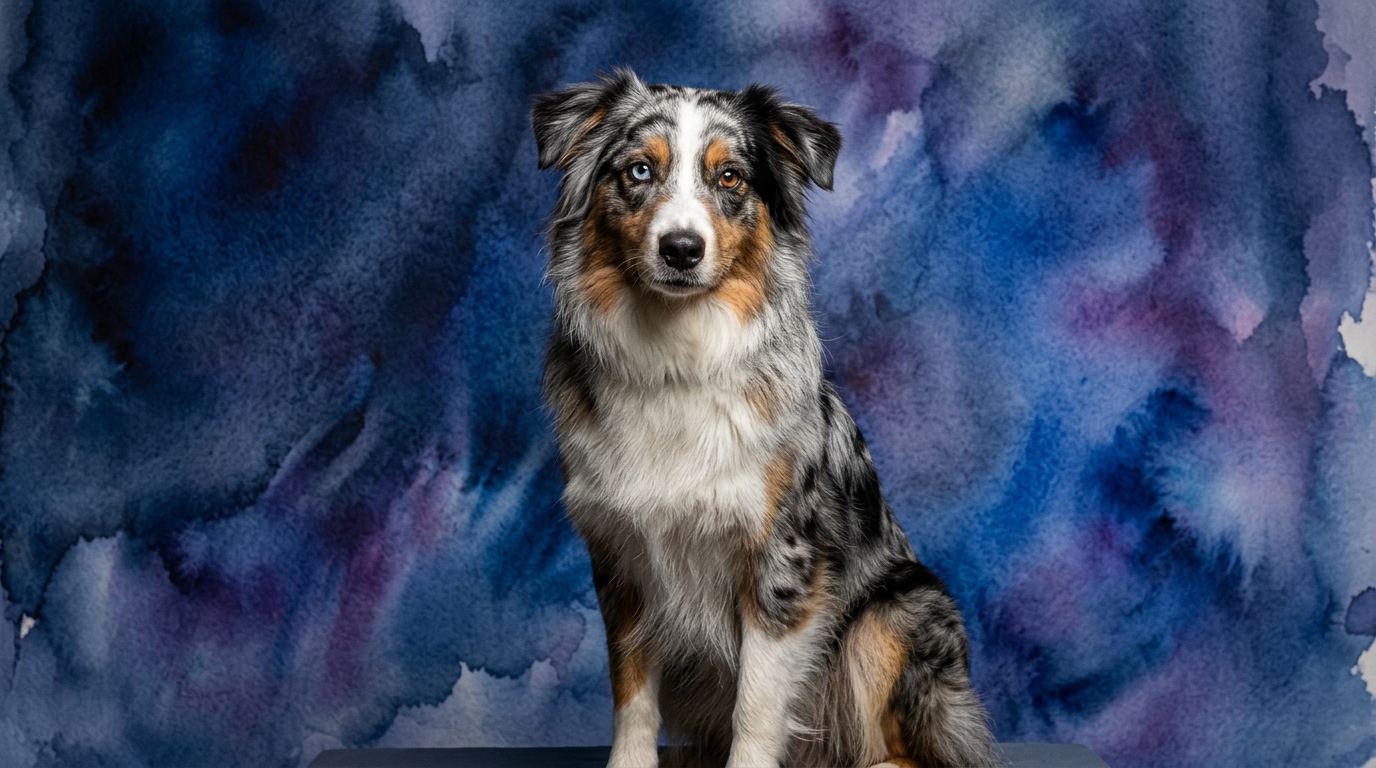
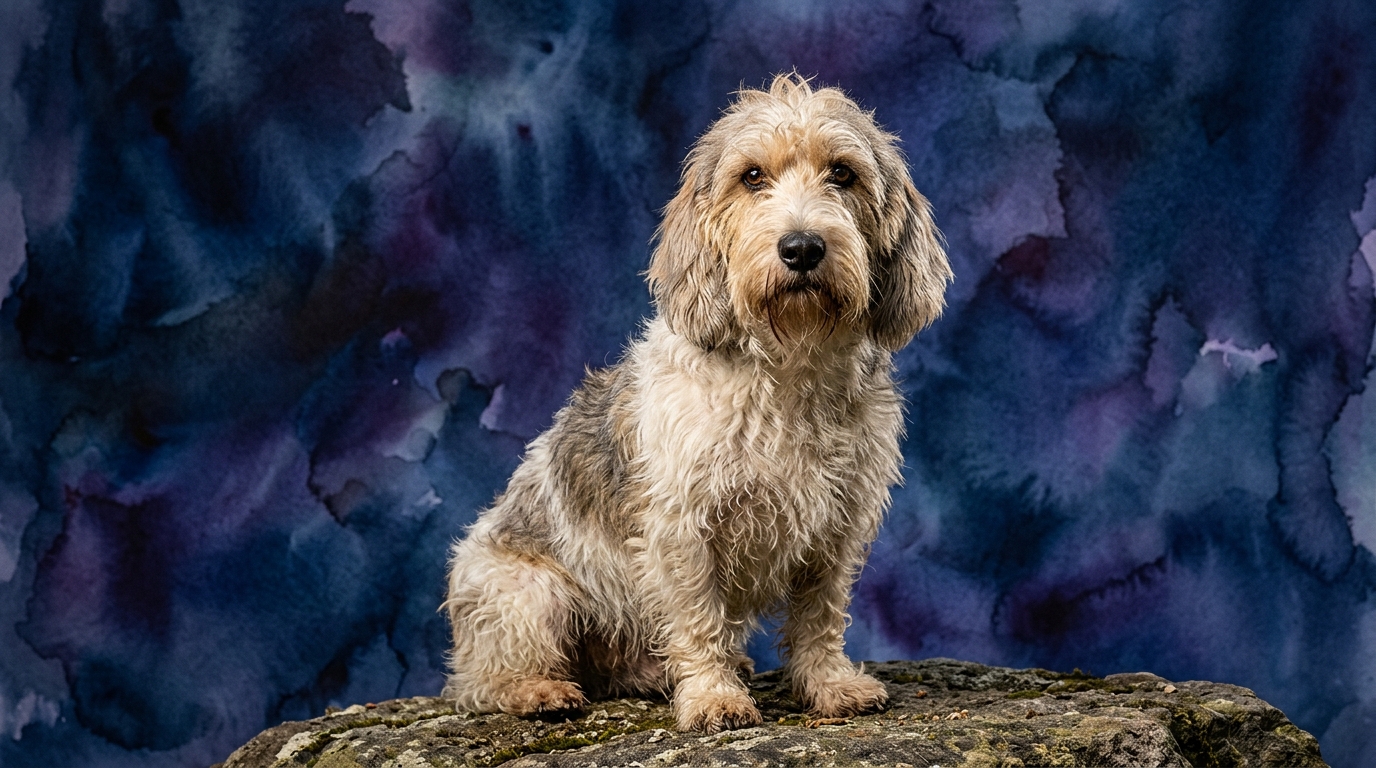
Side-by-Side Cognitive Profiles: Aussie vs. PBGV
The Cosmic Pet Pet IQ Lab's framework allows us to dissect the unique mental architectures of these two breeds. For the Australian Shepherd, we observe a profile indicative of a highly adaptable and cooperative working dog, purpose-bred for intricate tasks.
**Australian Shepherd IQ Lab Scores:** Their Problem Solving rates a perfect 5/5, reflecting an exceptional capacity for strategic thinking, adapting to novel situations, and figuring out complex pathways to achieve goals. Training Speed is also 5/5, demonstrating their rapid acquisition of new commands and routines, coupled with an eagerness to engage. Social Intelligence scores 4/5, highlighting their attunement to human cues, understanding of pack dynamics, and responsiveness as a working partner. Instinctive Drive, at 5/5, underscores their powerful herding impulses and innate desire for purposeful work. Finally, Memory, also 5/5, signifies their robust ability to recall intricate sequences, learned behaviors, and past experiences over extended periods.
In stark contrast, the Petit Basset Griffon Vendéen (PBGV) presents a cognitive makeup specialized for independent scent work, a testament to their heritage as tenacious hunters.
**Petit Basset Griffon Vendéen IQ Lab Scores:** Their Problem Solving registers 3/5, indicating a strong capacity for scent-based problem-solving – tirelessly deciphering complex scent trails – but less emphasis on human-directed abstract puzzles or strategic manipulation of objects. Training Speed is 3/5; while capable of learning, their independent nature and powerful scent distractions mean command acquisition is often slower and requires more patience. Social Intelligence scores 3/5, showing they are affectionate and engaged within their family unit, but during outdoor excursions, their primary focus often shifts away from human subtle cues towards their olfactory world. Instinctive Drive is 3/5, specifically channeled into their relentless pursuit of scent, which can override other directives. Their Memory, at 3/5, is proficient for remembering trails and familiar routines, yet less geared towards the rapid recall of extensive, multi-step obedience commands.
Where the Australian Shepherd Excels Cognitively
The Australian Shepherd's cognitive architecture shines brightest in scenarios demanding intricate planning and rapid learning. Their 5/5 problem-solving ability isn't just about brute force; it's about strategic thinking—anticipating movements, adjusting tactics on the fly, and understanding spatial relationships to manage livestock or navigate agility courses. This breed demonstrates an impressive capacity for abstract thought when directed by a human partner, making them adept at tasks requiring sequential actions or understanding complex rules.
Their superior training speed and memory mean they can absorb and retain a vast repertoire of commands and behaviors, building upon previous lessons with remarkable efficiency. This cognitive flexibility allows them to excel in diverse roles, from competitive obedience and agility to service work, where understanding nuanced human communication and executing precise actions are paramount. They can process multiple pieces of information simultaneously—a human verbal cue, a hand signal, and the environmental context—and synthesize them into a coherent response.
Where the Petit Basset Griffon Vendéen Excels Cognitively
The Petit Basset Griffon Vendéen's cognitive strengths are profoundly rooted in their specialized sensory world. Their 3/5 problem-solving, while lower in human-centric abstract tasks, is a testament to their exceptional olfactory intelligence. They are masters at deciphering complex scent puzzles, following a faint trail over varied terrains, and filtering out a multitude of environmental distractions to focus solely on their quarry's scent signature. This is a highly specialized form of cognitive processing that many breeds, including the Australian Shepherd, cannot replicate.
Their instinctive drive, though rated 3/5, is unwavering in its purpose: the pursuit of scent. This persistence, often perceived as stubbornness in training, is a cognitive advantage in their original role, allowing them to tirelessly work a trail for hours. They possess a remarkable ability to commit specific scent profiles and routes to memory, enabling them to navigate and retrace steps based on olfactory cues. Their independence, while challenging for training, is a cognitive asset for a dog expected to work autonomously, making decisions based on sensory input rather than constant human direction.
Ease of Training: A Tale of Two Temperaments
When it comes to ease of training, the Australian Shepherd holds a distinct advantage, primarily due to their intrinsic motivation to work cooperatively with humans. Their 5/5 training speed is fueled by a strong desire for engagement and a natural inclination to follow direction, often viewing training as a rewarding collaborative activity. They grasp new concepts quickly, respond well to positive reinforcement, and actively seek to understand what is expected of them, making them highly receptive students. Their high social intelligence means they are attuned to their handler's body language and vocal cues, facilitating clear communication during training.
Conversely, the Petit Basset Griffon Vendéen presents a more nuanced training experience. Their 3/5 training speed is not an indicator of inability, but rather of their independent spirit and the overwhelming power of their scent drive. A PBGV might learn a command perfectly indoors, but the moment a compelling scent hits their nose outdoors, their instinctive drive takes precedence, leading to what owners often describe as 'selective hearing.' Training a PBGV requires immense patience, creative motivation, and an understanding that their primary cognitive focus is often on the ground beneath their nose. Success hinges on making human-led activities more compelling than the myriad of scents demanding their attention, often leveraging high-value rewards and short, engaging sessions to maintain focus.
Suitability for Active vs. Relaxed Owners
The Australian Shepherd is an ideal companion for active owners who relish consistent engagement and provide structured mental and physical challenges. Their top scores in problem-solving, instinctive drive, and memory mean they thrive when given a 'job,' whether it's participating in agility, herding, advanced obedience, or even complex puzzle-solving. Owners who can commit to daily rigorous exercise, coupled with extensive training and mental enrichment, will find an Australian Shepherd to be an incredibly rewarding and integrated family member. A less active or more relaxed owner might inadvertently foster boredom, which can manifest as undesirable behaviors from a dog with such a powerful intellect and drive.
The Petit Basset Griffon Vendéen, while possessing an independent streak, is not a sedentary breed and requires owners who understand and cater to their specific energy outlets. They suit owners who appreciate a dog with a robust sense of self and are prepared to accommodate their scent-driven explorations. While they may enjoy relaxed snuggles indoors, their cognitive and physical needs demand opportunities to follow scents, explore varied environments, and engage their powerful noses. Owners should be active enough to provide secure, off-leash (in safe, fenced areas) or long-leash walks where the PBGV can indulge its tracking instincts. A truly 'relaxed' owner who expects a purely couch-potato companion without understanding their need for outdoor scent work might find the PBGV's innate drives challenging to manage, particularly their tendency to wander if not securely contained.
The Verdict: When to Choose Each Breed
The Verdict
Opt for an Australian Shepherd if you seek a highly engaged canine partner for complex tasks, competitive dog sports, and a strong desire for collaborative work. Their rapid learning and strategic thinking make them ideal for owners who enjoy consistent mental and physical challenges.
Select a Petit Basset Griffon Vendéen if you appreciate a resilient, scent-focused companion with a charmingly independent streak, suitable for exploring varied terrains and providing enrichment through their natural tracking abilities. They thrive with owners who celebrate their unique hound instincts and offer patient, consistent guidance.
🧠 Find Your Pet's IQ Score
Our Pet IQ Lab assessment covers 25+ tests across 5 cognitive dimensions — personalized to your breed.
Take the Full IQ Test →Frequently Asked Questions
Do Australian Shepherds need a lot of mental stimulation?
Absolutely. With top marks in problem-solving and memory, Australian Shepherds require consistent mental challenges to prevent boredom and destructive behaviors. Daily training sessions, puzzle toys, and engaging activities are crucial for their well-being.
Are Petit Basset Griffon Vendéens difficult to train?
Their training presents unique challenges due to their strong independent spirit and overwhelming instinct to follow scents. While not 'difficult' in the sense of being incapable, they require immense patience, positive reinforcement, and a deep understanding of their hound nature to succeed.
Can a PBGV live in an apartment?
A Petit Basset Griffon Vendéen can adapt to apartment living if their significant exercise needs and opportunities for scent work are met daily. Secure outdoor space for exploration and consistent walks are essential to prevent frustration and ensure their physical and mental health.