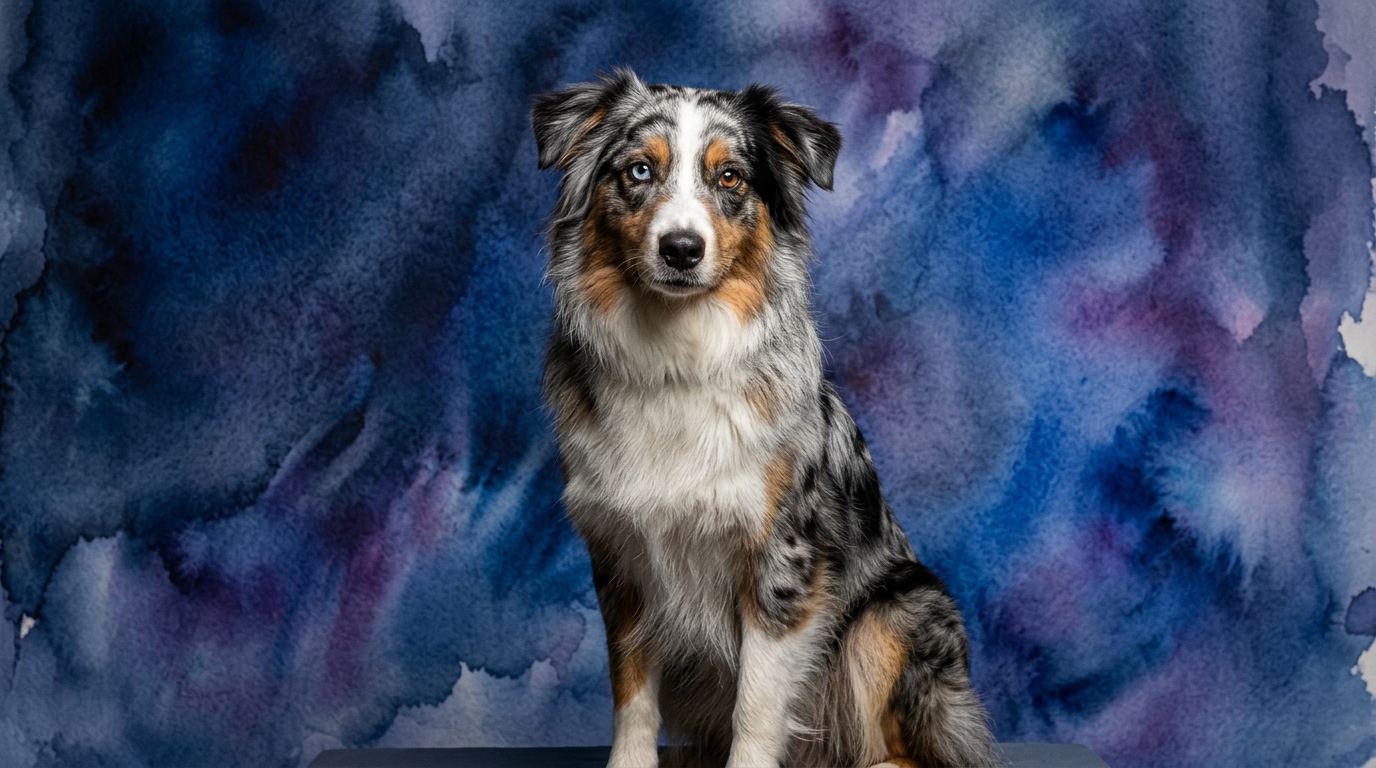
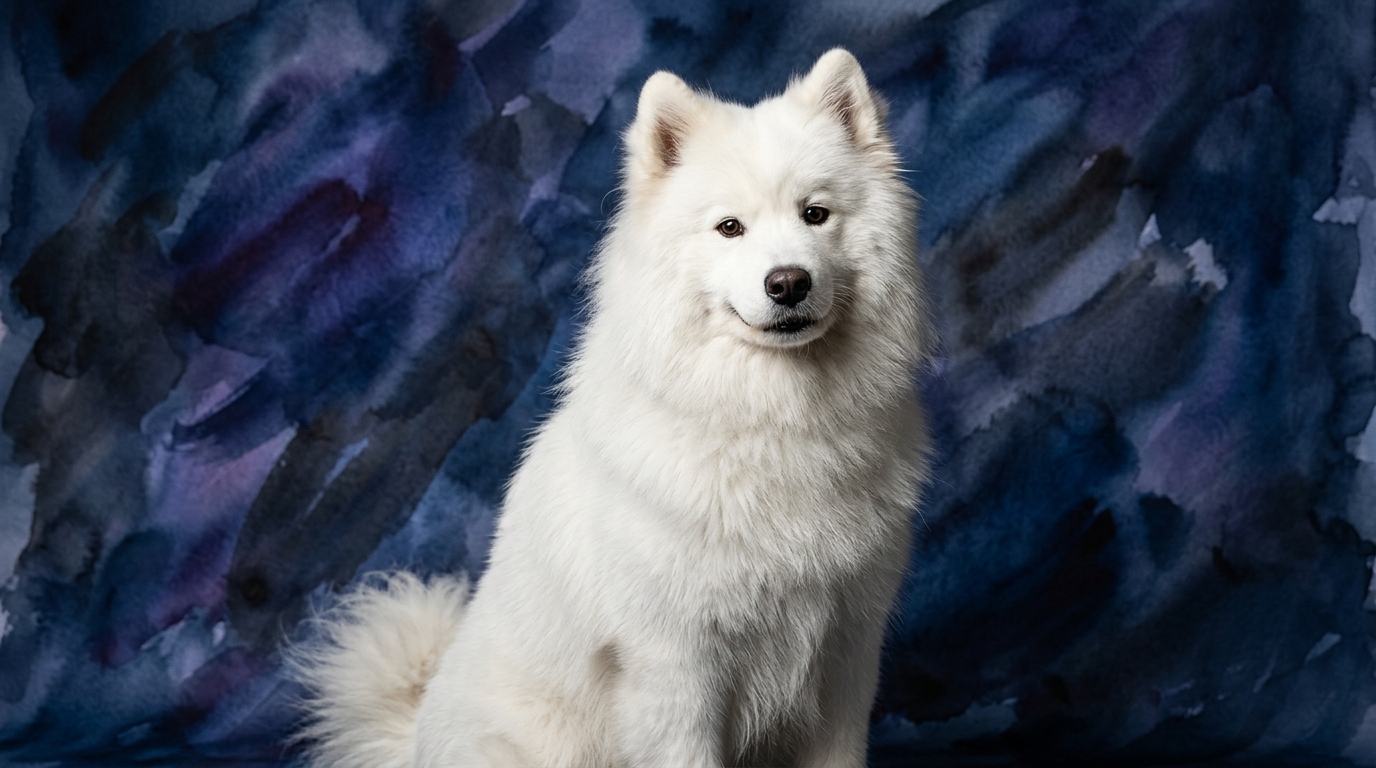
Side-by-Side Cognitive Profile: Australian Shepherd vs. Samoyed
The Cosmic Pet Pet IQ Lab offers a detailed lens into the cognitive abilities of various breeds, moving beyond general perceptions to specific dimensions of intelligence. For the Australian Shepherd, a Herding group dog, its profile paints a picture of exceptional mental agility. Its Problem Solving is rated 5/5, indicating a profound capacity to independently analyze and resolve new situations. Training Speed also sits at a perfect 5/5, suggesting a rapid assimilation of new commands and routines. Social Intelligence is a strong 4/5, reflecting good adaptability in various social contexts, while its Instinctive Drive, crucial for its herding lineage, is 5/5, signifying a powerful intrinsic motivation for work. Memory, vital for complex task retention, is likewise 5/5.
In contrast, the Samoyed, a Working group dog with a Coren rank of #33, presents a different cognitive blueprint. Its Problem Solving is rated 3/5, indicating a moderate ability to tackle novel challenges, often preferring established routines. Training Speed is also 3/5, meaning it learns at a steady pace, requiring consistent reinforcement. Where the Samoyed truly excels is in Social Intelligence, earning a 5/5, highlighting its exceptional ability to connect with humans and other animals. Instinctive Drive is 4/5, reflecting a solid, though not overwhelming, internal motivation, often geared towards companionship or specific tasks like pulling. Memory is rated 3/5, suggesting it retains information effectively but might require more repetition for long-term recall of intricate sequences.
Where the Australian Shepherd Wins Cognitively
The Australian Shepherd's cognitive strengths are profoundly rooted in its heritage as a working herding dog, demanding rapid, independent decision-making. Its 5/5 Problem Solving capability means an Aussie can often figure out how to open gates, retrieve out-of-reach items, or navigate complex obstacle courses with minimal human intervention, demonstrating a proactive approach to challenges. This breed's 5/5 Training Speed is evident in how quickly it picks up on new cues, often mastering a command in just a few repetitions, making advanced obedience or intricate trick training a rewarding endeavor. The 5/5 Instinctive Drive translates into a relentless motivation to engage in tasks, whether it's herding livestock, excelling in agility, or solving puzzle toys, showcasing an intrinsic desire for mental and physical engagement. Coupled with its 5/5 Memory, an Australian Shepherd retains complex sequences of commands and learned behaviors over long periods, making it a reliable partner in structured activities and a consistent performer once a skill is acquired.
Where the Samoyed Wins Cognitively
The Samoyed's cognitive brilliance shines brightest in its Social Intelligence, scoring a perfect 5/5. This dimension reflects an exceptional capacity for empathetic understanding and harmonious interaction within a social group. A Samoyed is adept at reading human emotions and intentions, often responding with comforting nudges or playful invitations, making them wonderfully attuned companions. Their high social intelligence means they thrive on interaction, integrating seamlessly into family dynamics and often displaying a remarkable patience with children or other pets. This strong social drive fosters deep bonds, making them highly responsive to positive reinforcement from their beloved humans. While not as focused on independent problem-solving, their social acumen allows them to navigate complex social situations with grace, fostering a peaceful and joyful home environment.
Which is Easier to Train and Why?
Based on the Pet IQ Lab data, the Australian Shepherd is demonstrably easier to train for obedience and complex tasks. Its 5/5 Training Speed means it grasps new commands with remarkable rapidity, often requiring fewer repetitions than a Samoyed. This is further bolstered by its 5/5 Problem Solving, allowing the Aussie to understand the 'why' behind a command or task, not just the 'what.' For instance, an Australian Shepherd will quickly learn to fetch a specific item and understand the concept of retrieving, making variations easier to teach. Their profound Instinctive Drive (5/5) also makes them eager to work and please, providing strong internal motivation during training sessions.
The Samoyed, with a 3/5 Training Speed and 3/5 Problem Solving, requires a more patient and consistent approach. While capable of learning, they might take longer to generalize commands to new environments or situations. Their training benefits immensely from positive reinforcement and making sessions feel like a fun interaction, leveraging their 5/5 Social Intelligence. A Samoyed might be more prone to 'selective hearing' if they perceive a task as uninteresting or if social interaction is not a core part of the training. They are not 'stubborn' but rather motivated differently; their training success hinges on building a strong, positive relationship and making learning a shared, enjoyable experience rather than a demanding directive.
Which Suits Active Owners vs. Relaxed Owners
The Australian Shepherd is undoubtedly suited for active and engaged owners who seek a canine partner for demanding activities. Their high Instinctive Drive (5/5), coupled with superior Problem Solving (5/5) and Memory (5/5), means they require substantial mental and physical stimulation daily. An owner who enjoys dog sports like agility, flyball, or disc golf, or who can provide a 'job' such as herding, long hikes, or advanced obedience, will find the Aussie thrives. A relaxed owner who cannot meet these cognitive and physical demands may find an Aussie becomes bored and channels its energy into less desirable behaviors, such as incessant barking or destructive chewing, born from a need to engage its active mind.
The Samoyed, while still an active breed with a 4/5 Instinctive Drive, aligns well with owners who are active but perhaps seek a more socially driven companionship rather than a high-octane working partner. They enjoy walks, runs, and playing, but their primary fulfillment comes from being an integral part of the family unit, thanks to their 5/5 Social Intelligence. A Samoyed owner should be prepared for regular exercise and consistent training, but the intensity of mental 'work' required is generally lower than an Aussie. They are an excellent fit for owners who appreciate a friendly, affectionate companion that loves to be involved in family life, enjoys outdoor adventures, but isn't constantly seeking complex tasks to solve.
The Verdict: When to Choose Each Breed
The Verdict
Choose an Australian Shepherd if you are an active, experienced owner eager for a highly trainable partner in dog sports, advanced obedience, or a working role, and can provide consistent mental challenges and physical exercise. Their exceptional cognitive abilities make them excel in structured, goal-oriented activities.
Opt for a Samoyed if you desire a highly social, affectionate companion that thrives on family interaction and offers a more moderate, yet still active, lifestyle. They are best for owners who appreciate their gentle nature and are prepared to engage in patient, positive reinforcement training, leveraging their strong desire for connection.
🧠 Find Your Pet's IQ Score
Our Pet IQ Lab assessment covers 25+ tests across 5 cognitive dimensions — personalized to your breed.
Take the Full IQ Test →Frequently Asked Questions
Are Australian Shepherds good for first-time dog owners?
Australian Shepherds are generally not recommended for first-time dog owners due to their intense cognitive needs and high energy levels. Their 5/5 Problem Solving and Instinctive Drive require an owner who understands how to channel their drive positively to prevent boredom and undesirable behaviors.
Do Samoyeds require a lot of grooming?
Yes, Samoyeds require significant grooming due to their thick double coat. While not directly related to their IQ, their coat demands regular brushing to prevent matting and maintain skin health, which is an important consideration for potential owners.
Which breed is better with children?
Both breeds can be good with children, but the Samoyed's 5/5 Social Intelligence often makes them exceptionally patient and gentle companions for families. Australian Shepherds, with 4/5 Social Intelligence, can also be good but may have a stronger herding instinct that needs management around very young children.