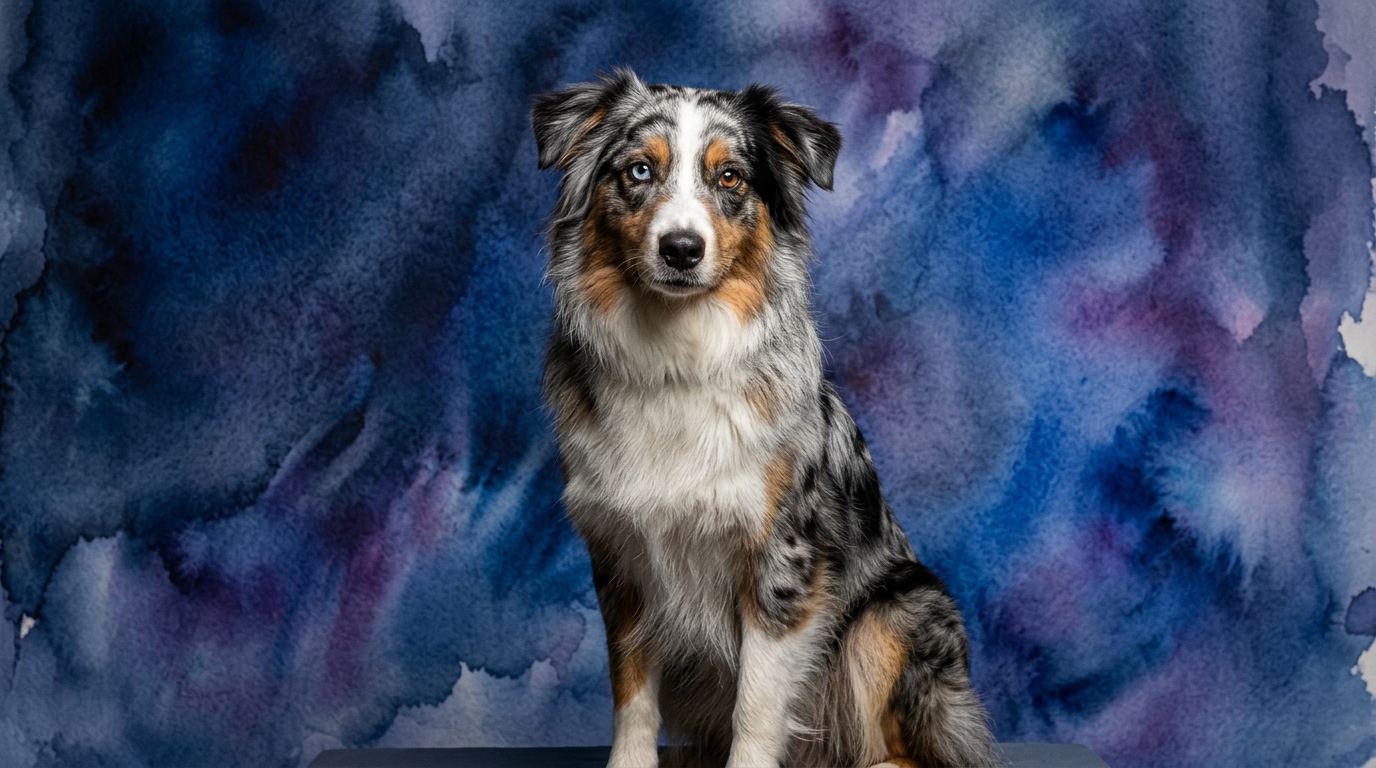
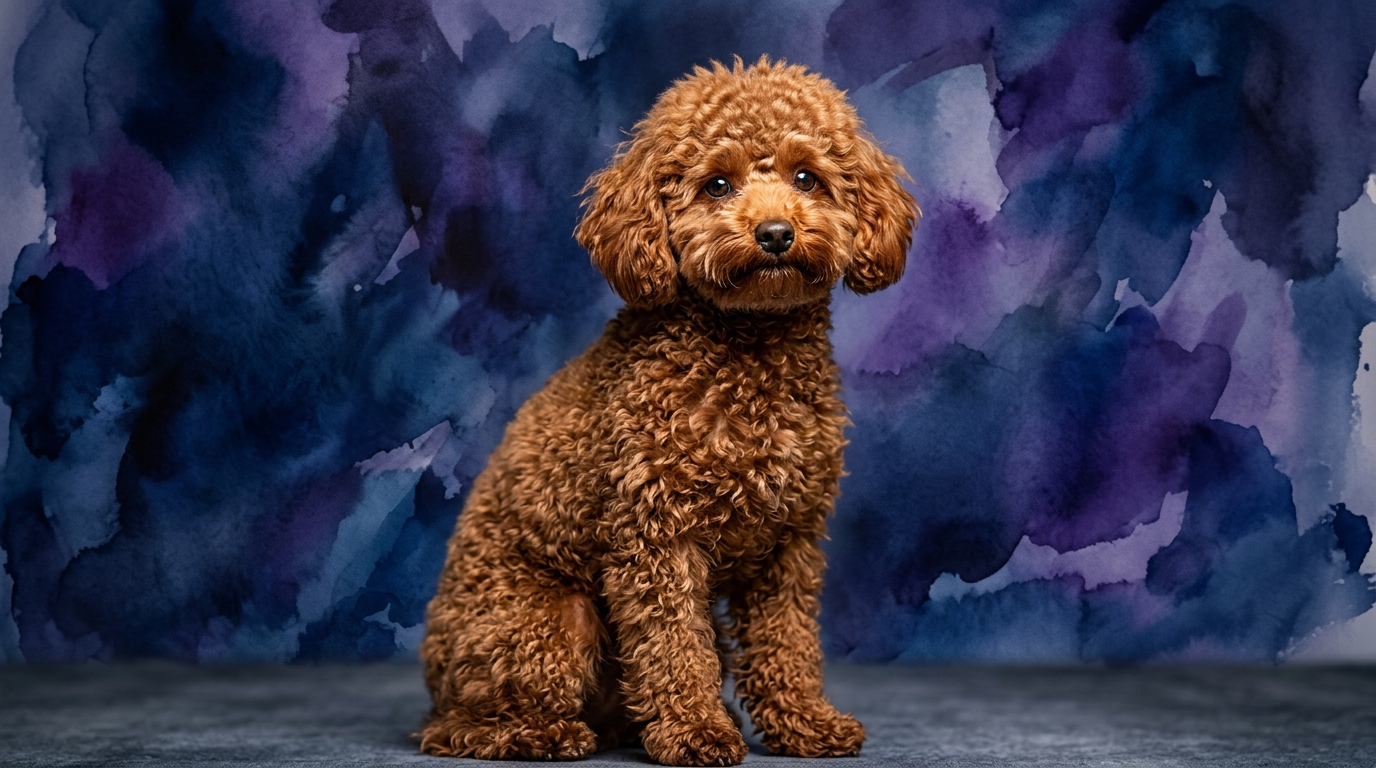
The Cosmic Pet Pet IQ Lab: Side-by-Side Cognitive Profiles
The Cosmic Pet Pet IQ Lab provides a detailed breakdown of canine cognitive dimensions, offering a unique lens through which to compare these two distinct breeds. While differing in size and primary historical roles, their mental capabilities reveal both surprising similarities and crucial distinctions.
Our analysis begins with Problem Solving, where both the Australian Shepherd and the Toy Poodle achieve a perfect 5/5 score. This indicates an exceptional capacity in both breeds to navigate novel situations, understand cause-and-effect, and figure out solutions independently. For an Australian Shepherd, this might manifest as strategizing how to move a group of animals or efficiently navigating a complex agility course. For a Toy Poodle, it translates to quickly understanding how to manipulate a puzzle feeder or deciphering a new, multi-step trick sequence. Their approaches might differ—the Aussie perhaps with more robust physical engagement, the Poodle with delicate manipulation—but the core cognitive process of evaluation and execution is equally strong.
Next, we examine Training Speed, another dimension where both breeds score an impressive 5/5. This metric measures how rapidly a dog grasps new commands, behaviors, and routines. Both the Australian Shepherd and the Toy Poodle are remarkably quick studies, absorbing lessons with striking efficiency. An Australian Shepherd can learn a complex multi-step obedience routine in just a few repetitions, while a Toy Poodle can master intricate stunt work or scent discrimination with similar alacrity. Their eagerness to engage, coupled with their ability to link actions to consequences, is equally pronounced, making them highly receptive to instruction.
Social Intelligence reveals the first significant divergence, with the Australian Shepherd scoring 4/5 and the Toy Poodle 3/5. This dimension reflects a dog's ability to understand and respond to social cues from humans and other animals, interpreting body language, tone, and intent. The Australian Shepherd, with its 4/5 score, possesses a nuanced understanding of its 'pack' dynamics, often anticipating owner needs or reacting appropriately to subtle shifts in group mood, crucial for effective herding and collaborative work. The Toy Poodle, at 3/5, is certainly responsive to its primary human companions, forming strong bonds and recognizing familiar patterns, but might be slightly less attuned to broader, more complex social environments or less inclined to interpret subtle cues from strangers, preferring a more direct interaction style.
Instinctive Drive also shows a clear distinction: the Australian Shepherd earns a 5/5, while the Toy Poodle scores 3/5. This measures the strength of innate, breed-specific behaviors and the internal motivation behind them. The Australian Shepherd's 5/5 score highlights an intense, inherent urge to herd, chase, and control movement, which manifests as a powerful work ethic and a profound need for purpose. This drive is deeply ingrained and serves as a powerful motivator. The Toy Poodle, with a 3/5, exhibits a moderate level of instinctive drive, often expressed as a keen desire to retrieve, a playful nature, or a propensity for companionship, but without the overwhelming, directing force seen in the herding breeds. Their drives are present but more adaptable and less demanding to manage.
Finally, Memory is a shared strength, with both breeds scoring 5/5. This indicates an exceptional capacity for recalling commands, routines, and experiences over time. An Australian Shepherd will remember the layout of a vast pasture, the faces of individual sheep, or a complex sequence of agility obstacles for extended periods. Similarly, a Toy Poodle will retain a vast repertoire of tricks, recall specific toy names, or remember past interactions, demonstrating an enduring capacity for long-term retention. This robust memory underpins their rapid training speed and problem-solving success, allowing them to build upon learned experiences efficiently.
Where the Australian Shepherd Excels Cognitively
The Australian Shepherd's cognitive strengths truly shine in scenarios demanding a potent combination of innate drive and sophisticated social awareness. Their 5/5 instinctive drive isn't merely a penchant for chasing; it's a deep-seated impulse to organize, manage, and respond to dynamic environments, whether livestock or family members. This translates into an unparalleled ability to anticipate movement and direct action with purpose. Coupled with a 4/5 social intelligence, the Australian Shepherd excels at reading complex group dynamics, understanding hierarchies, and interpreting subtle non-verbal cues, making them adept at collaborative tasks and highly responsive partners in intricate work settings. Their cognitive framework is optimized for managing variables in motion and working in concert with a human handler, often predicting the next step before it's explicitly given, showcasing a proactive and deeply engaged intellect.
Where the Toy Poodle Demonstrates Unique Cognitive Strengths
While the Toy Poodle doesn't surpass the Australian Shepherd in raw numerical scores, their cognitive profile presents a distinct advantage in specific contexts. Matching the Australian Shepherd with 5/5 in problem-solving, training speed, and memory, the Toy Poodle demonstrates an equal capacity for learning and mental agility without the intense, demanding 5/5 instinctive drive. This means their formidable cognitive abilities are highly versatile and less tethered to a specific, hardwired purpose. Their 3/5 social intelligence, while lower than the Australian Shepherd's, is perfectly calibrated for intimate human companionship, allowing them to form deep, responsive bonds without the broader, often distracting, need to 'herd' their environment. They excel at precise, focused learning and nuanced interaction within a smaller, consistent social circle, making them masters of detailed tasks and dedicated personal connections, demonstrating a remarkable cognitive adaptability.
Ease of Training: Behavioral Differences in Action
When considering ease of training, both breeds exhibit a remarkable 5/5 training speed, indicating they absorb new information with impressive rapidity. However, the practical experience of training can differ significantly due to their other cognitive dimensions. The Australian Shepherd's powerful 5/5 instinctive drive, while a tremendous asset for work, requires a handler who can effectively channel and manage this intense energy. Without appropriate outlets and consistent direction, this drive can manifest as unwanted herding behaviors, nipping, or excessive chasing, demanding a proactive and skilled trainer. Their 4/5 social intelligence means they are highly attuned to their handler's expectations and subtle cues, but also quick to test boundaries if leadership isn't clear. This combination requires a committed, experienced owner to guide their formidable mental and physical energy.
In contrast, the Toy Poodle's 3/5 instinctive drive is more manageable, making it generally easier for a novice or less experienced owner to direct their cognitive potential. While they still require mental engagement, their drives are less likely to overwhelm a training session with intense, redirectable energy. Their slightly lower social intelligence (3/5) means they might be less prone to overthinking or challenging subtle social cues from a wide range of individuals, often responding more directly to commands within their established social bond, which can simplify the training process for some. Both breeds thrive on positive reinforcement and consistency, but the Australian Shepherd demands a more robust and creative approach to fulfilling its deep-seated working instincts.
Matching Canine Cognition with Owner Lifestyles
The choice between an Australian Shepherd and a Toy Poodle largely hinges on an owner's lifestyle and capacity for engagement. An Australian Shepherd, with its 5/5 instinctive drive and robust cognitive abilities across the board, thrives with active, dedicated owners who can provide consistent, high-level mental and physical stimulation. They need a 'job'—whether it's herding, agility, advanced obedience, or extensive hiking—to truly flourish and prevent their formidable intelligence and drive from becoming destructive. They suit individuals or families who embrace outdoor adventures, dog sports, and daily, structured training sessions that challenge their proactive problem-solving and social understanding. Their cognitive design demands an outlet for their inherent purpose.
Conversely, the Toy Poodle, while equally capable in problem-solving, training speed, and memory, has a more moderate 3/5 instinctive drive and can adapt to a wider range of activity levels. They still require daily walks and mental puzzles to satisfy their active minds, but they don't possess the same relentless need for intense, purposeful work. They are an excellent fit for owners who appreciate engaging in trick training, puzzle toys, and consistent, moderate exercise, but may not be seeking a high-octane canine partner for demanding outdoor pursuits. They suit individuals or families who enjoy a cognitively engaged companion that also appreciates relaxed indoor time, offering a balance of mental stimulation and affectionate presence.
The Verdict
For those seeking a highly driven, intensely engaged canine partner for demanding work, complex sports, or an active outdoor lifestyle, where managing powerful instincts is part of the joy, the Australian Shepherd is an unparalleled choice.
If your ideal companion is a mentally agile, highly trainable dog that excels in close companionship, intricate learning, and fits a more adaptable lifestyle without the need for constant intense physical output, the Toy Poodle is an exceptional match.
🧠 Find Your Pet's IQ Score
Our Pet IQ Lab assessment covers 25+ tests across 5 cognitive dimensions — personalized to your breed.
Take the Full IQ Test →Frequently Asked Questions
Do Australian Shepherds and Toy Poodles learn tricks at the same speed?
According to The Cosmic Pet Pet IQ Lab, both breeds score 5/5 in training speed, indicating they learn new tricks and commands with equal rapidity. Their exceptional memory and problem-solving skills contribute to their quick grasp of new behaviors, making both adept students.
How does a Toy Poodle's social intelligence compare to an Australian Shepherd's?
The Australian Shepherd scores 4/5 in social intelligence, showing a strong ability to interpret complex social cues and group dynamics, essential for their herding background. The Toy Poodle scores 3/5, demonstrating good social responsiveness within its immediate family circle, but perhaps less nuanced awareness of broader social environments or strangers.
Can a Toy Poodle be a good agility dog like an Australian Shepherd?
Absolutely. While Australian Shepherds excel in agility due to their high drive and physical prowess, Toy Poodles, with their 5/5 problem-solving and training speed, also perform exceptionally well. Their agility and mental quickness allow them to master courses with precision, proving that size doesn't limit their capacity for canine sports.