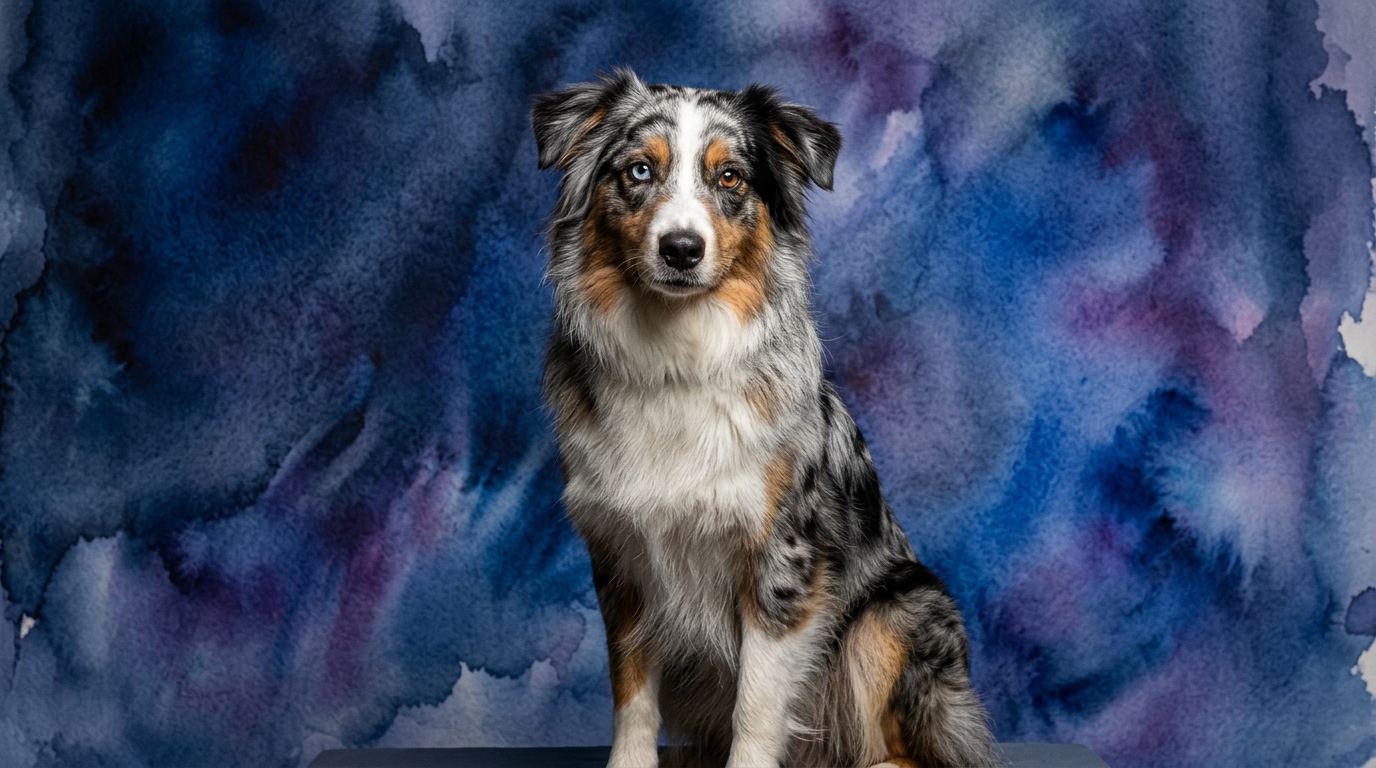
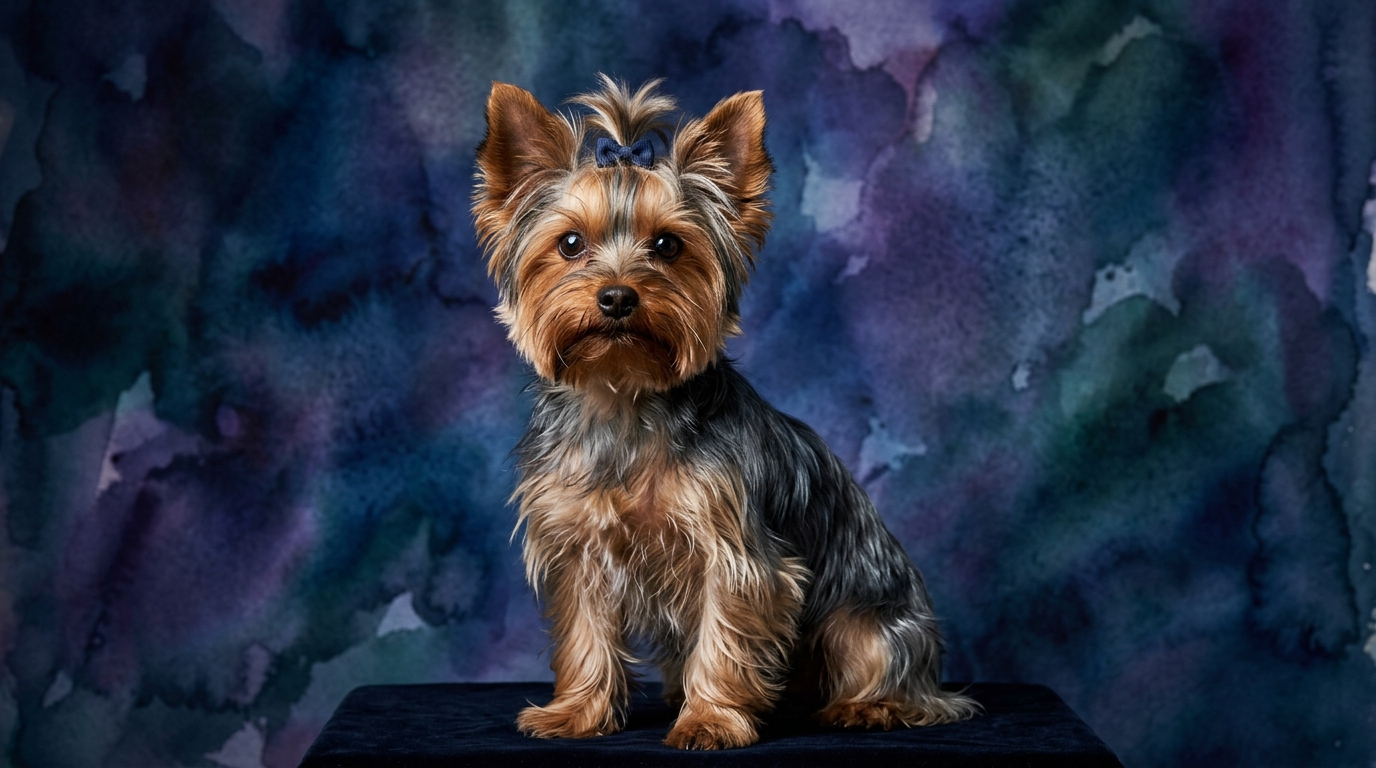
Side-by-Side IQ Profile: Australian Shepherd vs. Yorkshire Terrier
The Cosmic Pet Pet IQ Lab evaluates canine intelligence across five key dimensions, providing a nuanced perspective on each breed's cognitive strengths. For the Australian Shepherd, a herding dog, its profile is marked by exceptional working intellect: Problem Solving (5/5), Training Speed (5/5), Social Intelligence (4/5), Instinctive Drive (5/5), and Memory (5/5). This combination points to a mind built for complex, adaptive tasks and extensive information processing, reflecting its historical role in managing livestock.
In contrast, the Yorkshire Terrier, a terrier breed Coren-ranked at #27, presents a profile more attuned to companionship and focused engagement: Problem Solving (3/5), Training Speed (4/5), Social Intelligence (4/5), Instinctive Drive (4/5), and Memory (4/5). While perhaps not as broadly focused on intricate problem-solving as a herding dog, the Yorkie demonstrates solid capabilities across the board, particularly in areas supporting its role as an attentive and interactive companion.
Breaking down the Australian Shepherd's attributes, their 5/5 in Problem Solving signifies an outstanding ability to analyze novel situations and devise effective solutions, whether it's navigating an agility course or figuring out a complex puzzle toy. A 5/5 in Training Speed highlights their rapid grasp of new commands and routines, often requiring very few repetitions. Their Social Intelligence at 4/5 indicates a strong capacity to understand human cues and intentions within their trusted circle, though they can be reserved with strangers. An impressive 5/5 Instinctive Drive speaks to their powerful innate motivation for purposeful activity, often tied to their herding legacy, fueling their focus and persistence. Finally, a 5/5 in Memory underscores their exceptional recall for commands, learned behaviors, and environmental details, enabling them to execute complex sequences flawlessly.
For the Yorkshire Terrier, a 3/5 in Problem Solving suggests a moderate capacity for tackling new challenges, often relying on persistence or learned patterns rather than strategic analysis. Their 4/5 Training Speed shows they are quick learners, capable of mastering a good repertoire of obedience cues and tricks with consistent, positive methods. A 4/5 in Social Intelligence indicates a perceptive understanding of their human companions' moods and a strong ability to communicate their own needs, fostering deep bonds. Their 4/5 Instinctive Drive reflects a tenacious, spirited nature, often directed towards playful interaction or exploration rather than large-scale work. Lastly, a 4/5 in Memory means they have a reliable recall for routines and learned behaviors, serving their companion role effectively by remembering people, places, and preferred activities.
Where the Australian Shepherd Wins Cognitively
The Australian Shepherd's cognitive strengths distinctly lie in areas demanding complex, adaptive thought and extensive information processing. Their perfect scores in Problem Solving, Training Speed, Instinctive Drive, and Memory underscore a mind built for intricate work. Specifically, the Aussie excels in situations requiring independent decision-making under dynamic conditions, a direct legacy of their herding role where split-second judgments are crucial for managing livestock. This manifests as an ability to not just follow commands, but to understand the intent behind them and adjust their approach based on changing environmental factors, making them adept at advanced dog sports like agility or competitive obedience where sequences are long and precise. Their superior memory allows them to retain vast repertoires of cues and strategies, while their profound instinctive drive ensures they apply these faculties with unwavering focus and persistence.
Where the Yorkshire Terrier Wins Cognitively
While the Australian Shepherd's cognitive profile emphasizes broad, complex work, the Yorkshire Terrier demonstrates a different, yet equally valuable, set of mental advantages, particularly within their niche. Their strength isn't in managing a flock, but in excelling at close-quarters interaction and nuanced social communication, scoring a commendable 4/5 in Social Intelligence. Yorkies often exhibit a keen perceptiveness regarding their human companions' emotional states, frequently adapting their behavior to comfort or engage, a testament to their refined social cognition. They are also highly effective at leveraging their persistence (part of their 4/5 Instinctive Drive) to achieve desired outcomes, whether it's getting attention or securing a favorite toy. Their solid 4/5 in Training Speed, combined with their eager-to-please nature for their primary person, means they can master a significant array of house manners and tricks, proving remarkably adaptable to a domestic environment and excelling in focused, one-on-one training sessions.
Which Is Easier to Train and Why
Assessing ease of training between these two breeds requires understanding their intrinsic motivations and learning styles. The Australian Shepherd, with its 5/5 Training Speed and an equally high 5/5 Problem Solving and Memory, generally presents as the more straightforward breed to teach a wide range of commands and complex behaviors. Their deep desire for a job, coupled with an eagerness to please and a remarkable capacity for retaining information, means they often learn new tasks rapidly and perform them reliably. Their profound instinctive drive makes them highly receptive to direction, viewing training as a fulfilling mental exercise.
In contrast, the Yorkshire Terrier, scoring 4/5 in Training Speed, is also quite trainable, but their motivations differ. Yorkies often respond best to training that is engaging, reward-based, and focused on building a strong bond with their handler. While they grasp concepts well, their terrier tenacity and independence, stemming from their 4/5 Instinctive Drive, can sometimes lead to selective hearing if they deem a command less interesting than an environmental distraction. They might require more patience and creative motivation to maintain focus over long or repetitive sessions, especially when compared to the Aussie's inherent drive to work. For instance, an Aussie might instinctively 'gather' toys on command, whereas a Yorkie might need more specific positive reinforcement to perform a similar task, prioritizing their own perceived fun over the handler's instruction if not properly motivated.
Which Suits Active Owners vs. Relaxed Owners
The choice between an Australian Shepherd and a Yorkshire Terrier profoundly depends on an owner's lifestyle and capacity for engagement. An Australian Shepherd, with its 5/5 Instinctive Drive and 5/5 Problem Solving, thrives with active owners who can provide consistent mental and physical challenges. They require extensive daily exercise beyond simple walks, benefiting from activities like herding, agility, flyball, or long, structured hikes that engage both their bodies and their minds. Owners who appreciate a dog that needs to 'work' and can dedicate significant time to training, dog sports, or complex enrichment activities will find an Aussie to be an unparalleled companion. A relaxed owner who cannot meet these needs will likely encounter behavioral issues stemming from boredom and unchanneled energy.
The Yorkshire Terrier, while possessing a respectable 4/5 Instinctive Drive and 4/5 Memory, is better suited for owners who can offer regular, but less demanding, engagement. They enjoy daily walks, playtime with toys, and short, engaging training sessions that reinforce their bond. Their smaller size makes them adaptable to apartment living, provided their need for attention and mental stimulation (like puzzle toys or learning new tricks) is met. They are excellent companions for individuals or families who prefer indoor activities, cuddling, and social interaction over rigorous outdoor adventures. While they enjoy activity, they don't possess the same relentless need for a 'job' that defines the Australian Shepherd, making them a better fit for owners seeking a spirited, yet less intensely demanding, canine partner.
The Verdict
Choose an Australian Shepherd if you are an active individual or family committed to providing extensive daily mental and physical challenges, seeking a highly trainable partner for sports, work, or complex enrichment. Their need for a 'job' means they thrive in environments where their problem-solving and drive are consistently engaged.
Opt for a Yorkshire Terrier if you desire a spirited, socially perceptive companion who enjoys regular, moderate activity and thrives on close human interaction, fitting well into a home that values indoor companionship and focused, reward-based training. They offer a lively presence without the intense daily demands of a working breed.
🧠 Find Your Pet's IQ Score
Our Pet IQ Lab assessment covers 25+ tests across 5 cognitive dimensions — personalized to your breed.
Take the Full IQ Test →Frequently Asked Questions
Can a Yorkshire Terrier excel at dog sports like agility?
Yes, absolutely. Despite their smaller size, Yorkshire Terriers can perform well in agility, especially with their 4/5 Training Speed and 4/5 Instinctive Drive. Their agility and focus, when properly motivated, allow them to navigate courses with speed and precision, though they may not have the stamina for the most demanding, prolonged competitions.
Is an Australian Shepherd suitable for a first-time dog owner?
An Australian Shepherd can be a challenging choice for a first-time owner due to their exceptionally high energy, training needs, and powerful instinctive drive. They require a significant commitment to early socialization, consistent training, and ample mental and physical stimulation to prevent behavioral issues, which might overwhelm an inexperienced owner.
How do their social intelligence scores (4/5 for both) manifest differently?
While both score 4/5, the Australian Shepherd's social intelligence is often directed towards their immediate 'pack' and work partners, manifesting as strong loyalty and responsiveness within their trusted circle, sometimes with reservation towards strangers. The Yorkshire Terrier's social intelligence often presents as an acute perceptiveness of their primary owner's emotions and a confident, sometimes bold, interaction style within their social environment, regardless of size.