
Side-by-Side IQ Profile: Aussie vs. Elkhound
The Cosmic Pet Pet IQ Lab provides a structured lens through which to examine the cognitive abilities of our canine companions. For the Australian Terrier, we observe a consistent profile across the board: a problem-solving capacity of 3/5, a training speed rating of 3/5, social intelligence at 3/5, an instinctive drive score of 3/5, and a memory capacity also at 3/5. This suggests a dog with a balanced, predictable cognitive approach, capable of understanding and adapting but perhaps not excelling in any single, complex intellectual domain. Their problem-solving tends towards practical, persistent effort rather than intricate strategic thought, often focused on immediate, tangible goals. Training, while achievable, requires consistent engagement and positive reinforcement to build strong associations, reflecting their moderate training speed. Their social intelligence indicates a general amiability and ability to read basic social cues, while their instinctive drive is moderate, manageable, and characteristic of a terrier's tenacious spirit. Memory, being average, means they retain learned behaviors with regular reinforcement, but may not recall obscure commands after long periods.
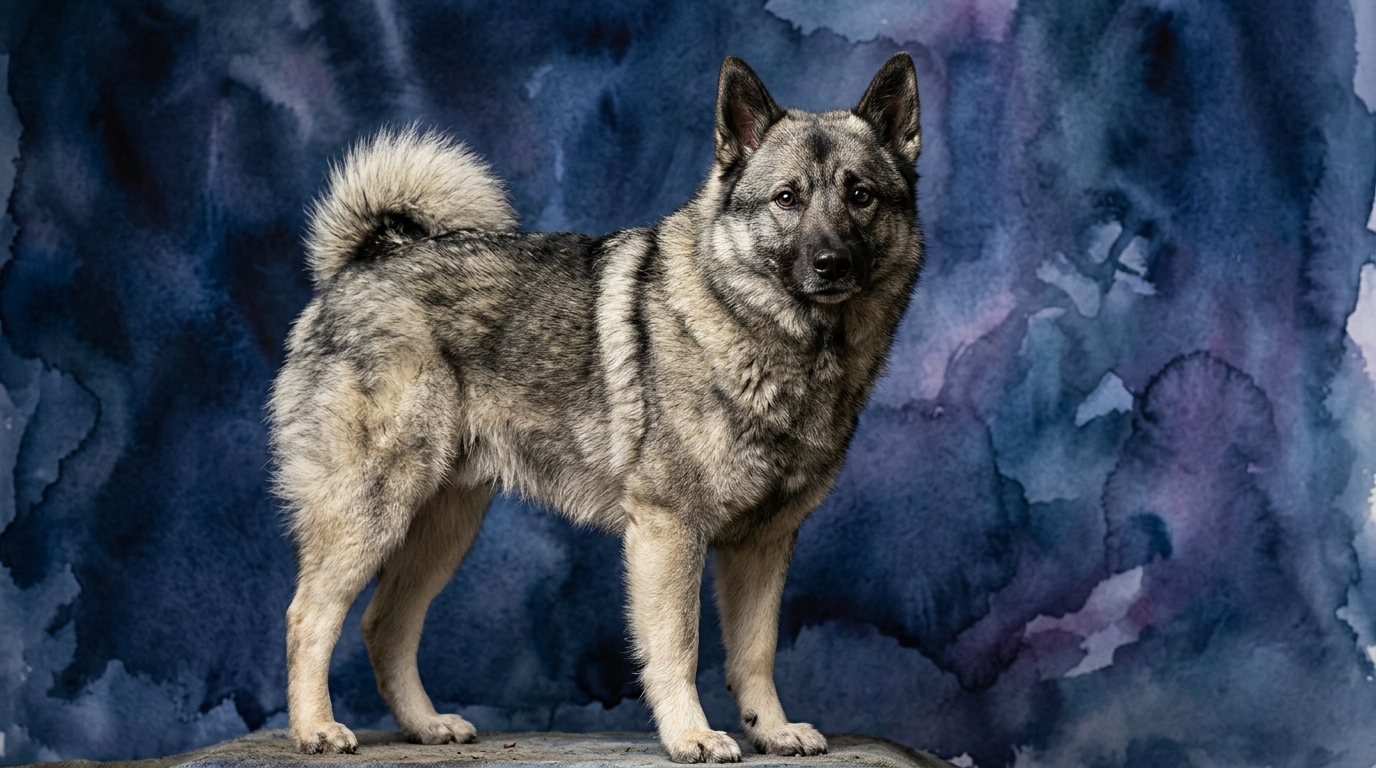
In contrast, the Norwegian Elkhound presents a profile with several elevated scores, hinting at a more profound cognitive engagement. Their problem-solving ability stands at 4/5, indicating a stronger capacity for analytical thought and navigating complex scenarios. Training speed is also rated 4/5, suggesting they grasp new commands and concepts more readily than the Australian Terrier, making them quicker to master new skills. Their social intelligence matches the Australian Terrier at 3/5, implying a similar level of understanding and interaction within a social context, being generally well-adjusted but not overly reliant on subtle human cues for complex tasks. The Elkhound's instinctive drive is also 3/5, reflecting their heritage as a hunting dog with a moderate but definite inclination towards tracking and exploring. Crucially, their memory capacity is rated 4/5, signifying a superior ability to recall information and learned behaviors over extended periods, which is a significant advantage in sustained training and complex task retention. This blend of higher problem-solving, training speed, and memory positions the Elkhound as a capable and discerning learner.
Where the Australian Terrier Excels Cognitively
While the Norwegian Elkhound boasts higher scores in several categories, the Australian Terrier's consistent 3/5 across all five cognitive dimensions can be seen as a unique strength, particularly for certain owners and environments. This balance provides a predictable and manageable cognitive companion, less prone to the specific demands or potential frustrations that can sometimes accompany breeds with very high, specialized cognitive abilities. Their problem-solving, rated at 3/5, manifests as a tenacious, practical approach to obstacles. This isn't about complex deduction, but rather persistent, trial-and-error efforts to achieve a goal, which can be incredibly effective for tasks like figuring out how to get to a dropped toy under furniture or navigating a tricky garden fence. This directness and grit, characteristic of the terrier group, means they rarely give up, applying their cognitive resources until a solution is found, even if it's not the most elegant one.
Furthermore, the Australian Terrier's 3/5 social intelligence, combined with their compact size and adaptable nature, often translates into a keen ability to integrate smoothly into various household dynamics. They are observant of their immediate family's routines and moods, adapting their behavior without necessarily needing highly nuanced social cues from strangers or complex group interactions. Their moderate instinctive drive (3/5) is also a cognitive advantage in a domestic setting; while they possess the terrier's innate drive for exploration and chasing, it is often more easily satisfied with structured play and short outdoor excursions than the more expansive needs of a larger hunting hound. This means their cognitive energy for instinctual behaviors is less likely to lead to overwhelming demands for exercise or escape attempts, making them a more contained and manageable cognitive package for many family environments.
Where the Norwegian Elkhound Demonstrates Cognitive Superiority
The Norwegian Elkhound clearly distinguishes itself with superior cognitive abilities in several key areas, particularly in problem-solving (4/5), training speed (4/5), and memory (4/5). Their elevated problem-solving score indicates a greater capacity for abstract thought and strategic planning. They are more likely to analyze a situation, understand cause-and-effect relationships, and devise multi-step solutions to challenges, rather than relying solely on brute force or persistent trial-and-error. This makes them adept at navigating more complex environments, understanding intricate puzzles, or even anticipating human actions based on patterns. Their ability to process and synthesize information quickly translates into a more discerning and analytical approach to their surroundings, allowing them to adapt to novel situations with greater efficiency.
The Elkhound's higher training speed (4/5) means they absorb new commands and routines with remarkable efficiency, often requiring fewer repetitions than the Australian Terrier to achieve mastery. This makes them highly responsive candidates for advanced obedience, canine sports, or any activity requiring a broad and precise behavioral repertoire. Coupled with their exceptional memory (4/5), they retain these learned behaviors over long periods, making refresher training less frequent and more effective. This cognitive strength allows them to build a vast vocabulary of commands and cues, acting as a reliable and consistent partner in various tasks. Their capacity for long-term retention of complex information positions them as truly capable working or companion animals, able to recall intricate sequences or rules even after significant time has passed, a distinct advantage for owners seeking a highly trainable and intelligent companion.
Which is Easier to Train and Why
When considering ease of training, the Norwegian Elkhound generally holds an advantage over the Australian Terrier, primarily due to its higher training speed (4/5) and memory (4/5). Elkhounds tend to grasp new concepts and commands more quickly, processing information efficiently and retaining it for longer periods. This means an owner might spend less time on initial repetitions and can progress to more complex behaviors sooner. Their working dog heritage also imbues them with a desire to cooperate when properly motivated, making them responsive to consistent, positive reinforcement methods. However, their moderate instinctive drive (3/5) still means they can be independent thinkers, occasionally prioritizing an interesting scent over a command, requiring an engaging and motivating approach to maintain focus.
The Australian Terrier, with a training speed of 3/5 and memory of 3/5, typically requires more patience and repetition during training sessions. While capable of learning, their progress may be slower, and consistency is paramount to ensure long-term retention. Their terrier heritage often manifests as a spirited independence and occasional stubbornness, meaning they might question the necessity of a command if it doesn't immediately align with their perceived interests. Engaging their sharp minds with varied, positive reinforcement techniques, and short, fun sessions is crucial to prevent boredom and maintain their focus. While they may not learn as rapidly as an Elkhound, their dedication once a behavior is mastered is unwavering, making them reliable companions in their own right, given the right training approach.
Which Suits Active Owners vs. Relaxed Owners
Both breeds possess an instinctive drive of 3/5, suggesting they are not sedentary couch potatoes but require different scales and types of activity. The Norwegian Elkhound, with its larger size, historical role as a moose hunter, and higher problem-solving and memory scores, is best suited for active owners. These dogs thrive on vigorous, sustained exercise such as long hikes, jogging, or structured canine sports like agility, obedience, and scent work. Their cognitive strengths mean they also benefit immensely from mental challenges that engage their analytical minds, preventing boredom and potential destructive behaviors. Owners who enjoy regular outdoor adventures and are committed to providing consistent mental stimulation will find a rewarding partnership with an Elkhound, as their intelligence flourishes with purpose and engagement.
The Australian Terrier, while also possessing a moderate instinctive drive, is generally a better fit for owners whose activity levels might be described as moderately active rather than intensely athletic. Their smaller size means their exercise needs can often be met with daily walks, vigorous play sessions in a securely fenced yard, or short bursts of activity. They are adaptable and enjoy participating in family activities, but don't typically require the endurance-based exercise of a large hunting hound. A 'relaxed' owner in this context doesn't mean inactive, but rather one who appreciates a companion that is content with regular, but perhaps less demanding, physical and mental engagement. Their consistent cognitive profile (3/5 across the board) makes them adaptable companions who enjoy learning tricks and playing games, but without the intense drive for complex, sustained work that an Elkhound might exhibit.
The Verdict
Choose the Australian Terrier if you seek a consistently balanced, tenacious, and adaptable companion who thrives on engaging, varied activities and appreciates a predictable cognitive profile. They are ideal for owners who value spirited independence in a more compact and manageable package.
Opt for the Norwegian Elkhound if you are an active owner ready to engage a highly capable, independent thinker with a strong capacity for learning, retention, and strategic problem-solving. They excel with structured training, ample exercise, and mental challenges, making them a superb partner for outdoor adventures and advanced obedience pursuits.
🧠 Find Your Pet's IQ Score
Our Pet IQ Lab assessment covers 25+ tests across 5 cognitive dimensions — personalized to your breed.
Take the Full IQ Test →Frequently Asked Questions
Is the Australian Terrier a good family dog?
Yes, Australian Terriers typically make good family dogs. Their 3/5 social intelligence means they are generally friendly and adaptable, enjoying interaction with their human companions, though they may retain a terrier's spirited independence.
Do Norwegian Elkhounds bark a lot?
Norwegian Elkhounds are known for their vocal nature, often using barks to communicate or alert, stemming from their hunting heritage. Their moderate instinctive drive means they can be prone to barking if not adequately stimulated mentally and physically.
Which breed is better for apartment living?
The Australian Terrier is generally better suited for apartment living due to its smaller size and more manageable exercise requirements. While both breeds need daily activity, the Elkhound's larger stature and higher energy for sustained outdoor activity can be more challenging in smaller spaces.