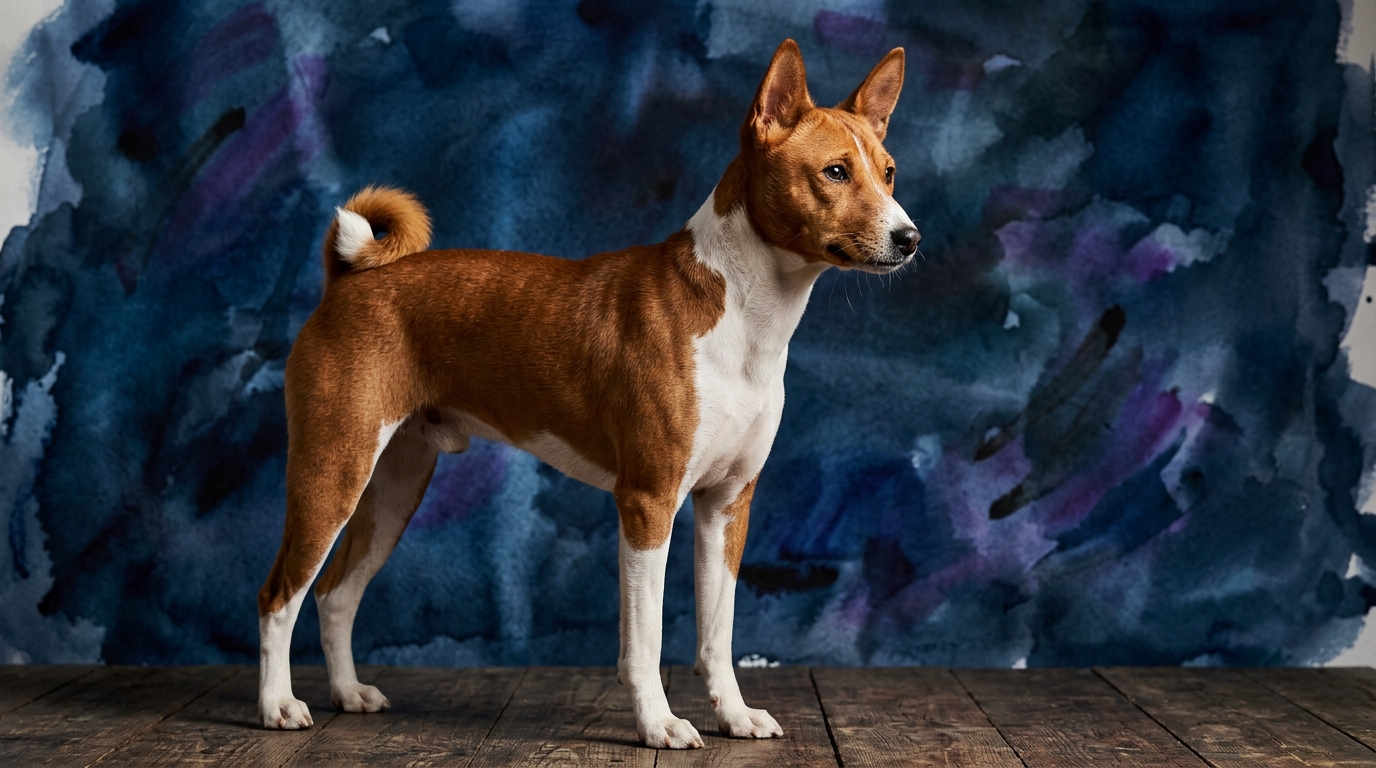
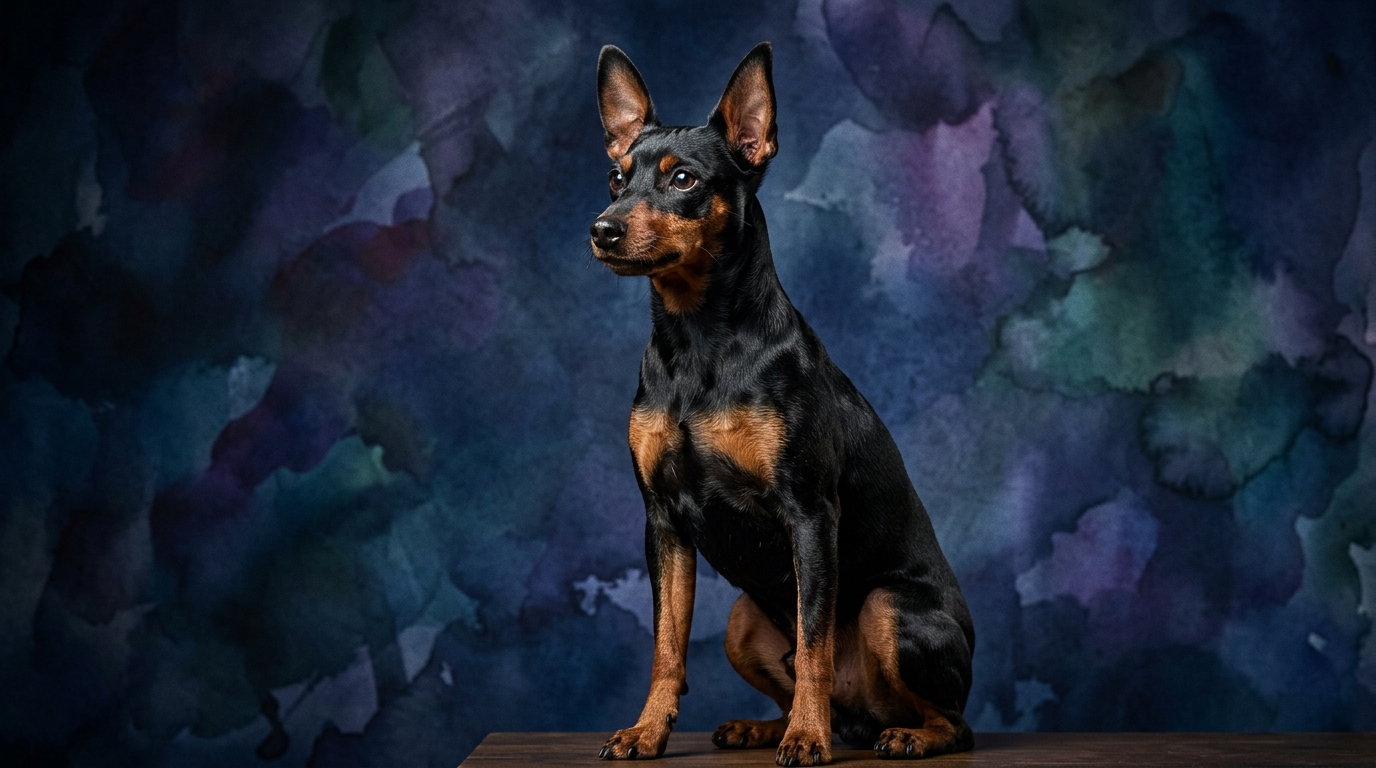
Side-by-Side IQ Profile: Basenji vs. Miniature Pinscher
At The Cosmic Pet Pet IQ Lab, we evaluate canine intelligence across five key dimensions, offering a nuanced understanding of each breed's cognitive strengths. For the Basenji, a Hound with a Coren rank of #78, these scores paint a picture of an independent and resourceful thinker.
Basenji IQ Dimensions:
Problem Solving (5/5): This rating highlights a Basenji's exceptional capacity for independent thought and ingenuity. They are adept at navigating complex environments, figuring out how to open gates, or achieving goals through unconventional, self-devised means, often surprising owners with their cleverness.
Training Speed (1/5): A Basenji's low training speed reflects profound independence and selective motivation. They learn quickly what benefits them, but often require compelling reasons to comply, preferring to follow their own agenda, which can be perceived as stubbornness.
Social Intelligence (3/5): Basenjis typically exhibit discerning social intelligence, observing and reading situations well. They form strong bonds with a select few, often displaying a reserved or aloof demeanor towards strangers, requiring understanding of their subtle cues.
Instinctive Drive (5/5): This breed possesses a robust instinctive drive, particularly their sighthound prey drive. Highly attuned to movement and scent, they are driven by a primal urge to chase and hunt, underpinning much of their exploratory and reactive behavior.
Memory (4/5): Basenjis demonstrate formidable memory, retaining past experiences, learned commands, and associations for extended periods. This aids their problem-solving by recalling successful strategies and contributes to their selective obedience based on past training inconsistencies.
The Miniature Pinscher, a spirited Toy breed without a specific Coren rank, presents a more balanced cognitive profile, suggesting a different approach to learning and interaction.
Miniature Pinscher IQ Dimensions:
Problem Solving (3/5): Miniature Pinschers show an average capacity for problem-solving. They learn to navigate puzzles or minor obstacles but may not exhibit the same level of independent strategic thinking as a Basenji, often relying on learned behaviors or direct trial-and-error.
Training Speed (3/5): With an average training speed, Miniature Pinschers are generally receptive to training and capable of learning basic to intermediate commands with consistency. They respond well to positive reinforcement and clear communication, making them a rewarding breed to teach.
Social Intelligence (3/5): Miniature Pinschers possess average social intelligence, forming strong attachments with family and interacting appropriately, though they can be wary of strangers. Their social cues are generally clear, adapting well once comfortable.
Instinctive Drive (3/5): Miniature Pinschers have a moderate instinctive drive. While they exhibit some prey drive, especially towards small, fast-moving objects, it is typically less intense than a Basenji's. They also possess a strong territorial instinct, often being vocal guardians.
Memory (3/5): Miniature Pinschers have an average memory, retaining training and experiences consistently. They remember routines, commands, and social interactions, supporting their general trainability and integration into a household environment.
Where the Basenji Wins Cognitively
The Basenji’s cognitive strengths truly shine in areas demanding independent thought and self-reliance. Their remarkable 5/5 Problem Solving score places them among the most resourceful canines, adept at devising intricate plans to achieve objectives. This isn't just about escaping a yard; it involves complex sequences like unlatching gates or manipulating objects, often surprising owners with their cleverness and ingenuity. Their 4/5 Memory complements this, allowing them to recall successful strategies and apply them to new, similar situations, making them highly adaptive once they've assessed an environment. Their 5/5 Instinctive Drive, while presenting challenges, also represents a cognitive win in terms of their acute sensory perception and focused pursuit. This drive means they possess an unparalleled ability to track, observe, and react to stimuli, making them exceptionally aware of their surroundings and effective in tasks requiring sensory acuity.
Where the Miniature Pinscher Wins Cognitively
While the Basenji excels in independent ingenuity, the Miniature Pinscher offers a more balanced cognitive profile that often translates to greater ease of integration into typical human households. Their 3/5 Training Speed signifies a more consistent willingness to learn and respond to human guidance compared to the Basenji’s highly selective approach. This means a Miniature Pinscher is generally more amenable to learning a wide range of commands and household rules without constant need for novel motivation, making the training process more predictable. Furthermore, their 3/5 Instinctive Drive, though present, is less overwhelming than the Basenji's intense sighthound focus. This moderated drive makes off-leash excursions in secure areas more manageable, as they are less consumed by an insatiable urge to chase. Their 3/5 Social Intelligence is also a win for many owners, as it typically translates to a more straightforward and less aloof social interaction style, making their social cues easier to interpret.
Which Is Easier to Train and Why
Based on their cognitive profiles, the Miniature Pinscher is unequivocally the easier breed to train for the average owner. The Basenji’s 1/5 Training Speed is perhaps their most defining cognitive characteristic in this regard. This isn't due to a lack of capacity to learn; rather, it's their profound independence and innate sighthound nature that dictates their compliance. Basenjis were bred to hunt independently, making their own decisions in the field, not to take constant direction from humans. This translates to a dog who constantly evaluates whether a command is worth their effort or if there's a more interesting, self-serving alternative. Owners often describe Basenjis as 'cat-like' in their independence, requiring immense patience, creativity, and a deep understanding of canine motivation to achieve consistent results. Traditional obedience methods often fall flat, as a Basenji will often use their 5/5 Problem Solving to circumvent rules or outsmart their trainer if they perceive a loophole. For example, a Basenji might learn 'sit,' but only if a high-value treat is presented immediately, and might ignore the command entirely if distracted or if the reward isn't enticing enough. In contrast, the Miniature Pinscher’s 3/5 Training Speed signifies a much more cooperative and responsive learner. While they possess a spirited 'big dog' personality, they generally aim to please their handlers and respond well to consistent positive reinforcement. A Min Pin will typically learn 'sit' and perform it reliably in various contexts with consistent practice, motivated by praise, treats, and the desire for interaction. Their moderate instinctive drive also means they are less likely to be completely consumed by environmental distractions during training sessions, allowing for more focused learning. This fundamental difference in their cognitive wiring means that basic obedience, house manners, and even more advanced tricks are generally a smoother, more predictable journey with a Miniature Pinscher.
Which Suits Active Owners vs. Relaxed Owners
When considering lifestyle, both breeds require engagement, but their cognitive make-up guides them towards different types of owners. The Basenji, with their 5/5 Problem Solving and 5/5 Instinctive Drive, thrives with active owners who are prepared for a consistent intellectual and physical challenge. These are not dogs content with simply a walk around the block; they need mental stimulation that taps into their ingenuity and opportunities to express their profound chase drive in a safe, appropriate manner. Owners who enjoy dog sports like lure coursing, agility, or scent work will find a Basenji to be an enthusiastic, if sometimes independent, participant. They suit individuals who appreciate an independent companion, are consistent in their training despite potential stubbornness, and can provide a secure environment to manage their escape artistry and strong prey drive. A 'relaxed' owner who expects a low-maintenance, easily compliant dog would likely find a Basenji frustrating. Conversely, the Miniature Pinscher, with its more balanced cognitive scores, suits a broader range of active owners, but also those who might be described as 'moderately active' rather than intensely so. Their 3/5 Instinctive Drive means they enjoy walks, playtime, and mental games, but are less likely to be consumed by an insatiable urge to chase. They are spirited and energetic, enjoying activities like brisk walks, puzzle toys, and learning new tricks, but they are also generally content to curl up with their family after their needs are met. While they require regular exercise and mental engagement to prevent boredom and destructive behaviors, their needs are typically more aligned with a standard active household. They are less suited for truly 'relaxed' owners who cannot commit to daily walks and mental enrichment, as their energetic nature and vocal tendencies could become problematic without adequate outlets.
The Verdict
For those seeking a canine companion who challenges their understanding of dog behavior and offers a profoundly independent, resourceful mind, the Basenji is an exceptional choice.
If you desire a spirited, trainable companion who balances lively energy with a more cooperative temperament for integrated family life, the Miniature Pinscher will be a rewarding addition.
🧠 Find Your Pet's IQ Score
Our Pet IQ Lab assessment covers 25+ tests across 5 cognitive dimensions — personalized to your breed.
Take the Full IQ Test →Frequently Asked Questions
Are Basenjis truly "barkless"?
Basenjis are often called the "barkless dog" because they typically don't bark in the conventional sense. Instead, they make a unique yodel-like sound, along with growls, whines, and chuffs, especially when excited or expressing displeasure.
Do Miniature Pinschers get along with children?
Miniature Pinschers can be good with older, respectful children who understand how to interact with a small, spirited dog. Due to their size and sometimes assertive personality, supervision is always recommended to ensure positive interactions.
How much exercise does a Basenji need daily?
Basenjis require a significant amount of daily exercise and mental stimulation to prevent boredom and destructive behaviors. This typically includes at least an hour of vigorous activity, such as running, lure coursing, or long, engaging walks, combined with puzzle toys and training sessions.