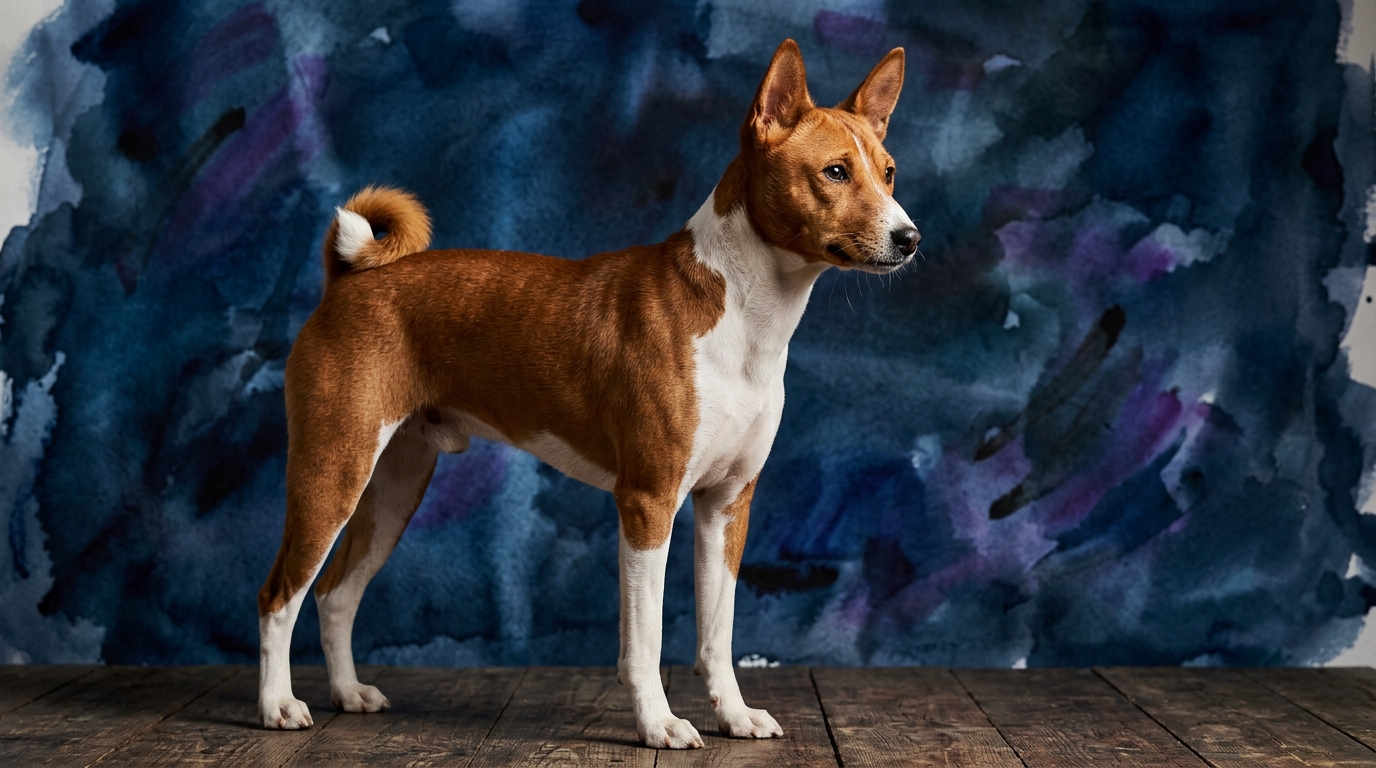
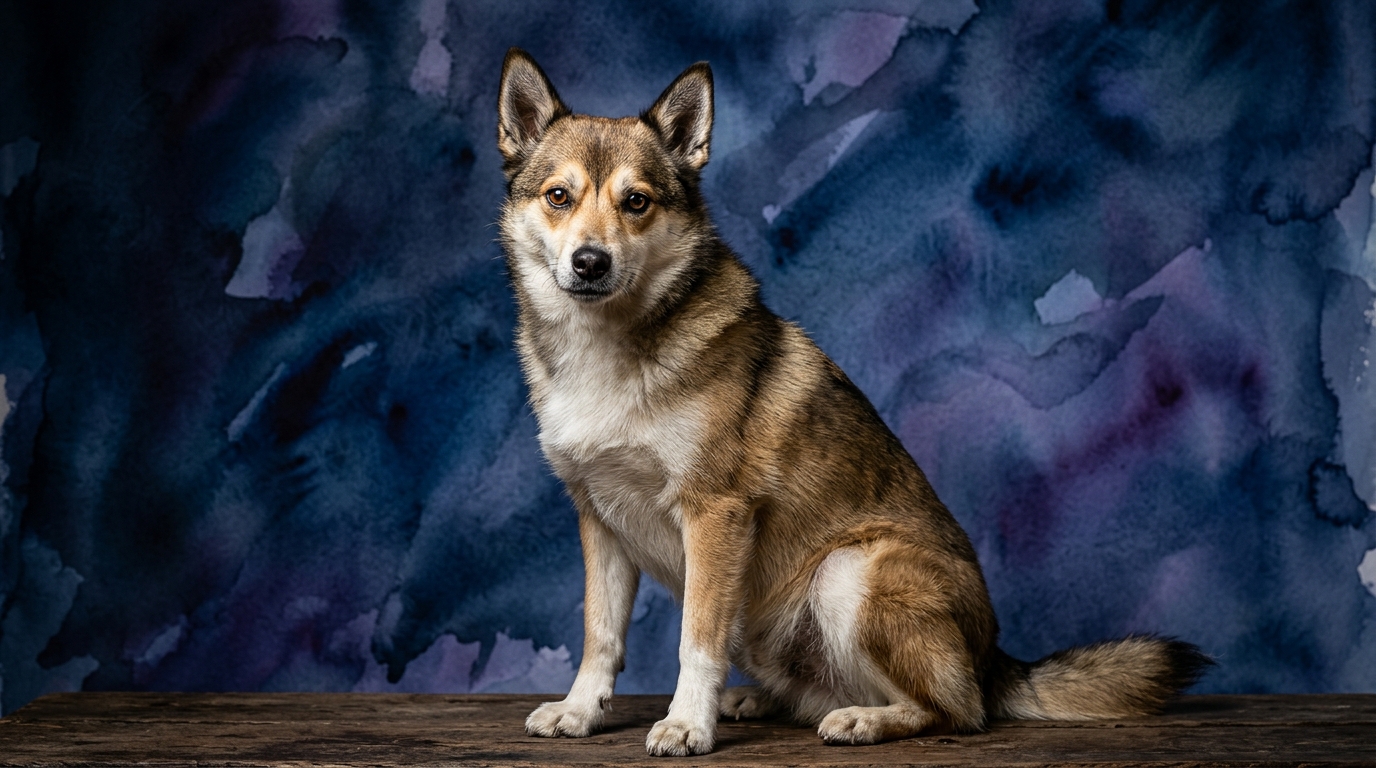
Side-by-Side Cognitive Profiles: Basenji vs. Norwegian Lundehund
The Cosmic Pet Pet IQ Lab employs a five-dimensional framework to map canine cognition, offering a granular view beyond generic notions of 'smartness.' For the Basenji, a breed often described as cat-like in its independence, its profile reveals a Problem Solving score of 5/5, indicating exceptional ingenuity in navigating obstacles and devising solutions. However, its Training Speed registers a challenging 1/5, reflecting a strong independent streak and a selective approach to compliance. Social Intelligence stands at 3/5, suggesting a capacity for connection but often on its own terms. An Instinctive Drive of 5/5 highlights a profound connection to its ancient hunting heritage, manifesting as intense focus and prey drive, complemented by a Memory score of 4/5, enabling it to recall complex spatial layouts and learned sequences.
The Norwegian Lundehund, a breed developed for its unique physical adaptations to hunt puffins, presents a more balanced, albeit less extreme, cognitive profile. With a Problem Solving score of 3/5, it demonstrates practical intelligence sufficient for its tasks, but perhaps not the intricate strategizing seen in the Basenji. Its Training Speed is a moderate 3/5, suggesting a more amenable disposition to instruction compared to its African counterpart. Social Intelligence matches the Basenji at 3/5, indicating a capacity for social interaction, though potentially less selective. An Instinctive Drive of 3/5 reflects a functional hunting drive without the overwhelming intensity of some hound breeds. Finally, its Memory score of 3/5 points to a solid capacity for learning and recall, adequate for its specialized historical role.
Where the Basenji’s Mind Shines Brightest
The Basenji’s cognitive strengths lie squarely in its formidable Problem Solving ability and its potent Instinctive Drive. A 5/5 in Problem Solving means these dogs are masters of environmental manipulation; they can figure out how to open latches, scale fences, or cleverly bypass barriers to achieve their goals. This isn't just about escape artistry; it's about an inherent capacity for strategic thinking and independent decision-making, honed over centuries as self-sufficient hunters. They are not waiting for human direction to solve a puzzle; they are actively assessing and acting.
Coupled with this is their 5/5 Instinctive Drive. This isn't merely a 'prey drive'; it's a deep-seated motivation to pursue, explore, and engage with the world through their senses. This intense drive fuels their problem-solving, giving them the tenacity to keep trying until they succeed. Their 4/5 Memory further enhances these traits, allowing them to remember successful strategies and the layout of their environment, making them exceptionally resourceful and persistent in their endeavors. Owners often report Basenjis remembering specific routes or hiding spots with remarkable accuracy over long periods.
The Norwegian Lundehund’s Unique Cognitive Edge
While the Basenji excels in independent problem-solving and drive, the Norwegian Lundehund claims a distinct advantage in Training Speed, scoring 3/5 compared to the Basenji’s 1/5. This higher score indicates a greater willingness to engage with human instruction and a more direct path to learning new commands and routines. The Lundehund's historical role, while specialized, likely involved working in closer proximity to humans, requiring a degree of cooperation that is reflected in its more moderate cognitive scores. They are generally more eager to please and less likely to question the utility of a command.
This isn't to say the Lundehund is a robotic follower, but rather that its intelligence is geared towards a collaborative learning process. Its 3/5 Problem Solving and Instinctive Drive suggest a practical, adaptable intelligence rather than an overtly independent one. They learn what is asked of them and apply it, often with enthusiasm, making the training process a more predictable and rewarding experience for both dog and owner. Their physical dexterity and unique flexibility, while not directly measured by these cognitive dimensions, are deeply intertwined with their ability to learn and adapt to complex movements and environments.
Training Dynamics: Basenji vs. Norwegian Lundehund
The disparity in Training Speed scores (Basenji 1/5, Lundehund 3/5) paints a clear picture: the Norwegian Lundehund is generally easier to train. The Basenji's low training speed isn't due to a lack of understanding; rather, it stems from its profound independence and self-reliance. A Basenji learns quickly what you *want* it to do, but it will then independently weigh whether doing so benefits *it*. If a command seems pointless or interferes with its own agenda, a Basenji is perfectly content to ignore it, or even offer a clever alternative, making consistency and high-value rewards paramount.
In contrast, the Lundehund's moderate training speed means it is generally more receptive to guidance and more inclined to form cooperative working relationships. They tend to respond well to positive reinforcement and clear, consistent instruction. Their moderate instinctive drive means they are less likely to be completely derailed by environmental distractions than a Basenji with an intense 5/5 drive. Real behavioral differences include the Basenji's infamous 'selective hearing' and tendency to 'counter-surf' with ingenious methods, versus the Lundehund's more direct approach to learning tasks, though their physical agility can still lead to unexpected explorations.
Matching Minds to Lifestyles: Active vs. Relaxed Owners
For owners with an active lifestyle, both breeds offer engagement, but with different cognitive demands. The Basenji, with its 5/5 Problem Solving and 5/5 Instinctive Drive, thrives with owners who can provide consistent mental stimulation, complex puzzle toys, and creative outlets for their relentless curiosity and drive. They require more than just physical exercise; they need their minds challenged daily, whether through advanced obedience, scent work, or agility. An active owner for a Basenji is someone who enjoys outsmarting a clever dog and is prepared for a constant intellectual chess match, providing firm but fair guidance to channel their independent spirit.
The Norwegian Lundehund, while physically active due to its history, might suit a wider range of active owners. Its 3/5 scores across most cognitive dimensions suggest a dog that enjoys shared activities and learning, without the intense mental management required by a Basenji. They are agile and require regular exercise, making them suitable for hiking, dog sports, or long walks. For a more relaxed owner who still enjoys activity, the Lundehund's cooperative nature and moderate drives make it a more adaptable companion, willing to participate in adventures without constantly trying to rewrite the rules.
The Verdict
Choose the Basenji if you seek a highly independent, ingenious companion who will challenge your wits daily and thrives on complex problem-solving and consistent mental engagement.
Opt for the Norwegian Lundehund if you desire a unique, cooperative, and physically agile dog that enjoys learning and thrives on shared activities, without the pronounced independence of a Basenji.
🧠 Find Your Pet's IQ Score
Our Pet IQ Lab assessment covers 25+ tests across 5 cognitive dimensions — personalized to your breed.
Take the Full IQ Test →Frequently Asked Questions
Are Basenjis truly difficult to train?
Basenjis are not untrainable, but their 1/5 Training Speed indicates they learn on their own terms. They understand commands quickly but often choose whether to comply based on their own assessment of the situation, requiring patient, consistent, and reward-based methods.
What makes the Lundehund's intelligence unique beyond its scores?
Beyond its moderate scores, the Lundehund's intelligence is deeply intertwined with its extraordinary physical capabilities, such as its flexible joints and extra toes. Its problem-solving and instinctive drive are geared towards navigating complex, tight spaces and adapting to challenging environments, showcasing a practical, body-smart intelligence.
How do their Social Intelligence scores (3/5) manifest in their behavior?
Both breeds scoring 3/5 in Social Intelligence means they are capable of forming bonds but may express it differently. Basenjis tend to be more selective, often forming deep attachments to a few chosen individuals. Lundehunds are generally amiable and enjoy company, but might not possess the intense people-pleasing drive seen in breeds with higher social intelligence scores.