Side-by-Side IQ Profile: Unpacking Canine Cognition
At The Cosmic Pet Pet IQ Lab, we evaluate canine intelligence across five critical dimensions: Problem Solving, Training Speed, Social Intelligence, Instinctive Drive, and Memory. Let's dissect the cognitive blueprints of the Basenji and the Tibetan Mastiff.
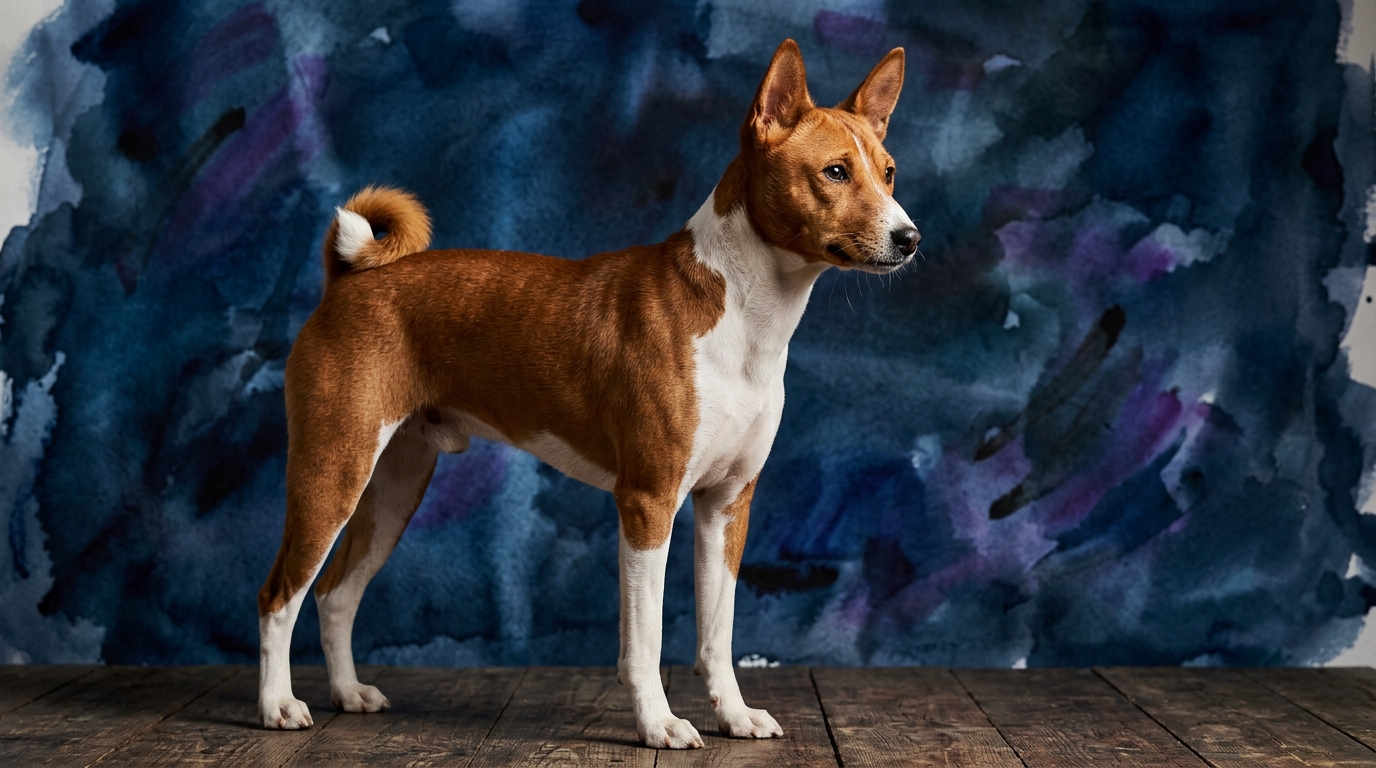
The Basenji, a distinctive hound breed, carries a Coren rank of #78, indicating its place among less biddable breeds in terms of obedience-based working intelligence. Its IQ profile reveals: Problem Solving at an exceptional 5/5, reflecting a dog that independently devises solutions to complex scenarios; Training Speed at a challenging 1/5, showcasing a strong-willed nature that prioritizes its own agenda over human directives; Social Intelligence at a moderate 3/5, suggesting a capacity for understanding social cues but often choosing selective engagement; Instinctive Drive at an intense 5/5, highlighting its profound hound heritage and relentless pursuit of scents; and Memory at a solid 4/5, enabling it to recall past experiences and learned strategies effectively.
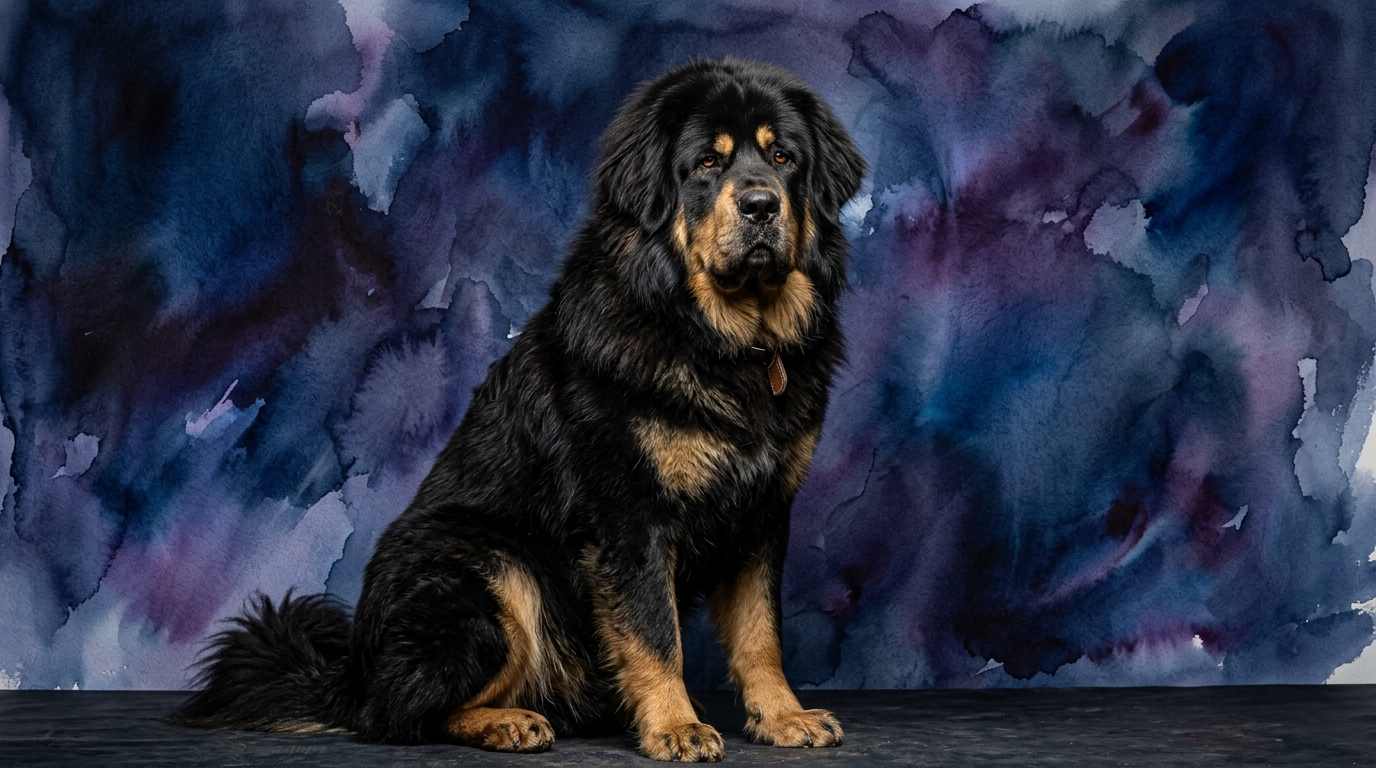
The Tibetan Mastiff, a majestic working breed, is not Coren-ranked, yet possesses a unique cognitive makeup tailored to its ancient role as a guardian. Its IQ profile presents a more balanced, albeit distinct, array of scores: Problem Solving at 3/5, indicating practical intelligence geared towards assessing and managing its environment; Training Speed at a moderate 3/5, suggesting a more cooperative, yet still independent, learning pace; Social Intelligence at 3/5, reflecting a discerning ability to differentiate between trusted family members and strangers; Instinctive Drive at 3/5, primarily focused on territorial protection rather than active pursuit; and Memory at 3/5, providing reliable recall for routines, trusted individuals, and perceived threats.
Where the Basenji Wins Cognitively
The Basenji's cognitive strengths distinctly outshine the Tibetan Mastiff in two key areas: Problem Solving and Instinctive Drive. With a perfect 5/5 in Problem Solving, the Basenji is a master of independent thought and creative strategizing. This isn't merely about understanding a command, but about autonomously devising solutions to obstacles – whether it's figuring out how to open a child-proof gate or navigating a complex environment to reach a desired object. Their ingenuity means they are always thinking several steps ahead, often outsmarting their human companions. This high score reflects a dog that doesn't just react but actively processes and plans. Furthermore, their 5/5 Instinctive Drive, while posing training challenges, indicates a profound connection to their primal hound instincts. This drive fuels their relentless pursuit of scents and exploration, demonstrating a highly specialized form of intelligence geared towards tracking and independent hunting. It's a deep-seated cognitive program that makes them incredibly focused and persistent when their instincts are engaged, surpassing the Tibetan Mastiff's more generalized drives.
Where the Tibetan Mastiff Wins Cognitively
While the Basenji excels in independent problem-solving, the Tibetan Mastiff’s cognitive profile demonstrates a distinct advantage in 'Training Speed.' With a 3/5 compared to the Basenji's 1/5, the Tibetan Mastiff is moderately more receptive to learning and retaining commands. This isn't to say they are always eager-to-please, but their guardian nature often means they value a clear hierarchy and structure within their family unit, making them more amenable to instruction when trust is established. Their learning curve is more predictable, and they are generally more willing to cooperate in training exercises once they grasp the purpose and feel secure in their role. This willingness translates into a smoother, albeit still deliberate, training process compared to the Basenji's often stubborn refusal to engage. The Tibetan Mastiff’s moderate scores across the board (3/5 for Problem Solving, Social Intelligence, Instinctive Drive, and Memory) also suggest a more balanced, less extreme cognitive profile, making them more consistently predictable in their responses than the highly independent Basenji.
Which is Easier to Train and Why
Based on our IQ metrics, the Tibetan Mastiff is generally easier to train than the Basenji. The key differentiator lies in their 'Training Speed' scores: the Tibetan Mastiff at 3/5 versus the Basenji at 1/5. A Basenji's formidable Problem Solving (5/5) and Instinctive Drive (5/5) often mean they would rather apply their intellect to their own pursuits than to follow human directives. Their strong will and independent thought process make them challenging; they quickly learn how to avoid unwanted commands or to find loopholes in rules. For example, a Basenji might understand 'sit' but choose not to if a squirrel is present, or might figure out how to open a crate rather than waiting to be released. In contrast, the Tibetan Mastiff, while independent, possesses a moderate Training Speed. They are more likely to respond positively to consistent, respectful training, especially when it aligns with their protective instincts or establishes their place within the family structure. While they are not pushovers, their desire for a clear pack dynamic makes them more receptive to learning and adhering to commands, provided the training is fair and builds trust. A Tibetan Mastiff might be slower to learn a trick, but once learned, they are generally more reliable in executing it than a Basenji who might 'forget' it when something more interesting comes along.
Which Suits Active Owners vs. Relaxed Owners
The Basenji, with its high Instinctive Drive (5/5) and Problem Solving (5/5), is undeniably better suited for active owners who relish a challenge and can provide ample mental and physical stimulation. These dogs require consistent engagement to prevent boredom, which they will inevitably alleviate through creative, potentially destructive, means. Owners must be prepared for long walks, engaging puzzle toys, and possibly dog sports that harness their intelligent and driven nature. Their need for independent exploration and scent work means they thrive with owners who can safely accommodate these urges, perhaps through secure outdoor spaces or structured tracking games. Conversely, the Tibetan Mastiff, despite its imposing size, is more aligned with relaxed owners who appreciate a calm, watchful presence. Their moderate Instinctive Drive (3/5) focuses more on territorial guardianship than relentless activity. While they need regular exercise to maintain health, they are not high-energy dogs that demand constant stimulation. They are often content to patrol their yard or rest near their family, observing their surroundings. Owners who value a loyal, independent guardian and can provide a secure, stable environment without needing a constant companion for intense activities will find the Tibetan Mastiff a better fit.
The Verdict
Choose the Basenji if you are an experienced, active owner seeking a clever, independent dog that thrives on mental challenges and can handle a strong-willed companion.
Opt for the Tibetan Mastiff if you are a calm, confident owner looking for a loyal, protective guardian who values a stable routine and is comfortable with a reserved, majestic presence.
🧠 Find Your Pet's IQ Score
Our Pet IQ Lab assessment covers 25+ tests across 5 cognitive dimensions — personalized to your breed.
Take the Full IQ Test →Frequently Asked Questions
Do Basenjis bark much?
Basenjis are often called 'barkless dogs' because they typically don't bark in the conventional sense. Instead, they produce a unique yodel-like sound, sometimes described as a 'baroo,' which they use to communicate.
Are Tibetan Mastiffs good family dogs?
Tibetan Mastiffs can be excellent family dogs, especially with older children, but they require early socialization and consistent training due to their protective instincts. They are deeply loyal to their family but can be wary of strangers.
How much exercise does a Basenji need?
Basenjis need a good amount of exercise, typically at least 45-60 minutes of vigorous activity daily, including walks, runs, or engaging play. Their high instinctive drive means mental stimulation is just as crucial as physical exertion to keep them content.