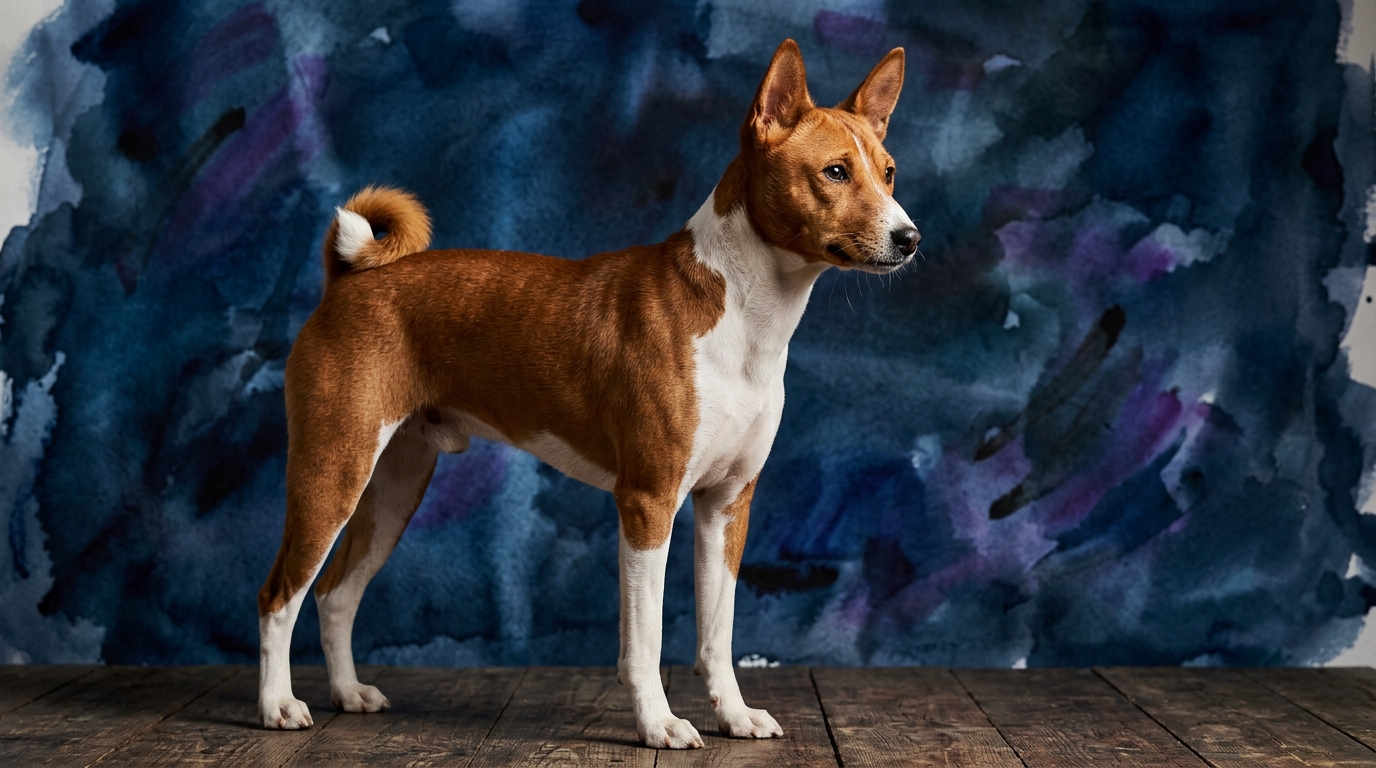
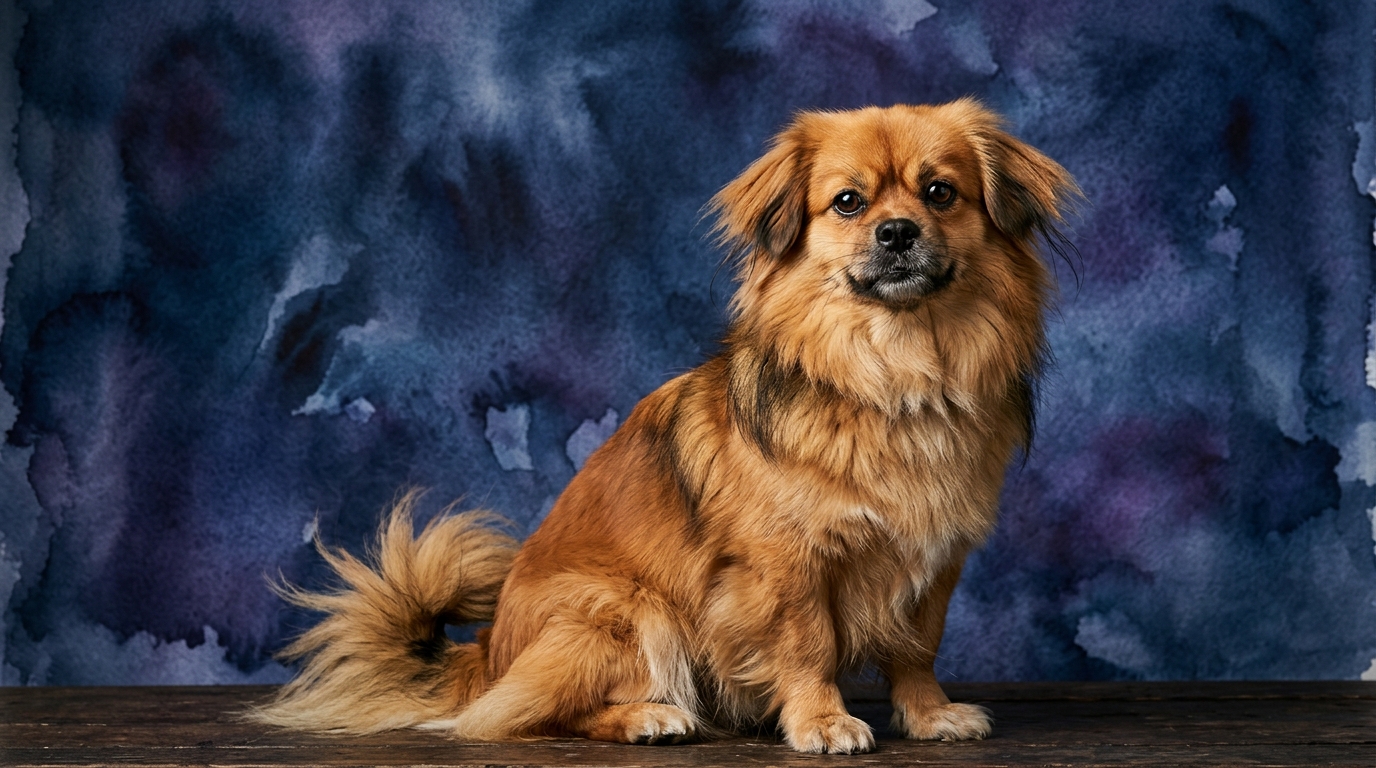
Side-by-Side Cognitive Profiles: Basenji vs. Tibetan Spaniel
To understand the unique cognitive landscapes of the Basenji and Tibetan Spaniel, The Cosmic Pet Pet IQ Lab employs five key dimensions. For the Basenji, a breed often noted for its ancient lineage and Coren rank #78 (placing it in the 'fair' working/obedience intelligence category), its profile is distinct. Its Problem Solving ability is rated an exceptional 5/5, indicating an innate talent for independently navigating complex situations and devising novel solutions. However, this ingenuity comes with a Training Speed of 1/5, signifying a significant challenge in teaching new commands due to a strong independent streak. Social Intelligence for the Basenji is 3/5, meaning they possess a moderate understanding of human cues but often prioritize their own agenda. A powerful Instinctive Drive of 5/5 means their behavior is heavily influenced by primal urges like hunting and tracking, requiring substantial outlets. Finally, their Memory is rated 4/5, allowing them to retain information and learn from past experiences, even if applying those lessons to human-directed tasks is slow.
In contrast, the Tibetan Spaniel, a breed not Coren-ranked but with a balanced cognitive makeup, presents a different picture. Its Problem Solving score is 3/5, indicating a moderate capacity for logical thought and navigating typical challenges without necessarily inventing sophisticated solutions. Correspondingly, its Training Speed is a more amenable 3/5, suggesting a moderate willingness and ability to learn new commands with consistent effort. Like the Basenji, the Tibetan Spaniel also scores 3/5 in Social Intelligence, meaning they generally understand human social dynamics and form strong bonds, albeit without the intense drive for collaboration seen in some other breeds. Their Instinctive Drive is 3/5, pointing to moderate natural urges, primarily focused on companionship and alert barking rather than intense hunting. Lastly, their Memory is also 3/5, allowing for adequate recall of routines and learned behaviors, supporting their role as a devoted companion.
Where the Basenji Wins Cognitively
The Basenji's cognitive strengths distinctly outshine the Tibetan Spaniel's in areas demanding independent thought and ingrained purpose. Scoring a perfect 5/5 in problem-solving, the Basenji exhibits a remarkable capacity for autonomous reasoning, often devising clever strategies to achieve its goals, whether that involves opening latches or navigating complex environments. This contrasts sharply with the Tibetan Spaniel's more moderate 3/5 in the same domain, suggesting the Basenji is inherently more adept at figuring things out on its own without human intervention. Their instinctive drive, also rated 5/5, is a powerful cognitive engine, fueling an intense focus on natural behaviors like scenting and pursuit. This innate drive means a Basenji is constantly processing environmental stimuli through the lens of its primal instincts, a profound difference from the Tibetan Spaniel's more subdued 3/5 instinctive drive. Furthermore, the Basenji's 4/5 memory allows it to retain complex sequences and spatial information with greater precision than the Tibetan Spaniel's 3/5, contributing to its ability to navigate familiar territories or remember past successes in problem-solving, even if applying those lessons to new training contexts proves challenging.
Where the Tibetan Spaniel Wins Cognitively
While the Basenji excels in independent cognitive feats, the Tibetan Spaniel's strengths lie in its more balanced and cooperative mental framework, particularly evident in its training speed. With a 3/5 rating for training speed, the Tibetan Spaniel demonstrates a greater willingness and capacity to absorb new commands and routines than the Basenji, which scores a challenging 1/5. This makes the Tibetan Spaniel more responsive to conventional training methods and generally more eager to please, translating into a smoother learning curve for owners. Their moderate instinctive drive (3/5) means their cognitive processes are less dominated by primal urges, allowing for greater focus on human interaction and learned behaviors. While both breeds share a 3/5 in social intelligence, the Tibetan Spaniel's overall cognitive balance often makes their social interactions more straightforward and less complicated by independent agendas. Their more moderate problem-solving and memory scores, while not as high as the Basenji's, contribute to a less demanding cognitive landscape, making them less prone to using their intellect for mischievous independent activities and more inclined towards companionable engagement.
Training Dynamics: Which Breed is Easier to Work With?
When it comes to ease of training, the Tibetan Spaniel clearly presents a more amenable experience compared to the Basenji. The data shows the Tibetan Spaniel scoring a 3/5 in training speed, indicating a moderate ability to learn and respond to cues. This breed typically thrives on positive reinforcement and consistent methods, showing a genuine desire to cooperate and understand what is expected of them. Their moderate instinctive drive (3/5) means they are less likely to be distracted by primal urges during training sessions, allowing for better focus on the task at hand. In stark contrast, the Basenji's training speed is rated a mere 1/5. This isn't due to a lack of intellect, but rather an abundance of independent thought and a low desire to please. Basenjis are often described as 'cat-like' in their approach to obedience; they understand commands but will only comply if they perceive a compelling reason to do so, or if it aligns with their own objectives. Their exceptional problem-solving (5/5) means they are constantly assessing situations and often finding loopholes or alternative solutions, rather than simply following instructions. Their powerful instinctive drive (5/5) also means they are easily diverted by scents or movements, making sustained focus during training a significant challenge. Owners often report needing innovative, highly motivating techniques and an extraordinary amount of patience to achieve even basic obedience with a Basenji, whereas a Tibetan Spaniel will generally respond well to standard, consistent training protocols.
Lifestyle Match: Active vs. Relaxed Owners
The distinct cognitive profiles of the Basenji and Tibetan Spaniel dictate vastly different ideal owner lifestyles. For active owners seeking a canine partner with an independent spirit and a penchant for physical and mental challenges, the Basenji is a compelling choice. Their 5/5 instinctive drive and equally impressive 5/5 problem-solving capabilities mean they require significant outlets for their natural behaviors and mental energy. These are not dogs content with simple strolls; they thrive on activities that engage their keen senses and allow them to 'hunt' or explore, such as scent work, agility, or extensive hiking. Owners must be prepared for a dog that will actively seek out its own entertainment if not adequately stimulated, often leading to creative escapades. Conversely, the Tibetan Spaniel is perfectly suited for more relaxed owners who appreciate a companionable presence without the intense cognitive demands. Their moderate instinctive drive (3/5) and problem-solving (3/5) mean they are generally content with regular walks, supervised playtime, and ample cuddle time on the sofa. While they still benefit from mental enrichment, their needs are less about fulfilling deep-seated primal urges and more about companionship and routine. They are alert and curious but less prone to independent mischief or the relentless pursuit of their own agendas, making them an excellent fit for individuals or families seeking a devoted, adaptable, and relatively low-maintenance cognitive companion.
The Verdict
Choose the Basenji if you are an experienced, active owner who relishes a cognitive challenge, can provide consistent, engaging mental stimulation, and appreciates a dog that thinks for itself, even if it means a steeper training curve.
Opt for the Tibetan Spaniel if you desire a more trainable, cooperative companion, value a balanced temperament, and seek a devoted, alert presence that thrives on routine and companionship without requiring intense management of powerful instinctive drives.
🧠 Find Your Pet's IQ Score
Our Pet IQ Lab assessment covers 25+ tests across 5 cognitive dimensions — personalized to your breed.
Take the Full IQ Test →Frequently Asked Questions
Are Basenjis difficult dogs?
Basenjis present unique challenges due to their high problem-solving skills and low training speed, requiring experienced owners dedicated to consistent, engaging mental and physical stimulation. Their independent nature means they often decide whether to comply, rather than simply obeying commands, which can be perceived as difficult.
Do Tibetan Spaniels bark a lot?
Tibetan Spaniels have a moderate instinctive drive, which includes a propensity for alert barking to notify their owners of perceived changes or visitors. While not excessive, they are vigilant watchdogs, and their barking can be managed with consistent training and socialization from a young age.
Which breed is better for a first-time dog owner?
For a first-time dog owner, the Tibetan Spaniel would generally be a more suitable choice due to their moderate training speed and more cooperative nature. The Basenji's profound independence and challenging training requirements often necessitate an owner with prior experience in managing strong-willed, intelligent breeds.