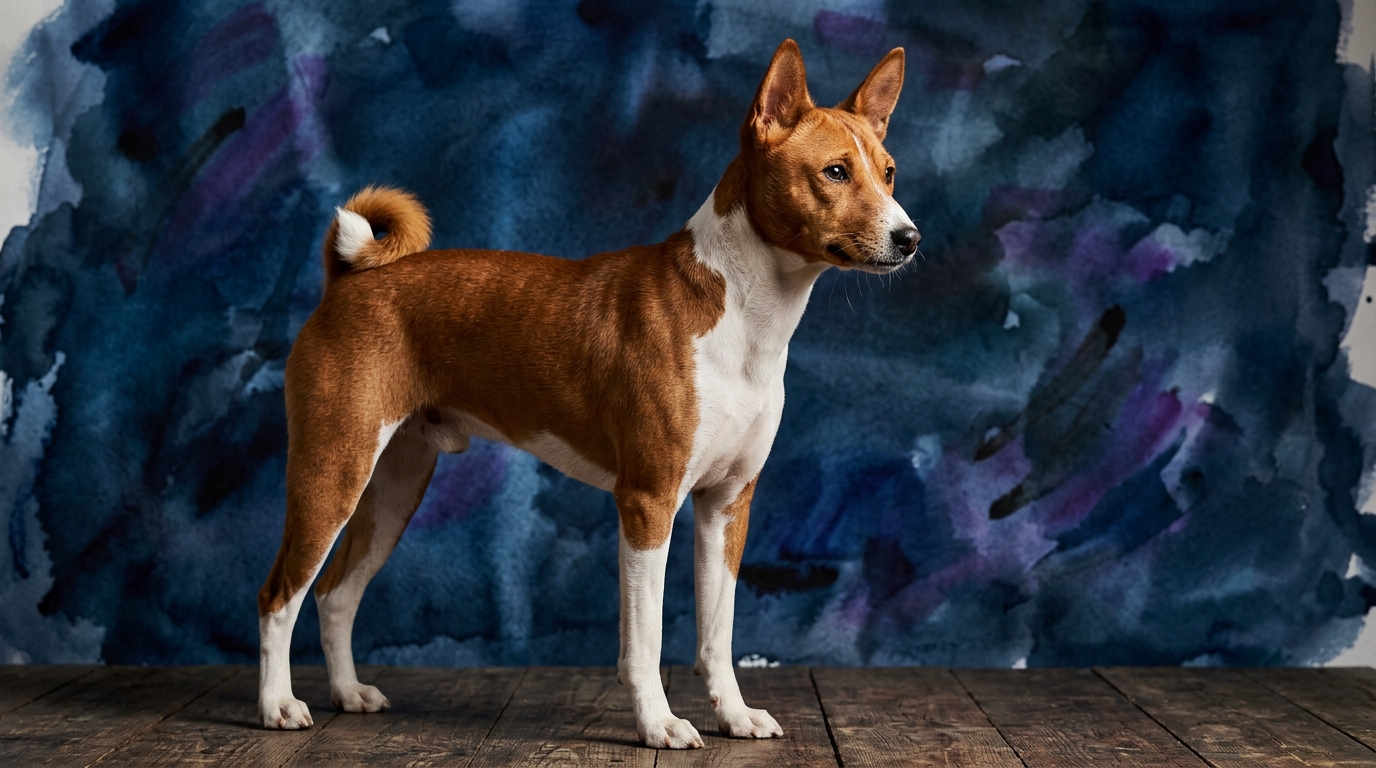
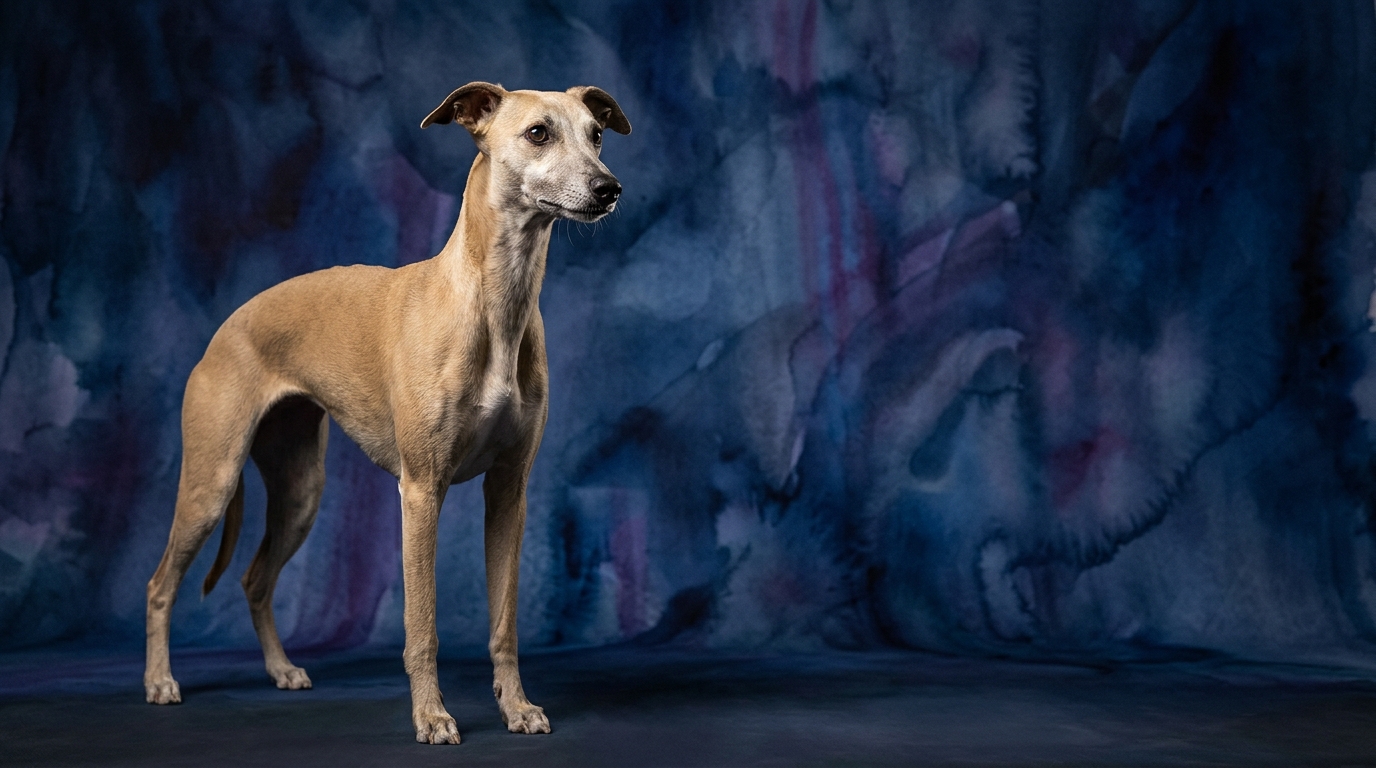
Side-by-Side Cognitive Profile: Basenji vs. Whippet
The Cosmic Pet Pet IQ Lab employs a five-dimensional framework to assess canine intelligence, offering a detailed look beyond simple obedience. For the Basenji and Whippet, both members of the Hound group, these dimensions illuminate their unique cognitive landscapes.
A Basenji's Problem Solving ability rates a formidable 5/5. This score signifies a dog with a remarkable capacity for independent thought and devising complex solutions to environmental challenges. They excel at understanding cause and effect, often figuring out how to open latches, navigate intricate spaces, or manipulate objects to achieve a goal. Their cognitive approach is characterized by cleverness and a self-directed ingenuity, making them formidable strategists in their daily lives. In contrast, the Whippet scores 3/5 in Problem Solving. This indicates a moderate ability to tackle straightforward puzzles or obstacles. Whippets can learn to solve routine problems through repetition and guidance, but they are less inclined to innovate complex solutions independently or persist in novel, multi-step challenges without human intervention.
Regarding Training Speed, the Basenji receives a challenging 1/5. This low score is a direct reflection of their profound independence and often selective hearing. Basenjis do not inherently possess a strong desire to please through obedience, frequently weighing a command against their own interests or impulses. Learning new cues requires immense patience, highly motivating rewards, and a consistent, engaging approach to overcome their self-willed nature. The Whippet, while not a top-tier performer, scores 2/5 in Training Speed. This suggests they are more amenable to learning commands and performing tasks than Basenjis. Whippets can acquire new behaviors with consistent positive reinforcement and clear communication, though they may not pick them up as rapidly as breeds with higher scores, requiring a steady, patient approach from their trainers.
Social Intelligence sees the Basenji at a 3/5. This indicates a reasonable understanding of social cues and dynamics, but often accompanied by a discerning and sometimes aloof demeanor. Basenjis can be selective in their affections, forming deep bonds with their chosen humans but often maintaining a polite distance with strangers. Their social interactions are frequently based on mutual respect rather than effusive eagerness. The Whippet, however, shines with a 4/5 in Social Intelligence. This higher score points to a keen capacity for understanding and responding to social cues from both humans and other animals. Whippets are typically more attuned to their owner's moods and intentions, often eager to please, and generally possess a gentle, adaptable nature that fosters harmonious and responsive social interactions.
Both breeds achieve a perfect 5/5 in Instinctive Drive, yet the manifestation of this drive differs. For the Basenji, this powerful intrinsic motivation is rooted in their ancestral purpose as independent hunters. It translates into a strong prey drive, a desire to explore and track with keen senses, and a self-reliant nature that often prioritizes innate behaviors over human directives. The Whippet's 5/5 instinctive drive is equally intense but focused on the sighthound's primary impulse: the chase. This manifests as an explosive urge to pursue anything that moves at high speed, whether it's a lure, a squirrel, or a blowing leaf. Their drive is primarily about the thrill of the chase, often overriding other considerations when a target is sighted.
Finally, Memory sees the Basenji with a strong 4/5. This suggests they retain learned information, experiences, and associations with remarkable clarity. This can be a double-edged sword: they remember training (or lack thereof), past successes in outsmarting owners, and specific routines, contributing significantly to their independent and often clever problem-solving nature. The Whippet scores 3/5 in Memory. While capable of recalling training and past experiences, their retention might not be as detailed or long-lasting as a Basenji's. They benefit from consistent reinforcement to solidify memories and may require more frequent refreshers for less frequently practiced commands.
Where the Basenji Wins Cognitively
The Basenji's cognitive strengths lie primarily in their exceptional problem-solving abilities and robust memory. Their 5/5 Problem Solving score means they excel at independent thought, often devising ingenious methods to overcome obstacles or achieve desired outcomes without human intervention. This isn't merely about mischief; it's a testament to their capacity for abstract thought and strategic planning.
Furthermore, their 4/5 Memory serves as a powerful tool in their cognitive arsenal. This strong retention allows them to learn complex sequences, navigate intricate environments, and remember past successes (and failures) with remarkable clarity, even if their independent nature means they don't always apply this learning in ways humans expect.
Where the Whippet Wins Cognitively
The Whippet's cognitive advantages are most evident in their superior social intelligence and comparative receptiveness to training. Their 4/5 Social Intelligence score highlights their heightened ability to read human emotions, intentions, and body language, fostering a more harmonious and responsive companionship. This makes them inherently more adaptable to living within a human family structure.
While not scoring exceptionally high, the Whippet's 2/5 Training Speed is a clear win over the Basenji's 1/5. This indicates a greater willingness to engage in learning and a more pronounced desire to please their human companions. They are more likely to respond positively to guidance and find satisfaction in cooperative tasks, making the training process generally smoother and more rewarding for both parties.
Which is Easier to Train, and Why?
Based on their cognitive profiles, the Whippet is generally easier to train than the Basenji. The Whippet's higher Social Intelligence (4/5) means they are more attuned to human expectations and desires. They are often eager to please and find joy in cooperative activities, making them more receptive to learning commands and responding to cues. Their 2/5 Training Speed, while still requiring patience, indicates a greater capacity for acquiring new behaviors with consistent positive reinforcement and clear communication. Whippets typically respond well to reward-based methods, viewing training as an engaging interaction rather than a forced compliance.
The Basenji, conversely, presents a significant training challenge due to their 1/5 Training Speed and powerful 5/5 Problem Solving. Their profound independence means they often view commands as suggestions, assessing whether compliance serves their own interests. They are not inherently driven to please and will use their cleverness to find loopholes or simply ignore directives they deem irrelevant. While their 4/5 Memory means they remember what they've learned, it also means they remember what they've successfully gotten away with, requiring exceptional consistency and creative motivation from their owners to achieve reliable obedience.
Suited for Active vs. Relaxed Owners
Both breeds possess a 5/5 Instinctive Drive, indicating they are not for entirely sedentary owners, but the *nature* of their activity needs differs. The Basenji, with its high Problem Solving and independent drive, suits owners who enjoy mental challenges and providing outlets for their dog's investigative and hunting instincts. This might involve extensive scent work, complex puzzle toys, or engaging in dog sports that require strategic thinking. Their physical activity often needs to be paired with mental stimulation to prevent boredom and potential destructive behaviors. Owners who appreciate a clever, self-directed companion and are prepared to channel that mental energy will find a Basenji fulfilling.
The Whippet, with its powerful sighthound drive, is ideal for owners who can provide intense, short bursts of physical activity, such as lure coursing, sprinting in a secure area, or vigorous games of fetch. After these exhilarating outings, Whippets are often content to be relaxed, affectionate companions indoors, earning them the moniker '45 mph couch potatoes.' Their higher Social Intelligence also makes them more adaptable to a relaxed home environment, provided their need for speed is met daily. Owners seeking a dog that can transition from an athletic burst to a calm, cuddly presence will find the Whippet a perfect fit.
The Verdict
Choose the Basenji if you appreciate a clever, independent canine partner who thrives on mental challenges and values a relationship built on mutual respect rather than eager compliance, and you have the patience for their unique training approach.
Choose the Whippet if you seek a gentle, socially attuned companion who enjoys exhilarating sprints outdoors but transforms into a serene, affectionate house dog, and you prefer a dog that is generally more responsive to guidance.
🧠 Find Your Pet's IQ Score
Our Pet IQ Lab assessment covers 25+ tests across 5 cognitive dimensions — personalized to your breed.
Take the Full IQ Test →Frequently Asked Questions
Are Basenjis difficult to live with due to their problem-solving skills?
Basenjis' 5/5 problem-solving means they can be highly inventive in navigating their environment, often finding ways to open doors or access forbidden items. This requires owners to be proactive in 'Basenji-proofing' their homes and providing consistent mental stimulation to channel their cleverness constructively.
How does a Whippet's 5/5 instinctive drive manifest compared to a Basenji's?
Both breeds possess a powerful drive, but it differs in focus. A Whippet's drive is primarily a sighthound's urge to chase rapidly moving objects, leading to explosive sprints. A Basenji's drive is more about independent hunting, tracking, and exploring with keen senses, often leading to determined investigative behaviors.
Does a Basenji's low training speed mean they cannot learn?
Not at all. A Basenji's 1/5 training speed signifies their independent nature and often a lack of inherent desire to please through obedience. They *can* learn, and their 4/5 memory ensures retention, but training requires exceptional patience, high-value motivation, and a willingness to adapt methods to their self-directed cognitive style.